Why doesn’t Overland Park have more affordable housing? Often the city won’t allow it
Frank Pikus wanted to find a newer, affordable home for his elderly mother in Overland Park. He soon realized his quest was nearly impossible.
“She wants to move, but she doesn’t want to move out of central Overland Park. And there’s nothing newer she can afford in central Overland Park. Nothing,” Pikus, a Johnson County business leader, said. “So what do you do? This prompted me to say, well, if she’s in this situation, there are probably others in this situation.”
Despite the growing need for affordable housing in Kansas’ wealthiest county, there’s a lot stopping developers from building it. The high costs of land, construction materials and fees mean small projects often yield a small return on investment. But even when developers want to build something other than luxury apartment complexes or McMansions, in many cases it’s illegal to do so.
Overland Park, like cities across the region and country, has zoning codes that largely prohibit the construction of duplexes, four-plexes, cottage communities and homes with shared driveways — essentially anything other than big houses and big apartment complexes, said Matthew Petty, a city planner, real estate developer and city council member in Fayetteville, Arkansas, who has been studying Overland Park’s housing market. The city has engaged with Petty and the Incremental Development Alliance to look at the barriers to building affordable housing.
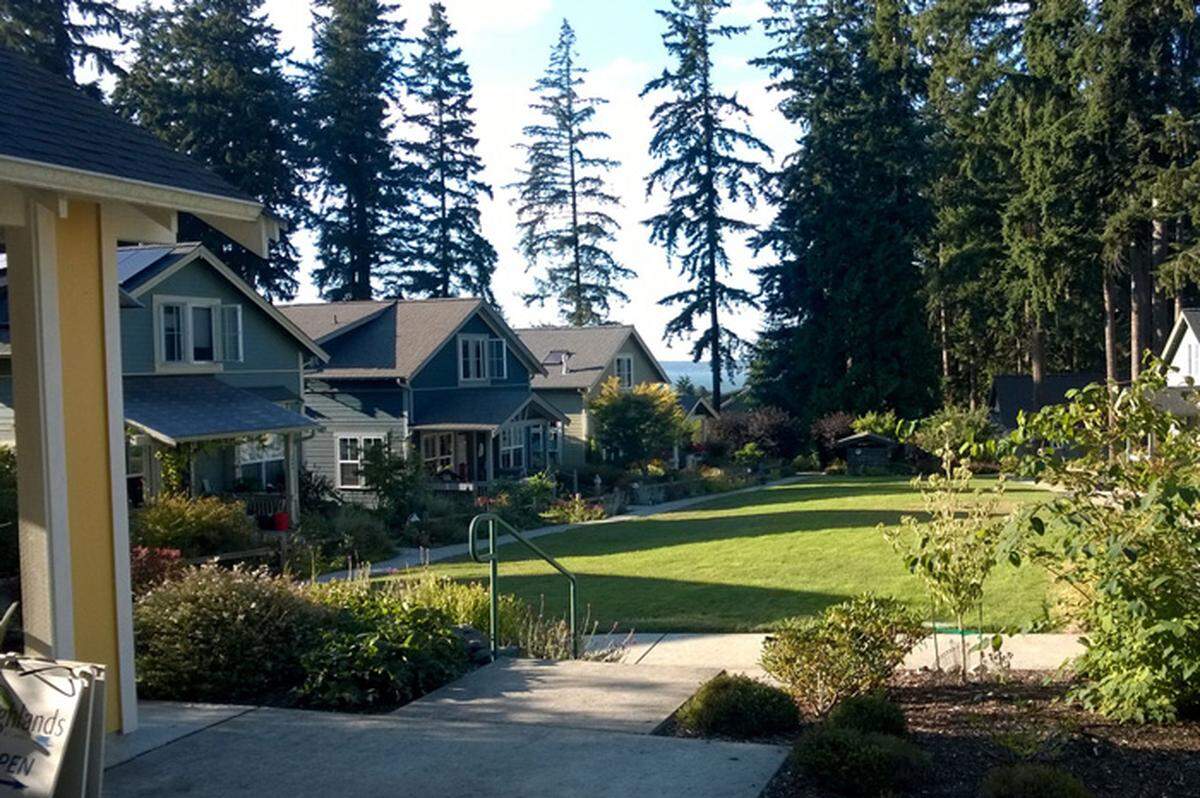
Developers call these types of projects the “missing middle” — homes that could be an alternative for workers struggling to afford rent or a mortgage. And Petty is recommending the city change its code to allow for a larger variety of housing.
According to a report released this year by the League of Women Voters of Johnson County, anyone working full-time as a retail sales clerk, janitor or home health aid cannot afford to rent or buy a home in any of Johnson County’s cities. Cheaper homes are in short supply, and wages have not kept up with the rise in rent and home prices.
“You have a need in Overland Park for housing like this,” Petty said at a recent public meeting. “We believe in taking care of people. And if you say we don’t need it, it means you’re telling them we don’t care, go live somewhere else. This is a compassion issue. This is a moral issue.”
“Everybody wants more”
Wanting to help his mom find a new place to live, Pikus decided to set out on his own and build affordable homes.
He purchased 3.5 acres west of downtown Overland Park to subdivide into five lots for smaller homes, rather than one or two large houses typical to the city. But getting the development approved this past summer, including rezoning the land and fighting a protest petition from neighbors, was an uphill battle — one that often stops developers from building affordable homes in the Kansas City suburbs.
“Quickly you come to the determination that rising costs have just priced newer, affordable homes out of the marketplace,” Pikus said. “The reason development doesn’t occur in these areas is because it’s so expensive. There are no margins for a developer to have an adequate return on investment.”
The rising costs often mean only large-scale housing projects with high rental prices can deliver a return on investment, according to a Mid-America Regional Council, or MARC, study released last month. The report, which studied the suburbs in the Kansas City region, showed the greatest barriers to building affordable housing are high costs, development requirements and neighborhood concerns.
Only 6% of Overland Park’s housing supply is vacant — better than many cities across the country facing housing crises, but still below the national level of 9% and a sign of depleting options, said MARC program director Lauren Palmer. The median rent in the city is $1,084, and the average sale price for homes is more than $320,000.
And even though the median household income in Overland Park is more than $78,000, studies show nearly one in four Johnson County households are burdened by the cost of housing. The number rises to 40% for renters. That means households spend more than 30% of their income on housing.
Meanwhile, Overland Park often offers subsidies to projects that include large, luxury apartment complexes, such as the $2 billion redevelopment of the Brookridge Golf Course. Before the City Council and mayor voted to approve up to $200 million in tax incentives for the project, real estate attorney Todd LaSala pointed out that the development agreement precludes affordable housing.
“It restricts affordable, low-income housing, as do many of your incentive agreements,” he said at the meeting. “It says with this public investment, the developer will deliver this quality of housing.”
With high construction costs, Petty said the rental rates required for developers to make a profit “just aren’t achievable.”
“And you see that because most of the recently completed very large family projects have required extraordinary subsidy in order to do,” he said. “And if it was the case that wages had kept up with construction pricing, then people would be able to afford rental rates to cover the cost of construction without subsidy.”
Petty said Overland Park needs to change its laws, offer assistance programs and create a system where developers of smaller scale, cheaper housing projects can see a return on investment. The MARC study calls for cities, including those in Johnson County, to launch incentive programs for affordable housing projects, start housing trust funds and create home-buyer assistance programs.
“If we prefer a duplex or series of duplexes to another 300-unit apartment complex, we need to create a system where someone who builds duplexes can earn the same rate of return as someone who builds giant projects,” Petty said. “Otherwise, we’re just waiting for people who want to do projects because they’re the right thing to do.”
Pikus admits the economics are difficult. “Everyone wants more,” he said.
But he urges Johnson County to come together to help developers make affordable housing viable.
“Who can subsidize some of the cost to allow the ultimate cost to be lowered? To me, there needs to be an agreement between municipalities, the developer and the builder,” Pikus said. “If we can all work for less, if the fees can be less, if the regulations can be less cumbersome, if the developer can acknowledge they can’t make as much, we could lower the end price.”
Changing Overland Park’s system
In many ways, Pikus’ housing project is a test of Petty’s vision for Overland Park.
He’s replacing large, spread out homes with small ones, at 8505 W. 80th St., that should be more affordable for seniors, young families and workers struggling to make ends meet. But it hasn’t been easy.
The project, near the home where Pikus grew up, required rezoning approval from the City Council so Pikus could add greater density, something neighbors loudly protested, arguing the subdivision would become too crowded. Overland Park residents at other times have voiced concerns about the changing character of neighborhoods and a lack of upkeep on smaller homes.
Petty said fighting misconceptions about different types of housing is one battle. The other is that in many areas of Overland Park, zoning codes that would allow for denser, smaller housing developments simply do not exist.
He said that’s because the city’s residential zoning codes have not been updated for 30 years.
“The City Council should be able to look at a piece of property and say a four-plex is appropriate here, but a giant apartment complex isn’t. That’s not an option. You don’t have a zoning category for that,” he said.
While the nearby city of Shawnee has not done a major overhaul of its zoning codes, neighborhood planner Lauren Grashoff said the city did create a residential district downtown to allow for smaller single-family homes. The city hopes the zoning district will allow for larger lots to be subdivided and spur pocket, cottage communities.
In that district, Shawnee also offers programs including tax rebates and home builder assistance.
“We can’t regulate price, but we hope allowing smaller housing units would have a secondary benefit of them being affordable,” she said.
Petty recommends Overland Park take a similar measure to create a new zoning designation that will allow for smaller homes on smaller lots, duplexes and other shared housing arrangements.
While developers can essentially build a home as large as they want on lots throughout most of Overland Park, turning homes into duplexes or four-plexes is often prohibited, he said.
“The only way to overcome that challenge is to buy more land, and buying more land means housing is more expensive. And that means it’s less accessible to the workforce,” Petty said. “It’s not that big houses are bad. People love big houses. I wish I had a big house. But I can’t afford one right now. And a lot of people can’t afford them right now.”
Petty also suggests the city amend its code to add more flexibility to how subdivisions are created, making it possible for pocket neighborhoods and cottage communities. He said having greater density, with more homes closer together, would also help the city conserve resources and tax revenue — compared to the infrastructure needed for houses sprawled far apart.
Most City Council members interviewed said they are open to Overland Park diversifying its housing stock. Some said the city needs to define what housing price is actually affordable before moving forward. But most said they are looking forward to receiving the full report from Petty and the Incremental Development Alliance detailing next steps.
“Housing is a challenge for a lot of people. Not just low-income people, but certainly middle-income folks as well. So I think having a variety of choices is important,” Councilman Logan Heley said. “There’s a long history of zoning laws, not just in Overland Park but across the country, having a profound impact on how communities develop, and who the winners and losers are.”
The final report should be completed by the end of next month, city Planning Manager Leslie Karr said. Then, officials will meet to determine whether the city wants to implement any of the recommendations.
In the meantime, Johnson County is partnering with its cities to collaborate on a comprehensive housing market and needs assessment. The county announced this month that 17 cities have committed to participate in the $109,000 study.
For Pikus, who is hoping to show other developers in Overland Park what is possible when it comes to building affordable housing, he said his small project on West 80th Street shows the city “has come to play.”
“I think there are a lot of folks in the development community who are interested in doing it, but it’s a hard path to navigate,” he said. “But I do appreciate Overland Park for what they’re doing and that they’re trying. They want affordable development in the city. So that makes me feel good about doing it.”
This story was originally published December 26, 2019 at 5:00 AM.