Downtown Overland Park is growing up: Retail, high-rises are ‘the way of the future’
After decades of trying to revitalize Overland Park’s historic downtown, community leaders say the area is finally in the midst of a modern renaissance.
A short walk from the first commercial building ever constructed in Overland Park and a 70-year-old independent theater, hundreds of luxury apartments and several modern office spaces are popping up. And now something completely new is opening in the quaint downtown: a coworking space for entrepreneurs to get start-up restaurants off the ground.
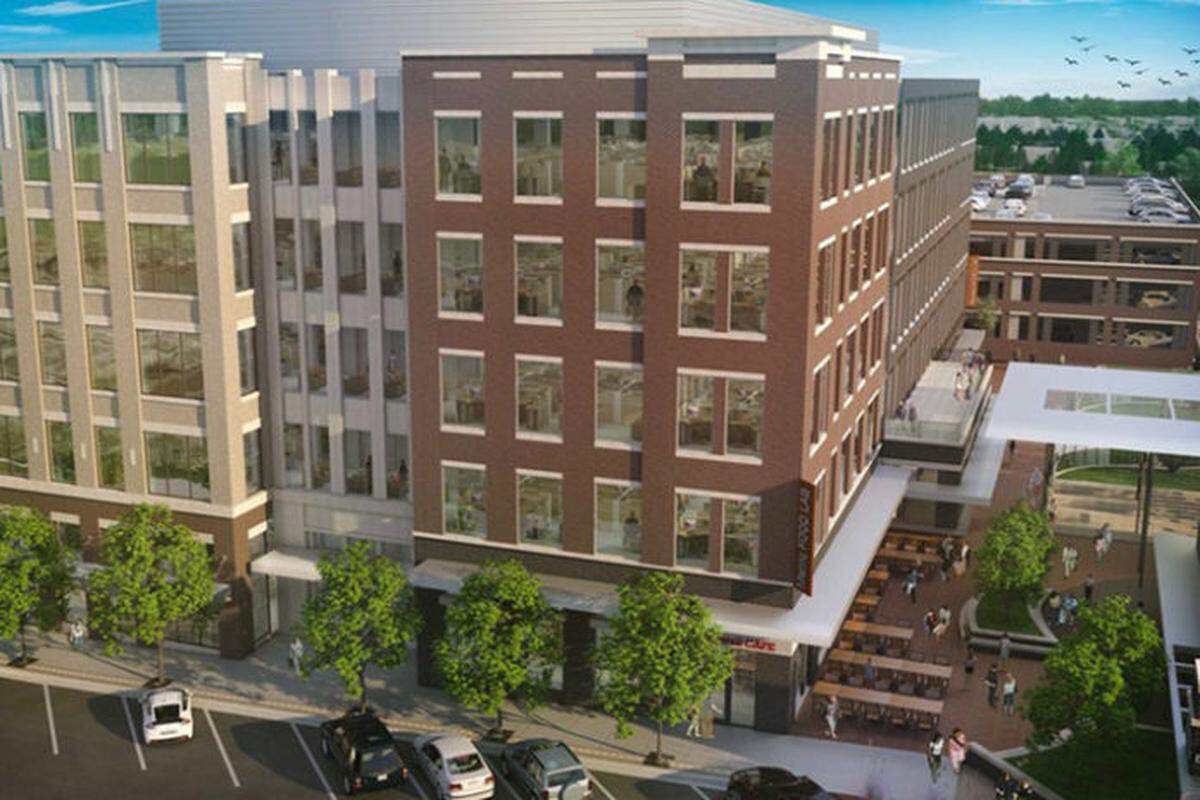
Strang Hall opened Friday at the new Edison District, at the corner of West 80th and Marty streets. In the style of Parlor KC in Kansas City or the Public Market in Lenexa, the food hall is the latest addition to the district’s five-story business incubator catering to young entrepreneurs.
The downtown’s revival has not been welcomed by everyone, with several longtime residents worried about new development stripping the downtown of its historic feel.
“This is the way of the future,” City Councilman Dave White said of the Edison project at a recent finance committee meeting. “There’s no doubt about it.”
The Edison District is a symbol of what community leaders have envisioned for the downtown for more than 20 years. The $54 million project —with a large outdoor event area, shops, offices and a parking garage — adds to the growing density, bringing with it new employees, residents and places for the community to gather.
And nearby, hundreds of contemporary apartments are under construction or are being leased out, finally bringing residents to the true heart of the downtown.
“Edison brings this opportunity for growth for people building their businesses,” said Jack Messer, city planning and development services director. “And it works toward our goal of having people that work down there and also live in the same area. We don’t have many of those opportunities in Overland Park.”
Balancing old and new
The downtown’s revitalization has come with plenty of growing pains. Added traffic, a lack of parking and walking access are all concerns. And many residents worry about the loss of historic buildings and the area’s authentic feel.
The Edison District, for example, included the demolition of a strip shopping center on 80th Street and the redevelopment of the closed Overland Park Presbyterian Church. Some residents complain construction is hurting small businesses and harming the area’s historic character.
“Change is difficult, and I get that,” Councilwoman Terry Happer Scheier said. “But a lot of those shops had seen better days. The downtown is really evolving. And we can do that while still respecting the older area of downtown. It’s going to be cool. For the first time, I see energy. I see people wanting to come here.”
City leaders say they’re committed to preserving historic buildings downtown, including the Rio Theatre, built in 1946. In addition, the Overland Park Historical Society purchased the Strang Depot Building on Santa Fe Drive this summer. The group is now restoring and preserving the depot, the first commercial building ever constructed downtown.
The Edison District and other developers have said they are incorporating historic elements into new construction. Topeka-based PT’s Coffee Roasting Co., for example, plans to renovate the mid-century former gas station, at 8139 Metcalf Ave., with community leaders expecting original elements of the building to be retained.
But still, many longtime residents worry about the downtown changing too quickly, less enthusiastic about hip, new work spaces and more concerned about the demolition of old buildings. And some have opposed the influx of high-rise apartment complexes, arguing they live in Overland Park to avoid the density and traffic in areas like downtown Kansas City.
Hundreds of new residents downtown
Overland Park residents and officials dreamed up goals for the then-sleepy downtown while creating the Vision Metcalf plan in 2008. While Santa Fe Drive generated pedestrian traffic walking to small businesses, the rest of the downtown had been stagnant for years.
Now, Happer Scheier said the city is finally “getting what we wanted” years ago. In large part, that’s people living downtown — for the first time occupying apartments, rather than surrounding single-family homes.
The $49 million project, The Vue, at the southeast corner of 80th and Marty streets, is now leasing more than 200 luxury apartments, and also has retail space. Nearby, another $10.8 mixed-use apartment building, Market Lofts, brings 36 more units.
And following the development of the 218-unit Avenue 80 building on 80th Street and Metcalf Avenue, Overland Park welcomed its first senior apartment building downtown, a $45 million project with 150 units. And more apartments, office buildings and restaurants have been recently completed or are in the works.
“I’m thrilled. I talk to people a lot who now say they want to move downtown,” Councilman Paul Lyons said. “Young people and retirees, I’m seeing all age groups, wanting to move to the area for the first time. I think it’s really energizing.”
Messer said the area moving from suburban sprawl to urban density gives people a reason to live and work downtown, and then stick around for food, entertainment and community.
Officials point to the city taking over the farmers market, plus redeveloping Thompson Park, as ways that public investment has helped get the downtown to this point. The park project caused controversy when the city announced plans to demolish a historic gazebo to make way for a performance stage. But city leaders argue the park will soon draw more attention to the region.
Residents also have criticized the City Council for offering tax incentives for many downtown projects, including the Edison District, which received an unprecedented 2% added sales tax to help fund construction. But many council members said that without public investment, the downtown wouldn’t see today’s rebirth, including the brand-new concept of a food hall and entrepreneur incubator.
“I don’t think we’re going to see any more incentives downtown,” Lyons said.
Lyons and others feel the latest projects are only the beginning. Many have said there is a need for a grocery store to serve the area’s new residents, and calls for the redevelopment of more mid-century buildings. And many hope to see more development like the new food hall, to help cave out the future of the historic downtown.
“There was nothing happening here before. There was no activity to gather around,” Messer said. “This kind of energy and gathering is what people are craving. It’s really authentic for its time.”
This story was originally published December 20, 2019 at 5:00 AM.