
Their turn: Here’s when nursing homes in Missouri and Kansas will get COVID vaccine
Residents and staff at long-term care facilities in Kansas and Missouri facilities will begin getting the COVID-19 vaccine next week, pharmacy officials announced Monday.
Through a national pharmacy program, nursing homes chose last month to have either CVS or Walgreens come into their buildings and administer the shots.
On Monday, CVS was set to begin the process of administering the Pfizer-BioNTech vaccine at more than 40,000 long-term care facilities across the country. A second phase, beginning Dec. 28, will bring the vaccine to facilities in Kansas and Missouri, a company spokesman said.
More than 600 long-term care facilities in Missouri and 360 in Kansas chose to work with CVS Health — with the potential to vaccinate nearly 100,000 Missourians and 40,000 Kansans.
Walgreens also will begin providing vaccinations in about 800 long-term care facilities across 12 states this week, a company spokesman said. Nursing homes in Kansas and Missouri are on the list of states where vaccinations will begin Dec. 28.
“We are prepared to administer vaccines as soon as inventory is available and the CDC, states and facilities finalize their plans,” said the Walgreens spokeswoman. “The federal government will also determine the amount of COVID-19 vaccine doses designated for each jurisdiction.”
Kansas will use 17,550 doses of the Pfizer vaccine it expects to receive this week to begin this next phase of inoculations, said Kristi Zears, a spokeswoman for the Kansas Department of Health and Environment. Hospital employees nationwide began receiving the vaccine last week.
Nursing home administrators across the country are awaiting “the call” that will tell them when vaccinations will begin.
“I am so excited about this,” said Brenda Droste, regional director of wellness for Arrow Senior Living, which operates The Parkway in Blue Springs and The Madison in Kansas City. “Them rolling this out in the time frame the government has done this is just short of a miracle, honestly.”
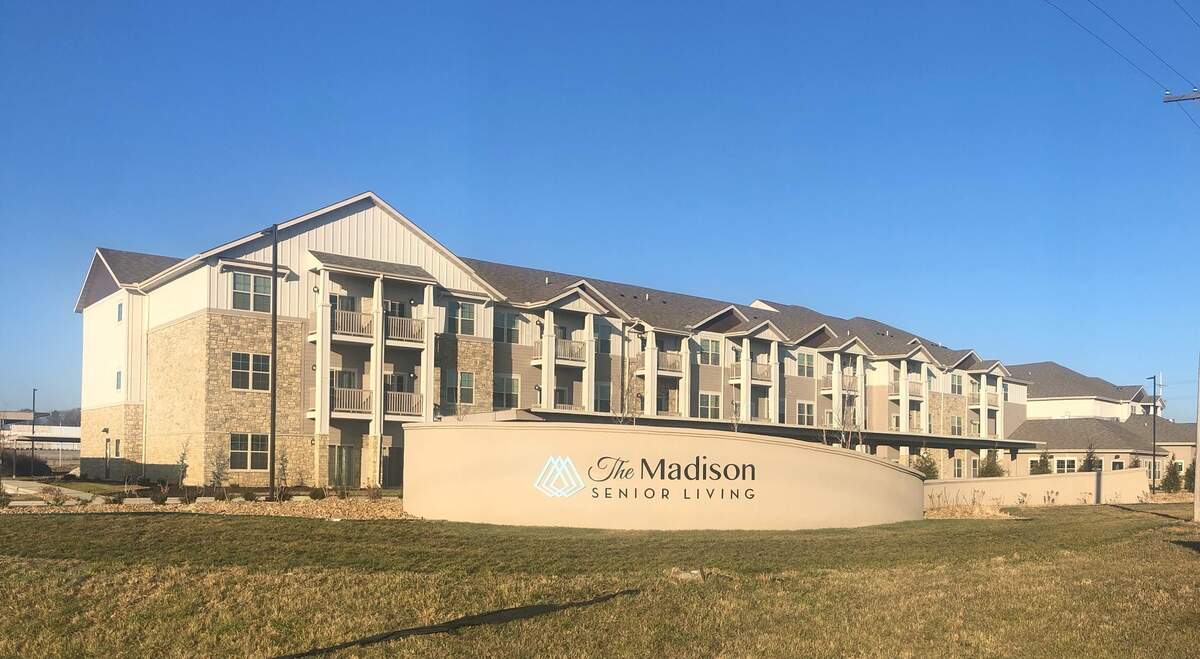
The pandemic has taken an enormous toll on the nation’s nursing homes.
As of the week of Dec. 6, nearly 82,000 nursing home residents had died of COVID-19 in the United States, with about 1,200 deaths among staff, according to the Centers for Medicare and Medicaid Services. Visitor restrictions that are needed to keep residents safe also separated loved ones.
“I would say at the very beginning, just like the rest of the world, it was very scary. Because we just didn’t know what we were dealing with, and we didn’t know how it was truly spreading or how to truly contain the virus,” said Angie Keeven, chief wellness officer for Cedarhurst Senior Living, which operates 13 senior communities in Missouri, including four in the metro area.
“It was new, and there was a lot of changing information out there. It was difficult. I would say that’s changed. We feel a lot more confident now on how to deal with the virus, and know how it gets into our communities, and we know how to keep it contained.
“But now it’s exhausting. We’re confident, but it’s exhausting, because this third wave is by far the hardest that we’ve seen because it is so much more than what we’ve seen thus far as far as exposures.”
Shots on-site
CVS has spent weeks creating a game plan that will send teams into long-term care facilities to give the shots on-site. Employees are being trained how to handle these new vaccines — for instance how long the frozen doses must be warmed before they can be injected into someone’s arm.
The historic nature of the moment is not lost on pharmacist Nate Burrell, Kansas City district leader for CVS.
So far, his office is scheduled to do vaccinations in 450 facilities — stretching from Salina, Kansas, to Springfield, Missouri — with more coming.
“I’m personally proud of the number of people who have said they want to be a part of this process,” said Burrell. “We’re going to do a lot of sites, and we’ve seen a lot of store-level colleagues say, ‘I want to be involved in this,’ even if it means working an extra day or two.”
Both the Pfizer and Moderna vaccines require two shots — 21 days between the first and second Pfizer shot, and 28 days for the Moderna vaccine. “Right now we’re going to use Pfizer in Kansas and Moderna in Missouri,” said Burrell.
CVS will visit each facility three times. “This will make sure we catch everybody,” Burrell said.
The people giving the shots will be tested for COVID-19 each week before visiting each site, said Burrell.
“We know that nursing home residents are the highest risk people when they get COVID-19, but also highest risk of being exposed because of their congregate living situation,” Dr. Jessica Kalender-Rich, a geriatric specialist at the Landon Center on Aging, said during the University of Kansas Health System’s daily coronavirus briefing Monday.
“So as we work together to help prevent disease and prevent spread within the facility, we also help prevent spread and patients coming to the health systems, leaving more room for other folks that may need that care.”
Say yes to the vaccine?
Droste said her company has been polling staff and residents about the vaccine, and “the majority of all of them in each community are very interested in receiving it,” she said.
As in most long-term care facilities, it will not be mandatory for residents or staff. Hospitals will not mandate it for their employees, either, because the vaccines have been authorized for emergency use only.
“We do think it is important, but it is up to each individual person,” said Droste.
But the goal is the same in every nursing home: Get as many people vaccinated as possible.
Each resident must consent to take it. In cases where residents cannot make an informed decision — memory care residents, for instance — their durable power of attorney will have to give permission.
Administrators know their residents are not unlike the general public — that some aren’t comfortable taking the shot and some worry about its safety. They also expect family members to hold sway over some of those decisions.
“And even residents who have the capacity to make their own decision, they may still be valuing, and taking in the opinion and consideration of their loved ones and what they think about the vaccine and hearing information from them,” said Keeven.
“So we’re trying to provide as much objective information as we can about it. Everybody has to be OK. It’s taking a risk, there is a certain level of risk involved, and everybody’s comfort level of risk varies.”
Keeven said because the pandemic has stretched on for so long, she’s hearing more people say, “Hey, a few months ago I would have said no, I’m not getting the vaccine. We’ll just kind of wait and see.
“But now at this point it’s, hey, does this mean if I get the vaccine I can come in and hug my mom?
“So I think people are more open to get it because we’re over, everybody is over the pandemic and we’re just desperately wanting to get back to our normal lives, pre-COVID.”
What about side effects?
The most frequent questions concern side effects.
“You’ve heard that some people will have them after the first (dose), and then there’s a bigger increase and severity in the second,” said Droste. “A lot of seniors are concerned about any co-morbidities they may have and how that correlates to using the vaccine.
“So far we’ve been able to answer and educate them on it.”
The most common side effects seen in clinical trials were like the flu shot: pain or redness at the injection site, fever, headache, chills, muscle and joint pain. Most happened after the second dose. And most last no more than three days.
Generally, the vaccine becomes effective six to eight weeks after the first dose. It’s unclear how long the protection lasts, but it could become an annual vaccination like the flu shot.
Droste said her company, like many hospitals, is staggering vaccinations among employees.
“We don’t know who’s going to get side effects, or if anybody is,” she said. “So that’s where we are working with our communities to educate them on how we can do this effectively so not everybody’s getting it all at once and then everybody’s getting side effects all at once.
“You don’t want to blow out all your staffing.”
Family members want to know how the vaccination process will affect visitation rules. Long-term care facilities shut out visitors at the beginning of the pandemic. Families hope the vaccine will open those doors.
“I think that it is one step in a really important pathway to getting back to visitors,” said Kalender-Rich.
Administrators say they will take their cue from public health recommendations.
“We’re basically saying that’s a good question,” said Keeven. “We have not received guidance as to how to handle that. Anything that we’ve heard right now is that it’s really not going to change much.
“I would imagine that kind of guidance is coming down the road. But it’s not there yet.”
Droste said it’s been “heart-wrenching” to keep families separated over the last few months “and to live through something that in my lifetime as a nurse, and I’ve been a nurse forever, I never thought would experience.
“I just want to put a little bubble around them. … We just want to protect them and keep them safe.
“But we are going to stay this course to get through this so that our residents can hug their families again, their families can come in and see them, and everybody has smiles on their faces.”
This story was originally published December 21, 2020 at 6:00 AM.
CORRECTION: An earlier version of this story gave incorrect information on when the two vaccine doses are given. The Pfizer vaccine requires 21 days between shots. Moderna requires 28 days.
.jpg)