
Foggy glasses? Getting ‘maskne?’ Here’s how to be more comfortable wearing that mask
Just to be clear, even medical professionals who wear masks for a living find them uncomfortable.
“I’m an anesthesiologist. We wear masks all day long in the operating room and we like to take them off, too,” said Dr. Scott Segal, a Wake Forest School of Medicine professor who recently studied the safety factor of homemade cloth masks.
But doctors still urge you to wear a mask to help slow the spread of COVID-19. Masks are mandatory now in some places across the country, including most of the Kansas City area. And the places that don’t require masks usually highly recommend them.
If you’re heeding the science, you might have run into a hurdle or two. Your glasses fog up. The elastic loops irritate your ears. You find it hard to breathe in it. The mask rubs against your chin and cheeks and makes you break out — it’s called “maskne.”
“They’re uncomfortable,” said Segal, chairman of anesthesiology at Wake Forest Baptist Health in North Carolina. “But you certainly can get used to wearing a mask.
“And I do hope that people, even if they initially find it a little uncomfortable, will find a way and a particular mask that will make them comfortable enough that they can wear them.”
The best face mask is the one that you actually wear, and the key to that is comfort, said Dr. Wei-Shin Lai of Erie, Pennsylvania, who designed a homemade mask at the beginning of the pandemic and shared the instructions online. She’s still fiddling with the design of one she made to fit over her husband’s beard.
“People have them slide down on their face because it’s too loose and it doesn’t fit well, so then it slides down and it barely covers their mouth and it’s below their nose,” said Lai.
“I’ve seen really tiny face masks that basically just cover the nose and the mouth, and not the chin. And that’s not good either. Or if it’s too tight, then it’s really uncomfortable and it hurts your ears. It tugs too much on your ears. That’s not good either.”
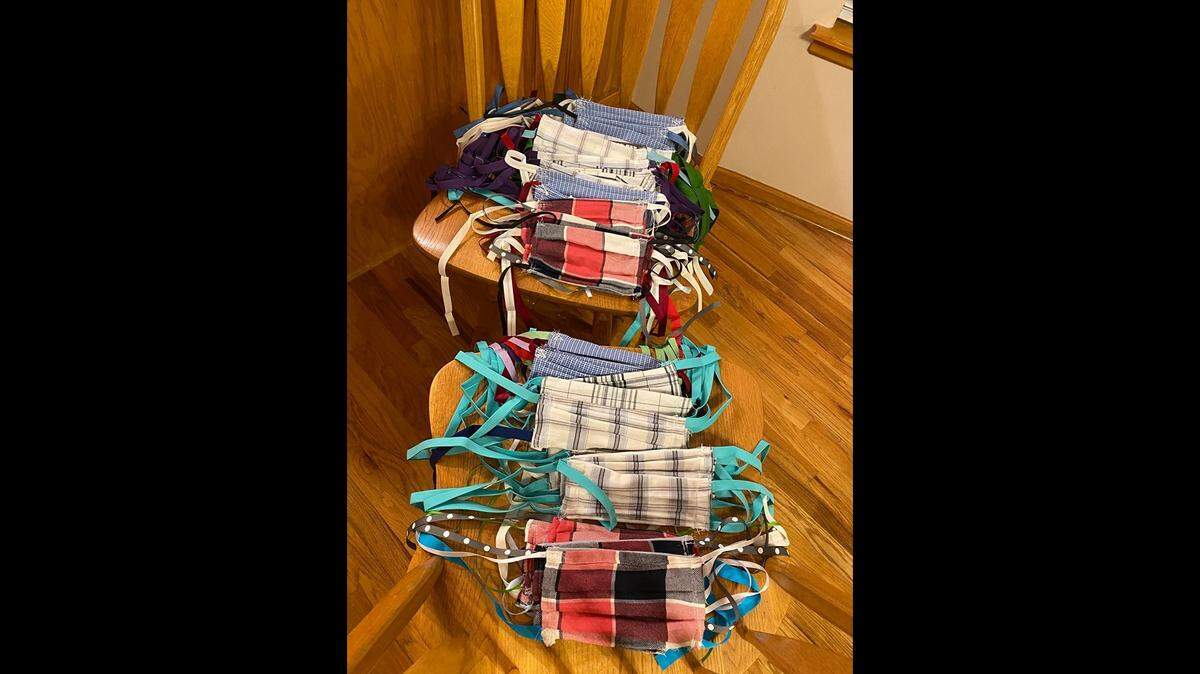
Brandi Thomas-Astry, a registered nurse who lives in Independence, began sewing homemade masks for local health care professionals in March.
But she struggled to find a mask for her 9-year-old son, who this week went back to summer classes in the Fort Osage school district. Not even the masks she sewed herself fit his small face, and they’ve gone through nearly a dozen store-bought ones. Right now he’s wearing a child-size mask she bought from Amazon, but it’s still too big so she’s ordered yet another.
She tells people that finding the right mask is like finding the right bra: It’s all about trial and error. “Just know that it’s going to be an investment,” she said. “You can’t return them.”
Oh, my ears
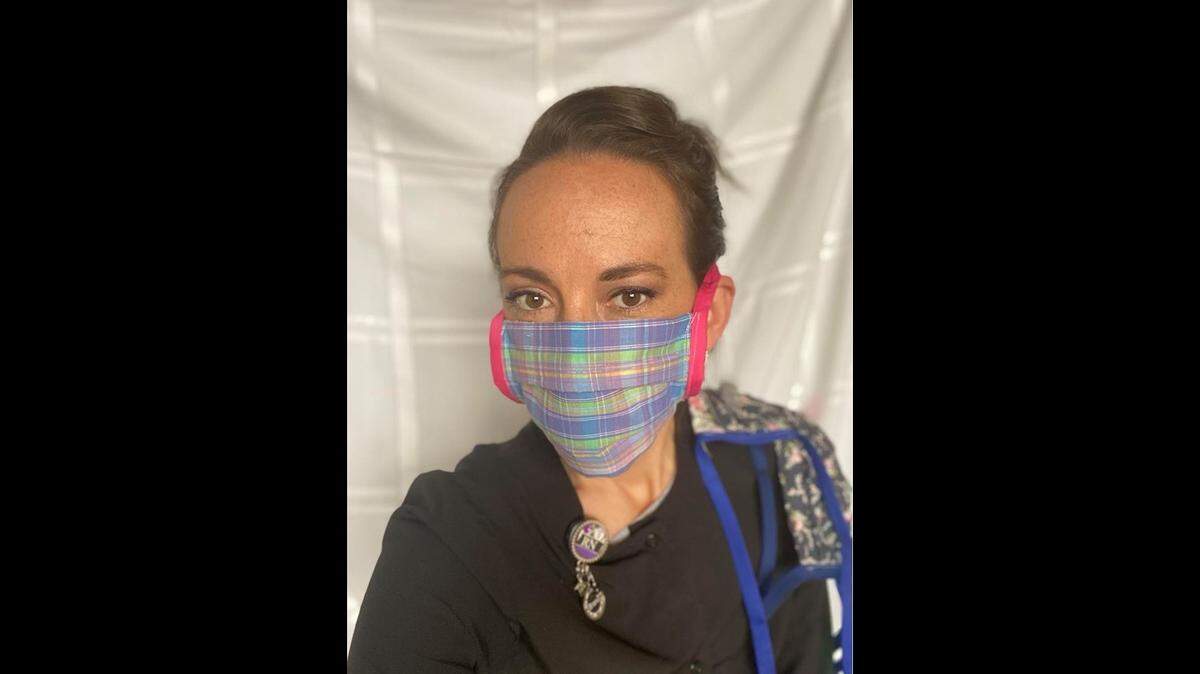
One of the biggest comfort problems with masks: elastic loops that chafe the ears.
Segal’s tip: “If it’s bothering your ears, or if it’s too loose, you can get something called an ear saver, a little strip of plastic or metal, that has little notches in it to put the ear loops in and you wear that little strip around the back of your head.
“You put the ear loops on that instead of your ears, and so you can make it tighter or looser and it takes the pressure off the back of your ears.”
Some nurses have made their own “ear savers” from paper clips.
Others sewed buttons onto their surgical caps, or onto headbands, to loop the straps around.
Some with long hair wear “space buns” — think Princess Leia — and loop the straps around low pigtail buns, a hack shared by the website Nurse.org.
If you’re wearing a mask all day, “ties are going to be far more comfortable than elastic around your ears,” said Lai. “But if you’re just going for a quick run to the grocery store, either one would be fine. The elastic tends to be a little faster to put on, just more convenient.”
Some homemade masks have ear loops made from pieces of elastic that “aren’t designed to actually touch your skin,” said Lai, who has learned a thing or two about comfort. The family physician co-founded a company that makes SleepPhones, headphones built into a soft headband that can be worn in bed.
“Elastic bands that you buy from the fabric store to sew yourself, they’re really designed to be … covered with fabric,” said Lai. “There’s just too much friction and it rubs on your ear, and your ear skin is just so tender that you really need something softer. Either that, or, something that ties above your head and doesn’t slip very easily.”
Segal is also a fan of masks with ties, a style more common in the health profession, “because it’s a little more customized fit. It takes a little practice to get used to tying the mask on behind your head. But you can do it.”
Avoiding ‘maskne’
Thomas-Astry has dealt with a new problem all this mask-wearing has created: acne.
Though in this case it’s called “maskne” or “mascne.” Google Trends reports that searches for the term began shooting up in early May.
“It’s generally going to be in places that the mask rubs,” Thomas-Astry said. “When I had that happen, it was on my chin. We’ve had another co-worker where it was right at the tops of the cheekbones where the mask rubs.”
It happens to athletes who wear helmets or chin straps.
Masks can trap bacteria, dirt and oil and irritate skin, dermatologist Nada Elbuluk with the Keck School of Medicine at the University of Southern California said in a press release.
“It is important to wear breathable fabrics such as cotton and to wash your face before and after wearing the mask with a gentle cleanser followed by a moisturizing cream, which can help calm irritation and restore the skin’s natural barrier,” she said.
She recommends avoiding makeup, toners and harsh facial scrubs if you’re wearing a mask.
You also need to wash your mask frequently, which doesn’t mean hanging it on the mirror of your car in the sun.
“If you just lay it on your couch or put it in your closet and then put it on again in a couple of days, just think about all the microbes that have been growing in the weave of the fabric,” New York City dermatologist Dr. Whitney Bowe told CNN.
Bowe advised washing and drying your mask completely after every use. If you sweat in it, “then you want to change that mask and put on a fresh, clean mask right away,” she told CNN. “You don’t want to sit in a sweaty mask, that will just breed more acne.”
Can you breathe in it?
For a comfortable fit, you need a mask with a flexible piece of wire over the bridge of the nose. Home sewers have used pipe cleaners. Lai used speaker wire.
That bit of wire will hold the mask tighter to your face — so it will do a better job preventing the spread of germs and not fall down your nose. If the mask moves around on your face, Segal said, “it is not only less effective but it may also encourage you to constantly be touching the mask, which is really what you want to try to avoid doing because if there is contamination it’s going to be on your mask.”
With the mask covering everything it’s supposed to — from the bridge of your nose to your chin — you should be able to breathe comfortably, Segal said.
“If it really makes you work hard to breathe through it … you’ll breathe around it or you’ll take it off,” he said.
You should be able to wear it “for 20 or 30 minutes without feeling the need to rip it off,” Segal said. “And that’s how long it’s going to take to run into a store for an errand, or to get your hair cut, or whatever.”
Segal and a team of doctors and scientists in March studied about 400 masks made by community volunteers to learn what protection they offered from particles the size of many viruses and bacteria. The fabric was key. Nylon for windbreakers, for example, is a bad idea.
“There’s a reason they’re waterproof — no air or anything gets through them. So you’re essentially just wearing a shield in front of your mouth and nose, which may be better than nothing, but not nearly as effective as a mask that you’re breathing through.”
The most protective masks Segal and his colleagues tested were made from two layers of high-quality “quilter’s cotton” with a thread count of 180 or higher, and fabrics with tight weaves and thicker thread such as batiks.
“Two layers of quilting cotton was the best. The lower-end printed cotton fabrics, the kind of stuff you might find at a big-box discount fabric store, were less effective. However, a layer of that plus a layer of something like cotton flannel on the inside was quite effective,” he said.
“Flannel is pretty warm and stuffy in July, so that may not be as comfortable to wear for a long time.”
Lai is a fan of flannel when it comes to comfort. Any mask made of cotton is going to be less irritating and feel softer against the skin, she said. And silk? “That’s super comfortable, especially around the mouth,” she said.
Basically, she said, just choose something that is comfortable against your skin. “It’s whatever is comfortable, that’s most important.”

Foggy glasses
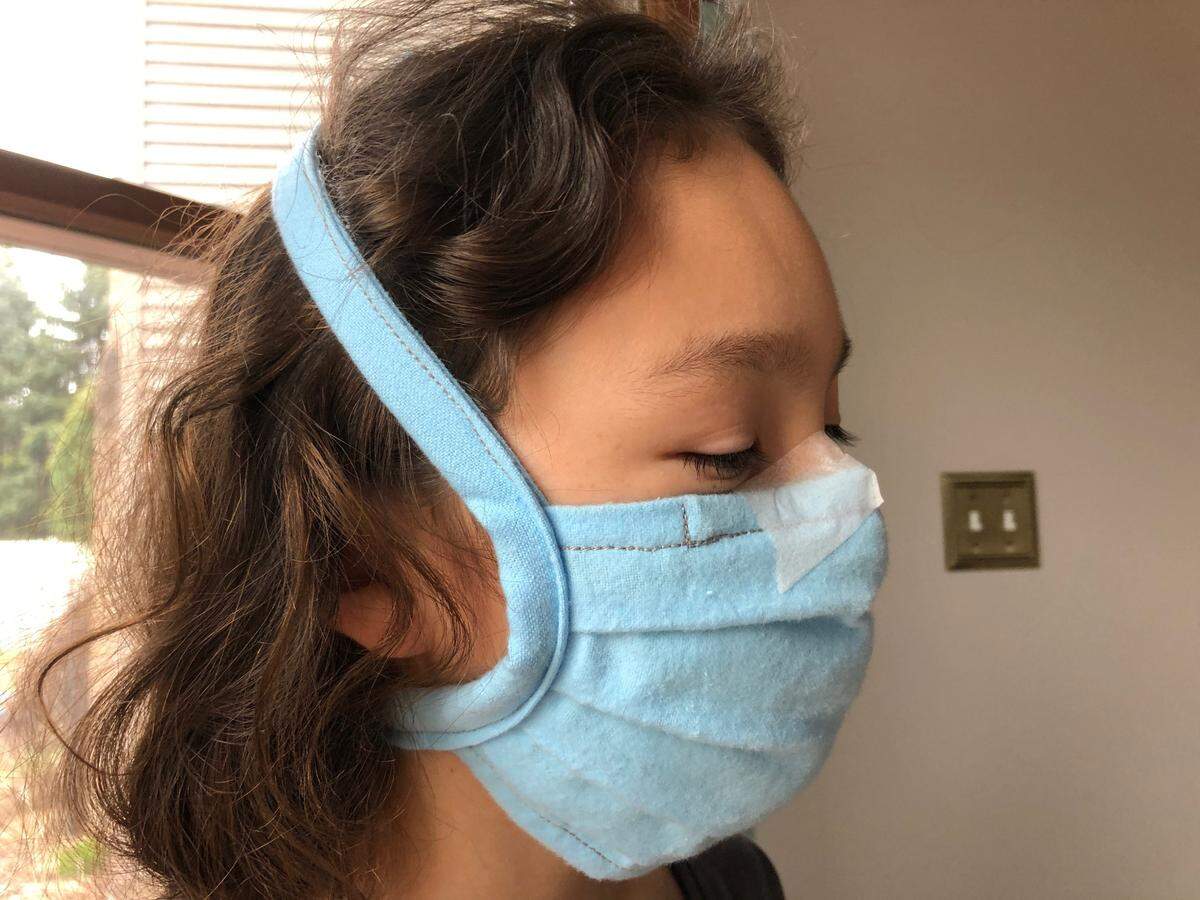
Lai wears glasses, and the best way she’s found to combat fog is to secure the mask to her face with surgical tape. That way, moisture doesn’t creep out of the mask and onto her glasses.
“It looks dorky. But I swear it really really works,” she said. “If you have a white mask, people may not even notice that you have surgical tape on.”
She swims, and even anti-fogging products for swim goggles don’t work long-term, she said.
She uses paper tape, which she says is gentler on her skin “and it peels off a little easier. Really, any tape will do. One time in a pinch I used a little bit of just regular Scotch tape and it was fine, too.”
You should wear glasses over the top of the mask, Lai said. “But even then, even if you have the nose wire, sometimes just breathing out some of the moisture from your exhalation still kind of tends to go upward.”
This story was originally published July 9, 2020 at 5:00 AM.
.jpg)