
COVID-19 mask orders in Kansas City area have exemptions that some don’t want or need
Are you under the age of 5? Or currently unconscious?
Or have a medical condition that makes breathing difficult?
Then you are exempt from new mask-wearing mandates sweeping the Kansas City region.
If not, mask up.
“We don’t want people … looking for loopholes,” said Dr. Allen Greiner, chief medical officer for the Unified Government of Wyandotte County and Kansas City, Kansas. “We want people all contributing to the common good here.”
The new orders that took effect last week in Kansas (including Johnson and Wyandotte counties), in Jackson County and in both Kansas City and North Kansas City require masks in indoor public places but offer exemptions, mostly for medical reasons — breathing trouble or hearing issues, for example.
Some people, though, say they don’t want or need an exemption because they want to be safe from COVID-19. And one advocate in the deaf community even said the exemption makes them feel their lives aren’t valued.
People with severe pulmonary or respiratory problems, and heart patients who are short of breath might find it difficult to wear a mask, Greiner said. “But those are relatively rare circumstances,” said Greiner, a family physician and professor at the University of Kansas Medical Center.
“The average person with emphysema or the average person with asthma, or the average person exercising vigorously, whether indoors or outdoors — because we got a lot of questions about that — should medically be able to wear a mask.
“There is no medical, scientific evidence that they’re somehow going to suffer or experience worse … shortness of breath than the next person.”
The American Lung Association’s chief medical officer recommends that people with chronic lung diseases — who are at high risk for the worst of COVID-19 — should stay home and distance themselves from others. If they can’t, they should wear cloth masks.
“Cloth masks are designed to be breathed through and there is no evidence that low oxygen levels occur,” Dr. Albert Rizzo said in a statement. “The American Lung Association is not aware of any scientific evidence that mask wearing or physical distancing weakens the immune system.”
And no, a little bit of discomfort is not a legitimate excuse.
“We feel like people can find a mask that they are comfortable with and that they can wear for long periods of time despite their condition and despite what they’re doing,” said Greiner.
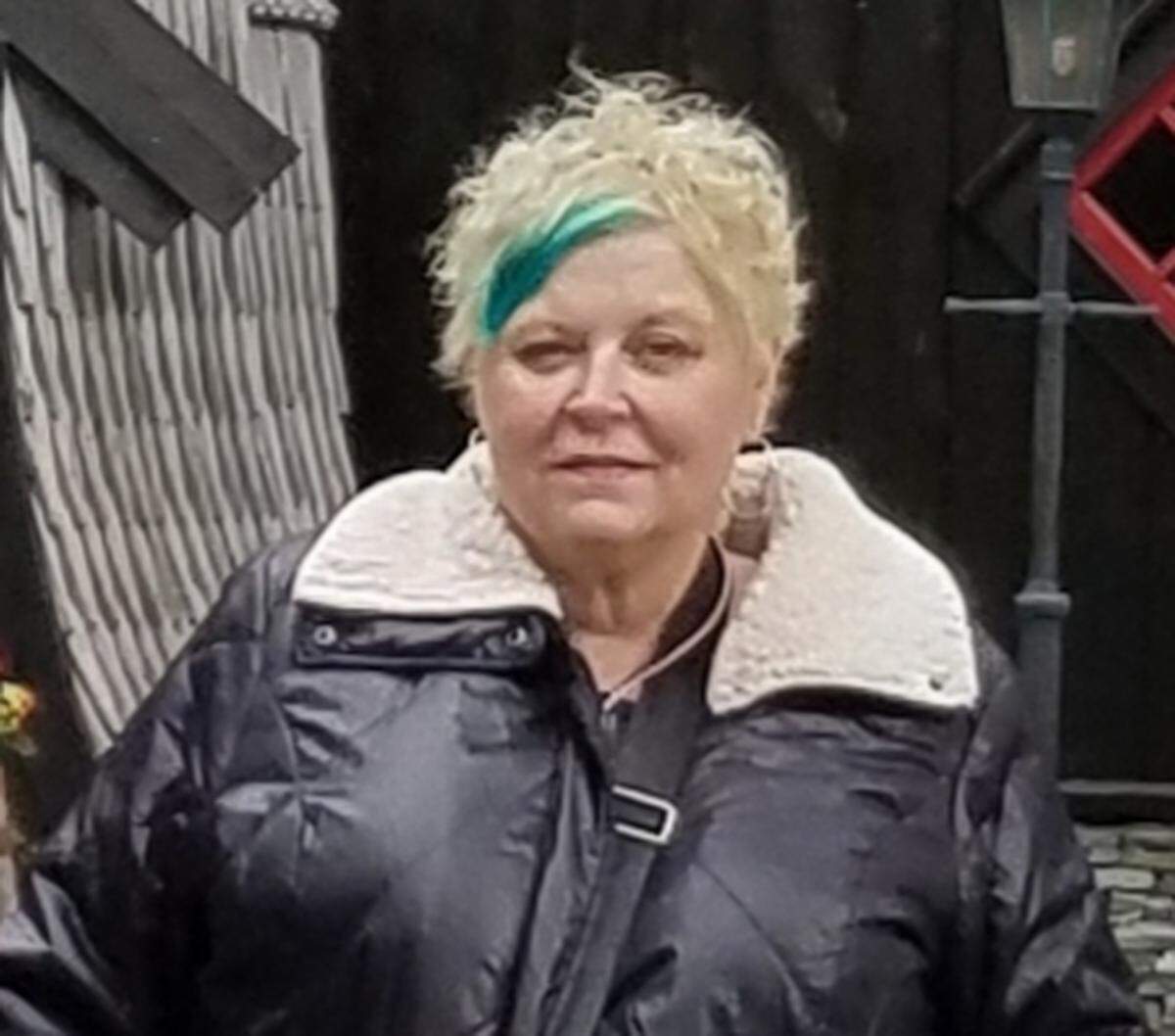
Renee Dietchman has been staying home a lot during the pandemic. She was diagnosed with lung cancer in August 2017 when she was told to “put my papers in order.”
But when she goes out, she wears a mask. “I wouldn’t be risking my health by going out in public if I couldn’t wear a mask,” said the 54-year-old retired psychologist who lives in Merriam. “I think it just makes common sense.”
During her rare outings, she has seen people out and about without masks and “it makes me kind of sad,” she said, recalling a woman at a local grocery store, probably in her 80s, shopping without a mask.
“It’s really simple,” said Dietchman. “Do unto others as you would have them do unto you. Just be considerate. Be kind … that’s really what it boils down to.”
Deaf people ‘should not be exempted’
Except for Kansas City’s order, all the other mask mandates specifically exempt deaf and hard of hearing residents. But some advocates in the deaf community don’t want the pass.
“Deaf and hard of hearing people should not be exempted unless they have breathing issues or other disabilities as the reason,” said Robert Cooper, executive director of the Kansas Commission for the Deaf and Hard of Hearing in Topeka.
He said some people might think masks would be a barrier to communication for deaf and hard of hearing people, “especially those who depend on full face expression and/or lip-reading.”
But the mask on their face isn’t the problem, he said. It’s the mask worn by the other person that gets in the way. He said he had a last-minute hand in crafting the Kansas exemption for people who are “communicating with a person who is deaf or hard of hearing.”
Instead of an exemption, Cooper said, many deaf and hard of hearing people would rather have clear masks or face shields to communicate easier and to “help others to recognize that they might communicate differently.”
Greiner, who noted that other states have also exempted deaf residents from mask requirements, said “we’d be happy to alter” the local order if there are objections.
And, “if we can get our hands on a whole bunch of clear masks at the local health departments, then we could distribute them and we could get rid of that exemption and that would be terrific,” Greiner said. “And, of course, you’d want to give a lot to the sign language interpreters that work in health care.”
(While most of the Kansas City area now mandates masks, Platte County and, with a few exceptions, Clay County just recommend wearing them.)
Masks ‘killing people’? Nope
Exemptions included in local orders largely mirror Centers for Disease Control and Prevention recommendations.
“We looked at CDC information, we looked at other states that already have mask mandates, or mask ordinances in place,” said Greiner, whose Unified Government order took effect last Tuesday. “And some of those have had them for over a month now. And we really utilized those, as well as our general understanding of the science around this, and also medicine.”
The CDC recognizes that “wearing cloth face coverings may not be possible in every situation or for some people” because they might exacerbate a health condition.
People who might, in the CDC’s estimation, be mask-challenged include those with intellectual and developmental disabilities, or other sensory sensitivities. The CDC also doesn’t want people wearing masks while swimming because it’s difficult to breathe through wet cloth.
When people can’t wear a mask, they need to follow other COVID-19 safety rules, including social distancing and frequent hand washing, federal health officials urge.
Age is a consideration as well. Children younger than 5 are exempted from most mandates; all warn that children under 2 should not wear masks because they could suffocate.
The Kansas order also excuses people who would face a safety risk if they wore a mask at work. And though it also exempted the Kansas Legislature and court proceedings, the Kansas Supreme Court ordered district and appellate courts to comply with Gov. Laura Kelly’s mask mandate.
Mask orders have been a hard sell across the country.
One woman in Palm Beach, Florida, earned viral infamy when she warned county commissioners that “you literally cannot mandate somebody to wear a mask knowing that mask is killing people. It literally is killing people.
And what about that popular internet theory that masks trap all that carbon dioxide that you exhale — and will knock you out or kill you?
“We have no data to suggest these are detrimental to gas exchange in any way, including increasing CO2,” said Dr. Brandon Bowers, a pulmonologist at AdventHealth Shawnee Mission and a board member for the American Lung Association in Kansas & Greater Kansas City. “However, mechanically, these can be quite uncomfortable for our lung patients, as many of them would tell you.
“Personally, now that we are wearing masks all the time in the hospital, walking up several flights of stairs regularly, I can tell a difference in my ease of breathing wearing a mask. I can only imagine it is even more uncomfortable in someone with underlying lung disease.
“That said, I think there would be only very few exclusions to wearing masks in my mind, and these would be people with near end stage COPD, the worst of the worst. And that would be based on comfort, not functional impairment caused by the mask.”
‘Ridiculous’ notions
Dr. Michael Moncure, a surgeon at Truman Medical Centers, doesn’t believe “there are a lot of legitimate reasons” for most people to not wear a mask.
Arguing from a civil liberties stance — government can’t tell me what to do — is subjective, he said. “But I think physicians and health care workers think objectively, and there really aren’t very many objective reasons not to wear them,” he said.
“I’ve seen a lot of stuff on social media, and there’s lots of banter going about and there are these ridiculous thoughts about you could suffocate. I mean, if you’re conscious and you’re awake, you’ll know that and there will be a reflex to take that mask off.
“And there’s this ridiculous notion about (causing) pneumonia. If that was true … working in a hospital we wear a mask the entire time we’re there. I would be dead, and all of my colleagues would be dead, too.”
Another internet myth is this: Diabetics who wear a mask risk spiking their blood sugar.
“I think that’s ridiculous,” said Moncure, a professor at the University of Missouri-Kansas City School of Medicine. “If you think about it, somebody who is diabetic is probably in that high-risk group for transmission and having severe disease. So that’s probably a population that really needs to wear a mask.
“If you thought about a way to basically just wipe out a large segment of our society, spreading rumors about ridiculous stuff like that puts a significant number of people at risk, especially the people who are probably at the highest risk.
“I think the more non-compliance we have with regard to masks, the longer this pandemic is going to linger, and the more chance for further spikes, and it’s just putting us in danger.”
This story was originally published July 6, 2020 at 5:00 AM.
.jpg)