‘Eye-opening revelation’: How COVID-19 spread to 200 workers at Kansas City business
A Kansas City paper goods manufacturer found out last month that one of its workers had contracted coronavirus. But despite the prevention measures an owner claims the company took, that ballooned into an outbreak infecting more than 200 people within weeks.
Now Aspen Paper Products Inc. must test workers weekly and institute a host of safety measures mandated by health officials or face temporary closure.
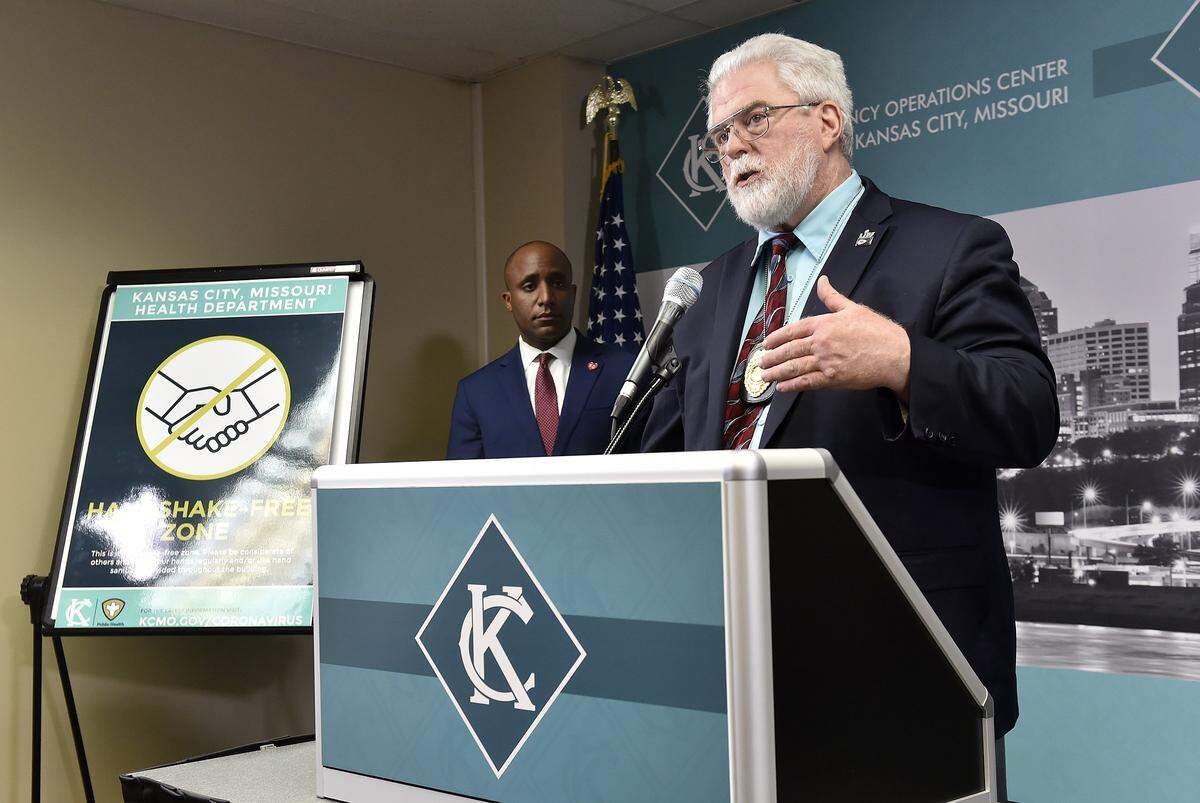
“I would say they were less than cooperative in the beginning, but I think we have their attention and they are cooperating now,” Rex Archer, director of Kansas City’s Health Department, said Wednesday.
He said officials had received several complaints last week that signaled how severe the outbreak was. The company said it decided on its own to test employees Friday and Saturday as its case volume climbed.
Before then, president and co-owner Bill Briggins said, the company was aware of about two dozen cases. By the end of the weekend, that number was more than 200 people — the vast majority of whom had no symptoms.
“The surprise for us was that of the approximately 200 people that came back positive … they were all asymptomatic,” Briggins said. “That was an eye-opening revelation that you could have that many asymptomatic people.”
Archer said those numbers will likely continue to rise because the company is expected to test employees weekly for four weeks as it works with the Health Department under a mitigation order.
Complaints against the company
Aspen, 4231 Clary Blvd., on the city’s East Side, is a family-owned manufacturer of paper plates, cups, bowls and lunch bags. It had its first COVID-19 case in early May, Briggins said.
Archer said the outbreak got on the radar of Health Department officials last week.
“I think it was back on the 26th that we got another complaint that there were confirmed cases, and when we contacted the plant, the story that we got did not appear to be consistent with the story we got later on how many cases they had,” Archer said. “So it seemed like they were not sharing how many positive cases they had.”
Since Mayor Quinton Lucas first issued a stay-at-home order to limit the spread of COVID-19, the city has been encouraging residents to complain to 311 if they see a business in violation.
The city’s first complaint about Aspen came in early April and said the company was “not taking enough precautionary measures to keep people safe.” It said the company was not spacing workers six feet apart and had been performing temperature screenings before shifts but had stopped.
Briggins said the temperature screenings had always been in place.
Then last week, three complaints came in over the course of two days saying that the company had multiple known cases. One said employees were scared to report to work.
Archer said as the situation escalated, the Health Department started advising Aspen to test employees.
It’s not clear, Archer said, whether the company was providing employees with masks.
“I doubt that they were cleaning as seriously,” Archer said. “I doubt that they were managing their density of employees in break areas and so forth. They, I don’t believe from the reports that I’ve heard … I doubt they’ve maximized their physical barriers — plastic shields and other things that could keep employees from breathing on other employees.”
Briggins, however, said the company has been “very transparent” and instituted safety measures to protect its employees early on. He said the company’s relationship with the Health Department has been cooperative, not adversarial.
“The best control of our employees’ social distancing and cleanliness practices actually occurs when they’re at work,” Briggins said. “We don’t have any control of what they do once they leave here, though.”
He added: “No one’s more motivated than we are to get our workforce safe and healthy because we’re operating at a skeleton staff here.”
Safety measures
Briggins said that, unlike at food processing plants that have discovered severe outbreaks, employees at Aspen are not placed shoulder-to-shoulder. He said social distancing is easy for the company to accomplish without significant adjustments.
Aspen’s work stations were already spaced far enough apart and the company had hand-washing and sanitizing stations prior to the pandemic, Briggins said. The company did have to spread out break areas and ensure employees weren’t going to the bathroom in groups.
Briggins said the company was providing employees with masks and had already been providing them with gloves. He said the company hadn’t needed to add plastic shields or barriers because workers at the plant don’t have a lot of face-to-face or hand-to-hand interactions.
Asked about the complaints, Briggins said he wasn’t aware of them, but he noted that those people have been tested by now.
“At my level, I might not have received reports of those two complaints,” Briggins said. “I don’t know if they made those complaints internally to our personnel department. I hope that they would before they go outside because we’ve got the ability to address inside complaints like that.”
Archer said the outbreak demonstrated the limited infrastructure public health officials have to prevent transmission of disease. Between Lucas’ first stay-at-home order and last week, 311 received more than 1,000 complaints of businesses allegedly failing to follow proper procedures. The sheer volume of complaints, Archer said, means staffers have to “triage” them.
“The hospitals haven’t had to triage on whether they have beds to treat patients,” Archer said. “They’ve got capacity. Public health, though, has had to triage on how we handle this outbreak because we haven’t had — either the testing capability, we’re not getting the data back in time, we don’t have the staff to do the on-site inspections and those things.”
This story was originally published June 3, 2020 at 5:28 PM.