Do you wear a mask? Kansas City, and the nation, divide over this COVID-19 question
Since the first confirmed case of COVID-19 hit the United States more than three months ago, the virus has killed some 75,000 Americans.
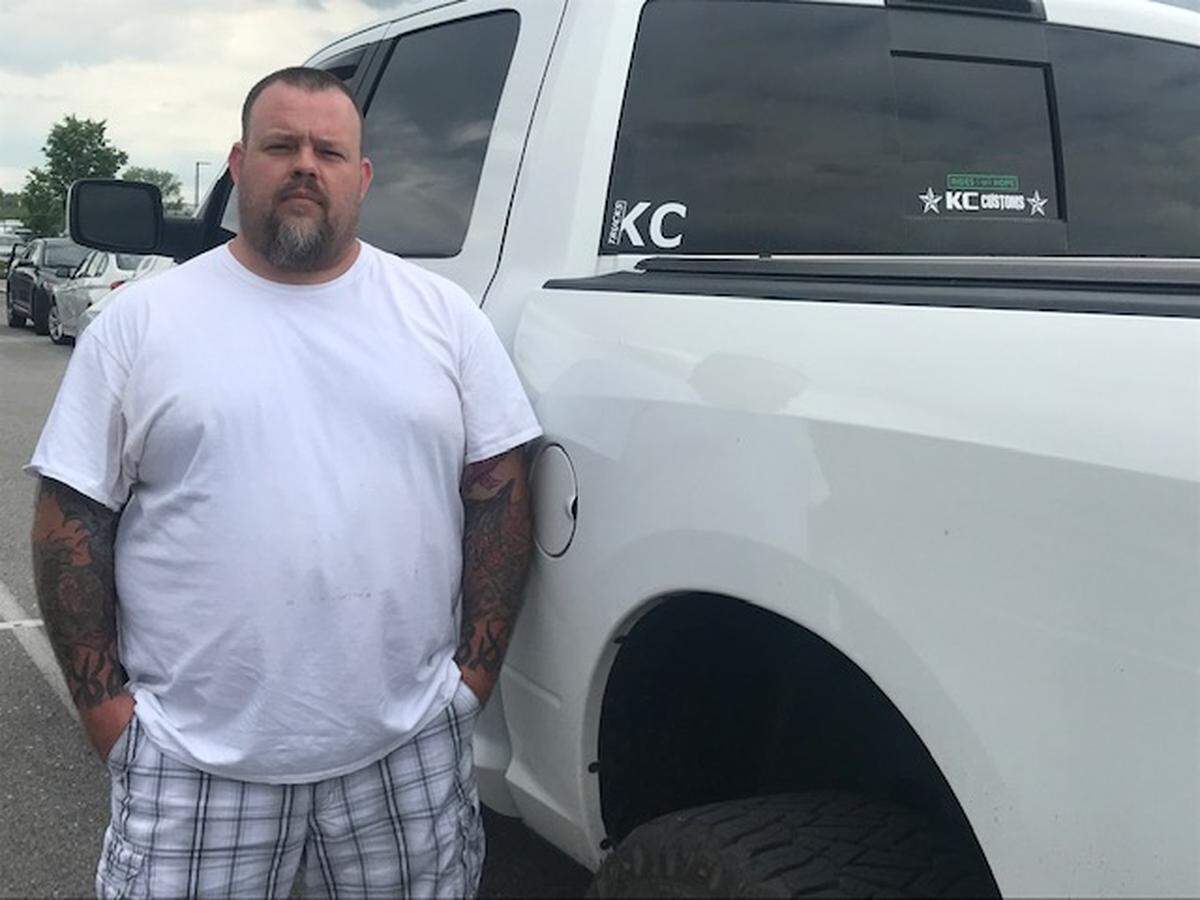
Yet, this past week, Ken Hall, 38, walked toward his pickup truck in the parking lot of a shopping center along Highway 152 in Clay County. He wore no mask or concerns. Why?
“Because,” the tattooed business owner said of the coronavirus, “I don’t give a (expletive). It is what it is. You’re either going to get it, or you’re not. You’re either going to be afraid of it, or you’re not. I’m not afraid of it. We all live. We all die. When that happens is not your choice.”
Hall runs Gene’s Cleaners in Liberty, started by his grandmother 52 years ago. With the business deemed essential, he’s put hand sanitizer out for customers. “Half of them don’t touch it,” he insisted. Much of the commotion, he thinks, comes from media hype.
“Do I feel judged for it? Sometimes, yes,” he said, knowing people look at him sideways for not wearing a mask. “Do I care? Not at all.”
Miles south, outside the Trader Joe’s at Kansas City’s Ward Parkway Center, Judy Morefield, 58, of Leawood, absolutely judges the no-mask crowd. She wore a mask and clasped her red shopping cart with blue gloves. She just recently moved in to help care for her 94-year-old father.
“You just put people at risk,” she said of those baring their faces in public. “Honestly, I think it’s selfish. Because it’s for other people.”
Beginning this week, even more businesses around the Kansas City area are setting to reopen, part of the dual goals of restarting a devastated economy — some 33 million people nationwide have filed for unemployment since the coronavirus outbreak — while also protecting public health.
Whether, or how fast, COVID-19 cases resurge will have much to do with how dutiful the public is about social distancing and other precautions. That includes wearing or not wearing face masks, acts that in recent weeks have become ever more politicized.
After initial statements that masks were not necessary, or protective against the virus, the federal Centers for Disease Control and Prevention changed course in April, recommending that all people wear masks in public to help prevent the spread of the coronavirus. President Donald Trump, however, has yet to do so.
According to one administration and two campaign officials who spoke anonymously to The Associated Press, the president has not dissuaded staff from wearing masks, but has said that his wearing one would “send the wrong message,” making it seem he is preoccupied with health rather than reopening the nation’s economy, important to his reelection chances in November.
The president did not wear one Tuesday on a visit to a Honeywell N95 mask-making factory in Arizona. He later told reporters that he wore one “backstage,” before stepping in front of cameras and mask-wearing reporters, but was told it was safe not to wear one. Other officials accompanying Trump on the tour also did not wear masks.
A gathering of Trump supporters who greeted the president’s plane in Phoenix did not wear masks, suggesting that it has become a visual symbol for the president’s support, albeit hardly as powerful as his iconic red “Make America Great Again” baseball caps.
Vice President Mike Pence also did not wear a mask when he visited the Mayo Clinic in Minnesota on April 29. Pence later acknowledged he should have done so. He subsequently wore one on a trip to a ventilator plant.
As Missouri businesses started reopening this past week, Gov. Mike Parson didn’t wear a mask during a series of visits around the state, including a stop at a Jefferson City Hy-Vee to praise the grocery chain’s social distancing and sanitation efforts. Hy-Vee workers wore masks.
Dividing lines
It’s clear the issue splits across party lines, at least to some degree, with 76% of Democrats compared to 59% of Republicans saying they are more likely than not to wear a mask when leaving home, according to recent poll by The Associated Press-NORC Center for Public Affairs.
But people, with and without masks, insist their decision has far less to do with their personal politics than it does with their sense of the COVID-19 threat and their own safety.
New York state has logged some 26,000 deaths. The Kansas City area, meantime, had 142 at of the end of the week, with 152 in Kansas and 449 in Missouri.
“I don’t feel very unsafe, I’ll tell you that,” said Eryn Fenton, 36, of Kansas City, wearing no mask, walking from the Liberty fitness center where she works and which was preparing to reopen. At work, she said, she’ll wear a mask, take all needed precautions.
But, for the last two months, she has largely been at home with her two kids, a son age 7 and daughter age 3, only leaving once a week for groceries. She understands why people wear masks, but for her it seemed less necessary.
“I feel like people are trying to protect other people, but I also think that it’s sometimes blown out of proportion,” she said, noting people sniping at others on social media for not wearing masks.
“I think everyone thinks they’re a politician, a medical adviser and a doctor all of a sudden. So I just try to stay out of that. I’m not worried about myself. I worry about people who are not as healthy. But that’s the way it is with any virus that comes around.”
The AP poll shows other demographic differences. People with college degrees are more likely, at 78%, to wear masks than those without degrees, 63%. African Americans are more likely than white people to wear masks, 83% to 64%. Hispanic people are at 67%.
Expecting a surge
Jason Olsen, 40, and his wife, Morgan 24, were leaving Petsmart in Liberty, getting their dog groomed. Neither wore masks, although Morgan does at her job at an assisted living facility. Jason, who works at Exide Manufacturing, a lead battery company, wears a respirator “14 hours a day already.”
He knows he probably ought to wear a mask. “I don’t usually,” he said. “She usually gets on my ass about it. … I’m not too worried about it.”
But he is convinced — as was nearly every person interviewed — that as businesses in the Kansas City area reopen, cases of COVID-19 are going to surge. “I think it’s going to go up,” Jason Olsen said, “for the simple fact that reopening will have people’s minds thinking, ‘OK, we’re better now. Everything’s better.’”
The Kansas City area had been under stay-at-home orders since mid-March, allowing only essential businesses to remain open, and restaurants to offer curbside, takeout or delivery service.
Last Monday, Clay and Platte counties allowed businesses to reopen. On Wednesday, Kansas City allowed a few to reopen as well, under strict capacity limits, with more set to open May 15. Jackson, Johnson and, to a lesser extent, Wyandotte counties begin to reopen this Monday.
Jason Olsen feels torn. For public health, he thinks it’s too early to reopen.
“But people are losing their livelihood,” he said. His own business, although essential, is not what it was. “I’m going to be out of a job if it (the economy) doesn’t open up. I mean, I need to pay my mortgage. We’re still paycheck to paycheck.”
Latesia Forrester of Liberty, who’s worked for nine years as a medical coder for St. Luke’s Health System, also is convinced COVID-19 cases are going to spike. That’s why seeing the lack of masks frustrates her.
“I just went to Hobby Lobby and most of the older people didn’t have masks on,” she said, with her own mask on, climbing into her car in Liberty. “I think it’s terrible. I mean, I’m protecting you from me. But you’re not protecting me from you.”
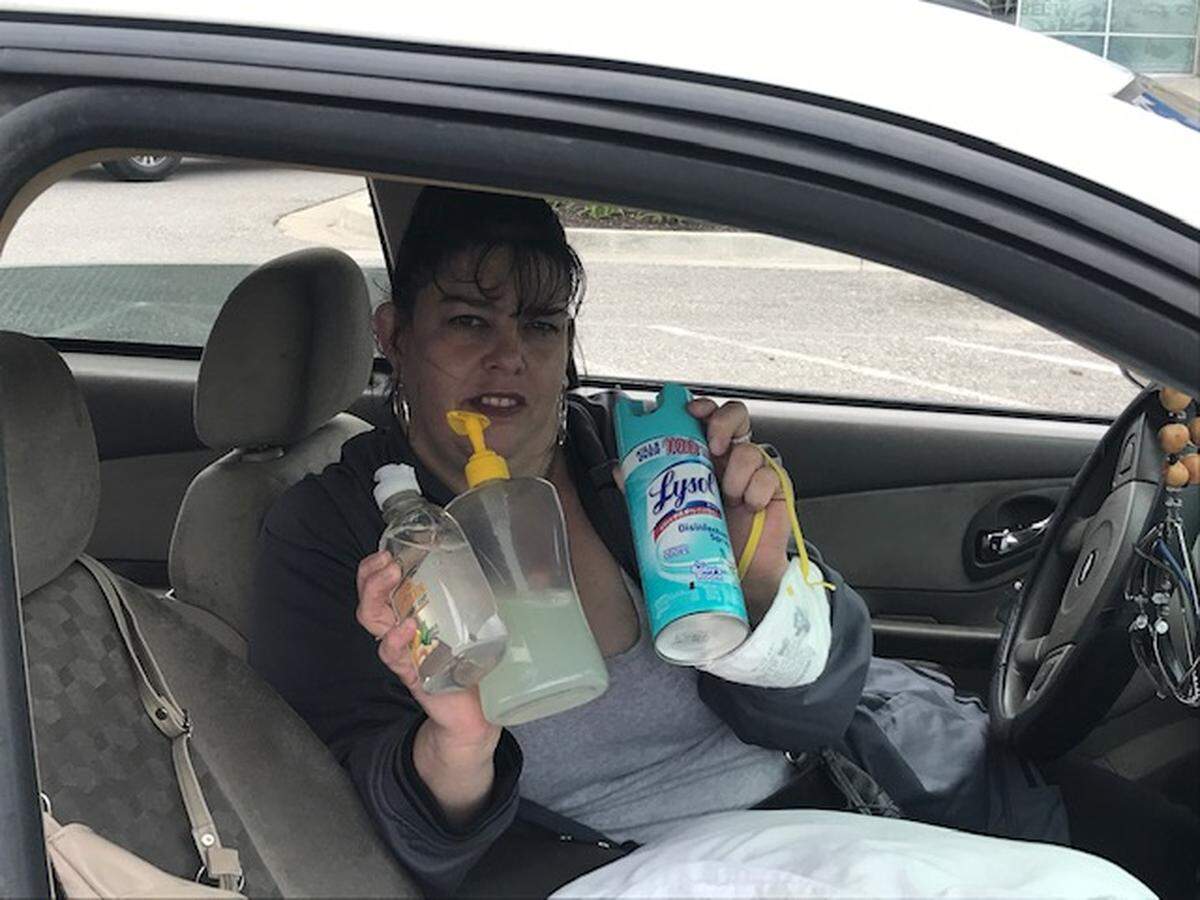
Feet away, Sara Doughty, 41, had just driven in from Utah, moving back to the Kansas City area. Her daughter, Liz Sanchez, 16, sat in the backseat. Doughty held up her stockpile: mask; Lysol spray, two bottles of hand sanitizer.
“I have my gloves,” Doughty said. For her, wearing a mask is priority. She suffers high blood pressure, her husband has diabetes, her daughter has asthma. “Me, today, when I forgot it, I felt exposed. I didn’t feel comfortable. I mean, who has it (the virus) and who don’t? It’s a question mark in your mind all the time. Especially when you go to Walmart or Target, to any of these outlets, they get crowded. You wonder: Who’s sick and who’s not? People who are not covering up — are they trying to make other people sick? It’s not fair to other people.
“I think there’s going to be a second episode. There are people who aren’t having any symptoms, but yet are positive. Without them being tested, or able to be tested, it’s just going to spread like wildfire.”
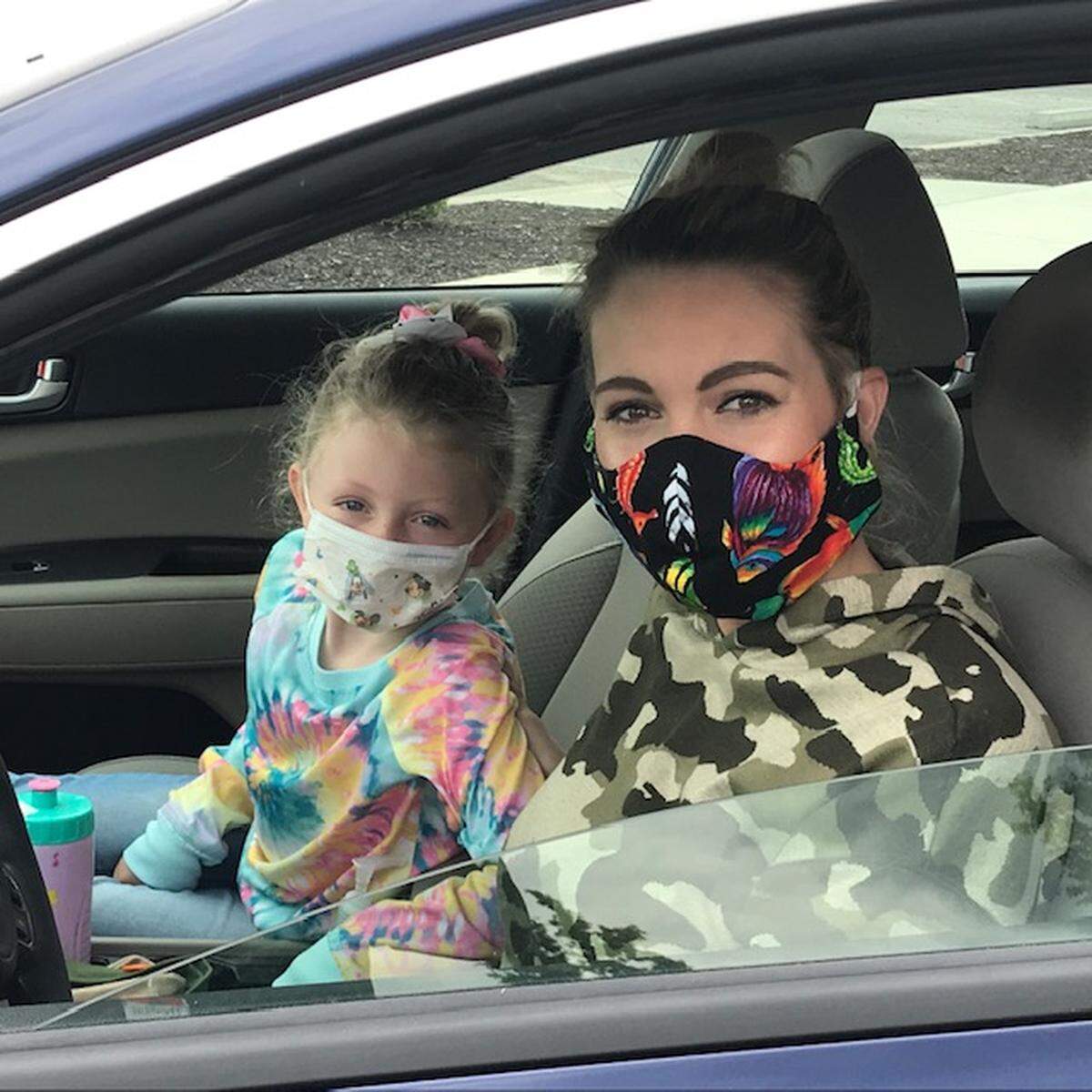
Taryn Coffman, 26, a certified nursing assistant from Blue Springs, with her daughter, Saylor, 6, sat in their car, masks on. Coffman reached down, pulled out a handful of more masks.
“I feel like a lot of people feel like they’re either invincible or just like this virus isn’t real or it’s passed,” she said. “But our hospital has been preparing for the surge that didn’t happen, because it’s going to happen now. It wasn’t happening because everyone was at home. But now that they’re not …”
Coffman recognized that businesses everywhere seem to be wanting to adapt, putting up barriers, insisting on masks or social distancing, regularly cleaning and disinfecting surfaces. But there are no set standards. Efforts vary. Whereas some stores already require all employees and customers to wear masks, it’s not a uniform rule.
“I don’t wear a mask where I work, but we do have the shields,” said Lori Harris, 57, an essential retail worker living in Overland Park. “We have a lot of customers complain we’re not wearing them.” Her workplace has made it optional.
“Well, I’d wear it if it wasn’t uncomfortable,” she said. Sometimes she finds herself doubting the severity of the whole thing. “It is kind of scary, because you don’t know.”
Yet, she also thinks businesses should not be reopening. “I think it’s too soon,” she said. “I see a lot of people out. They should be staying home, and they’re not. I’ve been seeing that ever since they started this stay-at-home thing, seeing everybody out, just shopping.”
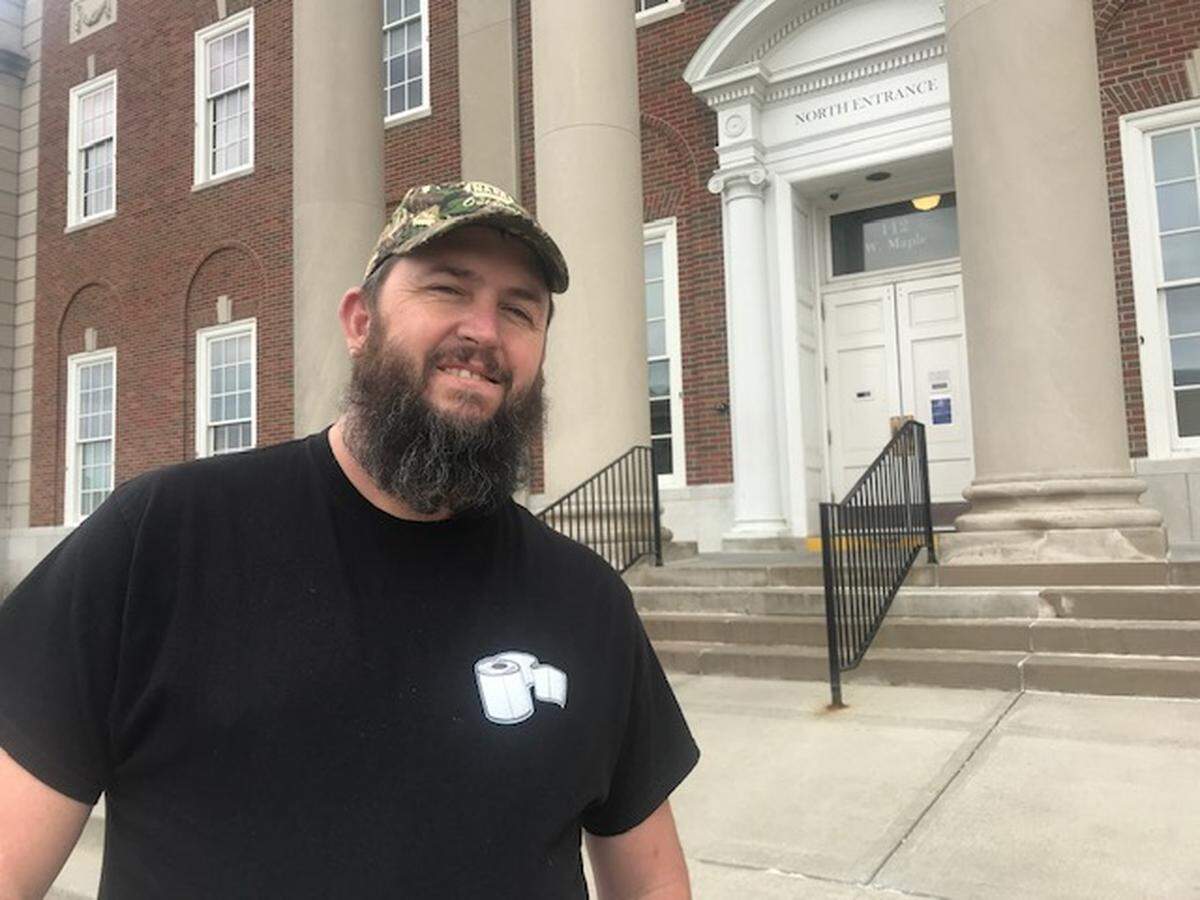
‘Way overblown’
In Independence, outside the closed Jackson County Courthouse, over-the-road truck driver Jeremy Chancellor, 43, walked the square. He delivers to every state in the lower 48, hauling groceries. Most recently, toilet paper.
Having a mask is not his priority.
“I don’t ever wear one,” he said. “I’m a truck driver. I’ve been in some of the dirtiest joints in town. Where we go, you’re either going to get it (the virus) or you’re not. That mask’s not going to help.”
As for protecting others: “I’m usually by myself all day,” he said. He echoed the sentiment that the shutdown and reaction to the pandemic had been exaggerated.
“Way overblown,” he said. “I mean you take guys like me, who are out on the road, we can’t even find a place to eat. It’s bad enough I’m in a truck 14 hours a day. Now, I can’t even go sit down in a restaurant?”
He looked back at the locked courthouse.
“I can’t do something as simple as pay property taxes,” Chancellor said. “I thought everything was going to start opening up the first of May. I got a daughter driving around on expired tags because nothing’s open.”
His wife, he said, also doesn’t wear a mask. His two kids didn’t have them on. As for judgment: “I don’t care.”
Yes, he figured COVID-19 cases are likely to surge. “Of course. You’re getting the public back out together. There’s going to be an upflow of cases, but we shouldn’t be quarantined in our houses anyway,” he said.
His reasoning: “It’s against the Constitution,” Chancellor said. “I mean we have the right to assembly. It’s in the Bill of Rights. Unless you’re going to invoke martial law, how can you make us all stay home?”
He knows people who have lost their jobs or been furloughed, now on enhanced unemployment. “They’re making more than I am,” he said. He’s ready for the country to open up.
The experience of New York, New Orleans, elsewhere doesn’t matter, he said. “This is the Midwest. We don’t have the problems they have. We don’t have the crime and all the other stuff they have, either. We don’t have the disease.”
Kansas City, with 151 homicides in 2019, actually logged more than New Orleans, but about half those in New York City.
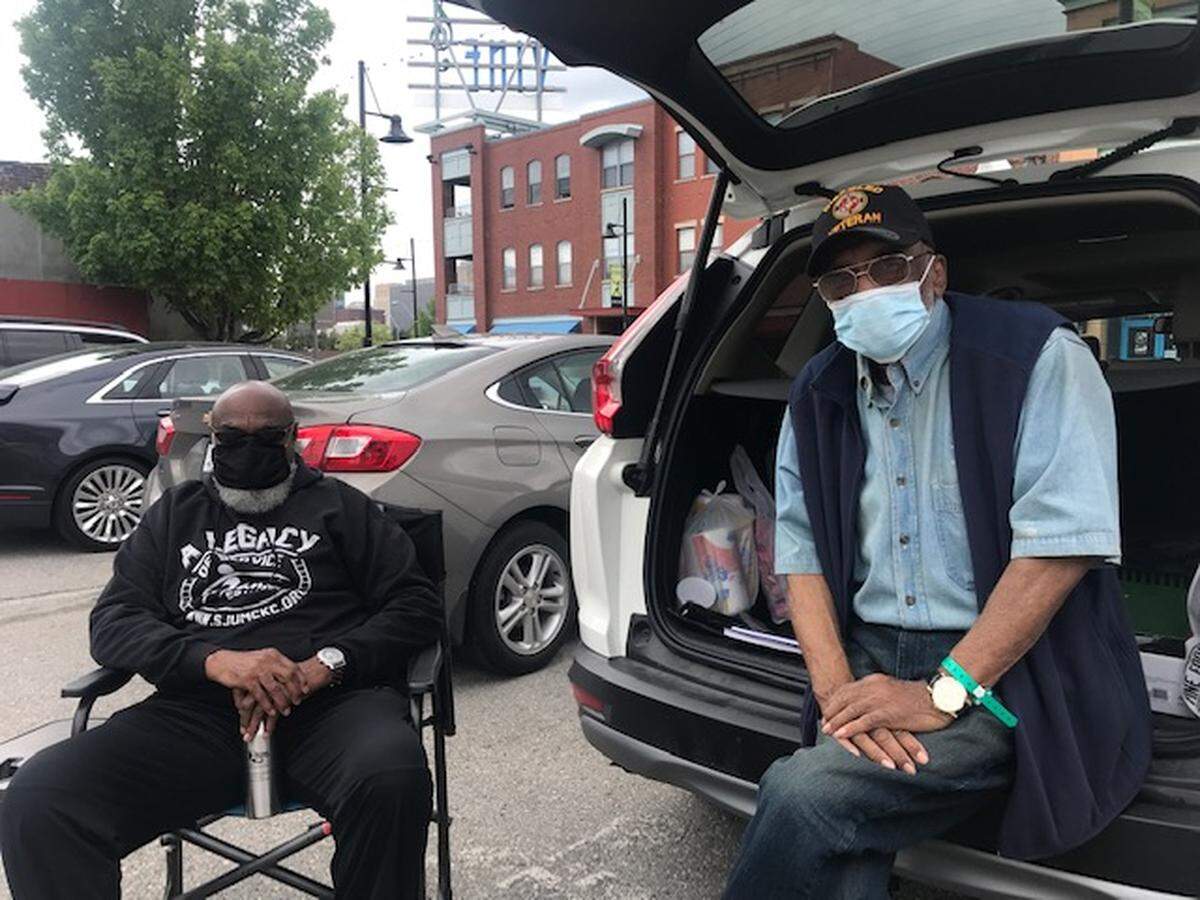
On many an afternoon, Craig T. Watson, 69, and Archie Welch, 79, of Kansas City can be found at 18th and Vine streets, socializing and social distancing with their friends in the parking lot. They used to sit in the corner restaurant, but it’s been shut down for table service since mid-March. Both wore masks.
Welch, a former U.S. Marine who recently moved back to Kansas City from Arizona, said he doesn’t judge anyone who chooses not to wear a mask.
“They’re grown people,” he said. “If they don’t want to protect themselves, that’s up to them. I’m going to protect me. I got to the point where I don’t worry about what other people think.”
Watson thinks everyone ought to be wearing masks. Nor does he think businesses ought to be opening.
“I don’t care what opens up, I’m not going in. I’m not going in anyplace,” he said. “We’re opening up too fast. We shouldn’t be opening up until we have a damn cure. You got to have a vaccine. Why are you opening up when you don’t even have a damn vaccine? All you’re going to do is kill up everybody else.
“I mean these masks don’t even do very much. They’re not that protective. I mean you can social distance, you can do all that. I believe in trying to wear the mask, in trying to prevent the spread of all this. But the answer is not to open up quick.”
About a dozen friends sat nearby, in folding chairs, at the rear of their cars, chatting and laughing Almost all had masks.
“Sometimes we have gloves,” Watson said. As he finished, a friend walked by. No mask.
“And I’m telling him,” Watson said, laughing, “to stay the hell away from me!”