
‘It’s been intense’: New Johnson County health director starts the job amid COVID-19
Public health directors from around the metro stood in front of the media at Union Station to announce they were ordering citizens to stay at home to slow the spread of COVID-19.
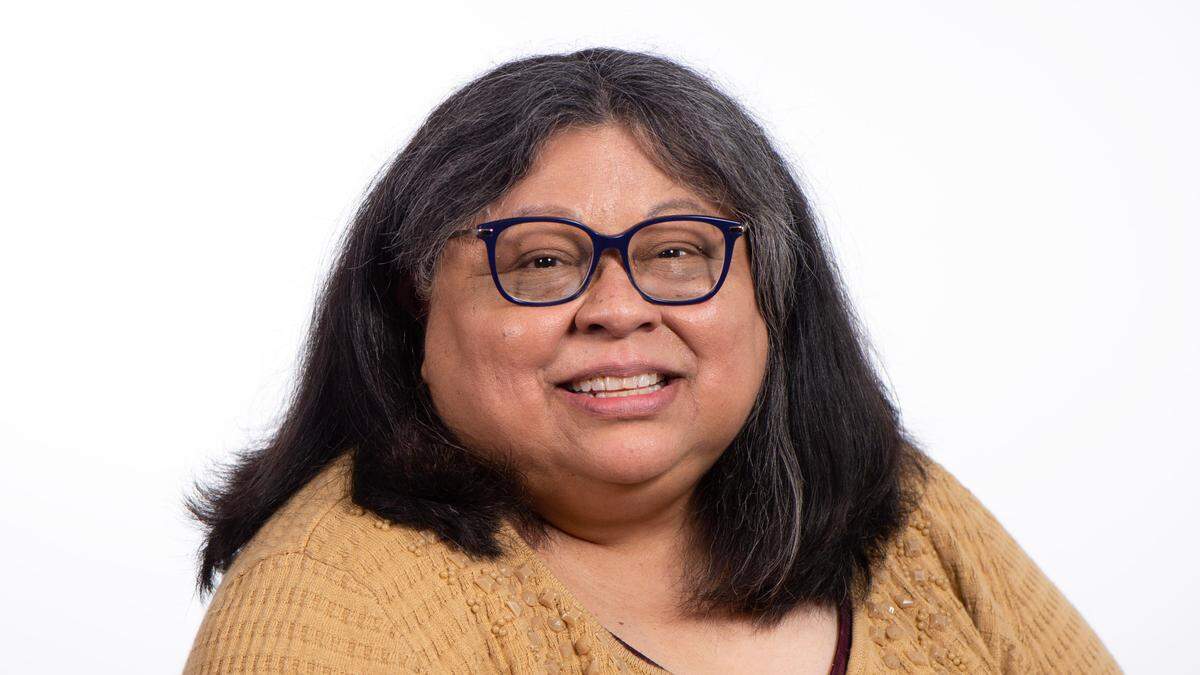
Sanmi Areola was there, too, on just his fifth day as the director of Johnson County’s health and environment department. He had never been in Union Station.
He thought it was in Olathe.
Areola wasn’t supposed to start his new job until the next day, March 23. He came to Kansas from Nashville, where he worked 17 years for the city’s health department, the last six months as interim director.
The virus had infected Nashville, too. And 10 days before his last day, a tornado slammed into parts of the city March 3, killing more than 20 and turning the end of his tenure there into a “pretty harsh time.”
From the moment he walked in the door of the public health department in Olathe on March 18, the coronavirus has been his life.
He had a say in crafting the metro’s stay at home order. He asked Johnson County leaders to buy more tests kits for the county’s residents. He filmed a coronavirus YouTube video. He’s trying to take care of his staff’s own health and mental well-being and, oh yeah, the media want to talk to him, too — at least 80 interview requests since he got into town.
The day before the Union Station press conference, it fell to him to announce the county’s first coronavirus death.
“It’s been intense,” he said in an interview with The Star at the end of his first full week on the job.
Areola will tell you that after nearly 20 years in the public health arena he knows his way around infectious disease. In Nashville, “we just had hepatitis. We dealt with a scabies outbreak in our jails. We dealt with West Nile virus in 2002 to 2004, Zika, which we contained effectively. Ebola,” he said.
“This is the core of what public health does. It comes on different scales.”
But this new coronavirus? “This one is a massive scale,” he said.
Long-time public health officials have told him they’ve never seen anything like this, “but the approaches are the same,” he said. “And the message is, ‘It’s serious, but we’re not panicking. We know what to do.’”
An early start
He drove the eight hours from Tennessee to Kansas the day before St. Patrick’s Day and intended to take a week to settle in before his start date. Areola is married and the father of five.
But COVID-19 had other plans.
By the time they arrived, the metro was shutting down. School districts closed. Movie theaters closed. Restaurants were restricted to takeout or delivery only. Public gatherings were banned.
On St. Patrick’s Day, Johnson County’s Department of Health and Environment put out a statement that six of 11 confirmed COVID-19 cases were “acquired locally and not through travel.”
The virus was spreading in the county.
Areola moved up his start date to March 18, taking one day to rest after moving his family and 17 years worth of household goods.
“I’m glad that I did,” said Areola, who is 53 but says he is feeling “very old” these days. “I got to be part of some of the key decisions here. And if we eventually escape the kind of cases that you see in New York, it will be because we have taken some very timely decisions around here.”
Nashville to KC
Areola was born in Nigeria — his first name is pronounced “Sammy,” the “n” is silent.
He is a toxicologist — with a doctorate in environmental toxicology from Texas Southern University — whose work in public health for nearly two decades has involved getting lead out of school water and warning about vaping.
Johnson County hired him in February to replace Lougene Marsh, who retired last year.
Announcing the hire, Assistant County Manager Joe Connor called Areola “a self-described public health lifer” with “a tremendous passion for public health. Our organization and the community will benefit from this passion, his depth of experience and excellent qualifications.”
Areola worked in a department of more than 500 people in Nashville. Here he leads a staff of about 140 who “work like they are 500 people, so energetic,” he said of employees who are putting in long hours, some fueled at this point by coffee and Diet Coke.
“The enthusiasm, the skill set, the commitment is through the roof,” he said.
The staff brought him up to speed at the daily 8:30 a.m. meeting on his first day. Then he started calling his counterparts across Kansas City, conversations that left him feeling that “we’re good, we’re going to be able to do this.”
He had been monitoring the situation from Nashville and was ready to support any move to shut down schools. The day before he started, Kansas Gov. Laura Kelly ordered Kansas schools to be closed for the rest of the academic year.
“Even when I started, my very first comment was those steps taken to close schools and to put some physical distance measures in place were very timely, appropriate. That’s what I would have recommended,” he said. “Actually I was coming here looking to say it’s time to do that. We don’t have to wait on it until it’s bad.”
From the time his hiring was announced, “quite a lot of people reached out to me, a lot of people in government, a lot of people in academia from some of the local institutions that were offering collaboration,” he said. “And that’s what you’re going to see with me.”
His philosophy of public health, he said, “is heavily premised on how well we connect to our community. There’s a reason we call it public health.
“So our goal is to emphasize the public, not just sit by ourselves and make the decisions, ensure that we build trust with our community, involve them throughout the entire process so they feel ownership and they get the buy-in to what we’re trying to do.”
He knew that community “buy-in” would be needed to make the stay at home order work. He was concerned about timing; it had to happen quickly.
“When is the appropriate time to do that? Should we allow what we had in place to work before we do this?” he said. “But I think we came to a consensus pretty quickly that we don’t have enough data but we don’t want to wait because we’ve seen other places that had to wait and what the consequences were.”
‘Don’t know the extent of spread’
Areola inherited a problem plaguing the country: lack of coronavirus tests.
The Kansas health department is only testing Johnson County residents who need to be hospitalized. But health officials, including Areola, have called for more testing to show how insidious the virus has become, especially because some people who have it never show symptoms.
Last week, Areola presented a plan saying that the county needed to test between 3,000 and 5,000 more residents, including some with minor symptoms or who are asymptomatic. On Monday, the Johnson County Commission voted to spend $400,000 to ramp up testing.
“We don’t want people to panic, but it’s serious. More so because we don’t know the extent of the spread in the community,” Areola said. “Remember we started this off trying to prevent the virus from coming into the U.S. and from spreading community-wide. So what we were doing was tracking what we call travel cases. ... That’s a containment strategy.
“Obviously, depending on who you listen to, we know that did not work because it’s here.”
He said the virus was probably already here “for a few weeks before we admitted that it’s in the country and that it’s spreading.”
“So I knew coming in this that ... it’s not a switch that you turn on and this is gone,” he said. “Our strategy is to minimize the impact on the health of our public, and that still remains our goal, and obviously using multiple strategies to go to that level. So I knew this is a marathon.”
Before he left Tennessee, Nashville’s mayor had ordered businesses in the city’s entertainment business to close to the public and Areola saw firsthand that some people don’t like the government telling them what to do.
The owner of a handful of Nashville businesses, including Kid Rock’s Big Ass Honky Tonk & Rock ‘n’ Roll Steakhouse, made headlines when he called the order unconstitutional and refused to shut his doors, though he eventually did.
“I think that’s part of my job as the director of health here, to be the voice of health and let people understand that everything I do, really everything, I look at it from one angle alone, and that’s the angle of public health,” Areola said.
“Does it work for health? And if I’m able to get the trust of the community, let them know that we’re being our best ... and if it’s absolutely unnecessary we wouldn’t do it ‘cause we know it brings some discomfort. It’s a change, a big disruption to what our normal way of life has been.”
On his fourth day on the job, Areola announced the county’s first fatality from the virus, the second in Kansas.
“It doesn’t matter how long you’ve been doing this, that’s not a pleasant thing to do,” Areola said.
Dennis Wilson of Lenexa, a retired biology teacher-turned school superintendent, and part-time professional magician, was in his 70s. He died that Saturday morning, five days after testing positive for COVID-19.
Wilson’s death has led to questions about how much information health departments and county officials provide publicly about residents who have tested positive for COVID-19.
In a press release, Areola called Wilson’s death “a tragic loss of life,” expressed condolences to Wilson’s family and emphasized that though the majority of cases of COVID-19 are said to be mild, it can be severe for people over 60 with other medical problems.
“As you saw in the press release,” Areola said, “I feel for the family. Our goal is to optimize, protect, contain, and ensure every one of our citizens (has) the best health possible.”
When people die, he said, that tells “public health professionals that we have more work to do.”
Staff are people, too
The day after the stay at home order was announced at Union Station, phones started ringing off the hook at the county’s health department, where everything is moving quickly as the number of positive cases continue to rise.
What about grocery stores? What about child care centers? People wanted to know.
The county has a COVID-19 hot line — 913-715-2819, available 8 a.m. to 5 p.m. Monday through Friday. School nurses are volunteering to answer questions about the virus, Areola said.
“Part of my role as the director of health here is to ensure that I provide the information as accurately as possible so people know what we’re doing,” Areola said.
“But it’s also my role not to create panic or paranoia when it’s not necessary. So in this situation ... I’ve talked about how the interventions we’re putting into place are proving over time that they will work if we give it time ... we just need to respect the process.
“So the hope is ... if we do it seriously the first time then we can cut down on the number of months or weeks where we have to face those disruptions.
“And I’m not just saying that in a vacuum. You can look at what’s going on in New York, Italy, China and the consequences of not taking actions early and on time.”
The public will get to know Areola, but they will never see the team that is working behind the scenes with test labs, examining data and tracking trends. Numbers are updated regularly on the county’s website, which showed as of Monday 116 positive cases in Johnson County, and more than 1,100 people have tested negative.
More than half of the people who tested positive are between the ages of 40 and 69, with one between the ages of 10 and 19.
When someone tests positive, members of his staff contact people who came in contact with that person, a task that is sometimes easier said than done. Some people are apparently unwilling to give information to the health department.
“We’re looking at where we have gaps in the data,” Areola said. “We are looking at breakdown (of positive cases) by age, their special patterns, (is) there clustering going on? Those are the kinds of details that we are looking at.
“And, relentlessly responding to questions about the data from elected officials and from the public. So hats off to public health staff.”
In his first days on the job, Areola talked to staff members about taking care of themselves, he said.
“Because I have my primary responsibilities to the public, but I also have a huge responsibility to running a good operation and to making sure that staff are OK. So staff can get burned out pretty easily. They are working impossible hours,” he said.
“So part of my message was ‘who is the backup? Make sure that you take time off when you need to.’
“Long-term we have to ensure that we protect them also because you can get caught up in this thing and not want to take a break, but you have to take a break. Not just for physical health but for mental and emotional health.”
Maybe at some point he can take some time, too, and finish signing up for his new employee benefits.
He still hadn’t finished that by the end of his first week on the job.
.jpg)