How Kansas City area districts feed thousands of kids amid coronavirus school closure
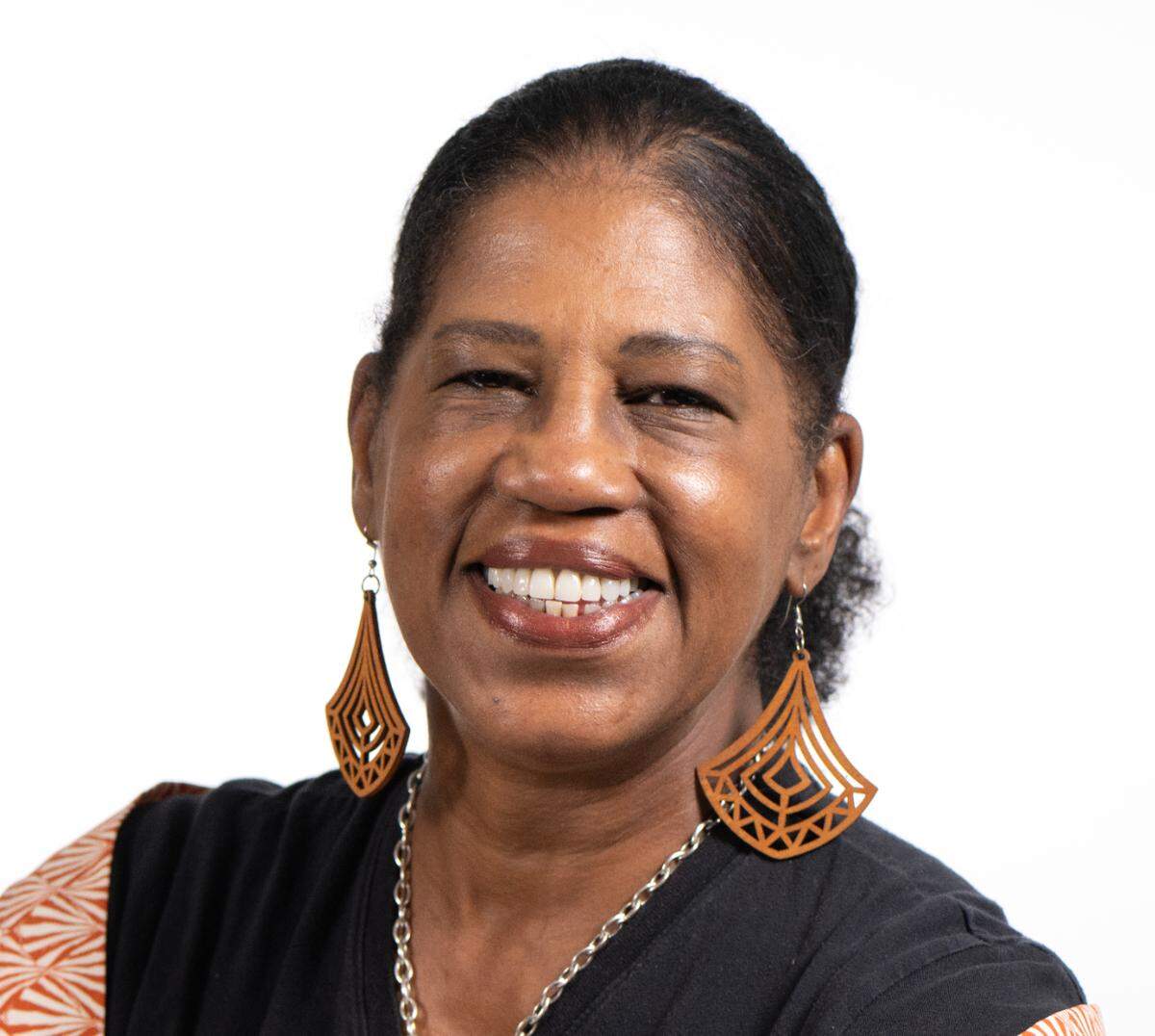
Stephanie Sanders has her own sandwich-making system — bread, turkey, cheese, bread — to the rhythm of the R&B tunes playing softly from her cellphone.
It’s working. The Kansas City Public Schools food service worker can make about 70 sandwiches in a matter of minutes, as she demonstrated Thursday morning. All with a smile.
“This is about feeding the children in this city,” said Sanders, who, like 50 or so other district food workers, gave up her spring break this week for the task. “I’m happy to do it.”
All across the country and in the Kansas City area, the spread of the new coronavirus has forced the closure of schools, leaving thousands of children at home without the convenience of the daily school meal. For many of those children, their school breakfast and lunch are the only meals they get each day.
District leaders have said that one of their biggest concerns has been for children who might go hungry.
Kansas schools are closed for the remainder of the academic year. Missouri left it up to individual districts, and Kansas City area schools will be closed until April 6 — and maybe longer.
With that uncertainty, this week KCPS began what district leaders said is the largest school lunch distribution in the area. From the district’s central kitchen at Paseo High School, workers have made roughly 7,500 sack meals a day. By Thursday, Day 3 of the operation, more than 22,000 free meals had been delivered.
Kansas Education Commissioner Randy Watson said this week that districts in his state would need to figure out not only how to educate students remotely but also how to feed them. And while some districts on Monday had already started the process, delivering as many as 800 meals, many districts both in Kansas and Missouri are still developing a food plan.
Across the country districts are in the same mode, working out food distribution plans for students. In some other parts of the world, England for example, schools are getting help from charity groups. And the BBC reported that the prime minister said the government will help parents by providing vouchers to those who receive free school meals.
The Los Angeles School District, one of the largest in the U.S., was preparing to distribute meals to a half a million school-age children displaced by the closing of schools, the Los Angeles Times reported.
In lower-income school districts, most students are eligible for free meals. But other districts have said they would not turn away families who come seeking food.
Several districts offering meals
In this region, the Tonganoxie School District has already launched what it is calling the Tongie drive-thru, where parents drive up and are handed bagged lunches and breakfast for their children at certain times Monday through Friday. In some cases, students themselves are showing up on bikes, and food service workers load their backpacks with one or two of the free meals.
Also offering drive-thru pickup: Hickman Mills, Fort Osage, Lee’s Summit and Independence. Blue Valley was planning Thursday to announce a pickup effort. Shawnee Mission and Raytown districts announced Wednesday that starting next Tuesday, they will begin serving grab-and-go, packaged lunch and breakfast outside four designated schools.
The Center School District is in partnership with Sodexo and Student Transportation of America to prepare and deliver meals to all its students
Kansas City Kansas Public School officials said they will be ready to launch a food pickup for their students starting Monday.
“It is a moral obligation for us to feed students,” said Charles Foust, KCK schools superintendent. “The U.S. Department of Agriculture guidelines provide us with the resources to do this. So what we are doing is carrying out what the federal government tells us to do. And I go by the mantra that kids can’t learn if they are hungry.”
Kansas City schools’ operation
The idea was one of the first things to come to mind for Jordan Gordon, who runs food service for KCPS.
Gordon was at a USDA training session in Mississippi when he got the word that schools would close and children had to be fed somehow. He left the training abruptly. “I told them, sorry, but I gotta go,” Gordon recalled. He drove nine hours through the night and immediately began planning a strategy.
Gordon, who has a background in commercial food service, said he had never imagined that he would have to develop a comprehensive food preparation and delivery operation involving multiple distribution sites and the coordination of transportation routing for the district, much less do it in less than a week.
He called on his food service workers to forfeit their spring break. First he and five workers visited schools to get a sense of the amount of food they had on hand and their storage capacity.
On Tuesday the workers showed up — van drivers, kitchen managers, food servers and some muscle to lift and load boxes of food that needed to be hauled from school kitchens around the district to what would become the center of operation at Paseo High.
Gordon said he wanted to be sure that with schools closed the district could use food already stored in schools and get it to families. “Otherwise, with school out, all that food would have to go in the trash,” Gordon said.
The Paseo Kitchen connects two schools — the high school and King Elementary. The kitchen is in the middle of two large cafeterias. On Thursday both were bustling with workers rapidly packing plastic sacks with sandwiches, chips,and fruit and then loading the sacks into boxes.
Turkey sandwich lunches went into boxes marked with a T. Peanut butter and jelly sandwiches went in the box marked P&B. Both boxes were labeled with an L for lunch and a number to account for how many sacks filled each box.
As they pack, Gordon said, workers are careful to adhere to the six-feet social distance rule. And he kept watch to make sure no more than 10 packers were working at any given time, to follow the latest health guidelines.
In the kitchen, the women making sandwiches followed the same rules. And like Sanders, they had a system.
Annabel Rodriguez and Dennys Orduna were on PB&J duty. Rodriguez laid out the bread dropped a dollop of peanut butter on top. Orduna spread the nutty butter then topped it with a spoonful of jelly. Rodriguez was right behind her to close up the sandwich. Then working from opposite ends of the counter the woman tucked each sandwich in a small, clear plastic bag.
Gordon said that while the system he designed is working smoothly for now, with four vans on the road either picking up or delivering food every half-hour, he believes KCPS will have to tweak the system as more and more families come looking for food.
“We are not going to turn away any child,” even if they are not enrolled in KCPS, Gordon said.
Spokeswoman Kathleen Pointer said with the district surrounded by charter schools that don’t have the same food preparation resources but a similar population of students from low-income families, she expects they may see many charter school children picking up food from KCPS sites.
Things could change
Gordon has already heard from food service managers employed by surrounding districts asking for his help in developing an efficient plan. Of course, Gordon said, as we have seen since the coronavirus began spreading in this region, plans can change from day to day.
He is already considering the possibility that food may have to be delivered by school buses if the school closure is extended. He said he feels certain his team, made up of food workers from schools all over the district, can keep up their pace.
On Thursday they were moving so fast, Gordon said they were about to peak at preparing 1,000 meals in an hour. “That is faster than I ever thought they could do,” he said.
Wendell Toombs, the nutrition manager at Northeast High School, who was loading trucks off the dock at Paseo, said he’s not complaining about the pace, the amount of work or giving up his spring break.
“I have 10 grandkids, all of them go to Kansas City Public Schools and they’re getting ready to feed all 10 of my grandkids,” Toombs said. “I can’t complain. This is about making sure these kids eat.”
And, Gordon said, the food is prepared and packaged under federal guidelines. All the workers, he said are are used to volume cooking. They all are certified to handle food and to work in the school lunch program.
Back in the cafeteria, where another load of lunches was just hauled away, sackers immediately started washing down the prep table with soapy water.
“That happens every time a load goes out,” Gordon said. “It’s a marker for them indicating for them to change your gloves, wash your hands and start at it all over again.”
This story was originally published March 19, 2020 at 5:44 PM.