
Stressed over Kansas-Villanova in Final Four? Doctors have some advice for you
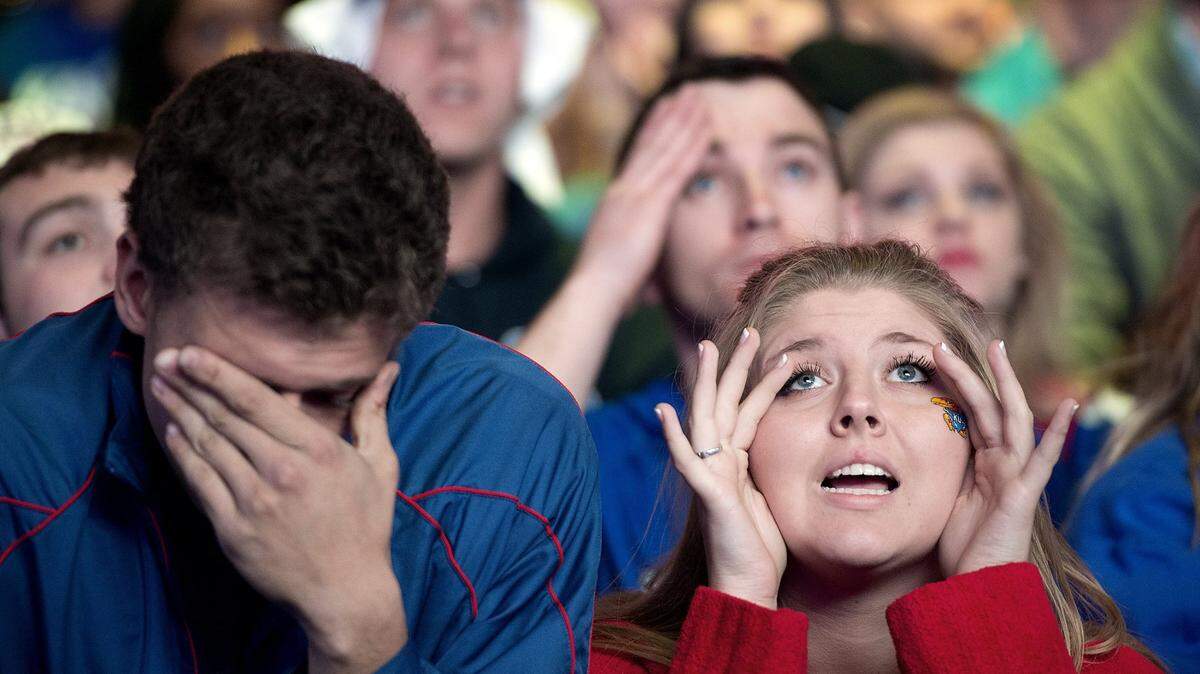
April, which begins Friday, is Stress Awareness Month. But Saturday is the day University of Kansas basketball fans are super stressed about. KU plays Villanova in the Final Four. When last they met there in 2018, KU lost.
Dr. Steve Stites can almost hear the sound of all those Jayhawk hearts racing.
“Many fans are feeling a faster heartbeat already as the game (gets) closer,” the chief medical officer for The University of Kansas Health System said during a health briefing this week. “Add to that the lingering pandemic that continues to stress us.”
No news flash that being a sports fan is stressful. Stites referenced a study from a few years ago that revealed NFL fans reach for sugary and fatty comfort foods after their teams lose.
On the Monday after a loss, fans ate 16% more saturated fats than they usually did. If their team won, that unhealthy consumption dropped 9%.
“I can definitely verify that,” said Stites, who admitted to developing a penchant for fried chicken in the early, hyper-stressful days of COVID.
On Wednesday he and two other physicians from the KU health system had a Rock Chalk stress talk about why sports fans get so worked up and how to manage what some experts have called the “sports fan blues.” As fans themselves, they could relate.
“I think you guys know about my Cleveland Browns affliction, so when it comes to sports, stress is just a routine. It’s like cream and sugar with your coffee. It’s just part of the deal,” said Dr. Gregory Nawalanic, a clinical psychologist for the health system.
Sports fans feel stress because they develop an emotional connection with their team, Nawalanic said. Fans feel like they earn respect and regard, through no work of their own, scientists say.
The researchers who studied the NFL fans theorized that when a beloved team loses, fans feel a threat to their identity and are more likely to eat as a coping mechanism. On the flip side, winning seemed to boost their self control.
Watching sports can catch fans up in a cycle of anxiety, Nawalanic said.
“Sports, obviously, you don’t make every catch. You don’t make every throw, you don’t make every shot. And so there’s always that variable of what’s going to happen and kind of the excitement of when the ball’s in the air, what’s going to happen with it,” he said.
“So there’s just this constant rush, moment after moment. … It’s kind of this trigger, over and over, of this stress loop that we’re in.”
But all a fan can do is watch.
“And so just like the pandemic, there were certain things we could control, and a lot of things that were well outside of our control, like everybody else in the world and the evolution of the variants,” said Nawalanic.
“So when we feel out of control, that’s when we try to grab on and cling to whatever we can.”
Thus explains the lucky T-shirts, lucky hats, lucky socks, lucky chairs to sit in while watching the games. It’s what Nawalanic calls magical thinking, our “human attempt to control something beyond our control.”
We’re social animals
In 1991 a study of KU students found that having an intense interest in a team can stave off feelings of depression and increase those feelings of belonging and self-worth, compared to people who weren’t interested in sports.
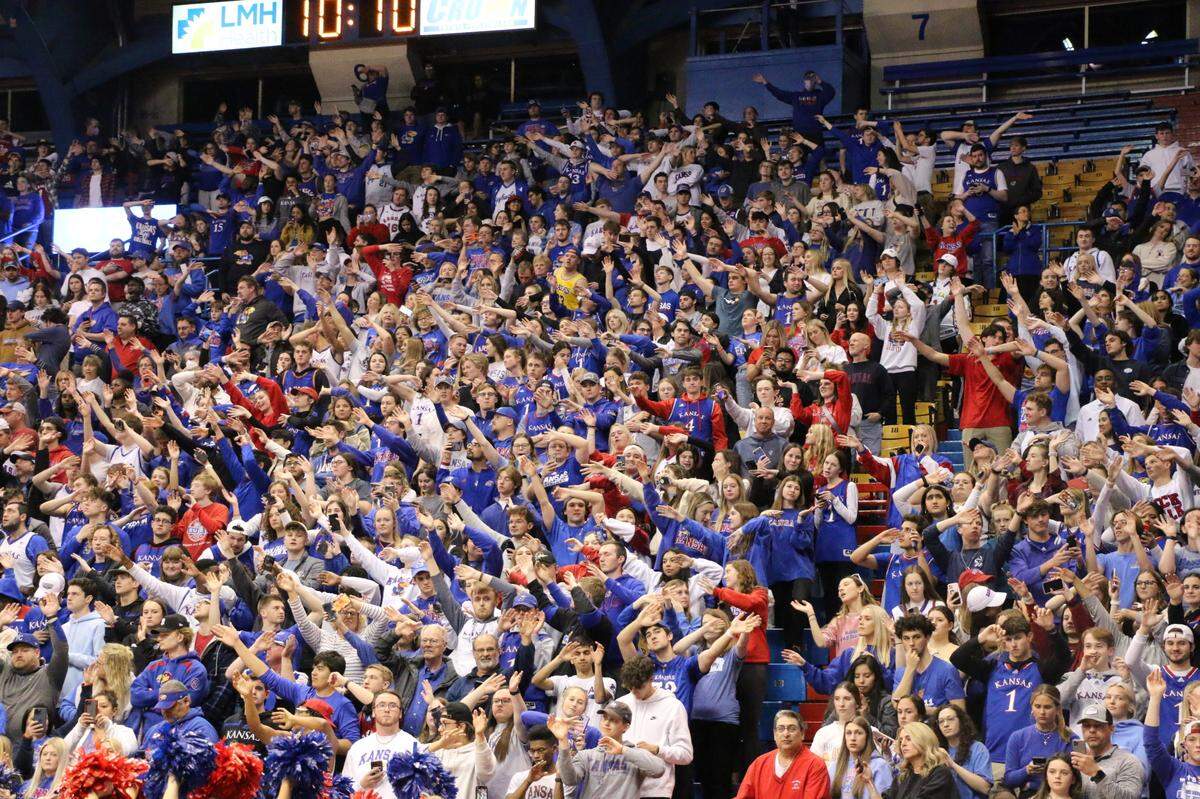
Research has also shown that being a passionate fan “is actually a preservative effect. And it goes back to again being the kind of social animals that we are,” said Nawalanic. “It forms another pack for us to kind of be in.”
In a stadium, at a sports bar, people have an immediate sense of camaraderie with people wearing the same team colors, he said. Everyone is connected — the worker bee and the CEO.
“And so when we come together like that it lifts your self-esteem for that, at least, moment,” Nawalanic said.
And that collegiality continues at work with celebratory high-fives and reliving highlights of the game with like-minded co-workers, he said. “So these little distractions are very important, these other abilities to connect with other people, very preservative, very sustaining, very helpful.”

It’s just a game?
Scientists have documented how sports fans bask in “reflected glory” by wearing clothes with their team’s logo the day after a win.
Stites, who said he grew up in Missouri but roots for KU now, said the nurse he has worked with for more than 18 years asks him why he gets so stressed out over sports.
It’s just a game, she says.
“I don’t know what that is,” Nawalanic said. “Sounds great. But I can’t get to that (point).”
He was joking. Maybe?
“I think you just have to tell yourself win or lose, what is that going to change in your life?” said Dr. Micca Schneider, a family medicine physician at the KU health system’s Great Bend campus.
“You get excited, you get stressed and angry. But at the end of the day, does it matter tomorrow? Is it going to change the trajectory of your life and if no, enjoy it for that moment, but then say we need to move on.”
Some fans would surely struggle with Nawalanic’s advice to view sports “for what they are, which are welcome distractions, kind of like the roller coaster ride. You get on, you dive in, enjoy it, experience it, and then get off.”
Take a hike
You know you’ve crossed over into an unhealthy relationship with sports if you can’t do anything but talk, eat, sleep and drink sports, said Nawalanic.
You’ve crossed a line when you can’t shake off that sadness over your team’s loss in a day or two.
You’ve crossed a line if you put a fist through a wall or drive with rage.
You’ve crossed a line if you get so angry your spouse or children are afraid to be around you if your team loses.
“I think that like, with everything else … all things in moderation,” Nawalanic said. “So we want to kind of be wary that if it’s all you’ve got, and that’s the one thing that sustains you, and you’re turning abusive … that’s a warning sign that you’ve crossed too far and it’s time to come back and try to find something else to work on and sustain you.”
Some of Schneider’s patients come to her exhibiting symptoms of stress, but they don’t realize it. They can’t eat, sleep, their stomach hurts, their head hurts, they complain of low energy, their appetite is nonexistent, or they can’t stop eating.
A person can carry stress in their entire body, said Nawalanic. So one effective technique for acute or chronic stress is progressive muscle relaxation, “where you’re leading them through a practice of tensing and releasing every set of muscles, from head to toe.”
Stites said he handles his stress at the gym or outdoors, sometimes “standing in a river waving a stick.”
Schneider said she swims and sometimes just likes to “cuddle in my bed with a good book and a coffee and just relax and do nothing.”
For the sports fan feeling tense after a game, take a walk, Nawalanic said.
“Get that nervous and angry energy out by yourself, outside. Walking is good because it allows you to just kind of get away from everything else and just clear your mind and take a look at what’s around … and put things in perspective.”
With KU in the Final Four, the Royals retooling, the Chiefs this close to the Super Bowl, the women’s soccer season starting, sports fans in Kansas City “are kings of the castle in the sports world,” right now, Nawalanic said.
Remember that. Even after the losses.
“We’ve got so many things to be grateful for,” he said, especially after stadiums have been empty and silent. “So try to take that lesson, appreciate what we have, and just enjoy. And Rock Chalk!”
This story was originally published March 31, 2022 at 5:00 AM.
.jpg)