
How this Kansas City researcher is putting her faith in Black churches during COVID
Editor’s note: During the month of February, in honor of Black History Month and the vibrant Black community in Kansas City, The Star will feature profiles of Black Kansas Citians by telling their stories and highlighting their businesses, causes, and passions.
She didn’t need data to know who would suffer most from COVID-19.
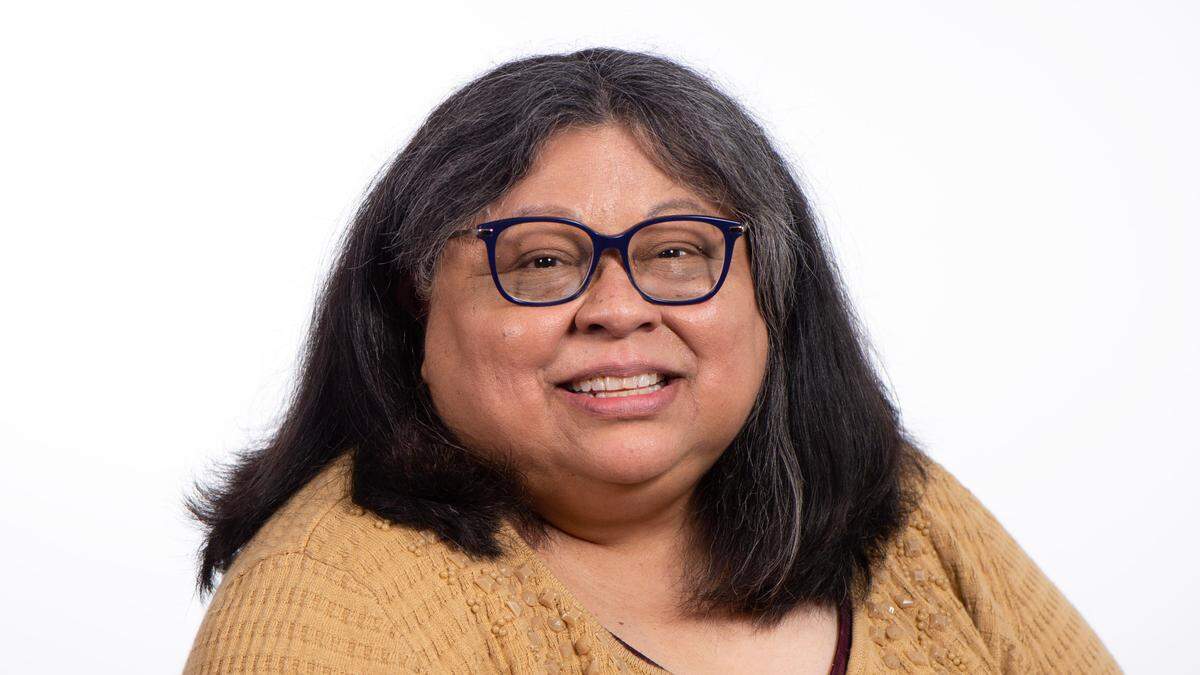
Jannette Berkley-Patton, a professor in the School of Medicine at the University of Missouri-Kansas City, knew this new virus would pummel a population struggling with persistently high rates of heart disease, diabetes and other chronic illnesses.
And it came to pass. Nationwide, Black people have died from COVID-19 at 1.4 times the rate of white people, according to the COVID Tracking Project.
“Usually when America has a cough, the Black community has pneumonia,” said Berkley-Patton, a behavioral psychologist who is director of UMKC’s Health Equity Institute.
COVID-19 scared her. But after studying the health of Kansas City’s church-going Black community for more than a decade, she also knew that Kansas City has a strong bulwark in local Black churches working to get their congregations and the communities they serve healthy.
Over the last 14 years Berkley-Patton has won more than $10 million in federal grants to improve the health of Black Americans. The research she and her team have done has involved at least 50 churches on both sides of the state line.
With their help, pastors have honed how they talk to their congregants and communities about everything from HIV to diabetes, and now COVID-19.
National studies show that on any given Sunday more than 50% of African Americans are attending church, and her team found that attendance is even higher in Kansas City, said Berkley-Patton.
“While there have been significant declines in church attendance among many populations, African Americans still have the highest rate of regular church attendance compared to any other ethnic population, white or otherwise, in this country,” she said.
“People may not go to that church down the street but they know who the pastor is.”
Public health officials recognized early that faith leaders, particularly those who serve Black congregations, would have to be involved in the fight against the disease and, more recently, the push to get everyone vaccinated.
Local ministers who answered that call have been busy, hosting pop-up COVID-19 testing clinics in their parking lots, distributing thousands of masks, serving on task forces advising health officials and even peacefully protesting the country’s response to the pandemic.
Take Calvary Temple Baptist church, led by the Rev. Eric Williams, who has spent more than two decades working with the church’s outreach network to improve the health of urban Kansas City, much through the Calvary Community Outreach Network.
He would rather not have any more families be forced to buy oversized caskets for their deceased loved ones, would rather not attend any more funeral lunches serving the same unhealthy foods that killed the deceased, would rather not watch one more church member lose toes or limbs to diabetes.
In 2008 Calvary Temple Baptist opened a fitness facility next to the church at 2940 Holmes St.; no excuses now.
The pastor met the professor back in the day as the church was working on HIV prevention, back when mothers in Williams’ congregation would take care of their AIDS-stricken sons in secret, fearing the stigma.
“She showed up at a meeting that was hosted at our church and she hasn’t been able to get rid of us since,” Williams said.
Loyal churchgoers
In 2014 Berkley-Patton won a $3.2 million grant from the National Institute of Mental Health — part of the National Institutes of Health — for a five-year research project called “Taking It to the Pews.”
She studied how 14 Black churches in the Kansas City area, including Calvary Temple Baptist, were encouraging people to get tested for HIV and screened for sexually transmitted diseases.
As part of that, UMKC’s Community Health Research Group, which she leads, created a program that inserted HIV education and testing into church services through sermon guides, responsive readings, posters, church bulletins and testimonials.
“We took what he was already doing with churches and took it to a whole new level,” said Berkley-Patton. “We took it so it could be expanded and packaged so more churches can get into it.”
She “churchified” the science, said Williams.
“The notion is in the power of the pulpit and the trust that congregations have with their clergy leaders,” he said.
“She was able to prove that the voice of the clergy saying ‘get tested’ (for HIV), the voice of the clergy demonstrating testing, the voice of the clergy saying let’s care … that that was meaningful and effective from a research standpoint.”
The Rev. Darron Edwards at Kansas City’s United Believers Community Church in south Kansas City — where the message is #WeChurchDifferent — took the role of ministers as role models to another level while helping Berkley-Patton and her team with their research.
To drive home the importance of HIV screening, one Sunday before delivering his sermon he had his finger pricked to have blood drawn for an HIV test, right at the pulpit.
“If the pastor can do it, I need you all to do it,” Edwards told the congregants assembled.
When Berkley-Patton was growing up in Kansas City, pastors would have never talked about HIV in the church, much less take a screening test at the pulpit.
“This is really their story,” she said. “I really see myself as a researcher amplifying what the community is already doing, trying to prove that the things that they are already doing, because they already know the solutions, are effective.”
That hands-on instinct led her to round up students from UMKC School of Medicine to help at Kansas City Health Department COVID-19 testing sites in hard-hit areas. She knows those neighborhoods.
Becoming who she is today
She grew up around 39th Street and Prospect Avenue. Her mom, a registered nurse, was an immigrant from Jamaica, which meant Berkley-Patton was the only one of her childhood friends who regularly got to fly on a plane when they visited family on the Caribbean island. Her dad was one of the first Black master plumbers in Kansas City, with a shop near 21st and Vine streets.
“When I was young I can remember his shop, somebody threw one of those homemade bombs in it because he was starting to get a bunch of the Black folks to use him as their plumber, which was causing some of the white plumbers to lose business,” she said.
People might think that “OK, you grew up in the ghetto and it was just all horrible,” she said. “But I had a really enjoyable experience growing up. Because there was certainly a lot of crime, our house got broken into 10 times, I don’t know how many batteries we replaced in cars and I’ve seen people get shot. And all of that.
“But that was balanced by just the sheer grit of my parents and making sure that we had a really well-rounded experience.”
A large part of that experience took place at Second Baptist Church. Sundays were spent at church. Sunday school. Church services. Then after-church activities.
She has taught Sunday school most of her life.
Church was a “spiritual touchstone and a way to not only socially connect with other spiritually minded people, but a way to really immerse oneself in spiritual beliefs that provide not only the experience in church, but once you leave church the ability to cope with everything else that’s happening in your life,” she said.
At Paseo High School, she was good in math and science and a “really good writer.” One day at school she and some of her friends, “all cheerleaders, the leaders of our class,” met with students from a minority engineering program at the University of Kansas.
“They told us about the opportunities in engineering and the availability of scholarships and Pell grants,” she said. “And so when it was time to graduate, it was like, ‘Well, I guess this is my way to go to college.’”
KU’s engineering program kicked her tail. She admits it. “I still get chills when I walk into the engineering building there from all the nights of just trying to figure out what the heck was going on,” she said. “I graduated by the skin of my teeth out of that program.”
She put her electrical engineering degree to use for about six years in the aerospace industry, including a three-year stint in Dallas, the only time she’s lived away from Kansas City.
“Throughout all of those years, though, I’ve always been committed to community service, doing everything from being a tutor in the evenings with junior high and high school students, to organizing food and clothing drives,” she said.
She and friends in Dallas started a mentoring program to help girls navigate life, teaching them about substance abuse prevention, how to do job interviews and how to be advocates for their community.
“I found that I was enjoying more of the time that I was spending on the weekends doing community service with adolescents than I was flying around the country selling materials to aerospace companies,” she said.
It was serendipity when she found out that KU’s behavioral science department was teaching community-based research, “addressing those things that I was doing on the weekend,” she said. “I didn’t even know there was such an area of research, let alone a job you could have in that area.”
So she quit engineering and went back to KU, where she got a master’s degree in human development and family life, and a doctorate in applied behavioral sciences.
Gaining trust in Black community
Last fall, faith leaders in Wyandotte County were encouraged to be role models for their flocks and get flu shots. If the pastor does it, church members will do it, said longtime Wyandotte County health advocate Broderick Crawford.
Now the hope is to get ministers onboard with the COVID-19 vaccines.
“What matters to people in this community is relationships, and when you build relationships you can work through the adversities because you’ve got rapport with the community. And that’s what’s so vital and that’s what’s so important,” said Crawford, president of the NBC Community Development Corp., the community outreach program at the New Bethel Church in KCK.
Faith leaders are on the list of trusted community voices — along with barbers and beauticians — that Melissa Robinson hopes to enlist for the Black Health Care Coalition’s COVID-19 vaccination efforts.
The coalition’s “The Science Is Safe” campaign will attempt to build trust in a community where distrust of the medical system runs deep.
“People ask why aren’t you just saying the science is safe because we know that it is,” Robinson, a Kansas City councilwoman, said during a University of Kansas Health System COVID-19 briefing this past week.
“However, when you have a population that has a deep distrust, you have to make sure you give them the information, the knowledge, and allow them to make those decisions for themselves.”
For Williams of Calvary Temple Baptist, COVID-19 is the second “pandemic” he’s led his congregants through. COVID-19 “is the absolute same,” as HIV/AIDS, he said.
Like COVID, HIV hurt Black people disproportionately, and still does.
Like COVID, trustworthy information was hard to come by at first.
Like AIDS, COVID comes with a stigma.
One pastor told Williams that when he returned to the church after getting infected with COVID-19, some people “were very afraid to receive him. He said it was like he had doo-doo on him. And nobody wanted to be around him because there’s still a lot of fear.”
Williams recently formed the Clergy Response Network, about 30 churches so far that have signed up to work on three meaty issues — COVID-19, community violence and race.
During the pandemic, the network has distributed close to 80,000 masks, provided food to local hospital employees and hosted town hall meetings. It will host a free virtual conference on March 6 for anyone who wants information about the work. (The sign-up is on the network’s Facebook page.)
Berkley-Patton and her staff worked with the network to develop text messages and other tools the churches could use to spread the word.
In January, the National Institutes of Health awarded Berkley-Patton more money, $1.9 million, to work with 16 local churches to expand COVID-19 testing and tracing, and access to health care in lower-income areas of Kansas City. The study will begin in the spring with one pilot church, followed by the rest, she said.
“We know the world has moved on, and vaccines are available, but it still doesn’t minimize the importance of people getting tested,” she said. “It’s when you know your status that you know what to do as far as isolation, quarantine or even seeking further medical care is concerned.”
She said “a large number” of Black faith leaders have taken a wait-and-see approach to the COVID-19 vaccine. But she would like for them to roll up their role-model sleeves again and take the shot.
.jpg)