
Lung Association flunks Missouri’s anti-smoking efforts; Kansas isn’t much better
Missouri gets an F for its efforts to get people to stop smoking, according to the American Lung Association’s annual “State of Tobacco Control” report released Wednesday.
One thing that keeps the negative spotlight on the state: It has the lowest cigarette tax in the country — 17 cents per 20-cigarette pack.
Kansas fared nearly as poorly, dinged for its state-level minimum age of 18 for buying tobacco products, among other issues (though several cities and counties have raised the age to 21 on their own). Kansas and Missouri both earned Fs when it comes to protecting residents from secondhand smoke.
States were tracked and graded on five criteria: State funding of tobacco prevention efforts, access to cessation services, smoke-free air, minimum age for tobacco sales and cigarette taxes.
“Much like the federal government, 2019 progress in state legislatures to reduce tobacco use and help smokers quit was decidedly mixed,” the report said.
“Some states led the way, such as Massachusetts, which became the first state to prohibit the sale of all flavored tobacco products, including e-cigarettes and menthol cigarettes.”
The report included efforts by states and the federal government to curb what health officials call the “epidemic” of vaping, which earned the federal government “as many Fs as As,” the group said.
The report called out the administration for announcing earlier this month that “it will allow thousands of flavored e-cigarettes to remain on the market, a stark reversal of the September (2019) announcement made that they would ‘clear the markets’ of all flavored e-cigarettes.”
Tobacco prevention and quit-smoking policies over the last 18 years have created “an historic improvement in public health, driving down adult and youth cigarette smoking to record lows,” Harold P. Wimmer, the group’s president and CEO, said in a statement.
“However, the dizzying rise in youth use of e-cigarettes threatens almost 20 years of nationwide progress.”
Tobacco use, the leading cause of preventable disease and death in the country, kills more than 480,000 Americans a year, according to the association.
In Kansas, 17.4 percent of adults smoke, the state health department estimates.
In Missouri, 19.4 percent of adults smoke, according to the latest estimate from the Missouri Department of Health and Senior Services.
Missouri health department officials could not be reached for comment on the report.
“Kansas has made strides in certain areas related to tobacco control, but there is work to do — particularly on the policy end, including funding. KDHE stands ready to work with our partners on this important issue,” Kansas Department of Health and Environment spokeswoman Kristi Zears said.
18 or 21?
The lung association’s report didn’t just grade the states. It gave them homework.
The group’s 12-point plan to “end the tobacco epidemic” calls for raising taxes on e-cigarettes; investing in tobacco prevention efforts at the federal, state and local level; and raising the minimum age of sale of tobacco products to 21 across the board.
The group also wants all flavored tobacco products removed from the market and the sale of tobacco products prohibited online.
In Missouri, “while the 2019 state legislative session was quiet with little action on tobacco control policies to speak of, there was momentum on the local level on laws to increase the tobacco sales age to 21 and smoke-free policies,” the report said.
For instance, the cities of Eldon, Hallsville, Smithville and Springfield all passed Tobacco 21 policies — increasing the minimum age for buying tobacco products to 21 — “bringing the total of Missouri’s population covered by Tobacco 21 laws to more than 43 percent,” the report said.
Kansas City and Wyandotte County led the metro area by voting on the same day in 2015 to raise the minimum age to 21. Several other area municipalities quickly followed suit.
In Kansas, the report said, more than 80 health-related bills, including tobacco control bills, were introduced last year. “Few progressed beyond the committee of origin,” it noted.
“Related to a legal challenge to local Tobacco 21 laws in the state, the Kansas Supreme Court ruled that cities can raise the tobacco sales age even though state law sets it at 18. … By late 2019, 25 communities, or more than one-third of the population of Kansas, was protected by Tobacco 21 laws.”
The association applauded Congress for voting in December to increase the national tobacco sales age to 21.
“Taking this step earned the federal government an “A” grade in the report’s new Federal Minimum Age category this year,” the lung association said. “As 2020 progresses, one big question will be how this new federal law will be enforced across the country?”
Lowest cigarette tax in the nation
The lung association continues to lobby for higher tobacco taxes, which it calls an effective way to reduce tobacco use, especially among youth.
While Missouri’s 17-cents-per-pack is the lowest tax in the nation, the District of Columbia charges the most — $4.50 per pack, according to the report.
The average state cigarette tax is $1.81 per pack. The tax in Kansas is $1.29 per pack.
Last year, Illinois was the only state “to increase its cigarette tax by an amount that has been shown to reduce tobacco use and initiation, $1 per pack,” the report said.
“New Mexico also increased its cigarette tax in 2019, but by only 34 cents per pack, missing a golden opportunity to accelerate declines in smoking rates for adults and youth.”
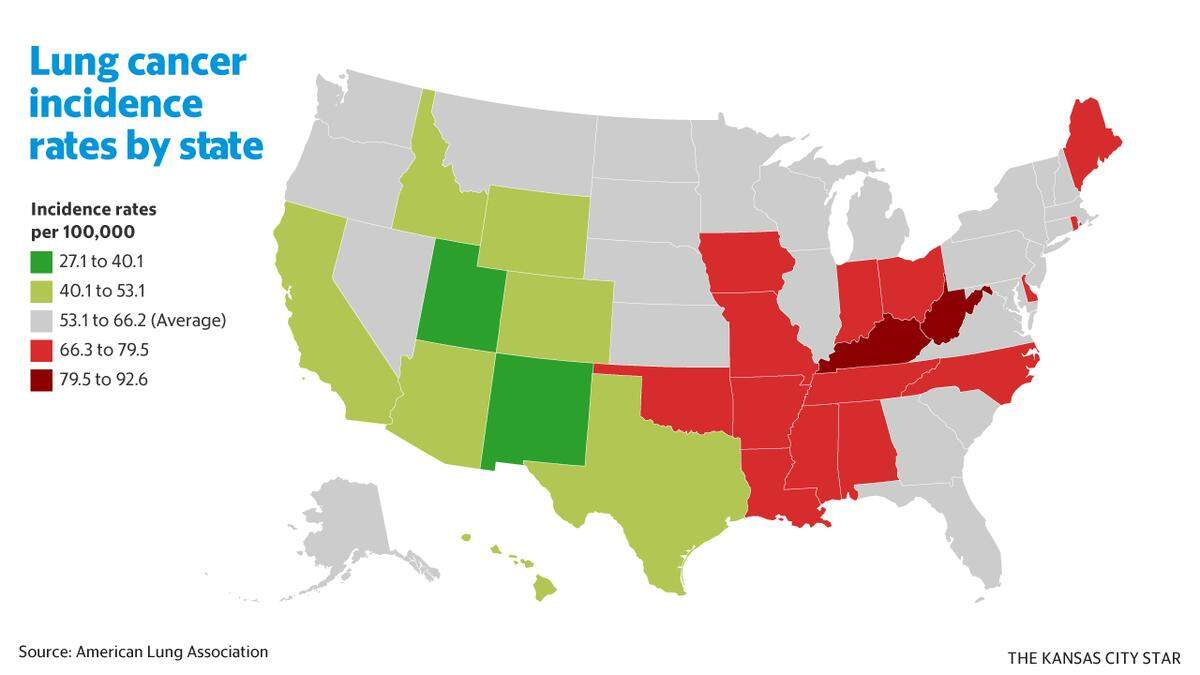
The lung association’s second “State of Lung Cancer” report in November said that Missouri has some of the highest lung cancer rates in the country, worse than 44 other states.
When that report came out in the fall, Missouri’s health department said in a statement that promoting smoking cessation and “providing resources to help Missourians quit using tobacco products is a priority.”
“DHSS has developed a number of new cessation resources for tobacco users and their healthcare providers and continues to promote tobacco cessation throughout the state.”
That campaign, for example, includes recent quit-smoking campaigns on YouTube and Facebook that targeted specific audiences, including 20 counties with the highest percentage of women who smoke during pregnancy, and in low-income ZIP codes in Kansas City and St. Louis.
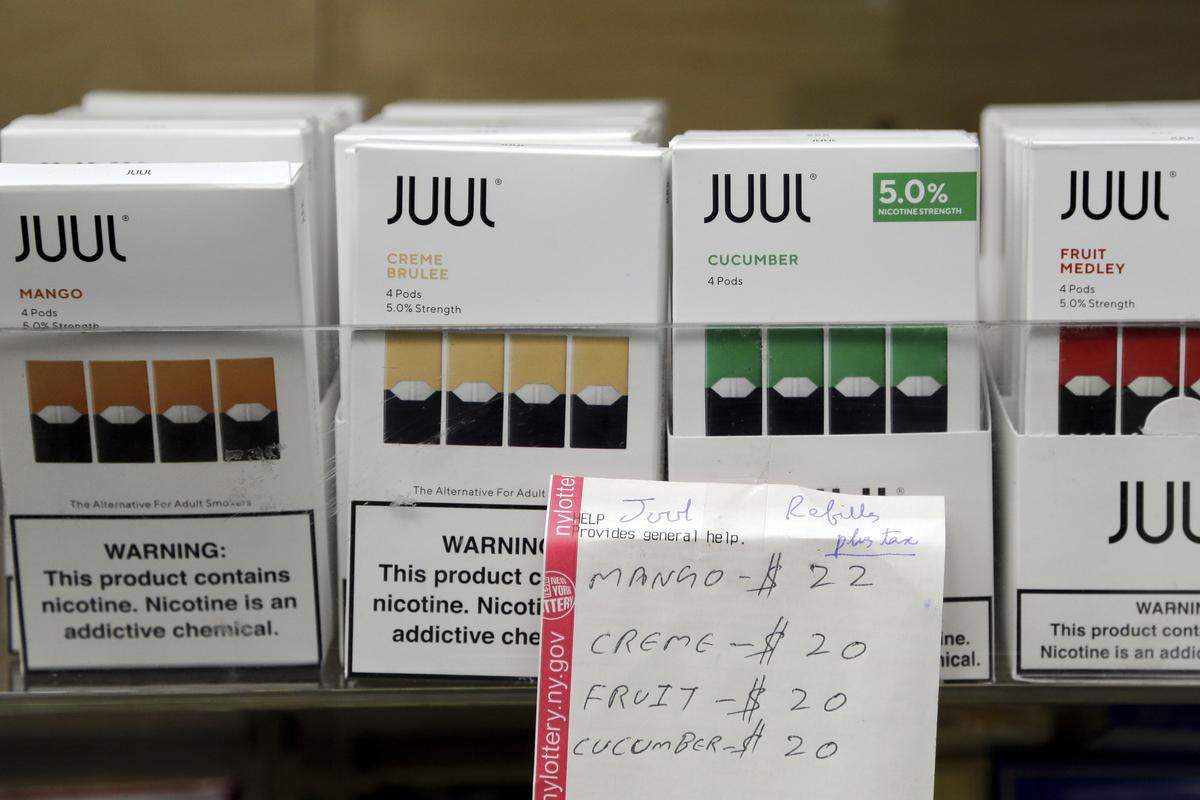
Like other public health advocates, the lung association continued to warn about vaping. Missouri and Kansas have both tackled the problem of kids vaping — with public awareness campaigns and efforts to ban vaping by not just students but visitors, too, in all Kansas public schools and activities.
The lung association reported that e-cigarette use among high school students in the United States has increased 132 percent from 2017 to 2019, with more than 1 in 4 kids vaping at this point. About 6.2 million middle and high school students currently use tobacco products, the report said.
“This is an increase of close to three million kids using tobacco products, primarily e-cigarettes in just the past two years,” said the report.
Delays on the part of federal officials to regulate and review those products before they hit the market are “now putting the lung health and lives of Americans at risk,” the lung association said.
.jpg)