‘We’ve waited so long’: Future of Johnson County project in question, funds in limbo
The property has the hallmarks of an active construction project: a yellow crane, orange cones and temporary chain link fencing. But there are no sounds of dirt moving or concrete being poured. And no workers in sight.
After 15 years of delays and tempered expectations, work has once again halted at the ill-fated $225 million Mission Gateway development in Johnson County. And it’s unclear if or when it might start back up.
For now, the site of the former Mission Center Mall, at Shawnee Mission Parkway, Johnson Drive and Roe Avenue, is home to an incomplete parking garage with exposed staircases. A structure has risen with bright, white walls. But nearby, support columns jut out of the ground, bearing no weight.
Workers left the site after two major funding sources were put on hold during the coronavirus pandemic. Since then, at least a dozen liens have been filed on the property, claiming invoices have gone unpaid to contractors and suppliers.
“We have not been paid,” said Jerry Messick, one of the contractors and owner of Metro Interiors in Lee’s Summit. “I can tell you that without any guilt because it really pisses me off.”
One of the developers, Matt Valenti of New-York based Cameron Group, said in an email, “at this point we are at a pause because of the effects of the pandemic on the financial markets.”
“When the markets return to more normalcy we will get the project back on track and resume construction.”
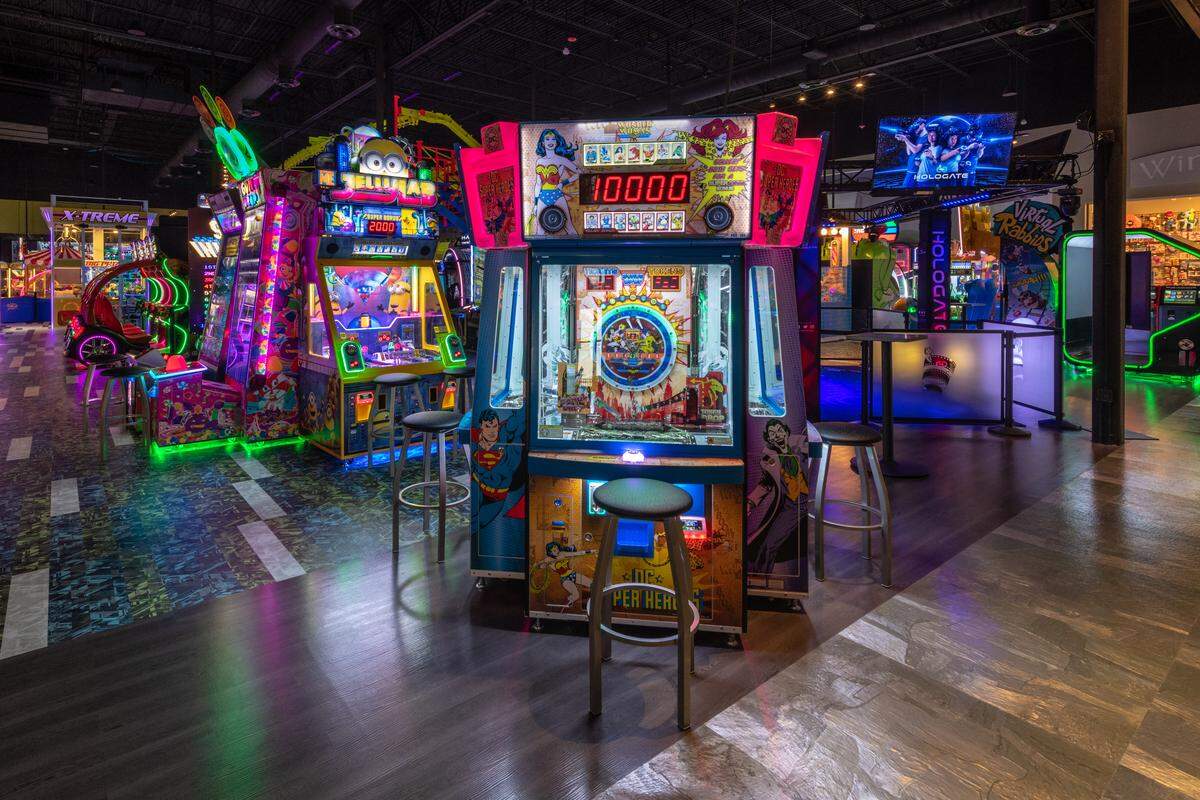
The centerpiece — a 90,000-square-foot Cinergy Entertainment complex — was expected to be completed this summer. Jeffrey Benson, founder and CEO of the Dallas-based company, told The Star that the company is still a tenant and committed to the project, but is “doing everything necessary to protect Cinergy’s interests.”
“The reason for the project going on hold was 100% the decision of the developer,” Benson said in an email. “If the developer were to agree to satisfy their debts and begin construction again, I would think we could settle our differences with the developer and see the project through to completion.”
The rest of the project — a food hall, apartments, retail and a hotel — was supposed to be finished by December 2021 under the terms of the city of Mission’s redevelopment agreement.
But now it’s uncertain if the developer can meet that deadline, and whether tenants will stick around long enough to find out.
“The ideas that were presented prior to COVID-19 were really great ideas in terms of what the community would like,” Mission Councilman Ken Davis said. “But following this pandemic, it’s very difficult to see how an entertainment center, theater and restaurants are going to do until we get a vaccine. So it puts a lot of uncertainty in the situation, not only for the city, but certainly for the developer.”
Some residents are wondering if they’ll be staring at a mostly barren site for another 15 years.
“I am very frustrated,” said Anne Pritchett, who lives nearby. “My property values are affected by this mess. … We have given them 15 years to fix it and we still have a big ugly empty lot in a high profile location.”
‘We’re all disappointed’
For years after the Mission Center Mall was demolished, the vacant acreage was the target of criticism, earning nicknames like “Mission Mudhole.”
But at the start of this year, things were looking up.
Tom Valenti, of Cameron Group, had overcome several setbacks since purchasing the land, attempting to keep funding afloat during the Great Recession, addressing delinquent property taxes and securing multimillion dollar loans.
And finally this past winter, officials had something to celebrate. The first visible sign of progress was, in part, made possible by the developer securing a lease with Cinergy Entertainment sooner than anticipated. Last October, the City Council amended its redevelopment agreement, saying Cinergy’s desire to open in summer 2020 — with 10 movie theaters, a bowling alley, zip lines and more — was driving a new construction schedule.
But just as the entertainment center and accompanying parking garage were taking shape, construction crews were instructed to stop working. Equipment left the site in early June, as the COVID-19 pandemic brought other projects to a halt across the metro and country.
City officials announced that one of the developer’s private lenders, Cottonwood Management, was putting its $60 million in financing on hold. Without the funding secured and final loan documents in hand, Mission City Administrator Laura Smith said the city would not go to the market to sell an estimated $28 million in special obligation bonds.
Smith said the city has not received finalized loan documents for Cottonwood’s financing or from any of the other private lenders, and is now in a holding pattern.
“I can tell you that every council person and staff person that I’ve worked with for the last 15 years has wanted this project to succeed,” Smith said. “But the city does not own the land. At the end of the day, we have to control what is ours to control. And we have.”
Matt Valenti said that the situation is not unique amid the pandemic. “Since March,” he said, “there have been no mixed-use development projects with entertainment and hospitality components that have been able to sell prospective sales-tax-based special obligation bonds in the country.”
But city officials still sense the public’s frustration.
“I think we’re all disappointed. There’s no doubt about that,” said Davis, the Mission councilman. He and other officials are waiting to hear if the developer will request an extension to the construction completion deadline.
Contractors are uneasy
Messick’s 50-employee firm filed a lien for $665,559 worth of work completed on metal stud framing, drywall installation, drywall finishing, acoustical ceilings and insulation at the Cinergy building.
“For a small company, that makes it hard to keep cash flowing,” Messick said. “That’s labor and materials we’ve done and paid for.”
Messick said he was first told that construction had to halt because of safety concerns surrounding the pandemic. Then he was told the developer was seeking to refinance and then later he was informed of problems in the bond market.
None of Metro Interiors’ other projects have been stalled by the pandemic, Messick said, and this was only the second time in eight years the company has had to file a mechanics lien. Messick has lived in the metro for 35 years, driving past the highly visible site countless times.
“You always heard people talking about it was going to be this, it was going to be that. We thought everybody had their i’s dotted and their t’s crossed this time,” he said.
While he is frustrated, Messick said he would consider going back to help complete the project after his invoices are paid and he has assurance that financing is secured.
“I just can’t believe it,” he said. “They’ve got to find a way to finish this.”
VCC, the general contractor on the project, along with several other contractors and suppliers, did not respond to requests for comment.
“It’s not uncommon when you have a construction project that pauses to see the contractors and subcontractors protecting their position,” Smith said. “The liens would have to be satisfied before we make any distribution of any bond proceeds.”
Olathe-based Temp-Con claims it is owed $426,686 by the general contractor. Company President Luke Chambers said his sheet metal firm installed ductwork on the Cinergy building.
He said it’s fairly unusual to file liens against a project.
“For us, it’s a last resort,” he said. “In this instance, the owner is aware that we were doing it.”
Chambers said he is willing to send crews back to finish.
“We’ve been told the owner is planning to move forward with it and he’s confident he will,” he said. “The specifics on how he plans to do that, I couldn’t say.”
Right idea at the wrong time?
Debbie Kring has been on the Mission City Council since 1999, when Mission Center Mall was still open. She was on the council when the mall was torn down, when Tom Valenti first arrived in Mission and later when city officials went to Guam to tour an aquarium concept that was once envisioned at the site.
Plans for the parcel have taken on a variety of forms. At one point, developers tried to get construction going with a Walmart Superstore, which proved unpopular with Mission residents and ultimately the City Council.
Kring said that the developer landing Cinergy was a “great bonus” to the community.
“It’s a lot more optimistic at this level than if we had a Walmart,” Kring said.
The concept of a mixed-use project, anchored by the entertainment complex, was welcomed by many residents and nearby business owners. Some agreed that the downtown — which is largely built on locally owned small businesses — could benefit from a new entertainment option, more housing, a 200-room Marriott Element hotel and a 40,000-square-foot food hall curated by celebrity chef Tom Colicchio.
“I think it would generate more foot traffic in downtown Mission,” said Doug Gorham, who works across the street from the project at the Cremation Center of Kansas City. “There’s also a grocery store that’s been vacant for several years near there, so I thought it might spur the rental or sale of that. So I don’t know. We’ll have to wait and see.”
But the coronavirus pandemic has taken a large toll on the entertainment, hospitality and restaurant industries. A couple of restaurants in the area shut down during stay-at-home orders and then permanently closed, including Lucky Brewgrille on Johnson Drive.
“I wish we had not lost them. But I think the business environment is very difficult right now. We have to think about what’s going to be next. How is it going to resurge after the pandemic? And I don’t think any of us have that answer yet,” Davis said.
He said it’s becoming more difficult to envision any of the planned businesses opening soon as the virus continues to spread.
“There are a lot of empty theaters around right now,” Davis said, pointing to local venues as well as the financial struggles of Leawood-based AMC Theatres, which on Thursday announced it was again delaying reopening, this time to mid- to late August.
“For all of those concepts that were part of the project, the removal of the financial support for the project calls everything into question.”
Benson said that Cinergy is still committed to building its entertainment center on the site. A spokeswoman for Marriott International did not return requests for comment.
Valenti’s partner in Mission Gateway is Allen Gross, CEO of New York City real estate finance and management firm GFI Capital Resources Group. That firm owns several residential developments, including RMwest apartments in Kansas City’s River Market area. But its holdings also include hotels, which have been hard hit by record low travel during the pandemic.
Davis said his “biggest concern is that businesses that have been signed on for the location might not wait until the financing gets straightened out.”
Despite concerns, city officials interviewed echoed the same sentiment: The city is hamstrung by the developer’s ownership of the land.
“I’ve been on this from the very beginning. I’ve seen all levels of the agreement change and come forth and go back,” Kring said. “Quite honestly, the city does not have a lot it can do other than work with the modifications on the development agreement.”
Residents call for accountability
With the project’s financing in limbo, residents have begun to speculate about whether the City Council will consider granting the developer an extension to finish the project.
Smith said that request has not yet been made.
“Ultimately, the goal is to get a successful project built on that site. So if the developer were to make a request and the Council were to consider it, there would be a lot of COVID-related things factored into that decision to potentially extend that deadline.”
City officials argued that the development agreement protects taxpayers and the city’s budget. The city isn’t on the hook to pay off bondholders if the project goes under, for example.
The developer will have access to tax incentives based on the completion of the project. The tax-increment financing and community improvement districts are already in place, but no revenue is being generated from then yet.
TIF, CID and other tax revenues are pledged to repay the $28 million in special obligation bonds. The developer also would receive the surplus revenues after the bonds are paid in full, which in 2017 were estimated to be about $8.4 million over 6 to 8 years.
If the project does not meet the December 2021 completion deadline, and if an extension is not granted, the developer could be in default of the agreement, putting the incentives in jeopardy.
Right now, Smith said the development team is not at risk of default. It is up-to-date on all of its taxes. But if it were to default on taxes, that could harm the city’s chances of receiving an annual $600,000 payment used to repay stormwater work, she said.
“That would create a hole in our budget if that were not paid,” Davis said.
At this point, with structures quasi-built, there are limited options for the site.
“It stays the way it is or we have to tear it down. Well that’s not progress,” Mission Mayor Ron Appletoft said. “To abandon it midstream would not be good for either the developer or the city.”
Nearby resident Andrew Lagerstrom said he was surprised to learn that financing is not secured this far into construction.
“I think it is the city’s role to hold the developer accountable for meeting the estimated milestones on the project,” he said. “They really could use this opportunity to spearhead a metrowide precedent that shows that the city governments are truly thinking about what is best for their city and their thousands of residents instead of pleasing one developer.”
The mayor and several council members interviewed by The Star said they frequently get requests to turn the land into a park or other public amenity, which they cannot do as the developer owns the land.
“They’re the ones piloting the plane. If the plane doesn’t get off the ground, we’ll have to take another look at things,” Davis said.
“If we have no development agreement and the incentives go away, you’re still left with a developer who owns a piece of property that’s undeveloped,” Smith said.
For now, officials said all they can do is wait — something that residents in the Kansas City suburb have grown used to over the years.
“In a way, it’s more of the same,” Gorham said. “We’ve been waited so long. I guess we’re going to have to wait a while more.”
This story was originally published July 26, 2020 at 5:00 AM.