In COVID-19 economy, development spurt in downtown Kansas City faces uncertain future
Companies that might otherwise bring jobs to Kansas City are passing us up because we don’t have enough high-end office space ready on demand.
That was the pitch from developers and supporters of the 25-story $133 million Strata office tower expected to be built at 13th and Main streets in the heart of downtown. It’s the first office tower of its type in nearly 30 years — one built speculatively for multiple tenants rather than one company’s headquarters. Developers expected to start construction this year.
But the spread of the coroanvirus and its chilling effect on economic growth are slowing things down, said Jon Copaken, principal at Copaken Brooks. His firm partnered with Jury & Associates and H&R Block to build the tower, which was awarded significant public incentives.
“We’re still pushing as hard as we can,” Copaken said. “If you look at the decision-making uncertainty in the environment right now, it’s got to cause some delays no matter how hard we’re working.”
Now, construction is expected to start in the first half of 2021.
The pandemic’s ability to disrupt developers’ plans goes beyond Strata. The city’s brand new Loews Kansas City Hotel was set to open in early April, but its grand unveiling was pushed to June 1. Now, with several major construction projects planned across downtown, firms are grappling with how to move forward in an uneasy time.
Strata’s major selling point for Kansas City officials was its speculative nature, meant to draw companies ready to add or move workers right away rather than building their own space. But in the midst of the COVID-19 pandemic, Copaken said lenders that would have previously backed a project with no or few committed tenants now might want more done deals before financing.
“Some of the norms that we’ve had six months ago are definitely changing,” Copaken said. “And for lenders to finance projects in general, they’re going to need more signs that tenants are leasing space.”
Though not the only office tower planned in downtown recently, Strata is the most consequential and complex. And right now, Copaken said many companies have slowed decisions on future office expansions or moves.
“Companies’ ability to make a decision based on space needs is difficult,” he said. “People are kind of consumed with a lot of near-term decisions. And there’s a lot of unknowns about how to configure yourself for the future.”
It’s hard to know how the pandemic will change the commercial real estate industry. in the future.
Normally office planners allow for 150 square feet per person, said Evan Welsh, vice president at Fairway-based Platform Ventures, which is planning to build at 13th and Wyandotte streets. He estimated that ratio could nearly double to 250 square feet “just to allow for a little more social-distancing.”
Others think COVID-19 will hurt demand for office space as more employees shift to working from home, permanently.
“That’s one school of thought,” he said. “A different school of thought is that companies are going to need more distance, more space. They’re not going to pack people in as tight. Where the truth is, I don’t know.”
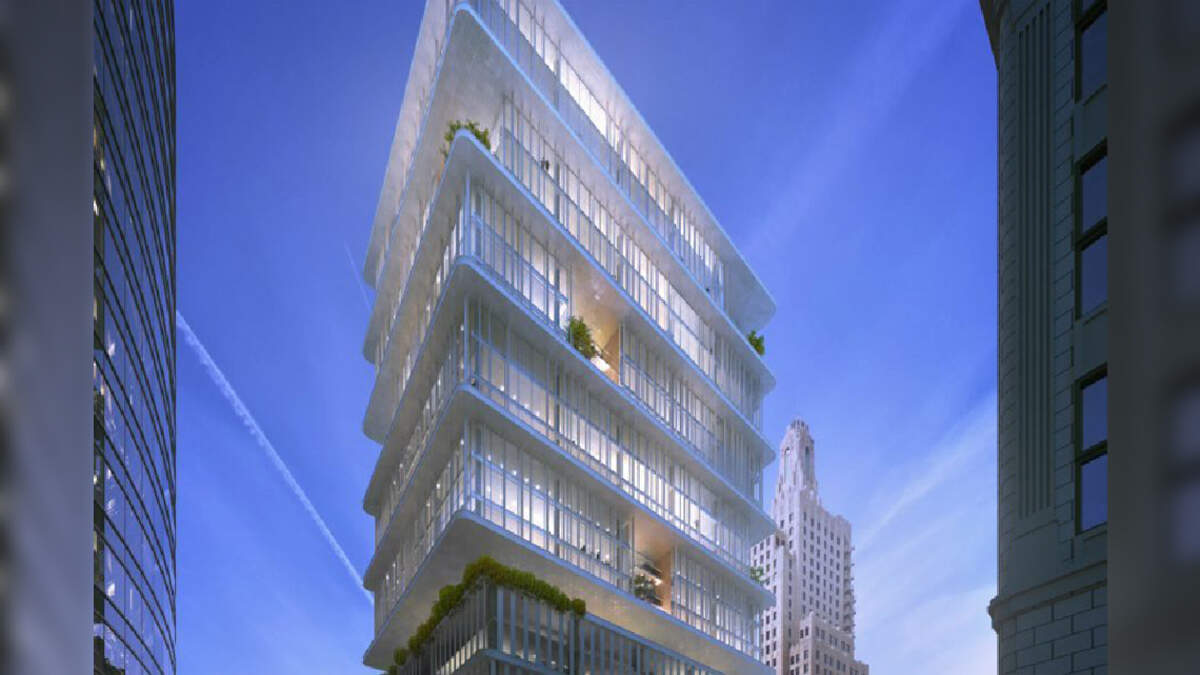
Strata’s history
The City Council voted 7-4 in favor of an agreement to guarantee $36 million in debt for Strata’s garage, meaning if the tower doesn’t make enough money, Kansas City would have to pay off some of its loans. The vote came after months of debate and a near defeat of the deal. Several council members took serious issue with the level of public investment asked of the city.
The tower, to be built atop the Yardhouse restaurant, will also receive a 75% property tax abatement and a 75% redirection of city earnings taxes from jobs created at the site.
At the time, developers were also plagued by threats of lawsuits from Maryland-based Cordish Companies, which has developed much of the Power & Light District and received subsidies from the city to build luxury apartment towers downtown.
The 2004 agreement that underpinned much of its downtown development gave H&R Block the right to develop above Yardhouse for several years. But Cordish argued that time had expired and it now has the rights to build there because it had developed the spot.
Asked via email this past week about the issue, Nick Benjamin, a Cordish executive and executive director of the Power & Light District, said “there are some ongoing discussions amongst us, the city and Strata.”
Benjamin didn’t respond to a follow-up email seeking clarification.
Asked about Benjamin’s remark, the city’s spokesman, Chris Hernandez, said in an email that “everything looks good from our end.”
“We are doing some surveying and platting work right now — those were our responsibility, and are underway.”
Around downtown
Copaken also has development rights to build on a nearby parking lot at 13th and Grand. Originally proposed as a speculative 500,000-square-foot, 25-story tower in the shape of a twist, the developer has downsized the proposal to a 10-story, 270,000-sqaure-foot version.
That project is subject to tenant needs and may change again, Copaken said.
“It’s really demand driven,” Copaken said. “If we felt that there were 500,000 square feet of tenants out there, we’d go with the twist design.”
The pandemic has changed little for Platform Ventures’ smaller speculative office tower planned at 13th and Wyandotte streets. Developers initially sought to build an even smaller office tower to be opened by the end of 2019. Now, they’re working on a 14-story $70 million tower.
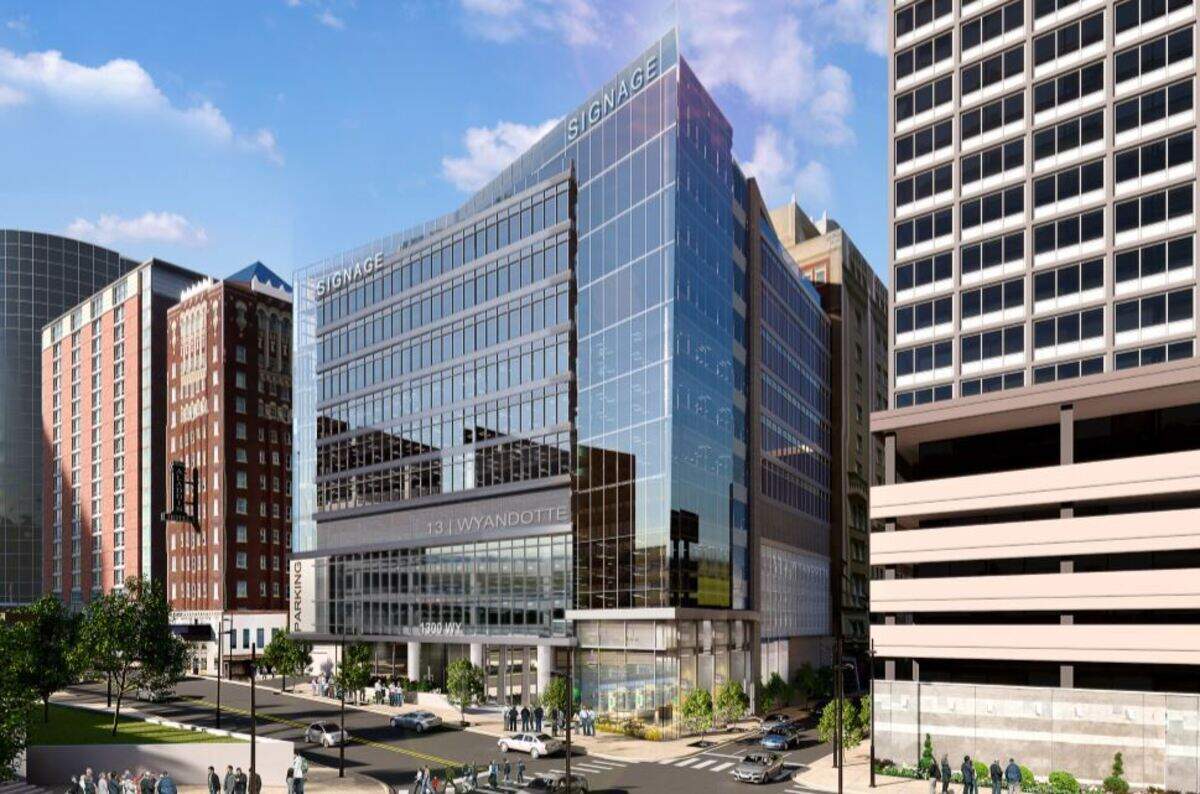
Welsh said crews were previously expected to start construction this spring, but given the drop in materials prices brought on by COVID-19, the firm planned to get updated cost estimates. He expects construction to now start this summer.
Despite the economic uncertainty, Welsh said the company didn’t struggle to obtain financing for the project. It has a deal with a lender despite having no signed leases, he said.
“We have our lender lined up, so we’re good on that front,” Welsh said. “They will require some level of leasing before they fund their first dollars, but we have a pretty long runway of equity before that happens. We’re not concerned about that.”
The project — 155,000 square feet and more than 400 parking spaces — received a 25-year property tax abatement. For the first 10 years, 75% of those taxes will be abated; for the remaining years it’s 37.5%. The project also received a sales tax exemption on construction materials.
Nearby, Platform Ventures transformed the historic Kansas City Club building into the high-end Hotel Kansas City, and it plans to convert the Muehlebach Hotel into apartments. The hotel was expected to open in July, but he said it will now open in August. Those projects are seeking historic preservation tax credits.
The combined project is also expected to receive up to $10 million in sales tax created at the site.
“There’s no reason to open a hotel when nobody wants to stay at a hotel — that’s the short answer,” Welsh said, adding that there was no reason to “rush to the finish line” while people are limiting their travel.
In the River Market, the Kansas City Area Transportation Authority is moving forward on a plan to convert a surface parking lot at Third Street and Grand Boulevard into a mixed-use development complete with transit stops.
The project isn’t yet off the ground. The KCATA selected a developer, and the two organizations are working out an idea for the development.
Brien Starner, vice president for community economic development at KCATA and president of RideKC Development Corp., said he expects to have an agreement with firms working on the project later this summer. The $45 million to $50 million project would then go through whatever incentive and zoning processes are necessary with an anticipated groundbreaking next spring.
The KCATA previously selected Briarcliff Development Co. to build a timber frame building at the site, but the deal fell apart.
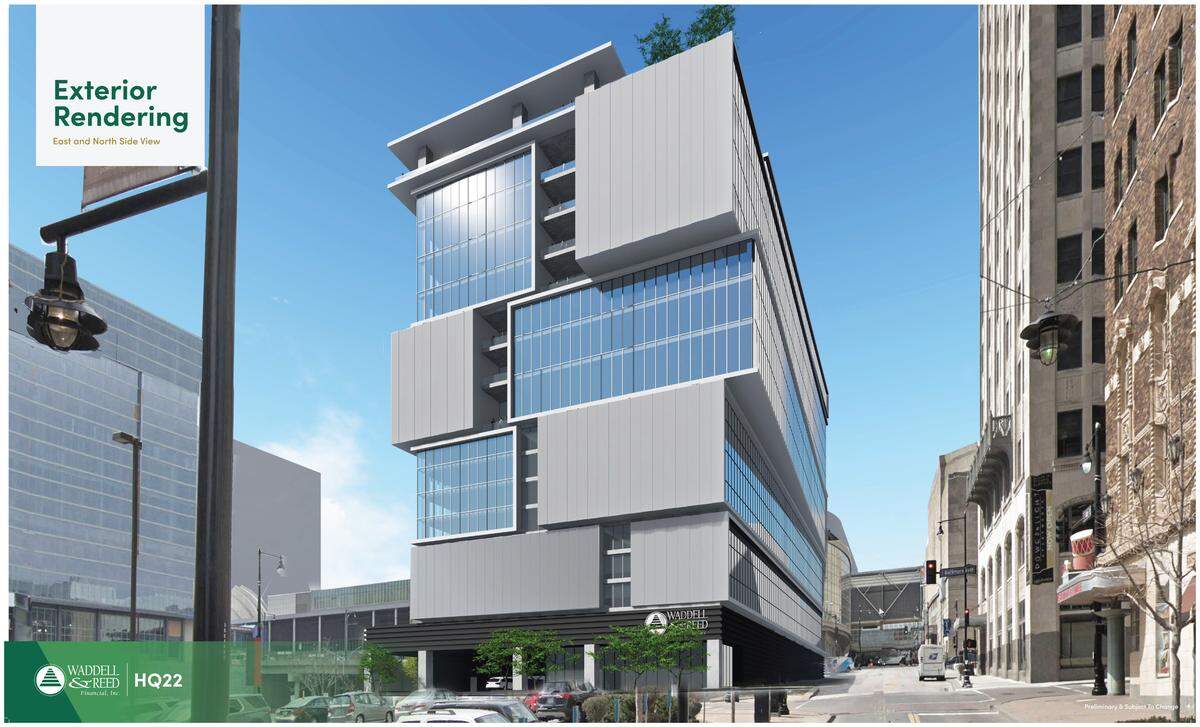
Near the Kansas City Convention Center, the other hotly debated development project of last year is still charging ahead. Crews have demolished the old building, begun excavation and started to erect a crane at the site.
Waddell & Reed, a financial services firm based in Overland Park, plans to move its corporate headquarters to a new 18-story $140 million tower at 14th Street and Baltimore Avenue. Expected to be one of the last projects of the economic development “border war” between Kansas and Missouri, the project received $62 million in state incentives and $35 million in local subsidies to move its employees just a few miles.
Despite the pandemic, which has knocked a dent in the investment funds Waddell & Reed manages, the company expects to complete its headquarters in 2022, said company spokesman Roger Hoadley.
“Even as the city and all of us face difficult circumstances brought on by the pandemic, we’re pleased that the project has been a source of jobs for a range of employers working at the site,” Hoadley said.
In terms of jobs, Hoadley said the company’s “headcount projections for the new headquarters remain the same.”
“With our holistic approach to navigating through this pandemic, since the disruption, we have not initiated any layoffs, furloughs or reduced hours,” Hoadley said. “We have paid spot bonuses to certain employees, implemented a temporary hourly wage increase to designated client services personnel, and increased certain benefit coverage for specific COVID-19 related treatments.”
Before the pandemic, Copaken thought Kansas City had economic momentum. When it ends, he believes the city might have a competitive edge because its relatively low density provides a more breathing room as companies start “thinking about the changing work environment in the next few years.”
“We had and have this momentum. We have the talent. We have the relatively lower cost of living,” Copaken said. “And I think at the end of the day, people still want an urban lifestyle.”
This story was originally published May 26, 2020 at 5:00 AM.