
Amid labor dispute, bustling West Coast ports fall quiet
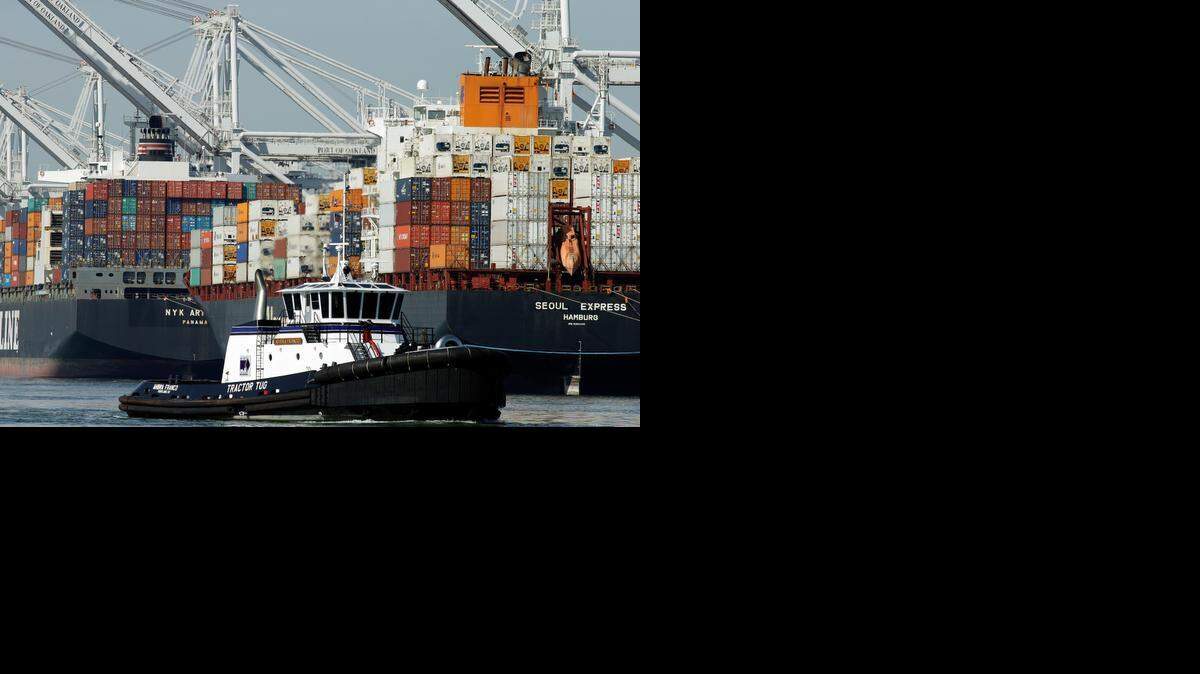
Seaports in major West Coast cities that normally buzz with the sound of commerce are falling unusually quiet.
Companies that operate marine terminals said they weren’t calling workers Thursday to unload ships that carry car parts, furniture, clothing, electronics — just about anything made in Asia and destined for U.S. consumers. Containers of U.S. exports won’t get loaded either.
The partial lockout is a result of an increasingly damaging labor dispute between dockworkers and their employers.
The two sides have been negotiating a new contract, and stalled talks have all but paralyzed 29 ports that handle about one-quarter of U.S. international trade — around $1 trillion worth of cargo annually.
The backup could be felt across the country soon. The International Trade Council of Greater Kansas City has warned its member shippers, both exporters and importers, to be on alert to shipping stoppages.
Rick Held of Held & Associates in Kansas City said, “This is truly a desperate situation. For more than nine months, negotiations … have not resulted in a contract even after federal mediation stepped in.”
The trade council’s president, Sharon Valasek, said, “Without resolution, this crisis will directly impact most industries in and around the Kansas City area, affecting trade in agriculture goods and equipment, machinery and manufactured parts.”
The 15 ships scheduled to arrive Thursday at the ports of Los Angeles and Long Beach, by far the nation’s largest complex, will join a trail of about 20 others anchored off the coast, waiting for berths at the docks to clear. There also are clusters of ships outside the ports of Oakland, as well as Seattle and Tacoma in Washington.
The Southern California slots weren’t opening Thursday. The ships occupying them were being idled because companies that operate marine terminals did not call dockworkers to operate the towering cranes that hoist containers of cargo on and off ships.
The berths won’t clear Saturday, Sunday or Monday either. On each of the days, dockworkers would get bonus pay — for the weekend or Presidents Day holiday — and employers refuse to pay extra to longshoremen who have slowed their work rate as a pressure tactic, said Steve Getzug, a spokesman for the Pacific Maritime Association, which is bargaining on behalf of terminal operators and shipping companies.
Dockworkers deny slowing down and say cargo is moving slowly for reasons they do not control, including a shortage of truck beds to take containers to retailers’ distribution warehouses.
Employers could still hire smaller crews that would focus on moving containers already clogging dockside yards onto trucks or trains in an effort to free space amid historically bad congestion. Full crews would still service military and cruise ships and any cargo ships bound for Hawaii.
But those are small operations compared with working container ships that are as long as some skyscrapers are tall.
Cargo has been struggling for months to cross the troubled West Coast waterfront. Containers that used to take two or three days to hit the highway have been taking a week or more, causing disruptions.
The maritime association blames longshoremen for work slowdowns since November. In recent days, the International Longshore and Warehouse Union said companies were exaggerating the extent of congestion so they could cut dockworker shifts and pressure negotiators into a contract agreement.
The last contract bargaining session was a week ago. Negotiations were to resume Wednesday in San Francisco but were canceled despite heavy — and increasing — pressure from elected officials and businesses to reach a deal.
Talks have stalled over how to arbitrate future workplace disputes. Some of the biggest issues, including health care, have been resolved with tentative agreements.
In response to employers’ decision to limit work crews, announced Wednesday, the union noted that longshoremen also were not hired to load or unload vessels last weekend.
“The union is standing by ready to negotiate, as we have been for the past several days,” union president Robert McEllrath said in a written statement. He suggested the maritime association is “trying to sabotage negotiations.”