
Waldo apartments will help former foster care youths, but some neighbors are concerned
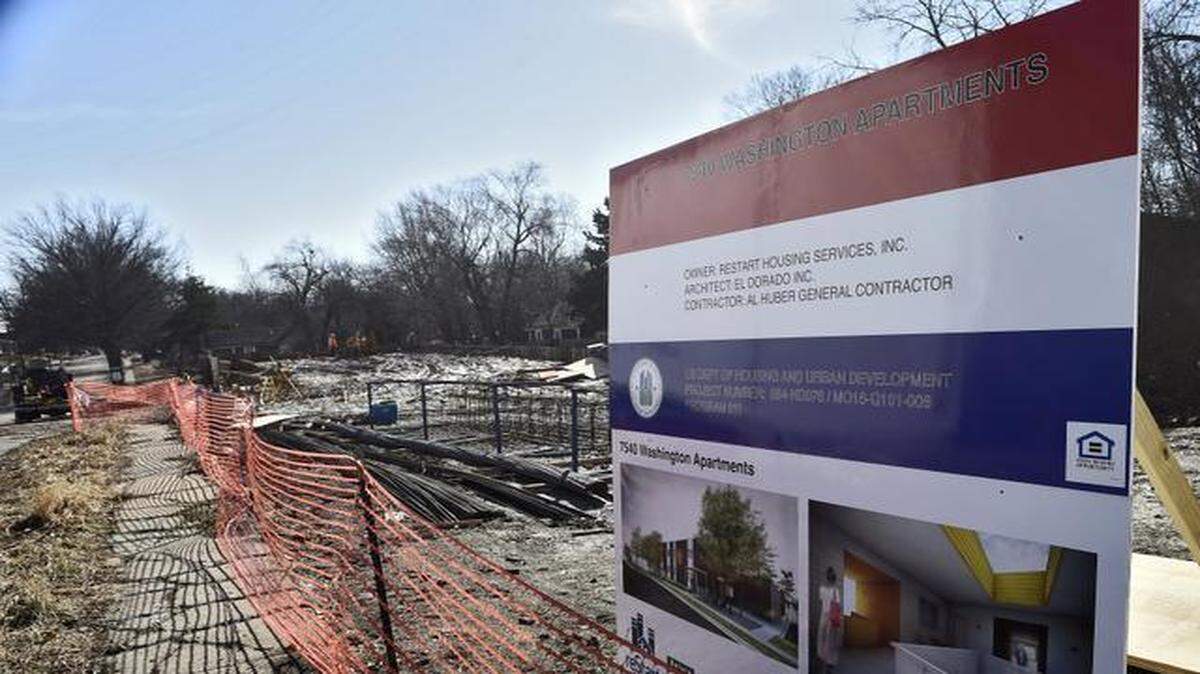
A small apartment building under construction in south Kansas City, lauded by social service providers as a breakthrough, is stirring neighborhood angst.
The 14-unit property in the heart of Waldo will be the city’s first supervised, independent living alternative for young people who have aged out of the foster care system but aren’t quite ready to live completely on their own.
“It’s new. It’s innovative. It’s desperately needed,” said Evie Craig, chief executive of reStart Inc., one of several nonprofit, government and private entities that are cooperating on the project.
Others aren’t happy about it.
“It’s a complete shock. It sucks. It can’t help property values,” said Mark Evans, who has lived half a block from the site for 27 years.
Craig and colleagues in the social service system say the apartments fill a housing gap that will help deter homelessness, crime, unemployment and substance abuse among young people who don’t have all the skills needed to be thrust out into the “real” world when they turn 18.
The building will house 14 young people in individual one-bedroom apartments plus a resident manager-counselor’s apartment. Residents will be screened by social service and housing agencies based on their assessed needs.
But Evans and some of his neighbors say they’re worried about safety, crime and economics if a “troubled” population is planted in government-sponsored housing on the Washington Street site that bridges single-family homes and commercial properties.
“What is it, exactly?” asked Sue Walton, a ReMax real estate agent who knew of a canceled sale contract on a house a block away from the apartments. “People are concerned.”
Neighbors learned about the apartments a few weeks ago when a large sign went up at 7540 Washington St., announcing a project of the U.S. Department of Housing and Urban Development and owned by reStart Housing Services Inc.
Though it may be a groundbreaking facility for Kansas City, the apartment building mirrors long-standing projects in some other cities.
Ruth White, executive director of the National Center for Housing and Child Welfare, said support is growing around the country for “reasonably sized apartments like this that can provide on-site services to help young people with case management — to make sure they go to school, keep appointments, get to their jobs.”
The goal, White said, is to provide a safe, monitored living arrangement for a period of time until the residents gain more independent living skills as well as income from work “to be able to launch out on their own.”
White said she had researched or visited similar sites and “never found any scandals” related to the former foster care population they served.
“You hear more about fraternities getting into trouble than people in these supervised living arrangements,” White said. “Of course I understand community reaction, so it’s wise to talk about it. I don’t criticize anyone for asking questions about who’s going to live there. If it were my neighborhood, I’d ask questions.”
White suggested holding meetings to let the neighbors meet the residents, to hear their stories, to “find out they’re not pariahs or gang bangers but just young people trying to make ends meet.”
The Waldo development had no pre-construction community meetings yet, partly because no special permitting or zoning change was needed. There have been no homes association or business association meetings about it, either. And it’s too early to have residents assigned to the units.
“Nothing has been done improperly,” said Diane Botwin Alpert, who owned the vacant corner property for years.
Alpert said she was comfortable that reDiscover’s residential services program will screen and monitor residents.
But it’s partly the role of reDiscover, an agency that provides mental health services, that disturbs neighborhood residents. Clients of reDiscover may be suffering bipolar disorders, major depression, schizophrenia and other mental illnesses.
April Schafersman, who works in reDiscover’s Transitional Living Program, won’t be directly involved in placing apartment residents, but she said she’s well aware of the need for such housing options.
“Those leaving foster care oftentimes have experienced simple or complex trauma,” Schafersman said. “They may be chronologically 18 or 21 but emotionally younger. They could live by themselves, but they need the oversight of an adult to give them guidance.”
The apartment’s resident manager will be a 24-7 coach or counselor to help residents “live safely in the community,” she said.
In the long run, advocates say, the apartments — for which residents will pay rent based on their financial abilities — are better for the community than setting former foster youth adrift on their own.
More than 800 youth aged out of the foster care system in Jackson County in 2013, the last full year for which statistics are available. Authorities point out that the apartment under construction can serve only 14 of them at a time.
National statistics indicate that more than one in five young people who age out of foster care will become homeless after age 18. Only 58 percent graduate from high school by age 19. Within two years of being “aged out,” one in four is involved in the criminal justice system. And by age 24, half of the aged-out population is unemployed.
“These young people need adjustments to make it in the adult world. They need assistance,” said Nathan Ross, a youth programs supervisor for the Midwest Foster Care and Adoption Association. “They need continued access to adults who understand their needs, who can help them stay on track to be productive.”
Ross also said the setup had been proven in some cities. “This is really a social good. It’s better for the community as a whole,” he said.
Ross’s grant coordinator colleague at the foster care association, Mike Othic, finds himself in an unusual position concerning the apartments.
“I’m a Waldo resident myself,” Othic said. “It’s interesting to see the weird combination of support and animosity. But I have to ask how the area feels about Gillis — a residential mental health facility — that’s already in the neighborhood. And I have to think the apartments won’t be marginally different from any other small apartment building in the neighborhood. I mean, how much do we know about who’s living in any of them, in any house?”
To reach Diane Stafford, call 816-234-4359 or send email to stafford@kcstar.com. Follow her online at kansascity.com/workplace and @kcstarstafford.
This story was originally published February 9, 2015 at 12:34 PM with the headline "Waldo apartments will help former foster care youths, but some neighbors are concerned."