
New king in Saudi Arabia is unlikely to alter oil policy
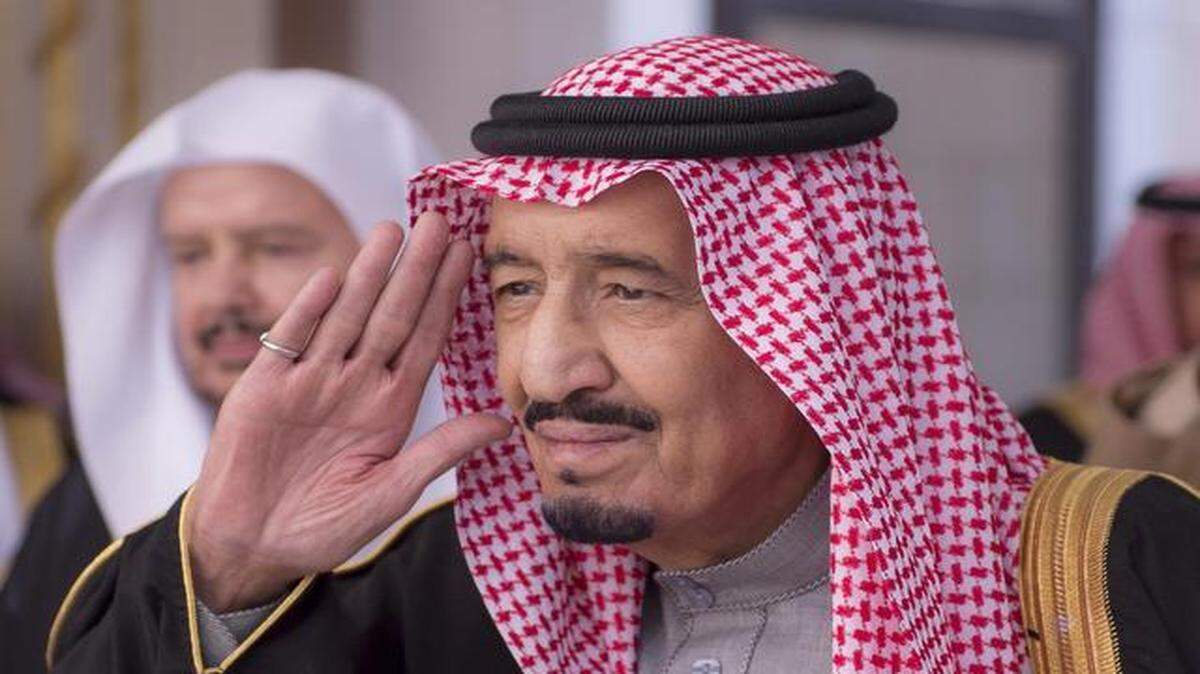
The death of King Abdullah of Saudi Arabia on Friday is unlikely to deter the desert kingdom from maintaining high oil production despite the recent sharp drop in prices, analysts said.
Saudi Arabia’s policy results from a consensus of the kingdom’s leadership and energy experts, and it will not be easy to abandon, longtime observers of Saudi Arabia say.
“There is no near-term reason to modify the kingdom’s position,” Sadad al-Husseini, a former executive vice president and board member of Saudi Aramco, the national oil company, said in an interview.
Al-Husseini, who now runs his own energy consulting firm, noted that Saudi Arabia had only fully detailed its position to maintain its oil production quota at a November meeting of OPEC in Vienna and that it was likely to wait for at least several months to see how the policy played out.
“The kingdom is unlikely to reverse a policy that it has just announced with the outcome still evolving,” he said.
The new ruler, King Salman, who was crown prince and a brother of Abdullah, said in a televised address Friday that the kingdom would not change course and would maintain “the correct policies which Saudi Arabia has followed since its establishment.” This month, Salman seemed to endorse the current oil policies in a speech given on behalf of his brother.
The price of Brent crude, the international benchmark, rose nearly 2 percent in morning trading Friday, reflecting uncertainty among traders about the continuity of Saudi policy. But the market erased much of those gains after the new king said that the policy would remain unchanged. Prices have fallen about 60 percent since June amid a glut of production and slowing global demand.
During a long career as governor of Riyadh province, the new king, who is 79, established a reputation as a conciliator among rival factions in the huge royal family, but he has suffered bouts of poor health in recent years. Simon Henderson, a Middle East analyst at the Washington Institute for Near East Policy, said it was most likely that the reins of power, including over oil policy, would be held by a group of advisers now forming around the king.
“Now that he is older, he is likely to take a more hands-off approach, relying on a coterie of advisers, which will probably include several of his sons,” said Henderson, who has written extensively on Saudi succession issues.
Salman moved quickly on Friday to begin forming that inner circle. He promoted his son Mohammad bin Abdul Aziz bin Salman as chief of the royal court and private adviser, replacing Abdullah’s chief adviser, Khalid al-Tuwaijri. The king’s son is likely to be a central figure along with another son, Abdel Aziz, who is a senior official in the oil ministry.
Ali al-Naimi, who has been the kingdom’s oil minister for 19 years and has been the chief proponent of Saudi Arabia’s policy of maintaining market share, will remain in that position, according to the official Saudi Press Agency.
Saudi Arabia is the most influential of the 12 OPEC members because it is by far the largest producer and the only one with the ability to substantially vary output to affect markets. In December, Saudi Arabia produced 9.6 million barrels per day, a slight decline from the previous month but still about 10 percent of the world total.
In recent years, Saudi Arabia has adjusted its production in what has been a mostly successful effort to keep markets balanced and prices in the $100-a-barrel range. But as prices began falling last summer, the Saudis and their Persian Gulf OPEC allies declined to intervene, contributing to the sharp drop.
Even gulf oil officials in recent interviews have said they were surprised by how far and how fast prices have fallen. The expectation around the gulf appears to have been that a floor would have been found in the range of $50 to $60 a barrel.
Gulf oil officials say privately that Saudi Arabia and other OPEC producers have not completely ruled out a cut that might help calm the markets. But the gulf producers insist that a wide range of countries inside and outside OPEC participate in any effort to absorb the glut in the markets — a long shot at this point.
This story was originally published January 23, 2015 at 5:28 PM.