Five years post-COVID, KC workers are filling offices again — but still not like before
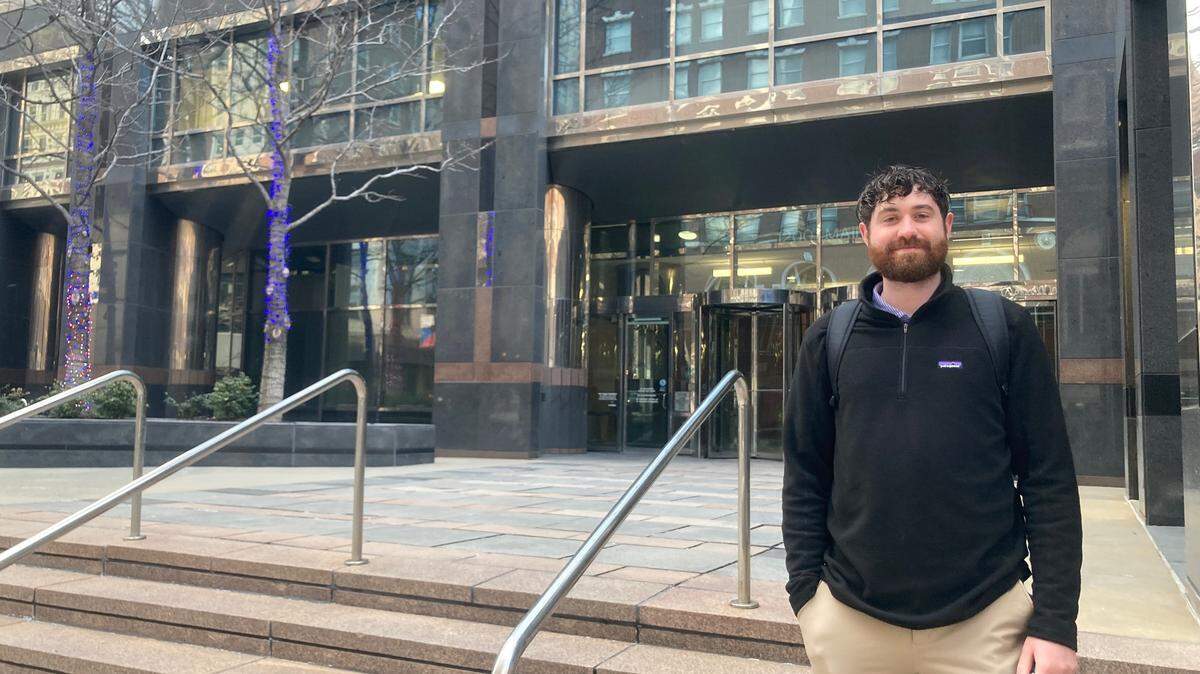
It was just after 8 a.m. Wednesday, and Joe Finkel, 24, was walking to work downtown, only steps from entering One Kansas City Place, home to his employer, the reinsurance company Swiss Re Group.
“I like to come to the office,” Finkel said at 1200 Main St., “just to see some of my co-workers, get that social interaction. Me: I typically will come in Tuesday through Thursdays. Mondays and Fridays, those are days people generally choose to work from home.
“Just waking up early, you know, getting going. Getting outside. I love the fresh air in the morning.”
His sentiment is the kind that Kansas City’s commercial real estate brokers love to hear.
Five years after COVID-19 decimated the commercial real estate market — turning offices into ghost towns and making working remotely from home a staple of American business — data shows that while vacancy rates in some pockets of Kansas City still remain double what they once were, in other pockets people are once again packing offices.
Downtown Kansas City is a case in point.
“As far as downtown goes,” said Thomas Wilson, director of business recruitment for the Downtown Council of Kansas City, “we’re actually seeing a pretty strong return to the office.”
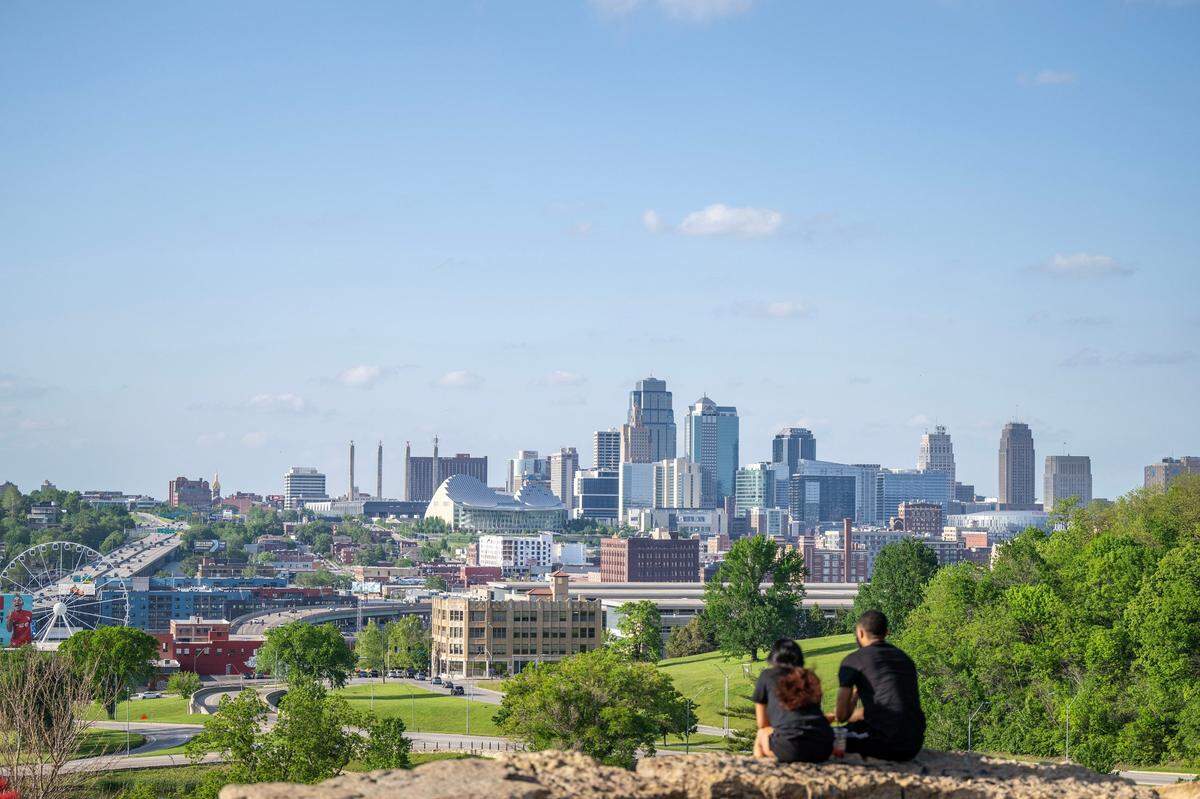
Are the numbers what they once were? No, said Gib Kerr, managing director in Kansas City of the real estate firm Cushman & Wakefield.
In 2019, only months before March 11, 2020, when COVID was declared to be a global pandemic, offices were packed and vacancies were few.
“Downtown’s vacancy rate was the lowest it had been in my entire career,” Kerr said of the pre-COVID days. “I’ve been doing this for 35 years. The market was really tight, and then, with COVID, the vacancy rate spiked.”
Analytics firms calculate their numbers differently, with some including all empty office space, others picking and choosing depending on square footage, or whether to include empty space in buildings that are owner-occupied. The general up and down trends they represent, however, are often the same.
The analytics firm CoStar, for example, charted the vacancy rate in Kansas City’s central business district — between the Missouri River and Crown Center — at 6.9% before COVID hit. By the end of 2024, it remained more than double that, at 16.4%. The Downtown Council, whose numbers tend to be close to 10% higher, puts the most recent downtown vacancy rate at 25.8%.
On a positive note, both sources note those numbers have plateaued.
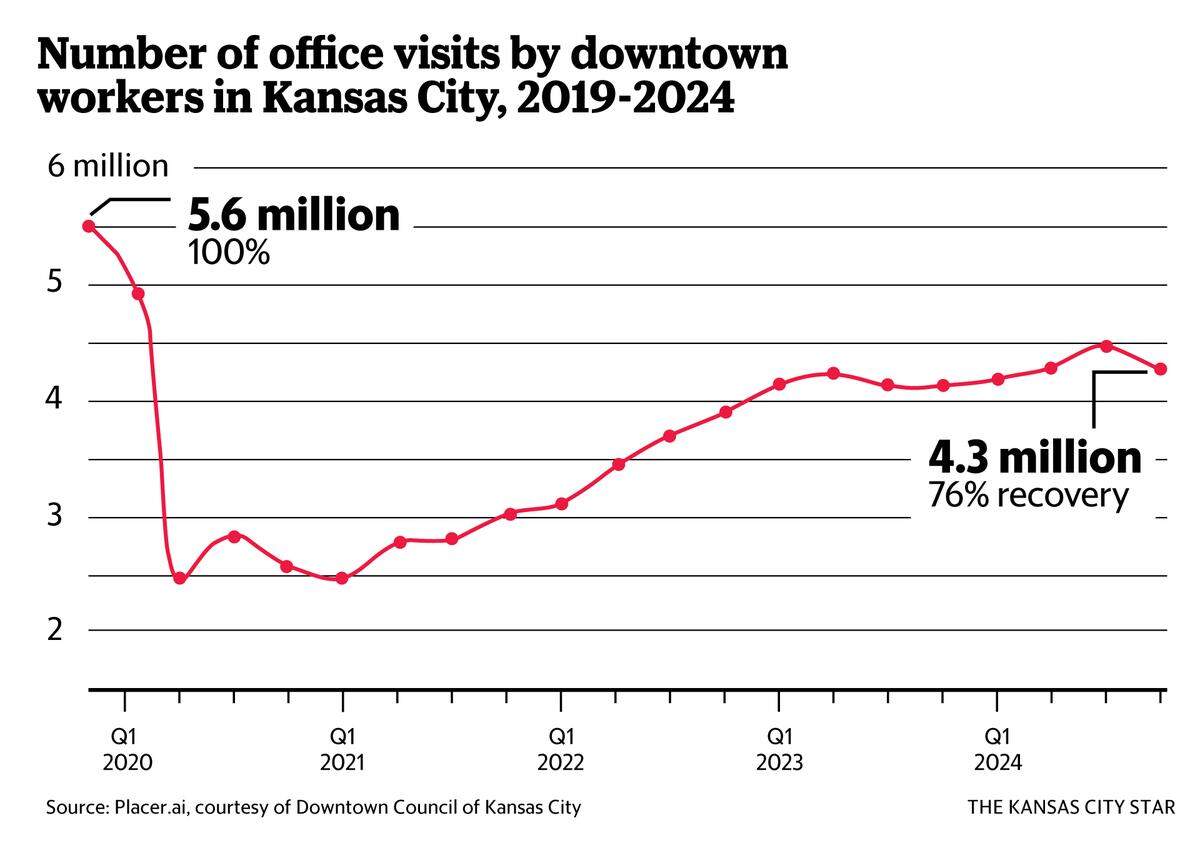
Also positive: Data supplied by Placer.ai, which tracks cell phone locations, indicates that before COVID, office workers in the final quarter of 2019 made about 5.6 million visits to their offices. Once the pandemic hit, the number plummeted by more than half.
But five years later, it’s at 76% of what it once was.
“Downtown workers are back, pretty close to pre-COVID numbers,” Kerr said.
CoStar’s data paints a mixed picture for the rest of the area:
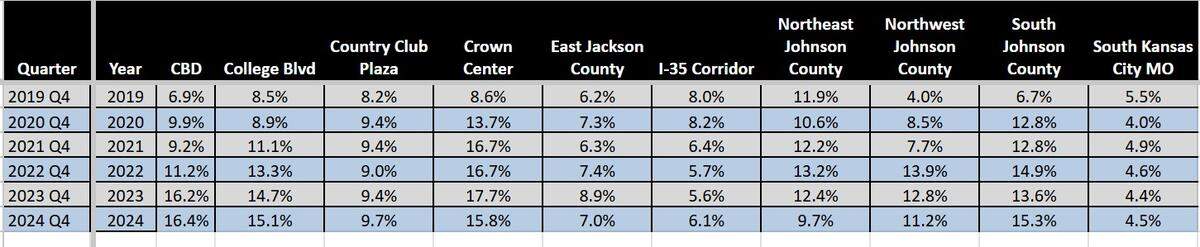
▪ In Johnson County, vacancy rates along College Boulevard and south Johnson County remain more than double what they were before COVID. And in northwest Johnson County, they’re nearly triple, rising from 4% before COVID, to more than 11% at the end of last year. On the flip side, vacancy rates in northwest Johnson County last year were better than they were before COVID, dropping from nearly 12% to 9.7%
▪ In eastern Jackson County, vacancies have all but returned to pre-COVID numbers.
▪ The Country Club Plaza, with an 8.2% vacancy rate before COVID, was at 9.7% in 2024. (The Downtown Council has it at 17%).
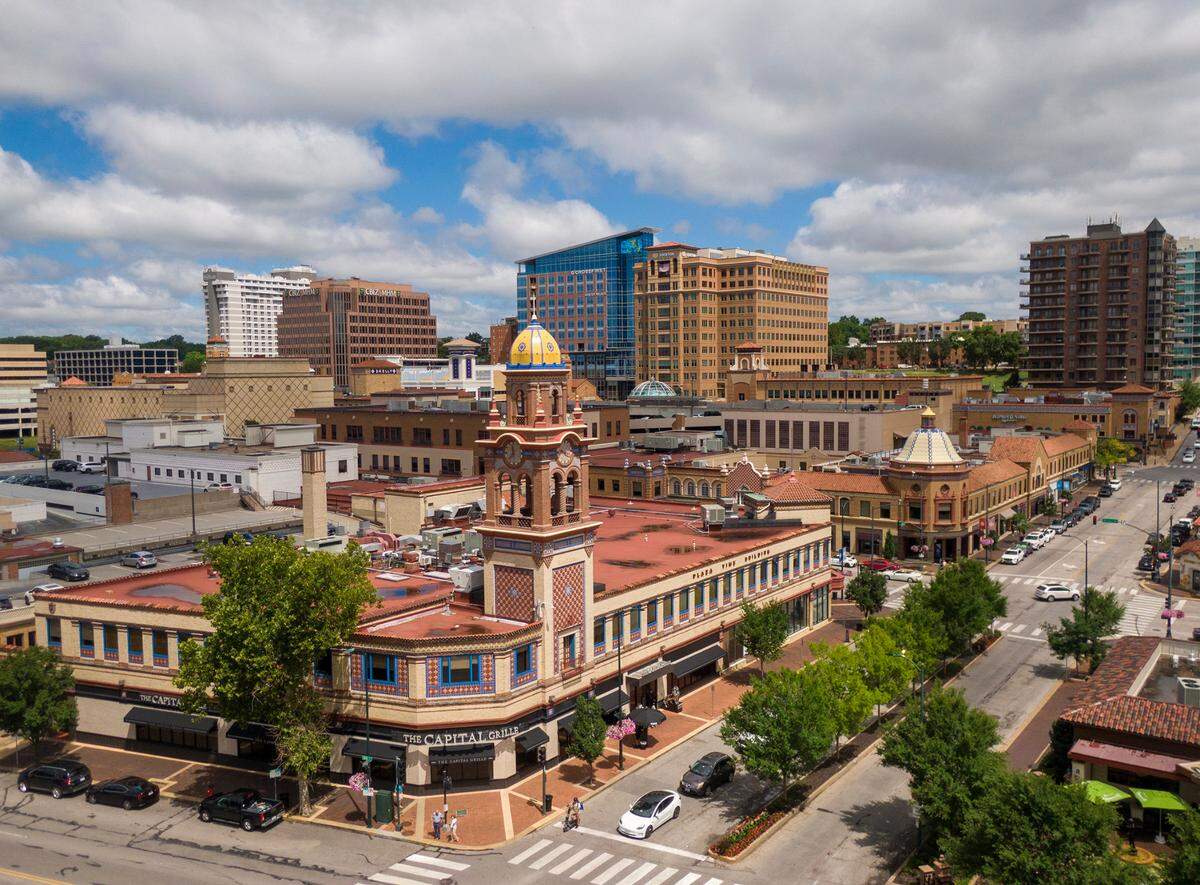
▪ At Crown Center, where The Star leases its office space, vacancies were high — nearly 16% at the end of 2024 (Downtown Council figures say 28%). The numbers are about double the figures before COVID. But, incrementally, the numbers have been improving.
“We had a really strong 2024 in office leasing,” leasing about 150,000 square feet, said Crown Center president Stacey Paine. “We’re really excited about that and proud of the year we had.”
In August, Crown Center announced that the Fidelity Security Life Insurance Company, at 3130 Broadway Blvd., would be taking over three floors, or about 75,000 square feet, at 2600 Grand Blvd.
Paine said she believes Crown Center’s amenities — such as restaurants, retail and hotels — have helped make it a draw. But, post-pandemic, she also thinks there is push to return workers to the office.
“I don’t think the days of working from home are gone,” Paine said. “I think people are hybrid. And I think a lot of offices are hybrid-to-stay. But I do think that it continues to evolve. And, as it continues to evolve, the weight is shifting back to the office more.”
Adam Tilton, senior vice president of capital markets for the real estate company CBRE, noted that, even now, there is a lot of “shadow occupancy.” Firms lease space, but it can be hard to tell whether those spaces are 20% full on any given day or 90% full.
He also believes office workers are coming back. Agents are seeing trends in opposite directions. Some employers are leasing, but leasing less, he said. Other are leasing, but are leasing more space, building that space out with amenities to draw workers back to their cubicles and offices.
Other trends: Newer office buildings — meaning those built between between 2015 and 2024 — are 92% occupied as of first quarter of 2025. Sixty-four percent of all vacancies in Kansas City market are in buildings built prior to 1990.
“If you talk to leasing agents, they’ll tell you that there’s been a lot of tour activity recently,” Tilton said. “Large users have started to strike on long-term deals. Some relocation deals are getting signed on 10-year-plus leases.
“That’s been happening at a weekly to bi-weekly rate. That’s the sort of thing that says, six months from now, we’re going to read reports that say vacancy just went down. I don’t think we’re skidding on the bottom anymore. Leases are getting signed.”
Employer again seem ready to see their employees again on something other than Zoom.
“What I’ll tell you is that, of people being hired now,” he said, “very few of those jobs are work-at-home.
“The benefit of hiring human beings to do work is to have them interact with each other, to create culture. That doesn’t happen when people work from home. Increasingly, that’s not what companies want. And I will tell you, just drive around south Johnson County at 8:30 in the morning and compare the traffic now to the traffic you were sitting in two years ago. Or look at the parking lots across the whole city.
“We’re not quite back to where we were before, because people don’t all go in at the same time. They don’t leave at the same time. But at some point, most people are going into the office now — particularly in Kansas City.”
This story was originally published March 17, 2025 at 5:00 AM.