‘Waste of money and time’: Will KC end liquor card rule for bar, restaurant workers?
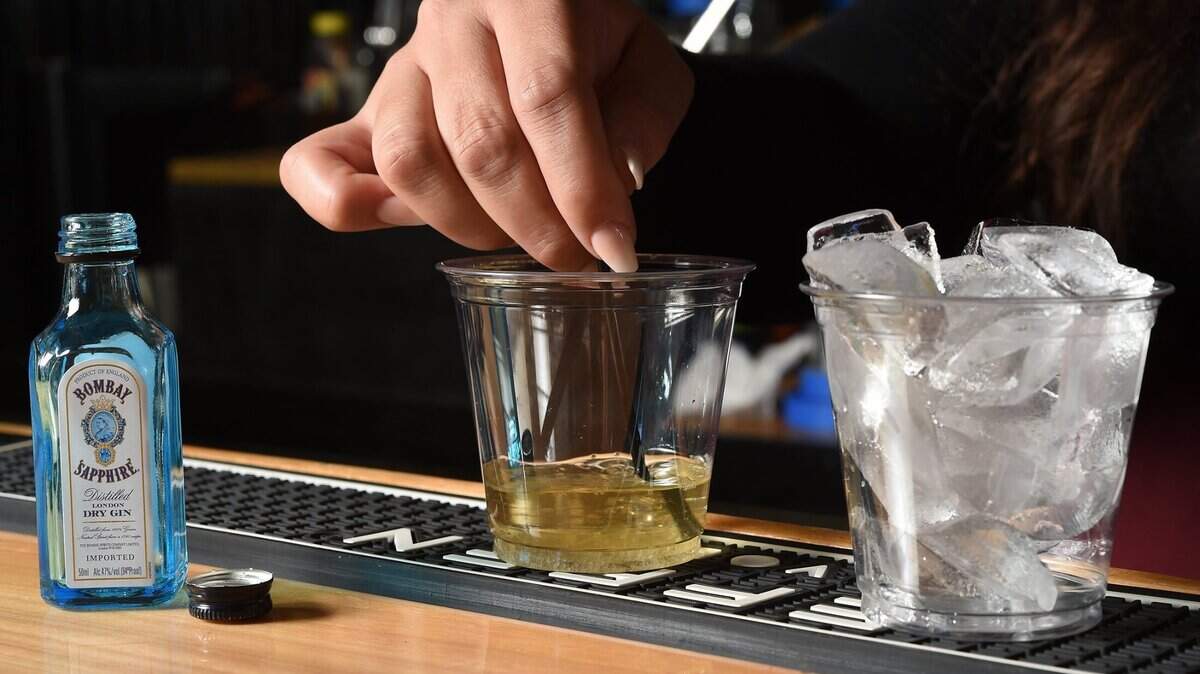
Anybody who wants to work at a bar or restaurant in Kansas City must first obtain a liquor card. This employee liquor permit costs $42 and requires a trip down to Regulated Industries, a city office located in a brutalist government building in KC’s Northeast Area.
Actually, it’s a little more complicated than that. You’ll need to create an account and apply for the liquor card on Compass KC, a not-particularly-intuitive city website. Then you drive (or find a ride) to Regulated Industries to get your picture taken. After the camera has flashed, they give you a piece of paper to show your employer while you wait for the liquor card to come in the U.S. mail. It’s good for three years, at which point you have to do it all over again.
Readers will note that the words “test” or “exam” do not appear in the above paragraphs. That’s because the liquor card process does not require the job seeker to know anything about … anything. It’s just a background check.
“It’s a waste of money and time, is what it is,” said Peter Castillo, executive chef of the recently opened Power & Light Irish pub KC Hooley House. “Regulate us, inspect us, sure. But give working people a break. A lot of unemployed people looking for a job, they just don’t have that kind of money, or they don’t have a car to drive there.”
Restaurant operators like Castillo have been grumbling about this for years. So, of course, have the city’s thousands of servers and runners and bussers and bartenders. Nothing has changed. But lately there are signs Kansas City might finally be ready to eighty-six the liquor card.
Mayor Quinton Lucas tweeted earlier this month, seemingly out of the blue, that the city “should abolish the simultaneously anti-worker and anti-business liquor card requirement in the city placed on all servers,” noting that soon-to-be 2nd District Councilman Wes Rogers agreed with him.
An ordinance is on its way, Lucas spokeswoman Jazzlyn Johnson confirmed to The Star.
“The mayor’s office is working closely with the (Greater Kansas City) Restaurant Association on community engagement to craft an ordinance to eliminate the liquor card requirement,” Johnson said.
Johnson wouldn’t specify when that ordinance might be put before the City Council. But David Lopez, general manager of Manny’s Mexican Restaurant and the head of government affairs for the Greater Kansas City Restaurant Association, said he’s had “wonderful, polite, informative conversations with the mayor, the city manager and the council” about getting rid of liquor cards and is “hopeful we can push something through before the election in June.”
Neither Johnson County nor Wyandotte County require liquor cards, though several municipalities on the Missouri side of the state line, such as Independence and Liberty, still do.
Jim Ready, manager of Regulated Industries, did not respond to a request for comment this week. His division, which oversees code compliance for bars, restaurants, taxi companies, strip clubs and several other “nuisance” businesses, has an annual budget just shy of $2 million.
Approximately 8,000 people applied for liquor cards in 2022, generating about $132,000 in revenue. More than half of the $42 liquor card fee — $25.50 — is paid to a third-party company that conducts background checks; the rest goes into the city’s general fund.
The elimination of liquor cards would result in “a small reduction in revenue in the general fund,” said Johnson, but “the city would gain back staff time to focus on other important initiatives.”
No more liquor cards would also mean no more background checks — a potentially thorny issue for the mayor and others who seek to abolish the cards. The current process weeds out all felons convicted of murder, voluntary manslaughter, forcible rape, forcible sodomy, kidnapping, false imprisonment, first degree child molestation, second degree child molestation or sexual abuse.
Lopez said the Greater Kansas City Restaurant Association has had “healthy conversations” with the sexual violence prevention group Metropolitan Organization to Counter Sexual Assault, or MOCSA, and other similar organizations. “We’re trying to cover all our bases,” he said.
Julie Donelon, president and CEO of MOCSA, emphasized in a statement to The Star that felony sexual offenders “should not be responsible for serving alcohol and controlling how much alcohol is provided and to whom,” noting that currently the only way to ensure they are not placed in this position of control is through the city’s liquor card application process.
However, Donelon said, “We are open to conversations about other ways to accomplish this if the application process is not working.”
Would-be restaurant workers are also denied liquor cards if they’ve been convicted in the past three years of a felony involving the sale of narcotics.
“A lot of these felonies that get flagged are minor drug issues, often involving marijuana, which of course is now legal” (in Missouri), Lopez said.
Plus, Lopez added, many restaurants now use hiring apps, such as Homebase, that have background checks built into the application process.
“Many of us are doing our own due diligence already.”
This story was originally published April 19, 2023 at 5:30 AM.