Farewell to Sprint: Inside the rise and fall of one of Kansas City’s great companies
At its height, Sprint offered stock options and bonuses so rich that some of its 20,000-plus local employees made the equivalent of a year’s pay in a single check.
At one point, the CEO’s secretary had her own secretary.
National ad campaigns were so omnipresent that the main character was known simply as The Sprint Guy.
There was a generous pension plan for employees, sponsorship of PGA tournaments and even a 108-seat corporate jet to ferry workers between Kansas City and Washington, D.C.
But today, as T-Mobile transitions away from the Sprint retail brand name, Kansas City bids farewell to one of its most recognizable names and influential corporate players.
The move follows years of maneuvering that culminated with T-Mobile finally closing on its $26 billion merger with Overland Park-based Sprint in April.
“There is a little bit of a happy-sad here,” said Deeanne King, a 30-year Sprint veteran and T-Mobile’s executive vice president and chief human resources officer.
Local employees are sad to see the Sprint name fade away, she said, but there’s renewed hope that better days are ahead.
“It’s been a while since we’ve been on a winning team, one that’s growing,” King said. “It’s a company that’s investing, not just in the customer and in the network, but in our people. And I think everybody feels it.”
With roots that run to railroad telegraph lines and a serial entrepreneur in a small Kansas town, Sprint’s final days also mark the end of a remarkable history that spans more than a century.
Sprint leaves a legacy as a major philanthropist and civic player in the Kansas City region. It helped reshape downtown Kansas City and built a groundbreaking corporate campus in Johnson County. For years the metro’s largest private employer, it provided tens of thousands of livelihoods. And its influence was enough to tip the scales of the local economy — for better or for worse.
The Sprint story is complicated by mergers, acquisitions and spin-offs. There were failed starts and big bets that didn’t pay off — notably the company’s $35 billion merger with Nextel. And its most recent years have been difficult: it sold off its treasured corporate campus in 2019 after years of cutbacks. In the last decade, it eliminated 15,000 jobs as it lost $25 billion.
And Sprint now finds itself subsumed by a company that few considered a serious competitor until recent years.
“To be honest it’s disappointing,” said Dave Dess, a former vice president of brand development. “Because back in the day we looked at T-Mobile as a tertiary player. They didn’t really focus into our calculations. We were focused on AT&T and Verizon and T-Mobile was this ankle biter.”
But people like Dess, who worked at Sprint for nine years, helped build the now ubiquitous cell phone market. Sprint successfully made the leap from a local and long distance telephone company to the wireless space. And it was a major player — and at times a leader — in a technological revolution we all benefit from today.
“We basically changed the way the world communicates. And I feel great about being part of that,” Dess said.
Sprint notched a number of industry firsts into history:
It built the country’s first all-fiber landline network.
It introduced the nation’s first cell phone leasing plan.
It was the first U.S. carrier to offer a camera phone.
And it offered consumers an unlimited plan for the first time.
Experts, company officials and former executives tell The Star that the innovation and talent that fueled Sprint’s headquarters for decades lives on — both in the ranks of employees still working at the Overland Park campus and in all manner of companies and nonprofits spread across the region staffed by people whose resumes list time at Sprint.
Executives say the merger was necessary to help Sprint and T-Mobile compete against their larger rivals AT&T and Verizon. Hopes are high that the merged company will continue to prioritize Kansas City, keeping its promise to employ thousands at a secondary headquarters for T-Mobile here.
“We’ll absolutely continue to be a major employer in the region,” T-Mobile CEO Mike Sievert said in a statement to The Star.
Whatever T-Mobile’s future in Kansas City looks like, many agree the merger was the best path for Sprint, which found itself with few options after years of decline.
“It’s unfortunate for Kansas City. And just personally you think, ‘Gosh, we built Sprint, the Sprint name and here it is going away,” said William Esrey, former chairman and chief executive. “Yeah, I wish Sprint were acquiring T-Mobile. But they’re not.”
Esrey, who worked at Sprint and its predecessor United Telecommunications for 23 years, said the merger gives the new T-Mobile a chance to become the dominant U.S. wireless carrier. And setting his emotions aside, he said the union is just another shakeup in the ever-changing landscape of corporate America.
“Life goes on and I think the company will be better,” he said. “We never heard of Tesla a few years ago. We never heard of Amazon a few years ago. That’s the great thing about America. It evolves and rewards success.”
Sprint’s Kansas roots
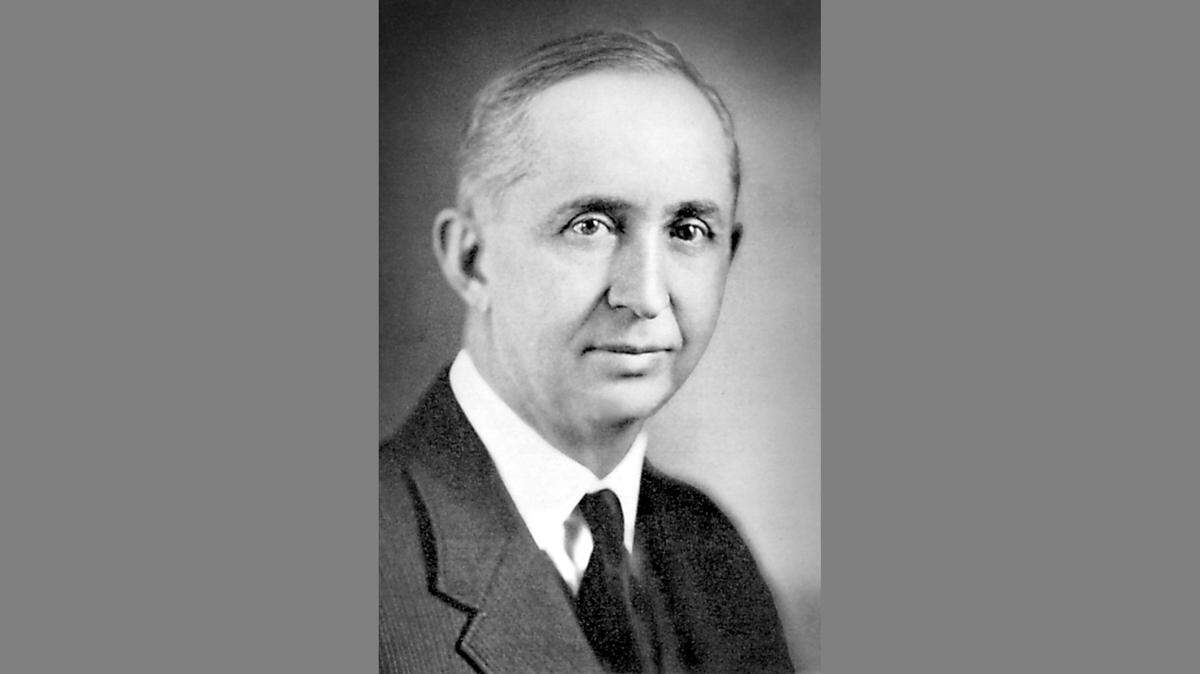
Cleyson Leroy Brown probably couldn’t have imagined where the little phone company he built in Abilene, Kansas, would wind up.
He and two employees started the Brown Telephone Company in 1899 on a mission to compete with Alexander Graham Bell’s namesake company. Brown eventually consolidated several companies, renaming his conglomerate as United.
After more than 50 years, that company moved to the Kansas City area and eventually acquired an offshoot of the Southern Pacific Railroad, which had decided to jump into the phone business.
The railroad named that division the Southern Pacific Railroad Internal Networking Telephony — or SPRINT for short.
For decades, the company enjoyed the reliable profits of the local and long distance phone business. But Sprint’s move into the emerging wireless market changed everything.
In 1995, together with cable companies, Sprint invested in licenses to build out a $10 billion all-digital wireless network.
At those times, current and former employees say, working in the wireless industry was like working at a feisty startup.
The technology was new. The market was ever-expanding. And Sprint built out both a national network to support mobile phones and a physical retail presence to sell them. Sprint was signing up millions of new customers.
“We were winning,” Esrey said. “I’d go in the office on Sundays and there’d be all kinds of people in the office — not because they had to be, but because they were excited about being there.”
It was under Esrey’s tenure that Sprint hired Candice Bergen, then the star of the CBS sitcom “Murphy Brown,” as its longtime spokesperson. On television ads, she touted the company’s 10-cents-a-minute long-distance rates, half-off weekends promos and its line of branded phone cards.
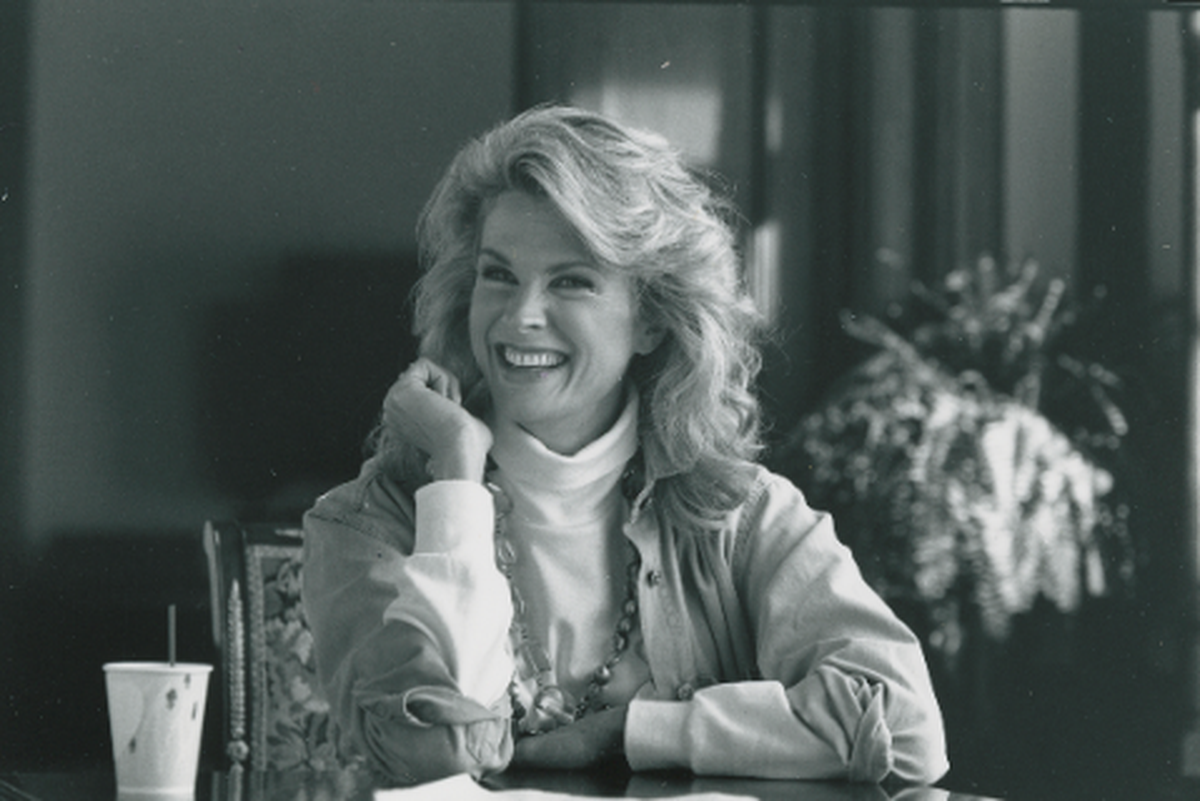
Esrey remembers that as a critical development and a decision he toiled over. Before hiring the actress, he said he had Bergen visit Kansas City, even staying in his home so he could get to know her.
“When you have somebody out there representing your company, it says an awful lot about your company,” he said.
Advertising fueled Sprint into a household name. It was the first to put its logo on NFL coaches’ headsets, Esrey said. And some viewers may still remember Brian Baker, the trenchcoat-wearing spokesman who starred in more than 100 commercials and was named one of People magazine’s “Sexiest Men Alive” in 2001.
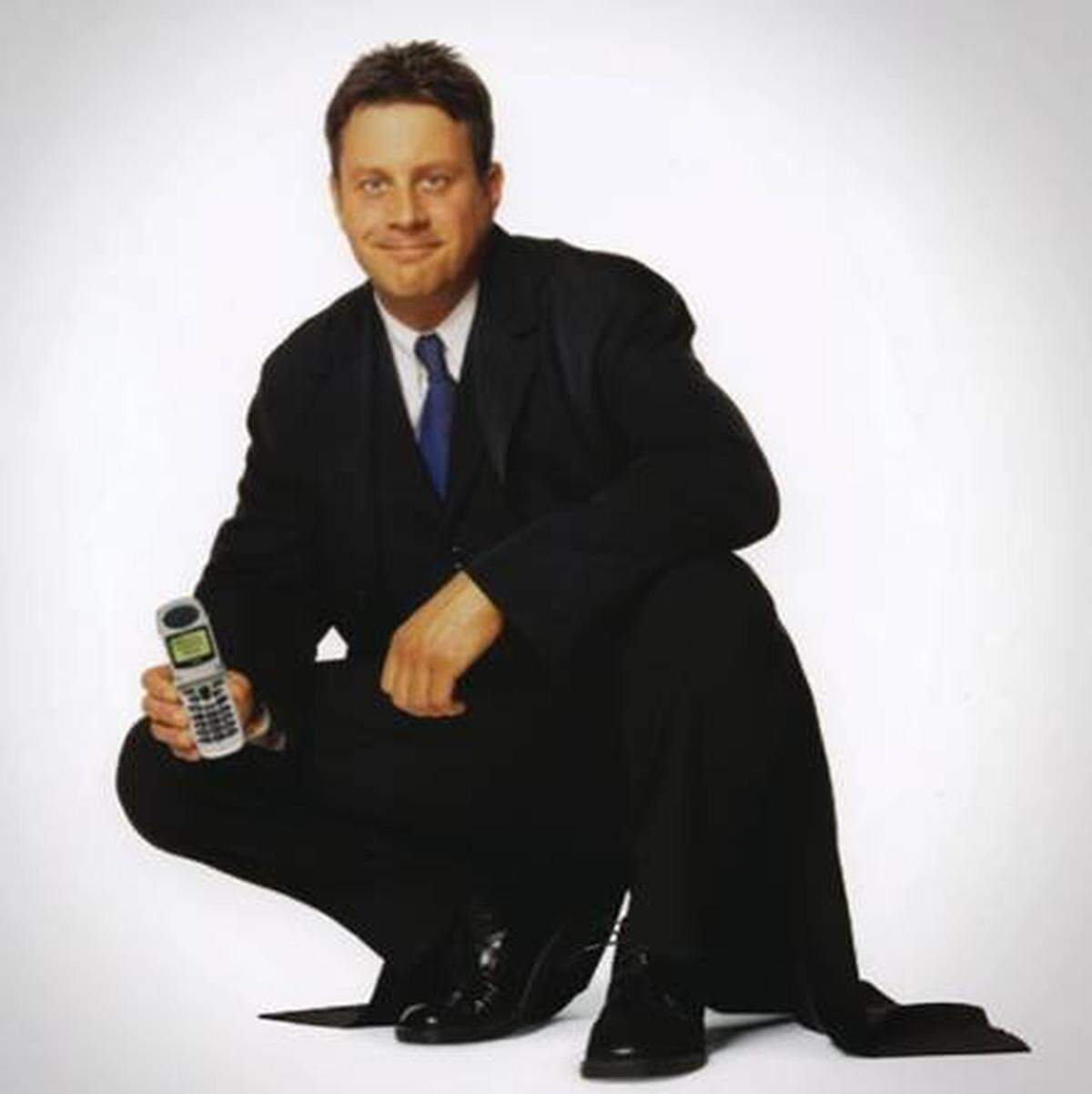
“That was really kind of a breakthrough. Because up until that time, the industry’s advertising was pretty pedestrian,” said Dess, the former vice president who worked on that campaign.
After first partnering with cable companies in a joint venture, Sprint bought out their shares in the late 1990s, moving Sprint PCS firmly under the company’s corporate umbrella.
Dess said that move changed the culture away from the startup feel that defined the earlier days to a more corporate, and bureaucratic one.
“It just became a lot more red tape and a lot more, ‘Mother may I?’” he said.
The Nextel merger
While analysts can point to a series of missteps and misfortunes, no transaction shaped Sprint’s recent history as much as its 2005 merger with Virginia-based Nextel. Hailed as a “merger of equals,” the acquisition was plagued by two incompatible networks and cultures.
Sprint eventually wrote off nearly $30 billion in losses from the acquisition, leaving the company financially hobbled.
The fallout from the Nextel merger came as the landline business was in decline, said Marty Nevschemal, who worked at Sprint from 2000 to 2016. Sprint in 2006 spun off its local landline phone operations to Embarq, which is now CenturyLink.
Nevschemal rode the ups and downs of the company during his tenure.
Early on when the company’s stock was riding high, he remembers a co-worker walking out of his office after the price closed $3 up for the day. One co-worker had made some $60,000 that day from his own stock holdings.
When the 190-acre campus was completed in 2001 to house more than 14,000 workers, some wondered whether it would be large enough to contain the company’s growth, Nevschemal said.
But it didn’t take long for the campus to start emptying out as rounds of layoffs thinned the workforce.
“Really, nobody was safe,” he said. “I don’t care if you were an executive or an individual.”
Nevschemal said those layoffs were never about individual performance, but evidence of the company’s financial despair.
He said the infusion of $20.1 billion from Japan’s SoftBank, which purchased a majority stake in Sprint in 2013, helped reinvigorate the company. That was followed by an ambitious turnaround effort led by Marcelo Claure, a charismatic tech entrepreneur hired as Sprint CEO in 2014.
In 2018, Sprint reported its first annual profit in 11 years. But by that time, Claure and others had already identified the union with T-Mobile, which previously collapsed amid regulatory opposition, as Sprint’s best path forward.
“It just couldn’t get the pieces right,” Nevschemal said.
He sees Sprint’s departure as a huge loss for Kansas City.
But it’s not a total loss.
He came to the company straight from the MBA program at the University of Iowa, one of the universities Sprint had targeted for regular recruiting. His time at Sprint, which culminated in a role as chief financial officer and vice president, made his career, he said. He went on to be the CFO at Sporting KC and is now the CFO and treasurer at Kansas City’s MRIGlobal.
He said there are plenty of other people like him spread across the region whose experience at Sprint fueled success in other companies and organizations.
“They turned out a lot of really good executives that are just all over Kansas City in very senior roles,” he said.
‘An amazingly huge employer’
Sprint was the kind of place where an employee could start as a temp, work her way up and leave with an advanced degree.
At least that was the experience of Kelly Aaron, who started in 1993 and moved into a variety of full-time roles thereafter.
As a recruiter, she helped hire union linemen, call center operators and managers. At the time, Sprint employed more than 20,000 people across dozens of buildings in Kansas City. And it offered competitive pay, generous healthcare coverage, a pension and 401(k) matching.
“I felt like I was with a company that really cared about its employees,” she said. “It was such a great opportunity for me.”
Sprint paid for Aaron’s master’s degree at Ottawa University. That degree and her experience allowed her to go on to a six-figure job elsewhere, she said.
“I cut my teeth at Sprint,” she said.
Aaron, who left the company in 2001, is grateful for her time at the company. And she bets most of the company’s former employees spread across the metro would share that view.
But she doesn’t view today’s switchover from the Sprint brand to T-Mobile as a momentous shift. These changes have been brewing for years, she said.
“For the longest time now, it has not been what it was,” Aaron said. “It really hasn’t felt or been a Kansas City company in a long, long time.”
Still, the loss of any headquarters — particularly one that was once home to a Fortune 100 firm — is a huge loss to the business community. Sprint employees for years were among the top five givers to the United Way of Greater Kansas City’s annual campaign.
“They’ve been an amazingly huge employer in Kansas City,” said Joe Reardon, president and CEO of the Greater Kansas City Chamber of Commerce. “We were proud to say that Sprint was sort of born here and grew here.”
He said Sprint’s influence spans across the metro, both in physical objects like the downtown arena and in the talent it fostered and helped spread. For his part, Reardon is upbeat about the merger and prospects for the new T-Mobile in Kansas City.
“I’m bullish on the future and I’m hopeful growth will lead to new jobs and further commitment to Kansas City,” he said.
Jeffrey Moore, who worked at Sprint from 2001 to 2014, is skeptical that T-Mobile will keep a true secondary headquarters in Overland Park over the long-term. But he said the company may see reasons to keep a considerable workforce in Kansas City, a relatively cheaper market where experienced talent already lives.
And though it’s being acquired, he said Sprint did outperform T-Mobile in some ways, including online ordering and servicing major business accounts. Moore said Sprint had contracts with nearly every Fortune 500 company.
“A lot of those people are on the campus and a lot of those people could survive and thrive in the new environment,” said Moore, who now owns wireless research firm Wave7 Research.
The Sprint network
Despite major investments and advancements with 4G technology, Moore and others interviewed identified a substandard wireless network as one of Sprint’s enduring challenges in its later years.
T-Mobile has said the merger will help the new company build out an ultra-fast, national 5G network.
Dan Wilinsky, who worked in public relations for Sprint from 1994 to 2004, described the wireless service as “laughably bad” during his tenure. He remembers local executives who had to step outside their homes to take calls on Sprint’s network.
“We were always making excuses,” he said.
As Sprint expanded into new markets, it frequently hired a local celebrity to help build buzz around new store openings.
The formula went something like this: the celebrity would place a ceremonial first call with a Sprint PCS phone, touting the crystal-clear quality of the connection.
Wilinsky remembers how engineers obsessed over each of these events. In Ohio, Sprint had hired native son and NASA aerospace engineer Gene Kranz, famous for his 1970 work at mission control helping to save the crew of the failed Apollo 13 mission.
Sprint held its 1999 event celebrating its entry into the Columbus market at a local IMAX theater, staging the call at the concession stand, he said. Engineers had completed dozens of test calls in advance and determined that service was strongest there.
Flanked by news reporters and company leaders, things appeared to go well as Kranz dialed the Ohio governor, saying he sounded “crystal clear,” Wilinsky said.
Once the cameras quit rolling though, one of the world’s most famous engineers privately admitted that he couldn’t hear anything at all on the call.
“Turns out he had faked the entire conversation,” Wilinsky said.
Sprint’s attitude lives on
By the time Russ McGuire came to Sprint in 2003, layoffs were already a familiar activity.
“I remember moving to the Overland Park area and it seemed like every fifth person I met would say, ‘Oh, I used to work at Sprint,’” he said.
McGuire, the company’s vice president of strategy until 2014, said he remembers desperate times when Sprint was losing a million subscribers a quarter. He recalled entering a meeting with senior executives to discuss the brand’s strategy.
“A senior executive said, ‘We don’t need a strategy. We have a strategy. It’s called survival,’” he said.
Ultimately, he said Sprint lost its point of differentiation in the wireless market. T-Mobile offered the best price. Verizon touted the best network. And for several years, rival AT&T touted exclusive access to the Apple iPhone after its 2007 introduction.
“There wasn’t a reason for anyone to choose Sprint over anyone else,” said, McGuire, who has written extensively about the company’s history.
But he said Sprint’s contributions in developing the wireless industry and embracing the internet in its early days should not be forgotten.
“Just as the world was making this shift in the way we communicate and the way we are productive and get things done, Sprint was prescient enough to lay the foundation,” he said.
Nowadays, T-Mobile touts itself as the Un-carrier, a sometimes-defiant player that questions the norms in the wireless industry.
Just last month, the company rolled out its free Scam Shield product to fight unsolicited scam calls. And Sievert, the CEO, also directly challenged Verizon as T-Mobile introduced a promotional plan with lines as low as $25 per month.
In those sorts of moves, McGuire sees a lot of Sprint’s identity as a spunky challenger.
“That same attitude is really the legacy of Sprint,” he said. “Always looking at ways to change the rules, do things differently.”
After all, the company took on the big, stodgy phone companies. Even the original Brown company in Abilene was a feisty alternative to the incomparable Bell company.
The influence of founder C.L. Brown still lives on in the Kansas town of about 6,400 through physical buildings, a memorial park and even on a colorful postcard mural.
His legacy might be overshadowed by Abilene’s most famous resident, President Dwight D. Eisenhower. But the tale of a young boy who lost an arm in a corn grinder and grew up to build a telecommunications empire still seems to amaze Robin Black, who previously ran Abilene’s Museum of Independent Telephony, which was once financially supported by Sprint.
“Talk about bootstrapping your way up,” she said. “It is quite the story.”
Still, knowing what she knows about the early days, she isn’t all that moved by today’s merger — only the latest in a long history of change for Brown’s original creation.
“This was a company that was all about buying and expanding and spinning off from its inception,” she said. “I just don’t think there would be anything about what has happened that would completely surprise him.”