
Kansas City skin-care company files to go public despite losses and other concerns
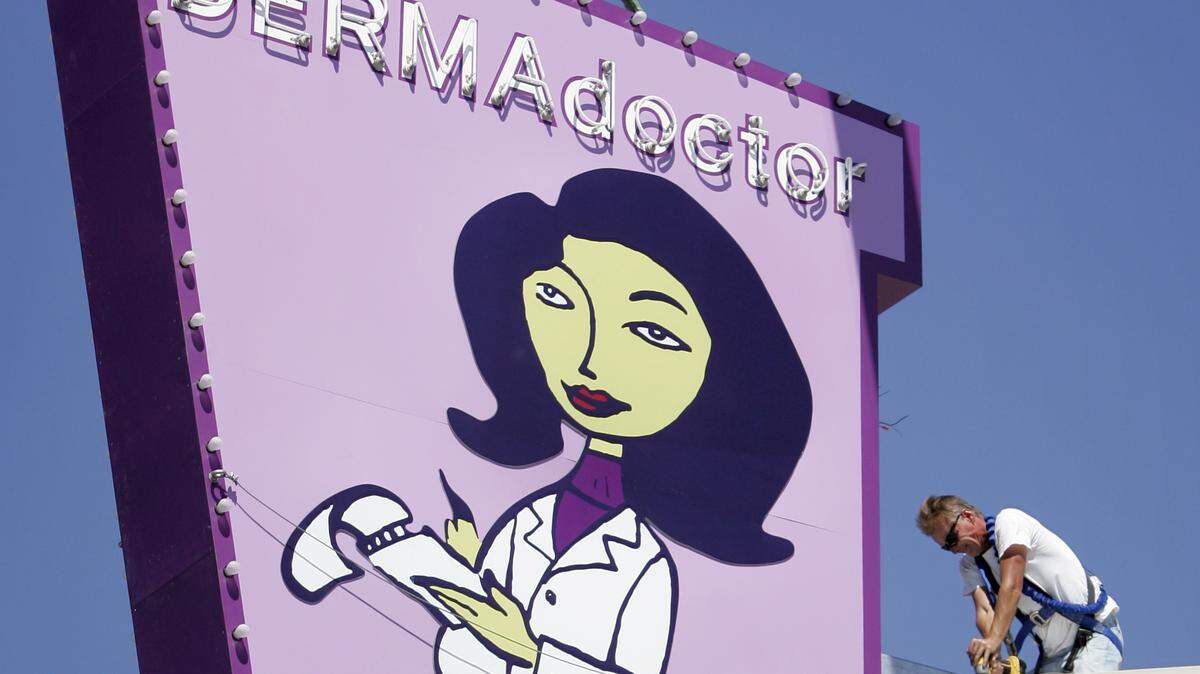
Dermadoctor, the Kansas City skin-care company that’s been a staple of television shopping channels, is looking to raise $10.7 million by going public despite a history of losses and a letter from its accountant casting doubt on the company’s ability to survive.
Dermadoctor, owned by Mission Hills physicians Jeffrey and Audrey Kunin and founded in 1998, sells what it calls “an assortment of high-quality, prestige-inspired skin care products at extraordinary value” out of its Crossroads headquarters at 1901 McGee St.
But the company has been losing money and its accounting firm issued an opinion “expressing substantial doubt that we can continue as a going concern.”
Dermadoctor sold $6.5 million of product in 2016, but ended the year with a $1.9 million loss. The following year was better: $8.8 million in sales and an end-of-year loss of $345,083. The company is on pace to lose more money in 2018 than the year before; its first quarter loses were $233,395.
Dermadoctor’s prospectus on file with the U.S. Securities and Exchange Commission said that cash flows from its operations “will not be sufficient to fund the operations of the Company over the twelve month period” from its most recent financials.
While IPOs are most commonly associated with big companies like Facebook and Google that are ready for prime time, small, emerging companies sometimes seek public offerings as a way to raise much-needed capital. It’s an expensive way to get capital, with underwriter discounts, attorney fees and the costs associated with meeting stock exchange listing requirements.
“Early-stage companies generally have losses and they typically offset those losses with equity capital either through the principals who start the company or outside capital like venture capital,” said John Hense, managing principal with CC Capital Advisors. “For a company that small, based in Kansas City, venture capital is pretty tough. I’m guessing maybe they tried that route and failed and now they’re going this small cap IPO route.”
Dermadoctor said it was seeking the IPO to obtain additional financing.
“The Company is actively pursuing additional sources of financing to fund its operations,” Dermadoctor’s propectus said. “These sources could include an initial public offering of the Company’s equity, or additional issuances of debt or equity.”
The company has been receiving loans — $1.79 million as of March 31 — from Papillon Partners, which is also owned by Jeff and Audrey Kunin.
In 2014, the Federal Trade Commission reached a settlement with Dermadoctor, which the consumer regulator accused of deception in its marketing of an anti-aging product.
Dermadoctor did not respond to a request for comment.
Dermadoctor hopes to sell 2,470,000 shares in its offering at $5 apiece, resulting in $10,762,000 after paying underwriters and other fees associated with an IPO.
The $5 share price is just above the listing requirement of $4 a share for Nasdaq Capital Market, meant for smaller companies that don’t meet the listing requirements to get on the larger Nasdaq exchange.
Of the $10.7 million raised, Dermadoctor said in its prospectus that it will use $190,000 to pay outstanding balances on a loan, $500,000 to pay accounts payable, $1 million to buy inventory, $1.5 million to expand products and marketing and $300,000 to buy computers and equipment. The remaining proceeds will go to working capital and “general corporate purposes.”
Dermadoctor has no plans to pay dividends from its stock.
“We currently intend to retain all of our future earnings, if any, to finance the growth and development of our business,” Dermadoctor said in its prospectus.