
Apple about to take the stage with new smartwatch, bigger iPhones
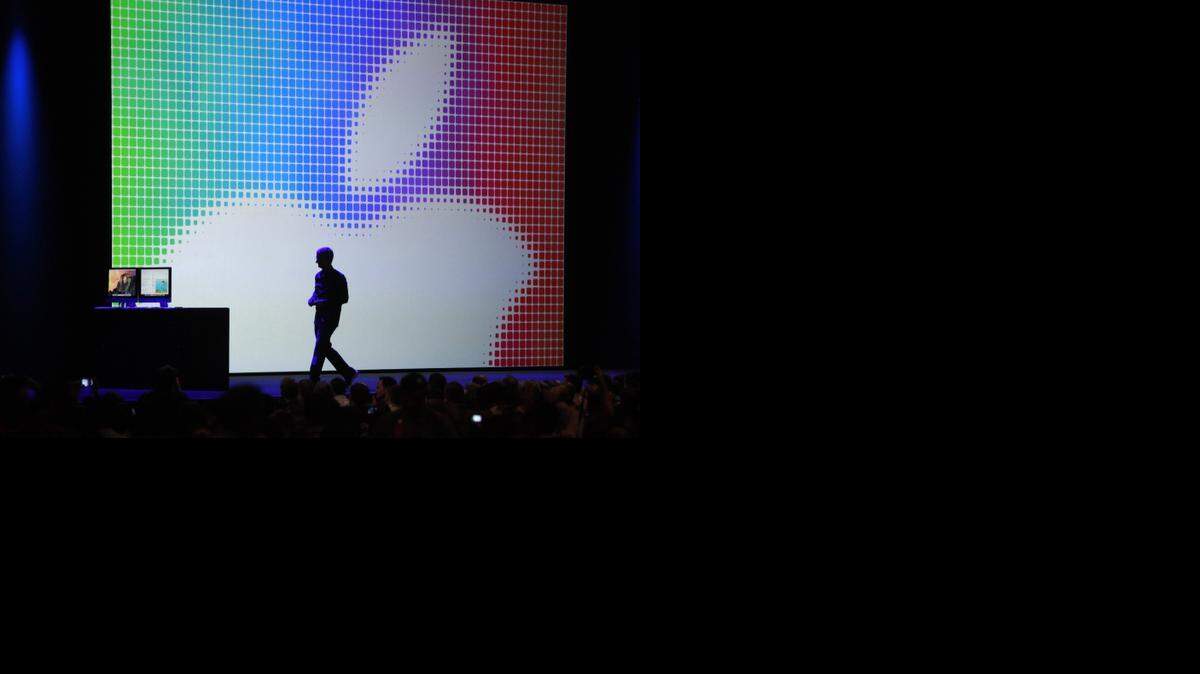
When Apple wants to make a big splash, it returns to its history.
Thirty years ago at the Flint Center for the Performing Arts, a roomy auditorium in Cupertino, Calif., Steve Jobs introduced the original Macintosh. On Tuesday, Apple is set to come back to the center to unveil a set of long-anticipated products: two iPhones with larger screens, and a wearable computer the media have nicknamed the iWatch.
The so-called smartwatch will be the first brand-new product unveiled under Apple chief Timothy D. Cook, who took the helm after Jobs died nearly three years ago.
It is expected to come in two sizes and combine functions such as health and fitness monitoring with mobile computing tasks such as displaying maps. It will have a unique, flexible screen and, like the new phones, will support technology that allows people to pay for things wirelessly.
“I believe it’s going to be historic,” said Tim Bajarin, a consumer technology analyst for Creative Strategies who attended the original Mac event in 1984. He added about the much-anticipated Apple watch: “The design of this product is all Tim’s fingerprints.”
With its first wearable computer, Apple will enter a growing market for fitness-tracking accessories and smartwatches filled with gadgets from Samsung Electronics, Fitbit, Nike and Olathe-based Garmin. And with the two larger phones, the iPhone will fight back against Samsung, whose big-screen Galaxy smartphones have wrestled sales away from Apple over the past few years.
Though the iPhones are expected to be released in the coming weeks, the watch is unlikely to be in stores until next year, several people said. The price of the new devices is not yet clear.
Apple, which is highly secretive, has not officially commented on any of the new products. But multiple employees for Apple and its partners who were briefed on the products shared some details on the condition that they not be identified.
Some said the smartwatch was one of Apple’s most ambitious projects. The company put an enormous amount of time and money into the device’s sensors so that they would track movements and vital signs, such as heart rate and footsteps, much more accurately than existing fitness devices, two employees said.
It has a flexible display panel that is protected by a cover composed of sapphire, a type of tougher glass, they said. The device’s circuit board, which includes its sensors and chips, was described as tiny, about the size of a postage stamp.
For replenishing the battery, the smartwatch will rely on a wireless charging method. Apple had at one point tested solar charging for the watch, but that experiment failed.
For software, the watch will take advantage of HealthKit, a set of tools for storing health data that Apple introduced in June. The device also will rely heavily on Handoff, a new software tool that makes it easy to share content from one Apple device to another.
The bigger iPhones, which have been widely written about over the past year, will come in two sizes, one measuring 4.7 diagonal inches and the other 5.5 diagonal inches. The larger version will be the more expensive model. Unlike the older iPhones, which have somewhat sharp edges, the new ones have softer, tapered edges, similar to the latest iPads.
To deal with concerns that a bigger phone will make typing with one hand difficult (the current iPhone has a 4-inch screen), there will be a one-handed mode that can be switched on and off, two employees said.
The wearable device and the smartphones will include hardware and software that supports technology called near-field communication, or NFC. That allows devices to exchange information wirelessly over very short distances, which could make paying for things with a phone less hassle.
Apple has teamed with Visa, American Express and MasterCard to support the payments system, said several people involved in the partnerships. In the deal, these people said, iPhone owners will be able to use their devices as a sort of digital wallet, giving customers the ability to pay for items at select partner merchants without handing over cash or a credit card.
Along with these partnerships, the abundance of new NFC-enabled iPhones could jump-start the world of mobile payments, which has so far failed to gain traction among U.S. consumers. Google, for instance, released a digital wallet in 2011 that has achieved little success. And Isis, a mobile wallet backed by three major U.S. phone carriers that was renamed Softcard earlier this week, never caught on either.
Some analysts think that Apple’s entrance into the payments world will make all the difference.
“Apple owns the hardware and the software here, unlike Google,” said Josh Beck, an analyst with Pacific Crest Securities. “Not to mention Apple has this huge cache of customer credit cards, and an affluent customer base.”
Apple to tighten security
Apple plans to tighten its online security measures to reduce the chances of its users being victimized by intrusions like the ones that stole nude photos from actress Jennifer Lawrence and other celebrities.
CEO Tim Cook told The Wall Street Journal in a story published Friday that Apple will use email and push notifications to alert the hundreds of millions of people using its services when there has been an attempt to restore their iCloud data on a new device, change an account password or log on to an account with a new device. Previously there were no notifications for restoring iCloud data, but users did receive an email when someone tried to change a password or log in for the first time from a new device.
Apple expects to start sending the additional notifications in two weeks. The iPhone maker said the new security will allow users to change passwords to reclaim control of an account or notify Apple’s security team about a potential problem.
The Associated Press
This story was originally published September 5, 2014 at 11:53 AM.