‘Losing everything’: Angered by Topeka homeless camp sweep, advocates point to KC example
After city workers in May razed a homeless camp in Topeka, some of those displaced and their advocates pointed to Kansas City policies as an example of a better way.
The encampment area just north of the Kansas River in Topeka has long been a site for the city’s unsheltered. Nearby, people can access food and services through the Topeka Rescue Mission. But some of the encampment’s residents avoid the Mission’s shelter, unable or unwilling to abide by its rules or put off by its religious overtones. Others hope to eventually find permanent housing.
On May 10, the camp where more than a dozen people were living was cleared by bulldozers. Many of their personal items, including clothing, were thrown out.
Advocates in Topeka like Russell Burton point to Kansas City’s policy on clearing such camps, which requires the city save and store any personal items, as a better approach. Unlike in Topeka, Kansas City also mandates that outreach workers be present before and during sweeps.
Burton plans to take some of his suggestions, pulled from Kansas City’s policy, to Topeka City Council next month. He estimated Topeka has between 200 and 400 chronically homeless individuals, many of whom have limited access to shelters, who could benefit from a change in policy.
Burton, who is also a social worker, said the city destroyed items that should have been kept and inventoried by the city.
Ken Saffer, who has been living at the Topeka encampment off and on since 2017, is just one example. The 57-year-old witnessed the site being cleared.
“You’re losing everything,” Saffer said. “You’re losing what you had going for you.”
Saffer said his belongings, including clothing, tools and a generator, were confiscated. Others scrambled to collect medication and important documents as the bulldozer came through.
“Now I just got tarps,” he said.
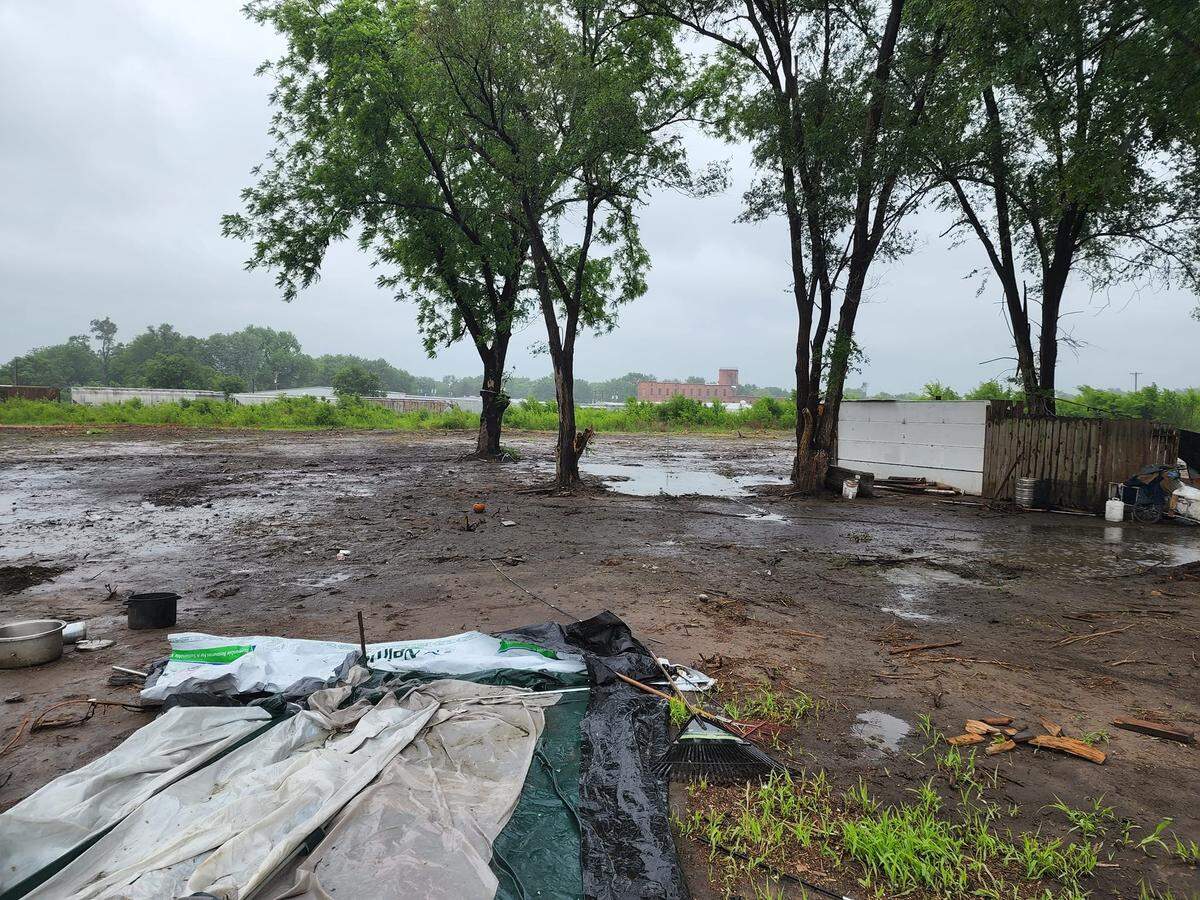
“We’ve got water leaking inside. It’s been raining constantly since they’ve done this so we can’t really do anything cause you’re stuck in mud.”
Burton also argued the city didn’t provide enough notice ahead of the cleanup.
Gretchen Spiker, a spokeswoman for the City of Topeka, said the city provided more than the required 72 hours of written notice.
She also said the city followed its policy regarding belongings
“The City went above and beyond to protect individual’s constitutional rights, while recognizing that the City has an obligation to provide necessary health and safety functions, which on occasion, requires cleaning of City property,” she said.
Kansas City’s new encampment policy
Several people, including Burton, hope to voice their concerns during a Topeka City Council meeting on Tuesday, June 7.
Burton plans to point to Kansas City’s new encampment sweep policy as an example of what he hopes to see in Topeka, including that outreach workers visit the camp at least once to provide alternative housing resources. Once a removal starts, outreach workers have to be present until the city leaves.
In mid-April, Kansas City enacted a new policy for the “enforcement and removal of camps on city property.” The goal of the policy, city officials said, is to preserve the rights and dignity of the estimated 2,000 people in the city experiencing houselessness in Kansas City.
Prior to the new policy, those living unhoused in Kansas City called the city’s sweep process incredibly demoralizing and disruptive to getting permanently housed. Other have said that they’ve lost important documentation in sweeps that took them months to get again, further delaying their opportunities for work or housing.
If Kansas City decides to clear a camp, they are allowed to throw away any non-personal items, or belongings that pose a health risk, such as dirty bedding. But the city is also required to save and store any personal items found during clean-ups for at least 60 days.
While Kansas City stores any personal items for 60 days, Topeka only stores them for 30 days, and at the police station, which Burton said is troubling.
The Kansas City policy gives examples of personal items, including legal documents, tents, bicycles, radios, photos, medication, glasses and jewelry — items similar to what Saffer said he lost in the Topeka sweep.