
Bypass or anvil? Here’s how to settle on your favorite type of pruning shears
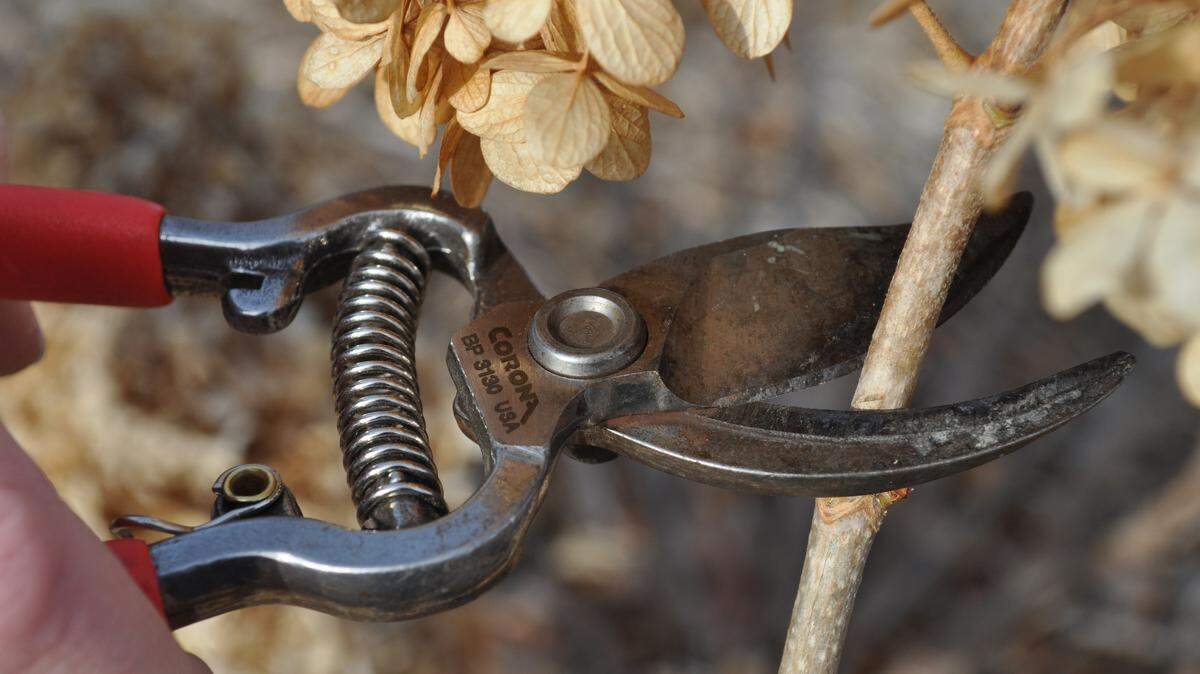
One of the most used garden tools are hand pruners. These shears work to prune small limbs and remove dead growth. While used frequently they are often neglected and in need of basic care.
There are two types of hand pruners. While they both cut, there are mechanical differences. Bypass pruners cut with scissor-like motion. They have a sharp cutting blade that slides past a flat hook. Sharp bypass pruners make a clean, smooth cut. They are best for getting into tight branch angles, ensuring the cut is made at the right spot for quick recovery.
Anvil pruners work when a sharp blade is squeezed onto a fixed flat surface. It is the pressure of the blade that makes the cut. Anvil pruners are less expensive. The concern with anvil pruners is that as they dull they do not make clean, smooth cuts. Dull anvil pruners smash. The smashed branch is damaged and doesn’t heal. Avid gardeners prefer the bypass pruners for this reason.
Ratchet or gear pruners are also available but are usually more costly. They come in the same cutting actions as either bypass or anvil but offer one advantage. They work with a gear motion. Ratchet pruners leverage your own strength, assisting those with strength and grip issues such as carpel tunnel or arthritis.
No matter what type you prefer, pruners need care. Dulled blades do not leave clean cuts and cause you to work harder. Clean frequently to remove sap buildup using hot soapy water, steel wool or a wire brush. Once removed a light application of a household oil can be applied to keep them in good shape.
Pruning shears need to be sharpened for best action. The internet is full of tutorial videos on how to sharpen pruners with a few simple tools. Local hardware stores often provide this service for a small fee. New blades are also available for purchase for higher quality brands.
Pruning shears come in various sizes and for left-handed or right-handed users. The larger size allows for a bigger cut. Hand shears are designed to cut a limb no more than 1/2 to 1 inch. Attempting to cut too large of a limb will spring the hinges and dull the blade.
The investment in a pair of pruning shears can vary. There are inexpensive pairs for around $10, or higher quality pairs that may run as much as $100. Each of us will need to make the decision of how much to invest. The use and care does matter as the better they are cared for the longer they will last.
Now is a good time to take stock of your pruning shears. Do they need a good cleaning, blade sharpening or maybe it is time to invest in a new pair? I hardly ever head out to the garden without a pair in hand. You never know what you will encounter, from a faded bloom, dead branch or maybe a bouquet of fresh flowers for the table.
Dennis Patton is a horticulture agent with Kansas State University Research and Extension. Have a question for him or other university extension experts? Email them to garden.help@jocogov.org.