
Chickweed and dandelions taking over the yard? Broadleaf herbicides do the trick
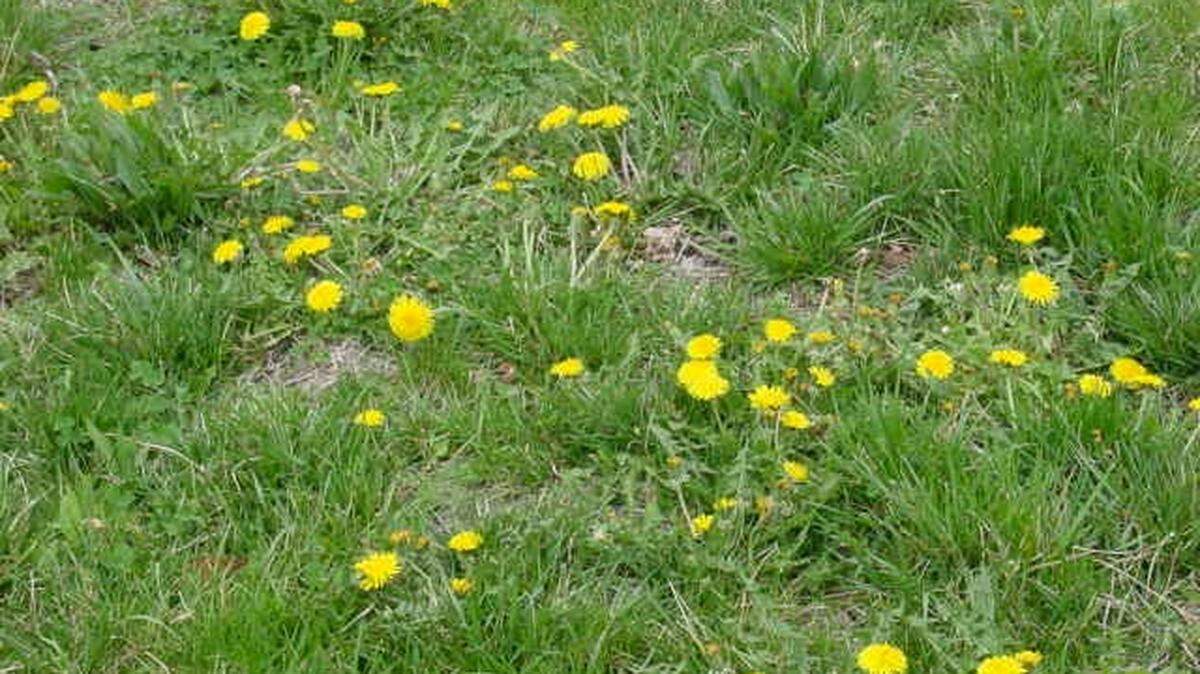
Gardeners have a saying: “Give a weed an inch and it will take a yard.” Weed control is a common problem. Achieving control is often challenging and safety must be followed when using pesticide.
Getting the upper hand on weeds is all about timing. Control is best attained when the weeds are small, vegetative and not in flower. Fall is the ideal time to eradicate our most common lawn weeds.
There is a classification of weeds known as winter annuals. Henbit, with its purple flowers; chickweed, which forms a lime-green mat; and bright yellow dandelions all fall into this category.
These weeds germinate in the cool fall nights, often barely noticeable in the seedling stage.
The seedlings take hold and lie in wait for the warming late-winter sun and rising temperatures. While a few weeds are tolerated, most homeowners want a green carpet of grass. Seemingly overnight, the spring greening of the lawn can quickly turn into a field of color.
Broadleaf herbicides are highly effective when applied on a warm fall day. Don’t expect a quick kill with the cooler temperatures. Instead, fall treatments are slower acting but more effective. As winter conditions lag on, the weeds die out, never to return come spring.
Herbicides formulation for fall control can either be liquid or granular applications. Each has advantages and disadvantages.
Granular applications usually contain a fertilizer, so two goals are accomplished in one application. Granular applications are not always the most effective as the particle must stick to the foliage to eradicate the weed.
Liquid applications result in more thorough coverage, coating the weed foliage with the chemical for absorption. Areas are missed by spraying as it is difficult to know what has and has not been treated.
Another advantage of liquid applications is the weeds can be spot treated instead of the entire lawn. Spot treatment reduces the amount of pesticide use.
In addition to being more effective than spring treatments, fall treatment of winter annuals has another advantage. Fall applications pose less harm to non-target plants.
Many of the broadleaf herbicides volatize, forming a vapor. This vapor travels with a spring breeze, resulting in herbicide drift. Spring is a time of active growth of trees, shrubs, flowers and vegetables. Unfolding leaves quickly take in the vapor resulting in herbicide damage to unintended landscape plants.
Herbicide damage results in deformed, twisted or curled leaves. The good news is the drift is more cosmetic than harmful. The bad news is the plant looks odd for most of the summer.
Herbicide drift is nonexistent in the fall as plants go dormant.
Remember, when you do apply an herbicide, read and follow label application and safety guidelines. Sweep or blow granular products on hard surfaces, such as sidewalks and driveways, back onto the lawn to keep the pesticide out of water sources.
Take advantage of a warm sunny day to give weeds a knockout punch before they take over your yard next spring.
Dennis Patton is a horticulture agent with Kansas State University Research and Extension. Have a question for him or other university extension experts? Email them to garden.help@jocogov.org.