
Want an ornamental grass that’s happy in your landscape? This ‘little’ has big impact
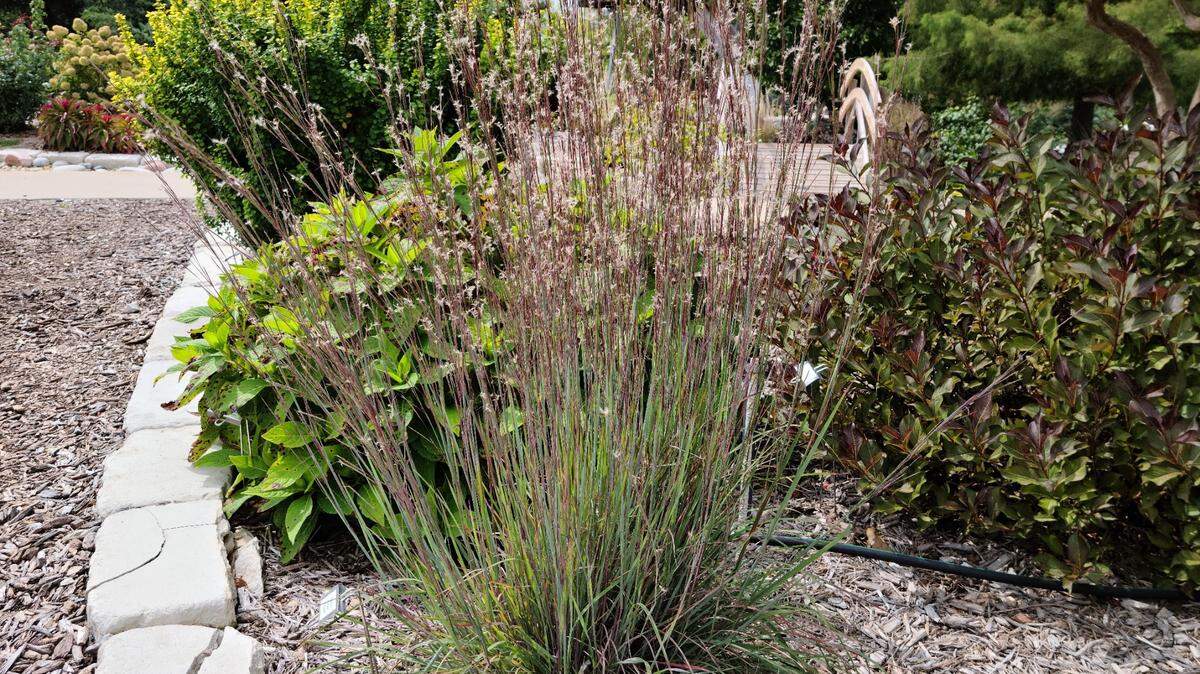
As you drive around the Kansas City area, you will see ornamental grasses are a staple in some of the most beautiful landscapes in our area. Grasses are desired for their strong architectural features, fascinating characteristics and durability. Native plants are popular as they are well adapted to local soils and climates.
Little bluestem, Schizachyrium scoparium, is a native perennial ornamental grass throughout much of the Midwest. In Kansas, it was given the distinction of being the state grass in 2010 as it is the only grass species to be found in all 105 counties.
Little bluestem is one of the few plants to tolerate elevation changes, varying soil types and more than a 30-inch difference in rainfall from the southeast to the west. If it can thrive in all of Kansas, it can thrive in your garden.
Like most natives, little bluestem adapts to a wide range of soil conditions. It does well in shallow rocky soils as well as heavier clay soils.
This native plant is prized for a deep root system that helps it to survive dry conditions. Roots can reach 5 to 8 feet deep into the soil. Once established, it requires little or no supplemental water and still thrives.
Adapted to the short and tallgrass prairies in Kansas, little bluestem is a mid-sized clumping warm-season grass. Depending on conditions, it will reach between 2 and 4 feet in height and less than 2 feet in diameter, making it the perfect size for a landscape feature or an accent in a perennial garden.
Unlike many ornamental grasses, its dense fibrous roots allow for easier maintenance when the time comes to dig, divide and transplant. The clump slowly expands, leading to timely divisions.
Overgrown clumps, or those planted in rich soil, may tend to open up or flop late in the summer, diminishing the strong vertical feature of the grass. Because it is a prairie plant, full sun is the ideal location for planting, as shading will increase the chance of flopping.
Plant breeders have researched this versatile plant for years. Selections have been made from wild plantings to crosses in the greenhouse. As a result, several varieties are on the market, all with similar qualities.
Foliage tends to be blue-gray, and fall color ranges from russet orange, red burgundy or a scarlet purple depending on the variety and seasonal conditions.
Common varieties with expected fall color include: Prairie Blues turning red-orange; the Blues turning purple, orange and blue; Smoke Signal turning scarlet, red, and purple; Blue Heaven turning red, orange, burgundy; and Standing Ovation turning red, orange, burgundy.
My experience in our demonstration gardens is the russet orange becomes the primary fall color with hints of the other shades.
No matter the variety, the maintenance is the same. This warm-season grass greens up later in the spring. Cut back the old growth each spring to renew the grass.
As the clump increases in size, timely divisions reduce the flopping potential. When the clump reaches about dinner-plate size, dig and divide into three or four sections for replanting.
Now is an excellent time to add this wonderful state grass of Kansas to your landscape. It will be as much at home in your garden as it is in the prairie.
Dennis Patton is a horticulture agent with Kansas State University Research and Extension. Have a question for him or other university extension experts? Email them to garden.help@jocogov.org.