
Peppermint Schnapps or Cherry Cheesecake anyone? This plant is crowd-pleaser
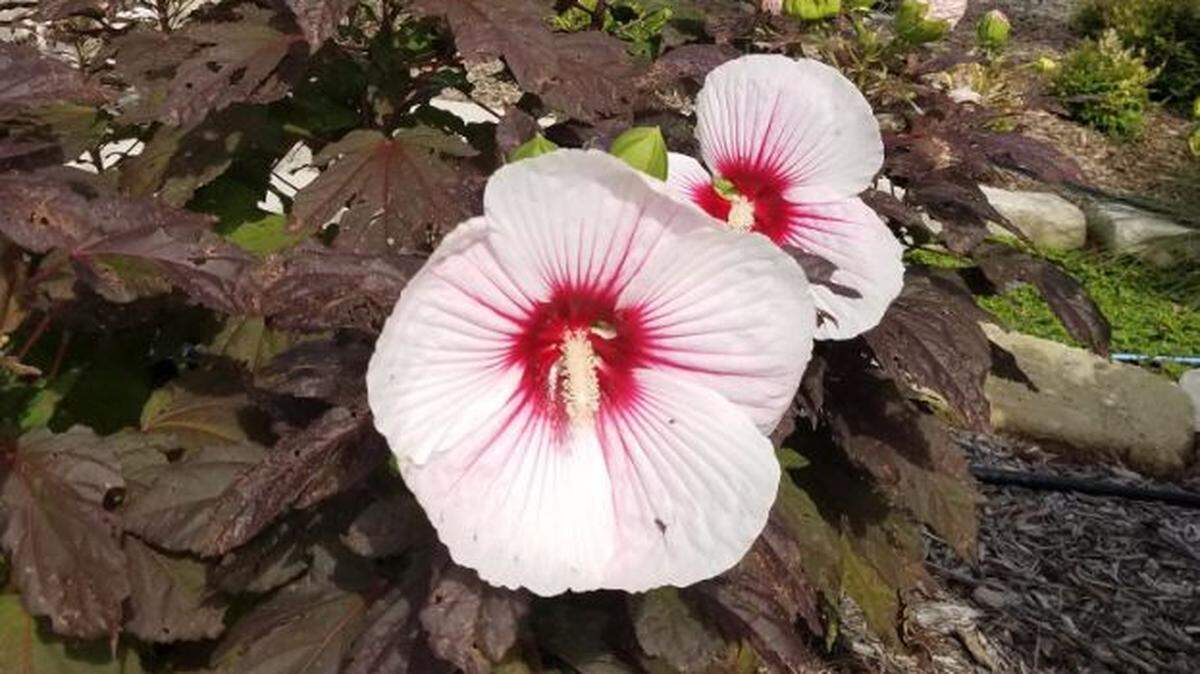
Large, beautiful, colorful blossoms and easy to care for: What more could you ask of a perennial plant? If these qualities appeal to you, consider adding hardy hibiscus to the garden. If you already have this gem, consider adding newer varieties to join the family.
Hardy hibiscus should not be confused with its cousin, the tropical hibiscus. With shiny green foliage, the tropical hibiscus makes a great patio plant, with bright yellow, orange, pink or red flowers. But they will not survive winter in the Midwest as they are truly tropical.
Other common names for the hardy hibiscus include rose mallow and perennial hibiscus. It is sometimes confused with the shrub Rose of Sharon. All of these are different species of hibiscus.
Hardy hibiscus is a perennial, returning each spring from a thick, fleshy crown. Since they love summer heat, they are slow to emerge in the spring. Don’t give up on them as it may be into May before any growth appears.
Hardy hibiscus lives up to its name, as it is not particular about soil conditions. This versatile plant will grow in boggy soil. Good soil moisture is best for flowering, but it is drought tolerant as well. Hibiscus could survive with little or no supplemental irrigation.
Like most summer blooming plants, full sun is the desired location in the garden. Light shade decreases flowering.
Yearly care is simple. Cut the thick, woody-like stems to the ground after the plant goes dormant in the fall or late winter. Sit back and patiently wait for the new growth and flowers to develop mid-July and last well into August.
Older varieties of hardy hibiscus, like Lord and Lady Baltimore, are large, rangy plants. Breeders have shrunk the plant, making it more compact and desirable for the garden.
Newer varieties span from 2 feet up to 5 feet. Strong stems develop a well-rounded plant, terminating in showy flowers the size of dinner plates. Flower colors include soft to dark pink, shades of red and white, with bicolor mixing the hues.
Leaf color varies from green to a greenish-gray to maroon. Some leaves have a dull mat, while others develop more of a sheen. Leaf shape varies from an oval to a lobed form, adding more interest.
Newer varieties flooded the market as this old fashion plant made its comeback. It is easy to be overwhelmed by the selections. A few favorites are Berry Awesome, Cranberry Crush, Perfect Storm, Cherry Cheesecake, Midnight Marvel, Starry Starry Night and Peppermint Schnapps. Those who named the plants get an A-plus for creativity.
Add one of these new varieties in your garden today. Full-grown flowering plants are found at local garden centers. It is a great way to make an immediate impact in the garden.
As you can see, I think this is almost the perfect plant. I would be remiss if I didn’t mention its one downside. Japanese beetles like to munch on the showy flowers. They can destroy the perfect structure of the flower when viewing up-close.
Even with feeding, these cheery blooms still put a smile on your face in the heat of summer.
Dennis Patton is a horticulture agent with Kansas State University Research and Extension. Have a question for him or other university extension experts? Email them to garden.help@jocogov.org.
This story was originally published August 4, 2020 at 5:00 AM.