
This type of hydrangea is prized for adding interest to the garden year-round
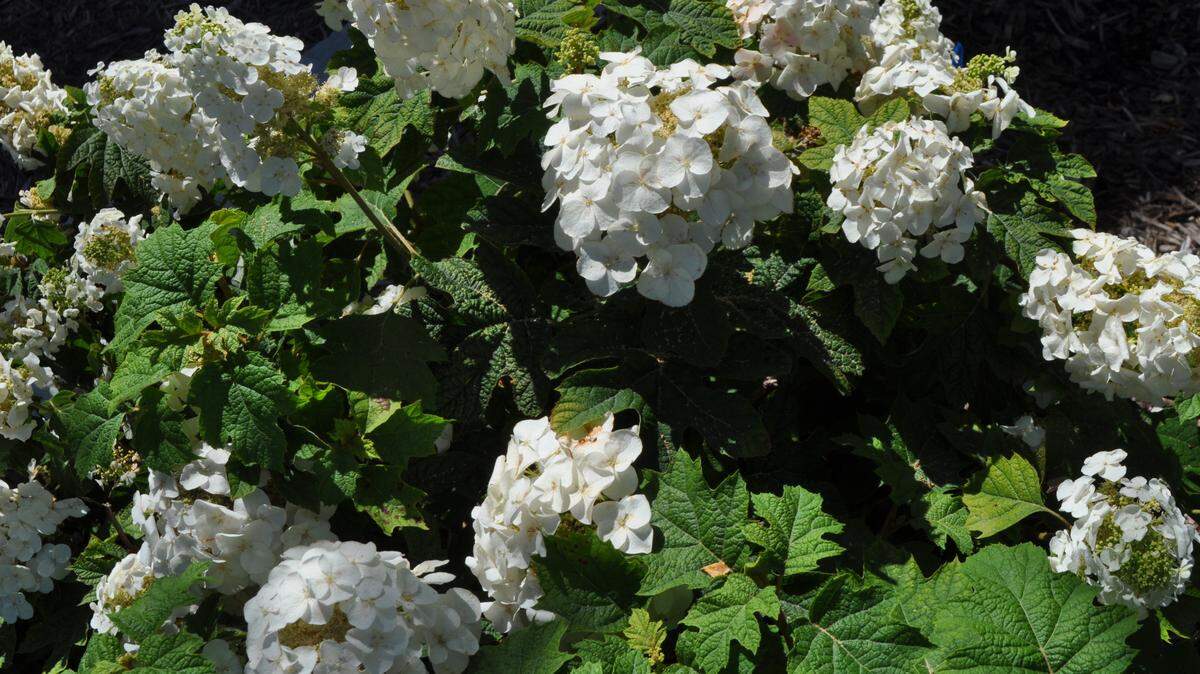
I recently wrote about a must-have plant for my garden: the hydrangea. As you might guess, no gardener can have just one. Currently in bloom across the metro area is the Hydrangea quercifolia, Oakleaf hydrangea. The bonus of this plant is the joy it brings for all seasons.
This plant is frequently referred to by its common name because of its leaf shape. Unlike other hydrangeas with an elongated rounded leaf, this one has a profoundly lobed leaf resembling an oak leaf. The leaves can be large, with a coarse texture, but overall the plant has a graceful appearance.
Large white panicles of flowers are produced late May into June on the tip of last year’s growth. Some blooms can be up to 10 inches in length, depending on the variety. As the flowers wane, older blooms sometimes take on a pinkish hue adding more interest.
By mid-summer, the flowers have faded into a pleasing rusty-brown. I recommend leaving the faded flowers as they provide summer interest contrasting with the green foliage.
Oakleaf hydrangea is not just prized for the blooming season but also its fall color. Once fall arrives, the leaves change to varying hues of purples and reds. It is one of the most intense shrubs providing fall color.
Winter provides yet another season of interest. Once the leaves drop from the branches, the exfoliating cinnamon-brown bark pops in the landscape. The woody stems add winter interest on a snow day.
Besides the fact that oakleaf hydrangeas provide interest in every season, they are not fussy. They do best in well-drained soil and even moisture. It will tolerate dry conditions but loses some of its summer interest. It is adaptable to full sun to light shade being one of the few shrubs flowering in the shade.
There are several varieties on the market fitting a larger to smaller spot in the garden. Alice is one of the larger, reaching 10 feet or more. Snow Queen and Gatsby Moon are about 6 feet. Gatsby Gal hits about 5 feet. Pee Wee is around 4 to 6 feet. Munchkin and Ruby Slippers are among the smallest varieties checking in at 3 to 4 feet. All varieties tend to have spread equaling their height.
Maintenance of this shrub is easy. Remove dead wood and spent flowers in the spring of the previous year. Flowers are produced on old, last season growth. Delay any additional pruning till after peak flowering to enjoy the flowers. In fact, pruning of old growth should be limited to get the peeling bark’s full effect in the winter.
Another bonus of this plant is some varieties tend to sucker, providing young plant starts for your garden or to share with a friend. Now you understand why this is a must-have in my garden for the joy it brings me year-round.
Dennis Patton is a horticulture agent with Kansas State University Research and Extension. Have a question for him or other university extension experts? Email them to garden.help@jocogov.org.