
To be kind to bees and butterflies, allow some wild violets in your lawns and gardens
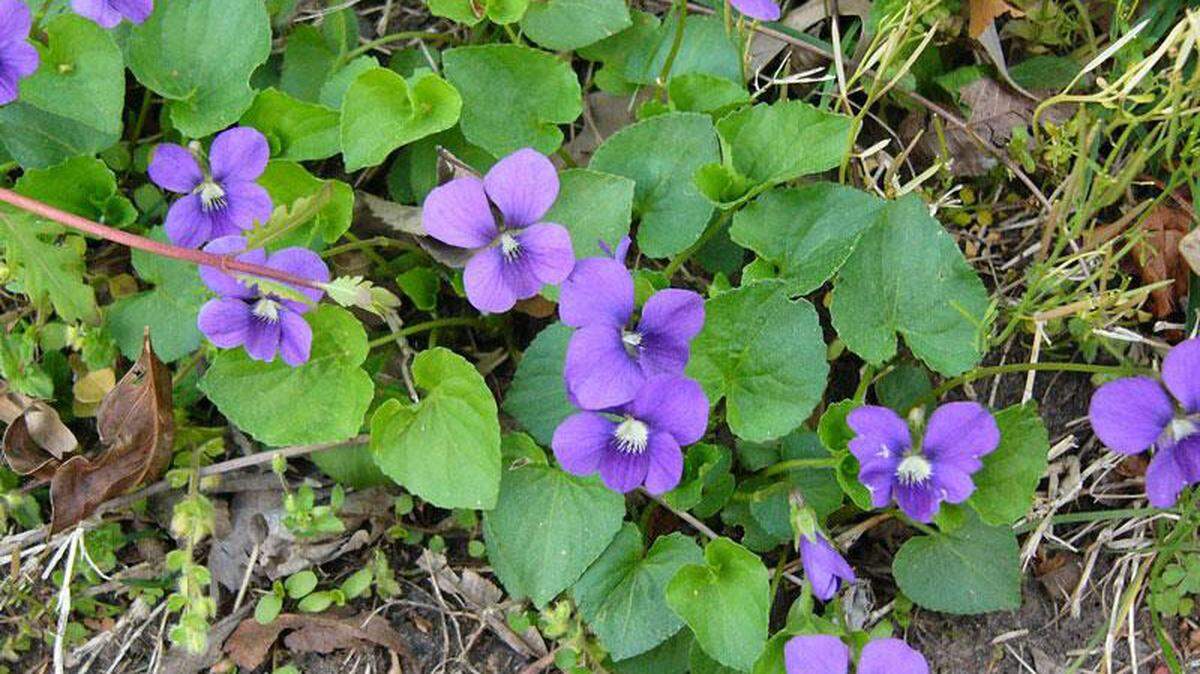
Wild violets are frequently found growing in lawns and landscapes across the Kansas City metro area, but many people have a love-hate relationship with this native plant.
The perennial plants have heart-shaped leaves growing in compact clumps. The dainty flowers appear March through June under cooler weather patterns and range in color from blue to light violet, and dark violet and white.
Violets, which prefer shady locations, have a knack for colonizing in flower gardens and sparse lawns. This perennial develops a strong rhizome and reseeds freely, adding to the love-hate relationship.
Those who do not like the wild violets see them invading the lawn and flower gardens. They spread freely and are extremely difficult to control because of the rhizome structure and reseeding.
Those who love the plants, or at least tolerate them, understand the vital role wild violets have in a healthy ecosystem. Wild violets are the host plant for 16 species of Fritillary butterflies. Violets are the only food source for this group of butterflies. Just like Monarchs need milkweed to survive, this species of butterflies need violets.
They are also the host in the eastern United States for a specialized pollinator: the mining bee. Reducing the violets as their food source eliminates these valuable pollinators.
Violet lovers can tolerate their random seeding as they see the greater good. I fall mostly into this category. I allow them to remain in shady areas of the garden and lawn. In other places, I will hand weed them from the perennial garden.
Violet haters are those striving for a beautiful lush green carpet for a lawn, not dotted with the invaders. Like most weeds, wild violets are opportunistic. They grow best in the shade where turf is usually thin, due to lack of sunlight. They find an open spot and take off, becoming the invader.
Violets are a cool-season plant growing best in the spring and fall. Heat and dry summer conditions send the plants into dormancy, dying back only to return in the fall. This makes chemical control difficult.
Although violets are most notable in spring when in full flower, spring is not the ideal time to treat. Spring chemical treatments usually burn off the foliage, not killing the rhizome supporting the growth. This results in them appearing again in the fall. Hand pulling will break the top off and leave the rhizomes in the soil to grow back again.
Fall chemical treatments are more effective. Treating in mid-October through mid-November results in greater success. In the fall, plants prepare for winter by storing energy and pull the chemical into the rhizome resulting in elimination.
Traditional herbicides used in the home lawn are deficient in controlling violets. 2,4-D, MCPP and Dicamba products are not recommended. Products containing higher percentages of the chemical Triclopy used at the highest labeled rates are most effective.
Are you a lover or a hater of violets or in the middle? I fall in the middle, appreciating their beauty and host benefits but on my terms. Unfortunately, they don’t seem to play by my terms.
Dennis Patton is a horticulture agent with Kansas State University Research and Extension. Have a question for him or other university extension experts? Email them to garden.help@jocogov.org.
This story was originally published June 8, 2020 at 4:56 PM.