
Love container gardens? Don’t be stingy with these essential ingredients
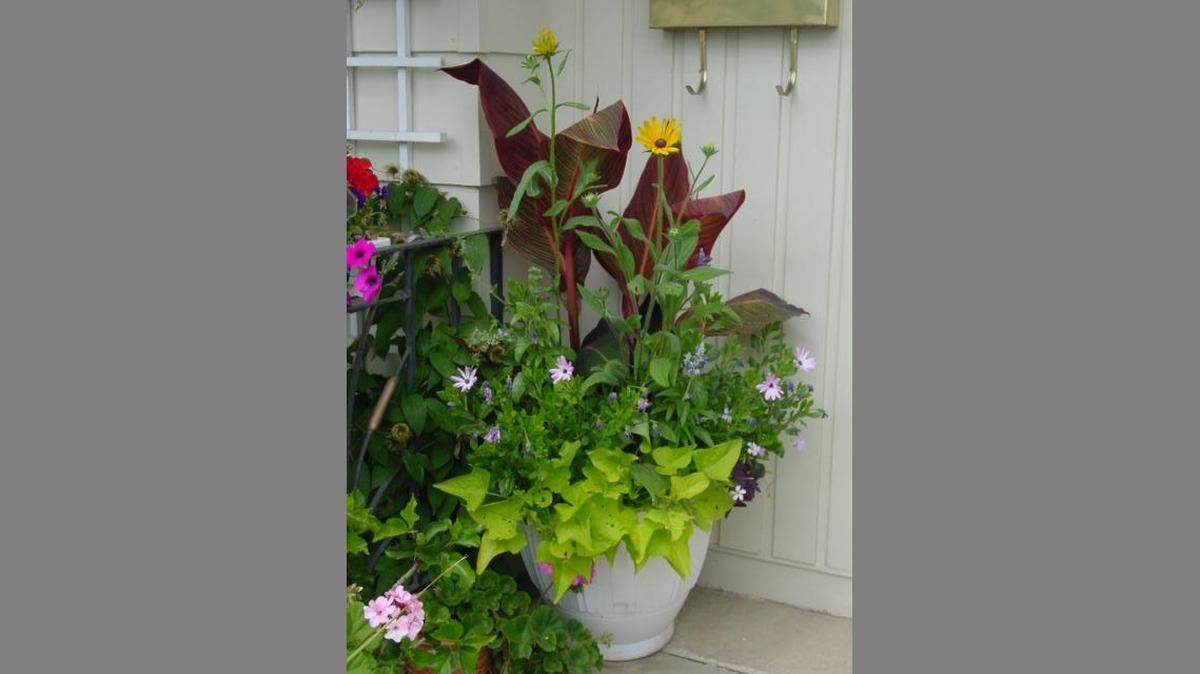
The arrival of spring brings signs of hope all around us. Many of us are bitten with the “gardening bug” and want to get outside and enjoy the warmer weather.
Container gardens can brighten the front door or patio by saying hello with their pop of color. Unfortunately, the good feelings now quickly turn to a summer sting when our spring plantings begin to fade. In my years of experience, here are the common mistakes.
Containers are too small
Containers come in all sizes, shapes, colors and materials. The plant doesn’t care what it looks like, only you do. The plant does care about how much space it has for root development. Bigger pots allow plants to grow larger and give more room for error when it comes to watering.
Since shape doesn’t matter, look at pot size from the standpoint of how much soil it can hold. In the Patton garden, anything less than 5 gallons doesn’t cut it. Smaller pots require frequent watering, little space for growth and limit the options for planting combinations. Personally, I prefer a container holding around 10 gallons.
Remember, a container must have adequate drainage. If it doesn’t have a drain hole, don’t waste your time.
Poor quality soil
A high-quality potting mix containing no soil (dirt) is a must. Potting mixes are soilless and made with the right blend of peat moss, shredded bark, coconut coir, or other materials. It is best to purchase a quality potting mix instead of concocting your own.
Potting soils are formulated to hold a lot of water while still providing the oxygen needed for root growth. Mixes containing topsoil are poorly drained and limit growth. Reusing potting mix from year to year is fine as long as it is refreshed by mixing and adding new material before replanting.
Skimping on potting mix
Purchasing mixes can be expensive, so people fill larger pots with bricks, Styrofoam, or bubble wrap to take up space and save money. You guessed it, this is a mistake as less soil mass results in less root development and decreased growth.
Soil is the most crucial part of a container garden. In the long run, it is less expensive than plants, especially if the plants don’t thrive. Fill the pot to about an inch from the top, leaving a reservoir for water.
Lack of fertilization, water
Container gardens are heavy feeders as all the watering needed also leaches the nutrients from the mix. More fertilizer leads to more growth, which leads to more flowers. Many products work, just follow the label instructions. Here again, the plant doesn’t care about name brands. Liquid or granular makes no difference, but they do no good in the package.
Many potting mixes include fertilizer, but they break down quickly in warm soil. My advice is to start fertilizing at the time of planting and call the premixed fertilizer a bonus.
The most apparent reason for a container catastrophe is the lack of water. If you are going to the time and expense to plant a container, make sure you are committed to watering it regularly. If not, save yourself some time and money and just stick some plastic flowers in the pot. Heavens, I cannot believe I just made that recommendation.
Spend the next few weeks planning your container garden purchases. Then when it is safe to get back out to the garden centers, you will know what you need to make sure your container lasts all season.
Dennis Patton is a horticulture agent with Kansas State University Research and Extension. Have a question for him or other university extension experts? Email them to garden.help@jocogov.org.
This story was originally published April 6, 2020 at 10:33 PM.