
Pruning anxiety? Take these simple steps to ease your fears
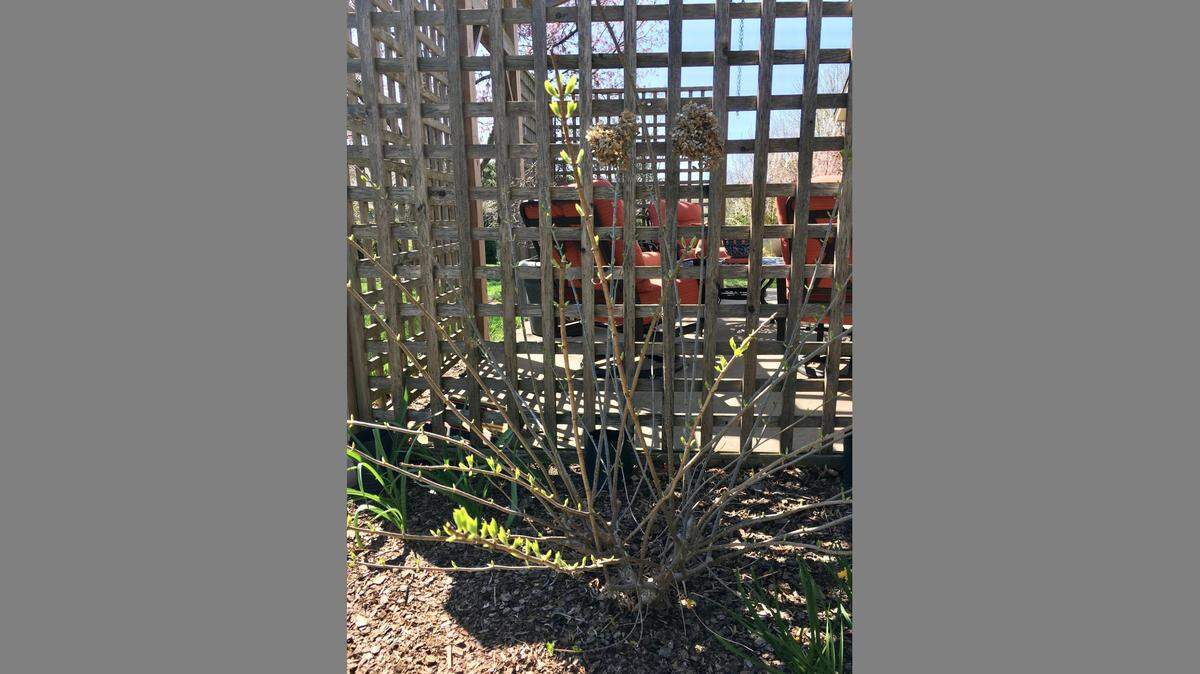
To borrow the Nike slogan, “Just Do It” is the best advice for pruning trees and shrubs. In my years of interacting with the public, I have learned people are afraid to prune. An overgrown shrub is more challenging to rein in if we had just bit the bullet and pruned.
Take advantage of a sunny spring day to get some fresh air and practice this skill. There is no need to stress over when and how to prune.
All in the timing
When to prune is a prime consideration. With a few exceptions, pruning is best done in the late winter through early spring. Shrubs that flower in the early spring, like lilac and forsythia, bloom from buds set last fall. Pruning before it blooms cuts off the flower buds. The shrub is not harmed, but you lose the spring color.
Don’t take the easy way out
Unfortunately, there are more bad examples of pruning than good. The industry is often guilty of setting a poor example. They shear to save time and keep costs down. Shrubs rarely need be pruned with hedge shears. Unless you are maintaining a hedge, they should seldom be used in the landscape.
Pruning evergreens or deciduous shrubs into balls, mushrooms, or squares is not proper pruning as it destroys the natural beauty of the plant. Proper pruning does take longer, but the result is a pleasing landscape.
Needed tools
Pruning requires three tools: hand pruners, a lopper and a saw. A sharp pair of hand pruners, invaluable to a gardener, are used to cut limbs about the size of a finger or smaller. A lopper is better for branches around thumb sized. The pruning saw is necessary for limbs bigger than the size of your thumb.
Where to make the cut
People seem to hesitate most when deciding what to remove. Keep this thought in mind: Think of pruning not as removing growth but stimulating growth. This concept is a game-changer. Once a branch is removed, the plant responds by sending its growth to the remaining branches, speeding up the rate of growth.
Begin by removing dead, broken, crossing or inward growing branches. These do little good to the plant. There is only a need to make a cut in three possible places on the branch. One, cut back to another side branch, crotch or fork. Two, cut back to a healthy bud. Or three, cut completely to the ground, removing the limb from the shrub. The goal is to retain the natural form of the plant. The pruning cuts should mimic this structure.
Get rid of repeat offenders
Any shrub that is overgrowing its space and requires constant pruning should be removed. Remember, pruning stimulates growth. Get rid of it instead of fighting it. Remove and replace it with a plant size that is better suited for the space. Granted, there is no perfect plant, but why continue to fight a 6-foot shrub planted in a space for a 3-foot plant?
Lose your fear of pruning and just do it. The sooner the task is accomplished, the easier it will be. It will also reduce your stress about pruning, knowing the task is complete.
Dennis Patton is a horticulture agent with Kansas State University Research and Extension. Have a question for him or other university extension experts? Email them to garden.help@jocogov.org.