
These plant provide a pop of color, texture before springtime truly arrives
I’m not too fond of winter. I find myself staring blankly out the window dreaming of spring. When I miss landscape color, these plants help me survive the winter blues.
Seven Sons tree
Sometimes called the crepe myrtle of the north, this tree’s outstanding attribute is its white peeling bark. Heptacodium miconioides is a small multi-stemmed tree reaching 20 feet tall and 10 feet wide. The bark is highlighted as winter interest, but the plant shines in late summer.
In September, you will find Seven Sons covered with white flowers, attracting pollinators galore. Once the petals drop sepals, the bracts holding the flowers turn bright pink, lasting until the first frost.
I appreciate the shape of this plant as it grows. When it is young, it may not have the best form, but with age, the exposed bark matures into an attractive tree.
Golden mops cypress
Chamaecyparis pisifera, false cypress, does not fare well in most landscapes as we don’t understand its manner. I now appreciate its natural characteristics, and as a result, this bright yellow-green evergreen makes me smile.
In the effort to control its size, it is commonly pruned into a ball, destroying its beauty. When left unpruned, it develops a natural leader resulting in a pyramidal graceful weeping shrub.
Many plant tags indicate the size to be 3 to 5 feet. Left unpruned, they develop into a small evergreen tree-like form. I’ve had one growing in my perennial garden for about 10 years and it’s already 7 feet tall, looking like a golden haystack. It really beams with a covering of snow on a cold winter day.
Annabelle hydrangea
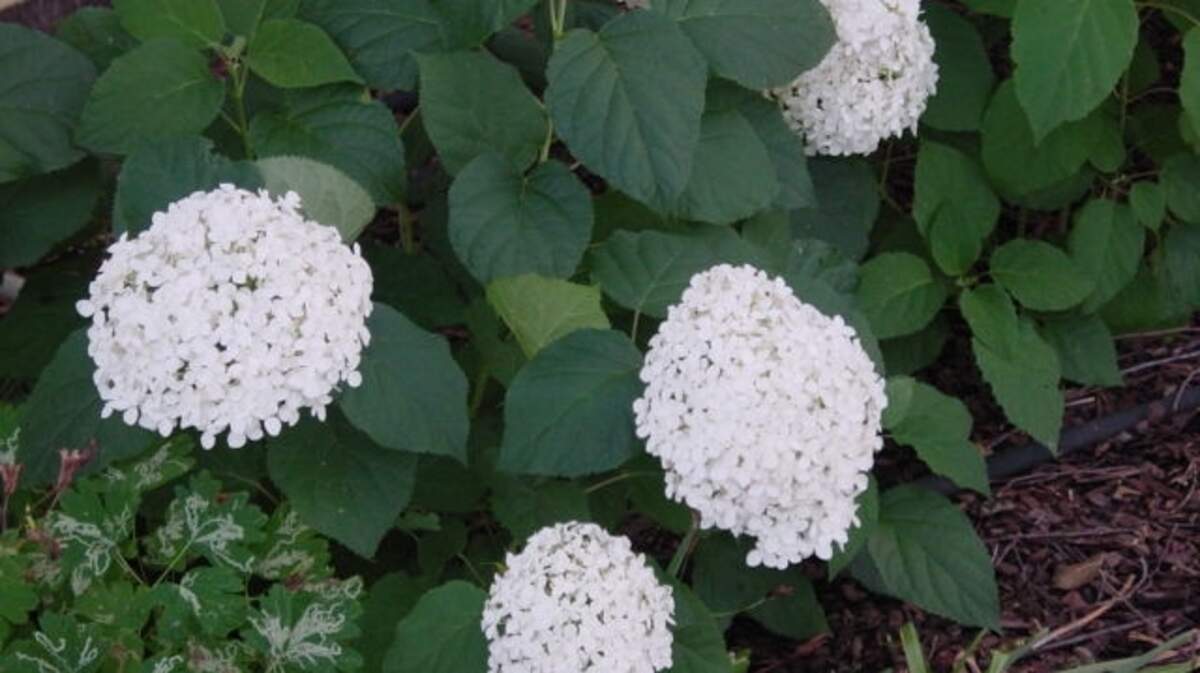
The brown flower heads of Hydrangea arborescens once again make me smile on a blustery day. Waving in the winter wind, I picture large, softball-sized white flowers basking in the early summer sun. Even during winter, they are still charming.
These hydrangeas are best known by the variety Annabelle. Once only available in white, pink shades are now on the market. I love looking at this plant in winter as it makes me long to grab the pruning shears and give it a spring cut.
Hellebore
The evergreen foliage of the Lenten Rose, or Helleborus orientalis, catches your eye as is shines green. This low-growing perennial is the first to bloom while still in winter, letting us know spring is on the way.
Delicate pastel blooms appear as the new growth sprouts from cold soil. Watching it grow this time of year reminds me there are just a few more weeks left of winter.
Arum
White and green speckled arrowhead-shaped leaves of Arum italicum brings a bit of cheer to the garden. Another low-growing perennial, this plant goes dormant in the heat of summer, returning in the fall.
Mature plants have an inconspicuous greenish flower that develops a bright red seed stock and stands at attention once the foliage disappears in summer. The contrast of winter brown and white snow draws the eye down, making it a winter favorite.
May these suggestions help you survive the last of winter and give you inspiration
Starting next week, catch my column in the Sunday Arts + Culture edition of The Kansas City Star. I love the feedback. Please keep it coming. Dennis Patton is a horticulture agent with Kansas State University Research and Extension. Got a question for him or other university extension experts? Email them to garden.help@jocogov.org.
This story was originally published March 3, 2020 at 4:42 PM.