
KC Gardens: Battling the bad beetles
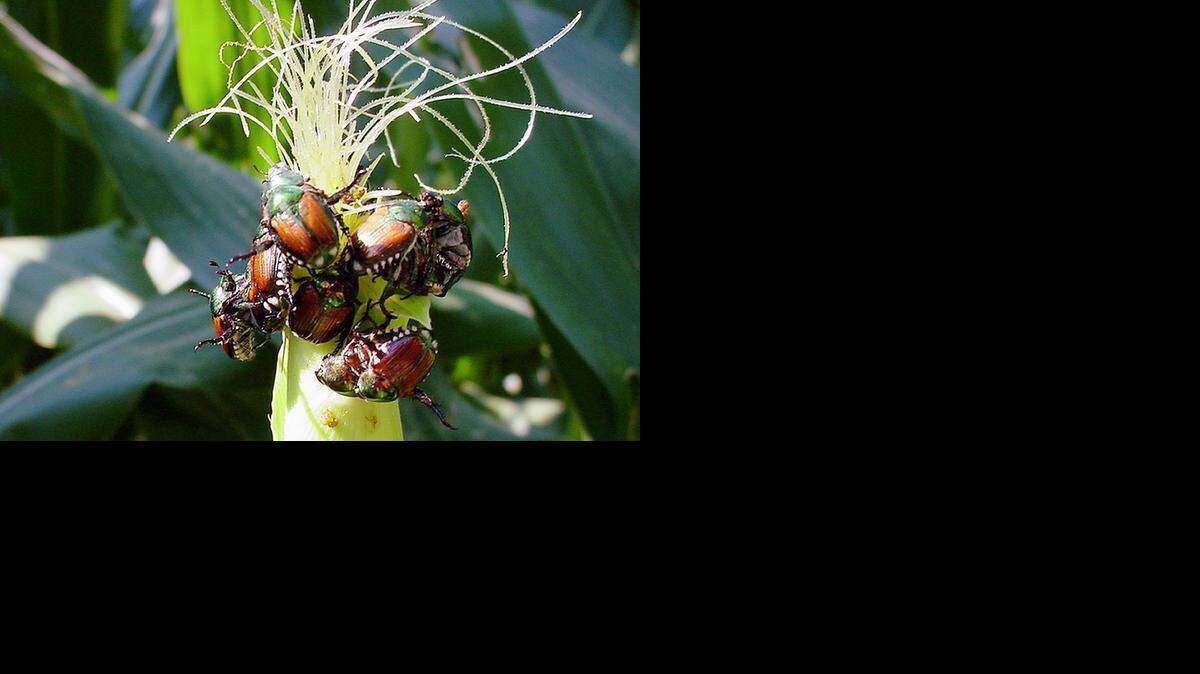
In only one day, Japanese beetles have decimated a plum tree and sand cherry tree. They’re moving on to the apple trees and silver lace vine along with hibiscus and rose of Sharon! I’ve never seen anything like it. While picking hundreds, there are hundreds more.
I will have little left in my garden and landscape if this continues through thru July and August. While I’m not a fan of chemical spraying, it’s impossible to handpick them all. What is the best solution for this new troublemaker and why don’t the birds eat them? – Gwen
Birds like crows, grackles and starlings do eat Japanese beetles, both the adults and the larvae, but when populations are heavy, the birds probably can’t keep up.
A number of chemicals will kill the adults: carbaryl, bifenthrin, cyfluthrin, horticultural insecticidal soaps, to name a few. But when shopping for a chemical to spray, be sure Japanese beetles are mentioned on the label. Frequent monitoring for new generations, and repeat spraying will be necessary.
Moisture is critical for the development of the embryos, which may explain why you have seen so many beetles this year.
The K-State Research and Extension bulletin has a list of chemicals, as well as a list of plants that are tasty to these pests. (Go to www.ksre.ksu.edu/bookstore and search for Japanese beetle.) – Carole Brandt, Johnson County Extension
To read more on this topic or to get your gardening questions answered on The Star’s KC Gardens blog by Carole Brandt and other Extension experts, go to KCGardens.KansasCity.com.
Birds like crows, grackles and starlings do eat Japanese beetles, both the adults and the larvae, but when populations are heavy, the birds probably can’t keep up.
There are a number of chemicals that will kill the adults, carbaryl, bifenthin, cyflutrhin, horticultural insecticidal soaps, to name a few. But when shopping for a chemical to spray, be sure Japanese beetles are mentioned on the label. Frequent monitoring for new generations, and repeat spraying will be necessary.
Moisture is critical for the development of the embryos, which may explain why you have seen them in such devastating proportions this year.
The KSU bulletin has a complete list of chemicals, as well as a list of plants that are particularly tasty to these pests. (Go to www.ksre.ksu.edu/bookstore and search for Japanese beetle.) – Carole Brandt, Johnson County Extension