
Why Pickleball Has Taken Over America — and Why Experts Say the Biggest Growth Is Still to Come
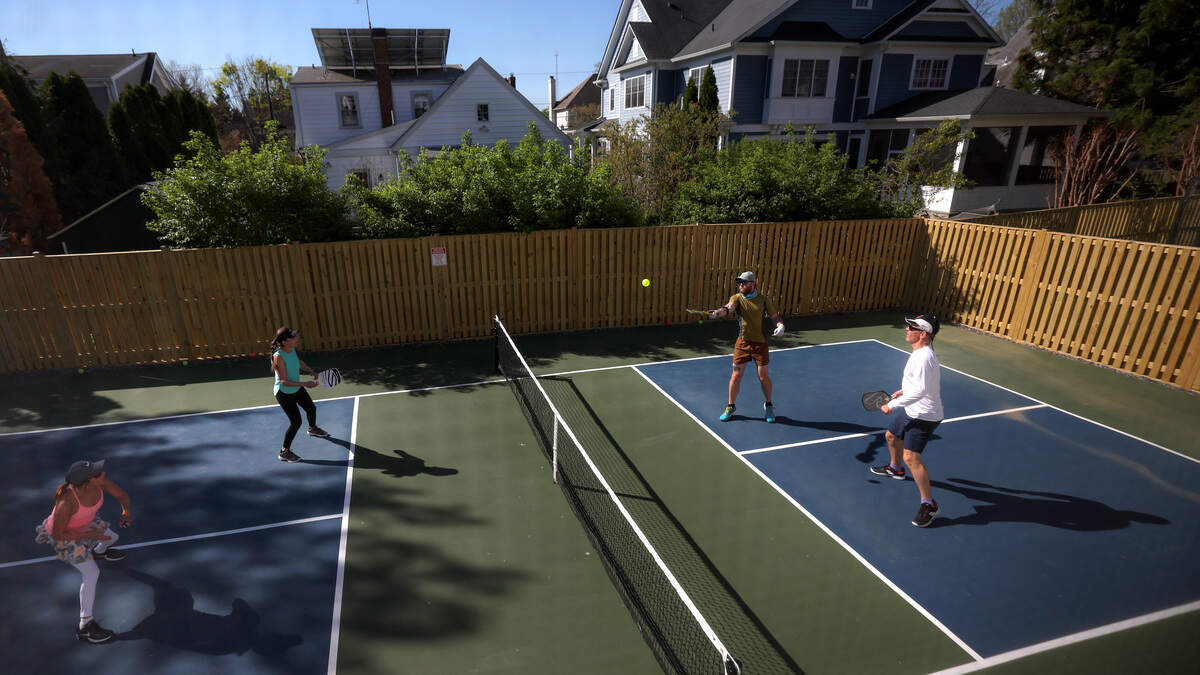
Pickleball isn’t just for retirees anymore. The sport once dismissed as a backyard pastime for older players has exploded into the fastest-growing sport in the United States for the fifth consecutive year, pulling in Gen Z, millennials and multigenerational families along the way. With nearly 20 million players nationwide and a 300% growth surge over the past four years, the paddle-and-plastic-ball game has become a cultural phenomenon, and it’s only picking up speed.
According to the 2026 Sports & Fitness Industry Association’s Topline Participation Report, pickleball’s rise shows no signs of slowing. A 2023 study from the APP found that more than 48 million adult Americans had played at least once in the previous 12 months. The mix of tennis, badminton and table tennis has proven irresistible, easy to learn, social by nature and built for mixed-ability groups.
Why pickleball took off as the hottest social sport
Pickleball’s appeal comes down to accessibility. The rules are simple, the equipment is minimal and the learning curve is short enough that beginners can hold a rally within minutes. Existing tennis courts can be quickly converted into pickleball courts, and the low cost of setup has made it a natural fit for community recreation centers, parks and even driveways. It’s one of the few sports adults of any age can play comfortably alongside teenagers, kids and grandparents.
The gameplay itself is part of the draw. “In tennis, the balls are all over the place. In pickleball, you’re hitting a plastic wiffle-like ball, so it’s less bouncy and doesn’t fly as fast through the air. And the paddle is much easier to handle because it’s shorter and lighter than a tennis racket,” Ernie Medina Jr., assistant professor of public health at Loma Linda University and a pickleball coach, told The New York Times in 2022.
That blend of approachability and depth is exactly what’s fueling the boom. “Pickleball is for everyone. It’s easy to start, but incredibly hard to master. That combination is powerful,” Jorge Barragan, co-founder and CEO of The Picklr, told Forbes.
Health benefits of pickleball for all ages
Beyond the social side, pickleball delivers a legitimate workout. A study published via ScienceDirect found that compared to walking at a self-selected pace for 30 minutes, doubles pickleball players had 14% higher heart rates and burned 36% more calories. Research published via Springer also suggests pickleball may be safer than tennis for people with heart issues, making it a smart option for players managing cardiovascular concerns.
The sport also engages the body in ways many traditional cardio activities don’t. “Because the paddle’s so small, pickleball is great for hand-eye coordination as well as neuromuscular coordination. You’re moving in different planes, not just forward like you do when you’re walking or cycling, which is good for your agility. And because there’s rotation involved, you’re working your core along with your upper and lower extremities,” Heather Milton, clinical exercise physiologist at the Sports Performance Center at NYU Langone Health, told The New York Times.
And then there’s the social benefit. Pickleball is designed for mixed-ability groups and casual play, and community courts have become gathering spots where neighbors, coworkers and families meet up. It’s one of the few sports that genuinely brings different generations together on the same court.
How professional pickleball is reshaping the sport
Pickleball’s professional infrastructure has grown alongside its grassroots boom. The sport is anchored by the PPA Tour, the official pro tour, and Major League Pickleball, which features a unique team-based draft format. On the men’s side, Ben Johns is the undisputed superstar. On the women’s side, that title belongs to Anna Leigh Waters, and her recent Nike deal signaled a turning point.
“When Nike signed Anna Leigh Waters, that was a huge moment. It legitimized pickleball as a real sport. Not just a hobby,” Barragan told Forbes.
Major pickleball events are now drawing hundreds of thousands of TV viewers, and coverage is moving into prime-time windows. Celebrity investors and crossover athletes, including Drew Brees and several tennis stars, are pouring money and attention into the sport. “There’s real capital coming into the sport now. Private equity has been sitting on the sidelines, waiting to see who emerges. I think 2026 is going to be a very interesting year for M&A in pickleball,” Barragan said.
What’s next for pickleball, from the World Cup to the Olympics
Pickleball’s global footprint is expanding at a remarkable clip. The World Cup of Pickleball grew from 32 participating countries to 78 in just one year, a jump that hints at the sport’s Olympic ambitions. For people inside the industry, the path forward is starting to feel inevitable.
“When I went to Lima, Peru, it really opened my eyes. You could see the Olympic pathway forming. If I were a betting man, I’d say 2032, we’re going to see pickleball in the Brisbane Games,” Barragan told Forbes.
This article was created by content specialists using various tools, including AI.
.jpeg)