HEPA air purifier sales spike every wildfire season. Here’s what panic buyers get wrong
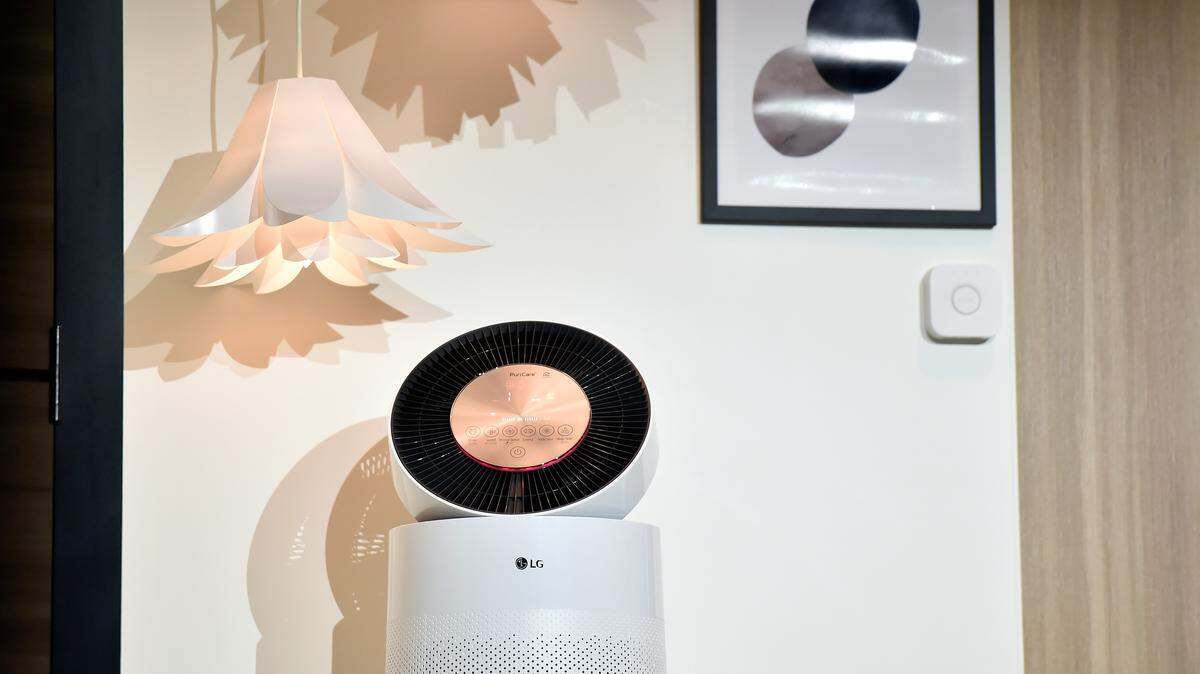
When wildfire smoke rolls in, the rush to buy a hepa air purifier starts within hours. Shelves empty. Prices climb. And the people grabbing whatever’s left often end up with units that can’t actually clean the air in the rooms where they live.
That pattern is repeating itself again. After wildfires hit Georgia in April 2026 fueled by a rain deficit, high winds and low humidity, — among other causes, per NASA — neighboring states got slammed with poor air quality alerts.
South Carolina searches for “hepa air purifiers” jumped 120% between March 29 and April 30, according to Google Trends. Searches for “portable air purifier” spiked 400%. Florida and North Carolina followed the same curve.
It’s the same thing we see every wildfire season. In 2023, when Canadian wildfire smoke blanketed the East Coast, Target, Walmart, Lowe’s and Home Depot stores across eastern Pennsylvania sold out within days, per the Lehigh Valley News. On Amazon, single models moved more than 20,000 units in a month.
Here’s what to know before you panic-buy — and what people consistently get wrong when they do.
Why a HEPA air purifier matters during wildfire season
Smoke doesn’t stay outside. During a wildfire, particles drift into homes through open windows and doors, ventilation systems and the small gaps and cracks most houses have around joints and poorly sealed areas.
Once inside, that air keeps recirculating — meaning the indoor air can stay unhealthy long after outdoor conditions improve.
According to the U.S. Environmental Protection Agency (EPA), wildfire smoke particles can reach your eyes and respiratory system, triggering burning eyes, runny nose and bronchitis. They can also aggravate chronic heart and lung disease.
That’s why an air purifier for wildfire smoke isn’t a luxury during a wildfire — it’s the main tool keeping indoor air breathable.
It’s also why the EPA recommends using a portable air cleaner to filter the air at home, or building a DIY version by taping a furnace filter to a box fan when nothing else is available.
When panic-buying a HEPA air purifier goes wrong
The urgency to buy an air purifier during wildfire season is completely rational. The way most people buy one isn’t. Here are the most common mistakes panic buyers make — and why they end up spending more for less protection.
- They buy the wrong size. A purifier rated for 200 square feet isn’t doing much in a 500-square-foot living room. It runs constantly, wears out the filter faster and barely moves the needle on air quality.
- They ignore the filter replacement math. A $90 purifier with $60 replacement filters every three months costs more over two years than a $250 unit with $30 filters every six months. Panic buyers focus on the sticker price and don’t think about the ongoing cost.
- They expect one unit to cover the whole house. Air doesn’t circulate that way, especially with doors closed at night — which is exactly when consistent air quality matters most for sleep.
- They fall for “HEPA-type” marketing. True HEPA filters capture 99.97% of particles down to 0.3 microns — the size that matters most during wildfire smoke events. But “HEPA-type,” “HEPA-style” and “HEPA-like” are unregulated terms that can mean almost anything.
- They skip the activated carbon filter. HEPA handles particles. But wildfire smoke also carries gases — volatile organic compounds, formaldehyde — that pass straight through HEPA. An activated carbon filter catches those.
None of these mistakes happen because people aren’t paying attention. They happen because smoke makes every purchase feel urgent — and urgency is the enemy of good decision-making. The good news is that most of them are avoidable with a little planning.
How to avoid the No. 1 mistake panic buyers make
The best time to buy an air purifier is when you don’t need one.
Late winter and early spring — before fire season pricing kicks in — is when inventory is full, prices are lowest and you can actually compare options without smoke in the forecast making the decision for you.
In other words, the same unit that costs $260 in August might sit at $180 in March.
Buying ahead also means you can test placement, learn how loud the unit runs on different settings and figure out filter replacement timing before any of it actually matters. Once wildfire season is underway, those choices get made for you — and usually not in your favor.
What to do if the smoke arrives first
If the smoke beats your purifier to the door, you still have options. Follow the EPA’s guidance to build a DIY air cleaner using a box fan and a furnace filter. It’s not a long-term solution, and it won’t match a true HEPA unit on fine-particle capture, but it beats doing nothing while you wait for shipping.
My advice: practice the build now, before you need it. Keep a couple of extra furnace filters in a closet. Close windows and exterior doors when air quality drops, run the cleanest unit you have in the room where you sleep and check local air quality readings before deciding whether it’s safe to open up again.
The goal isn’t to outsmart wildfire season. It’s to make the decisions before the smoke makes them for you.
MORE INFO: How to choose the best HEPA air purifier for your home — and why it’s so important
This article was created by content specialists using various tools, including AI.