What Are Somatic Exercises? Everything You Need to Know About This Body-Based Practice
Stress lives in the body, not just the mind, and a growing body of research suggests the way we move (or don’t) plays a bigger role in regulating anxiety and trauma than most people realize.
That’s why “what are somatic exercises” has become one of the most-searched wellness questions online, with the Global Wellness Summit naming nervous system regulation the next frontier of well-being for 2026.
If you’ve scrolled past the term on TikTok or Instagram and wondered whether it’s just rebranded yoga, you’re not alone. Somatic exercises are body-based practices designed to increase awareness of physical sensations as a way to process stress, anxiety and stored trauma. The goal isn’t burning calories or building muscle. It’s learning to listen to what your nervous system is trying to tell you.
What Are Somatic Exercises and How Do They Work?
Unlike traditional workouts focused on physical output, somatic exercises turn attention inward. The practice was originally developed by Peter Levine in the late 1970s as “Somatic Experiencing,” an alternative for people that conventional trauma therapy wasn’t reaching, according to PsychCentral. The core premise: trauma and chronic stress don’t only live in the mind. They show up as physical tension, shallow breathing and a nervous system stuck in fight-or-flight mode.
Mayo Clinic Press notes that anxiety’s physiological response includes labored breath, muscle tightening and activation of the sympathetic nervous system. Somatic work targets that activation directly, using awareness, breath and gentle movement to signal safety to the body and help it release what it’s holding.
The Science Behind Somatic Therapy and Nervous System Regulation
For years, somatic work was filed under “alternative” wellness, promising in practice but thin on clinical data. That’s starting to shift. The first small randomized controlled trial on somatic experiencing ran in 2017.
A study published in PMC/NIH of 63 PTSD participants found significant reductions in posttraumatic symptom severity and depression after 15 weekly sessions, with effect sizes researchers described as large.
A separate RCT also published in PMC found somatic experiencing significantly reduced PTSD symptoms in chronic low back pain patients compared to standard treatment alone, pointing to the real connection between physical pain and unprocessed stress. The research base is still growing, but the early signals are strong enough that nervous system regulation via somatic practices has gone from fringe wellness to a named priority in 2026 health forecasting.
Common Somatic Exercises You Can Try at Home
One reason interest is exploding is accessibility. Basic somatic exercises don’t require equipment, a gym membership or much time. Mayo Clinic Press notes that common practices like breathwork, grounding and body scanning are generally safe to do on your own, though working with a trained therapist is recommended if you’re navigating trauma recovery specifically. The goal isn’t to push through discomfort. It slows down enough to notice what your body is actually doing.
A few foundational practices to start with:
- Body scan: Move your attention slowly from head to toe, noticing tension, temperature or sensation without trying to change anything.
- Grounding: Plant your feet flat on the floor and focus on the contact, the pressure, the texture, the stability beneath you.
- Intentional breathwork: Slow, deep breaths that lengthen the exhale send a signal of safety to the nervous system.
- Shaking or tremoring: Sometimes called TRE (tension releasing exercises), gentle shaking can help discharge stored physical activation.
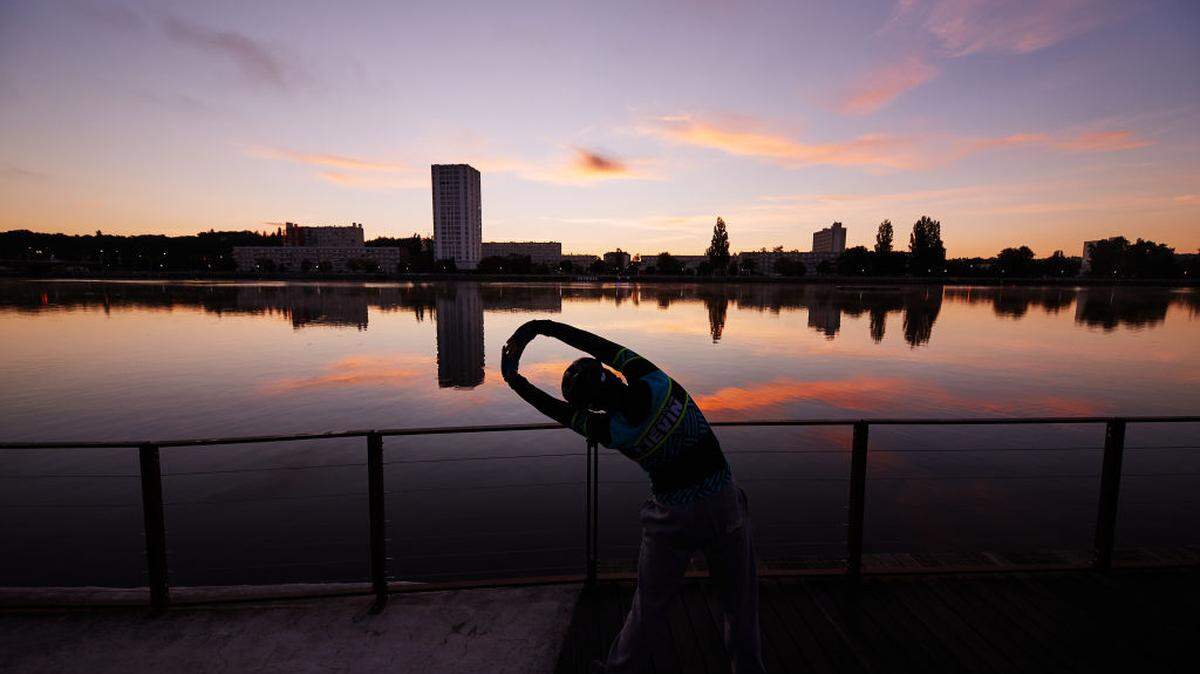
- Slow, mindful movement: Stretching or swaying with full attention on internal sensation rather than form or output.
What Somatic Exercises Can Actually Help With
Research and clinicians point to anxiety, chronic stress, PTSD symptoms and the physical residue of trauma as the primary targets here. Think: the tight shoulders, clenched jaw and shallow breathing that don’t ease up even when life calms down. Because somatic work engages the sympathetic nervous system directly, it can be especially useful for people who feel “stuck” in a stress response long after the original stressor is gone.
Trending search terms like “somatic exercises for anxiety,” “nervous system reset” and “vagus nerve exercises” all point to the same underlying need: people are looking for something that works at the body level, not just the mind.
Somatic Exercises vs. Somatic Therapy: an Important Distinction
These are not the same thing, and it’s worth knowing the difference before you start. Somatic exercises like grounding, breathwork and body scanning can be practiced solo, anytime, with no special training needed. Somatic therapy, the deeper trauma-focused work pioneered by Levine, requires a trained practitioner to guide the process safely.
If you’re using somatic practices to manage everyday stress or anxiety, going solo is fine and a good starting point. If you’re working through significant trauma, a licensed somatic therapist matters.
Are Somatic Exercises Just a Trend?
Fair question. The short answer: the practices themselves aren’t new, but mainstream awareness of them is. Somatic work has roots going back decades, and the clinical research, while still developing, is increasingly pointing in a consistent direction. What’s new is the cultural moment: nervous system health, polyvagal theory and body-based stress relief have all moved from clinical language into everyday wellness conversations.
You don’t need a therapist, a gym or even 30 minutes to start. Sit down. Plant your feet. Take three slow breaths and notice what you feel. That’s the entry point, and for a lot of people, it turns out to be exactly what they were missing.
This article was created by content specialists using various tools, including AI.
This story was originally published May 4, 2026 at 12:59 PM.