
Why is Kansas City called ‘The City of Fountains?’ Here’s the nickname’s hidden history
Kansas City in the late 1800s was on the cusp of a transformation. The country was rapidly changing, and this Midwestern town set out to become a bustling metropolis, reminiscent of European cities like Paris, with its wide boulevards and plazas equipped with monuments and fountains.
Out of this era came one of the city’s many nicknames: No, not Cowtown. Not the Paris of the Plains.
This time, it’s the City of Fountains.
So how did Kansas City become known for its fountains? We took a deep dive into records kept by the Kansas City Public Library, the University of Missouri-Kansas City, Kansas City’s parks department and the City of Fountains Foundation to find out.
By the turn of the 20th century, beaux-arts style buildings such as Grand Central Terminal in New York City, the Palace of Horticulture in San Francisco and Union Station in Kansas City were erected. And Kansas City began building civic areas with monumental public buildings, wider streets, spacious parks and, of course, fountains.
The first fountain built using city funds was completed in 1899 at a cost of $11,427 — or roughly $370,000 today. The fountain, at 15th Street and The Paseo, was modeled after the Latone fountain of Versailles. It was demolished and removed in 1942.
That left The Women’s Leadership Fountain, built in the same year, as the city’s oldest working fountain. It’s located — and operating — at Ninth Street and The Paseo.
The city’s first fountains were erected as a “matter of practicality,” according to VisitKC. They were used as troughs and drinking basins for the horses of passersby during the 1890s.
In 1904, the Humane Society of Kansas City built its first fountain, located near the west end of the Lewis and Clark Viaduct in Kansas City, Kansas. The fountain had a large square pedestal with four small pools for dogs to drink from and a granite basin set at a height suitable for horses to drink from.
Roughly 100 Kansas Citians were on the scene in 1910 when the Humane Society dedicated the Frank Faxon Fountain — located at 40th and Main — to the city.
And in 1973, the City of Fountains Foundation was established in order to restore and maintain Kansas City’s extensive collection.
Fountains and the City Beautiful Movement
The force behind the city’s first fountains — built in 1899 — was none other than George Kessler, the landscape architect enlisted to create Kansas City’s vast parks and boulevards system.
In the late 19th century, a reform philosophy called the City Beautiful Movement was taking hold in major American cities. It was an urban planning movement predicated on the idea that people needed more “beautiful natural scenery.”
In 1893, the Kansas City Board of Park Commissioners enlisted Kessler to devise a plan for a system of parks, boulevards, statues and fountains.
During this era, architects seeking to convey a sense of civic virtue would build sculptures and fountains side by side. In New York, museums built in the late 19th century were frequently accompanied by fountains, as was the case at the New York Botanical Garden, which was erected in 1897.
Partially because of the City Beautiful Movement, European inspired fountains, monuments, boulevards and plazas were now being built at a frantic pace. Often to the detriment of working-class Kansas Citians.
As with much of its history, Kansas City’s “beautification” came at the expense of low-income communities of color.
Many of the new parks projects — supported by The Star’s co-founder William Rockhill Nelson — targeted low-income, minority communities for razing and replacement. This established a dangerous precedent for urban renewal that placed the right of eminent domain over the rights of many Kansas Citians.
Kansas City fountains today
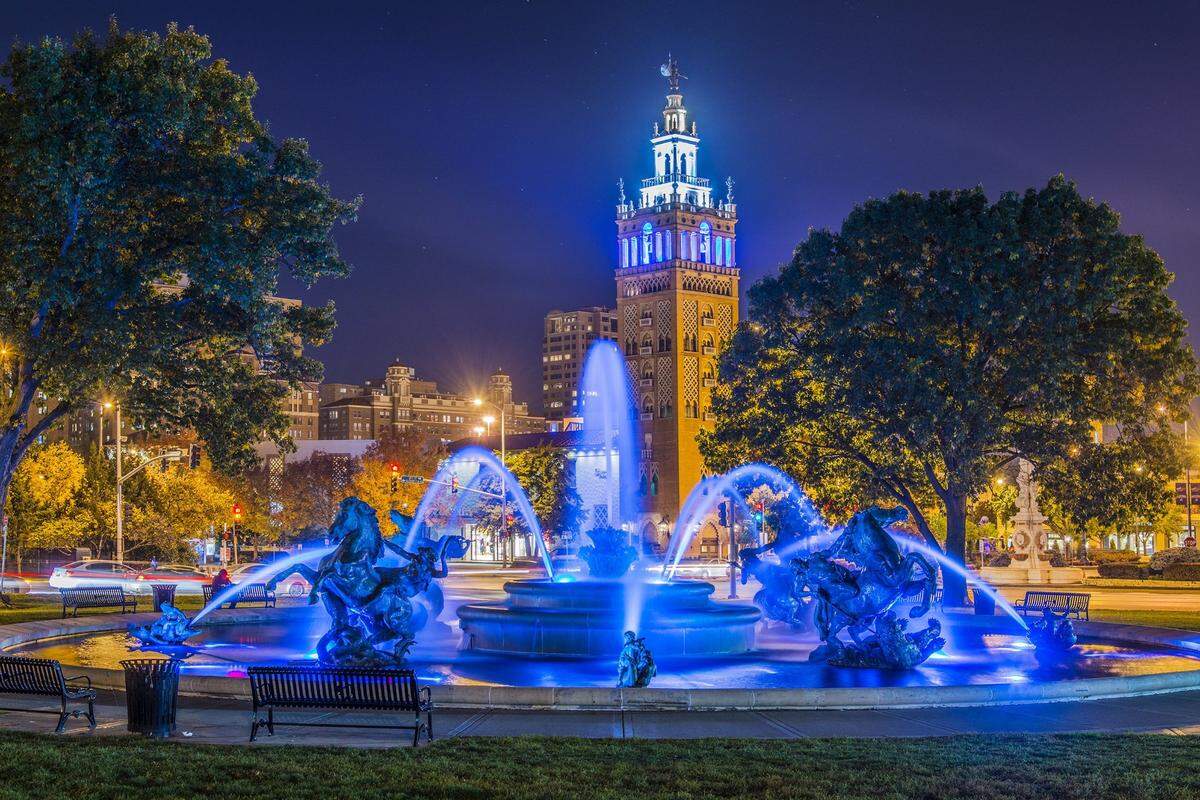
Today, you will find more than 200 fountains lining the city’s courtyards, plazas and boulevards. You’ll find fountains both large and small, both artistically intricate and beautifully simple. Forty-eight of the fountains are publicly owned.
Fountains are deeply ingrained in Kansas City’s cultural identity. So much so that every April the city celebrates Greater Kansas City Fountain Day. On Fountain Day, all 48 publicly operated fountains begin flowing for the spring and summer.
One of the city’s most identifiable landmarks is the fountain in Mill Creek Park. Formerly known as the J.C. Nichols Memorial Fountain, it was built in Paris in 1910 by the French artist Henri-Léon Gréber.
It was originally commissioned by a wealthy Irish immigrant, named John Mackay, who amassed a large fortune through the California and Nevada mining Industries, and through his investments in transoceanic cables in the late 1800s. Mackay gifted the elaborate fountain to his son, Clarence, as part of a wedding present that included a massive estate on the north shore of New York’s Long Island.
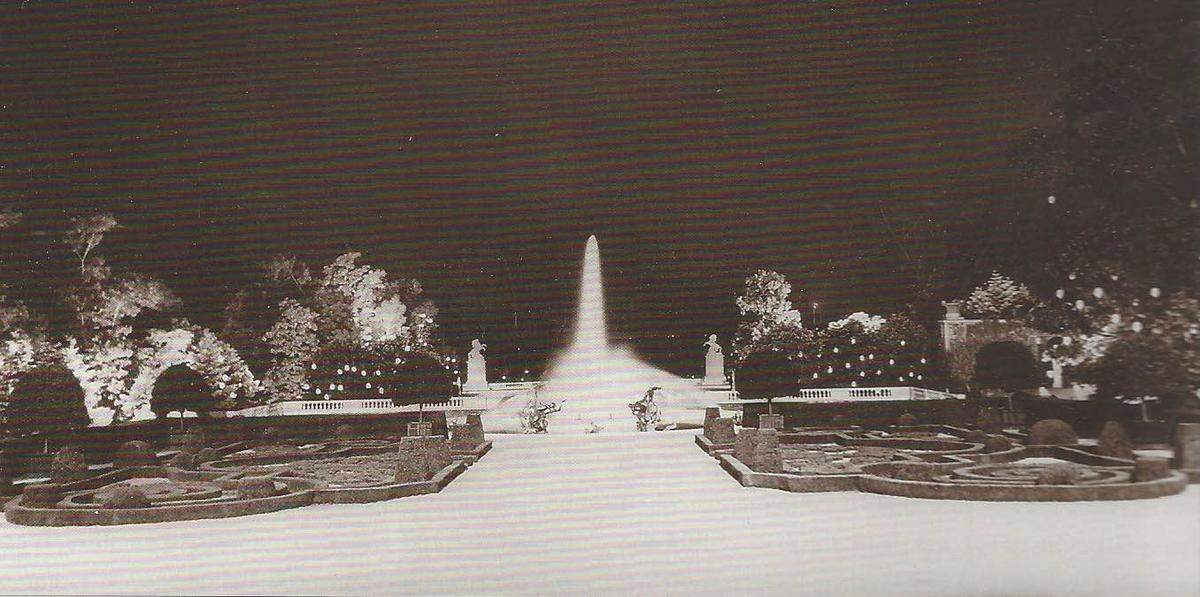
Clarence went on to inherit his father’s fortune but he would lose a majority of his wealth in the 1929 stock market crash. He eventually moved out of his Long Island estate, leaving his beautiful fountain to weather and deteriorate.
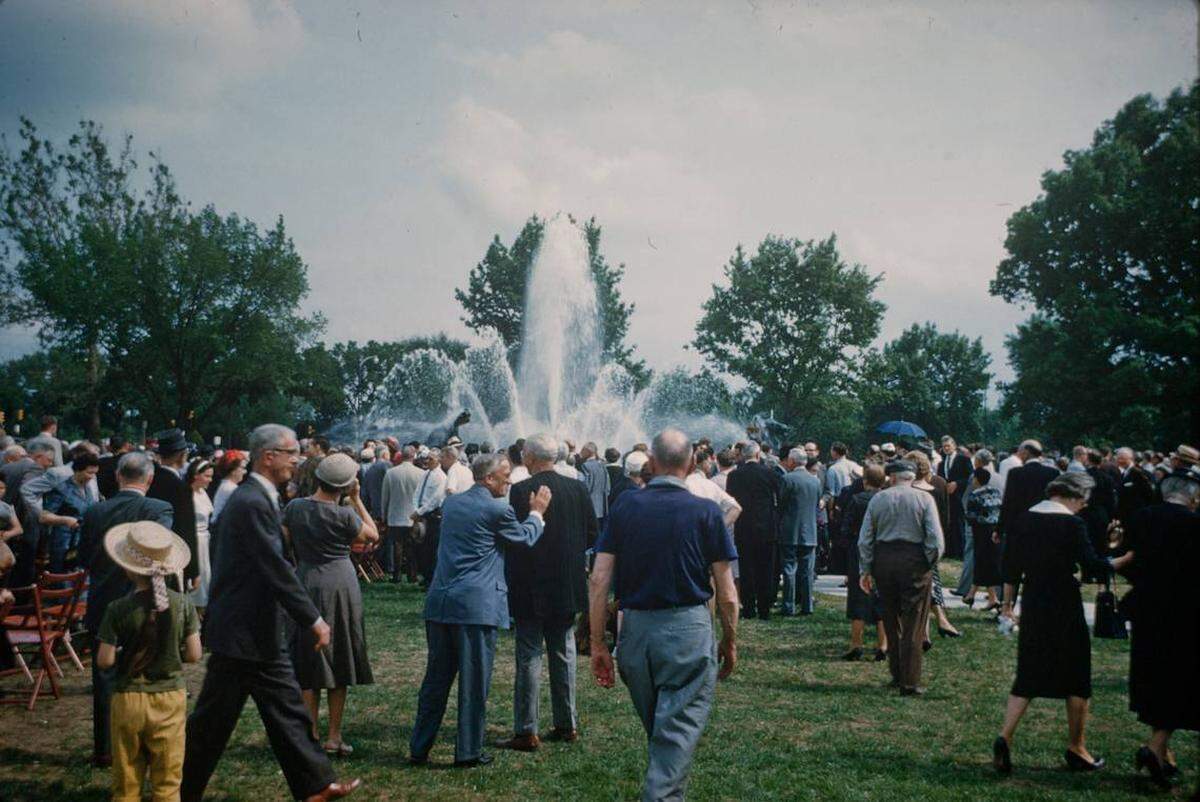
The fountain was brought to Kansas City in 1951 and dedicated to Nichols In 1960. After addressing that the fountain’s namesake had supported policies of systemic racism, the Greater Kansas City Chamber of Commerce, the Civic Council of Greater Kansas City and Visit KC collectively acted to remove Nichols’ name from the fountain during summer 2020 protests.
Guide to prominent fountains
Here’s a look at some of the most well-known fountains in the city:
Firefighters Fountain and Memorial: This memorial fountain was built in 1991 and was dedicated to six firefighters who lost their lives in the line of work. This fountain is located at the south end of Penn Valley Park.
Henry Wollman Bloch Fountain: The Bloch Fountain features 232 water jets that work in unison to create a choreographed show every 90 minutes. The fountain is located directly in front of Union Station.
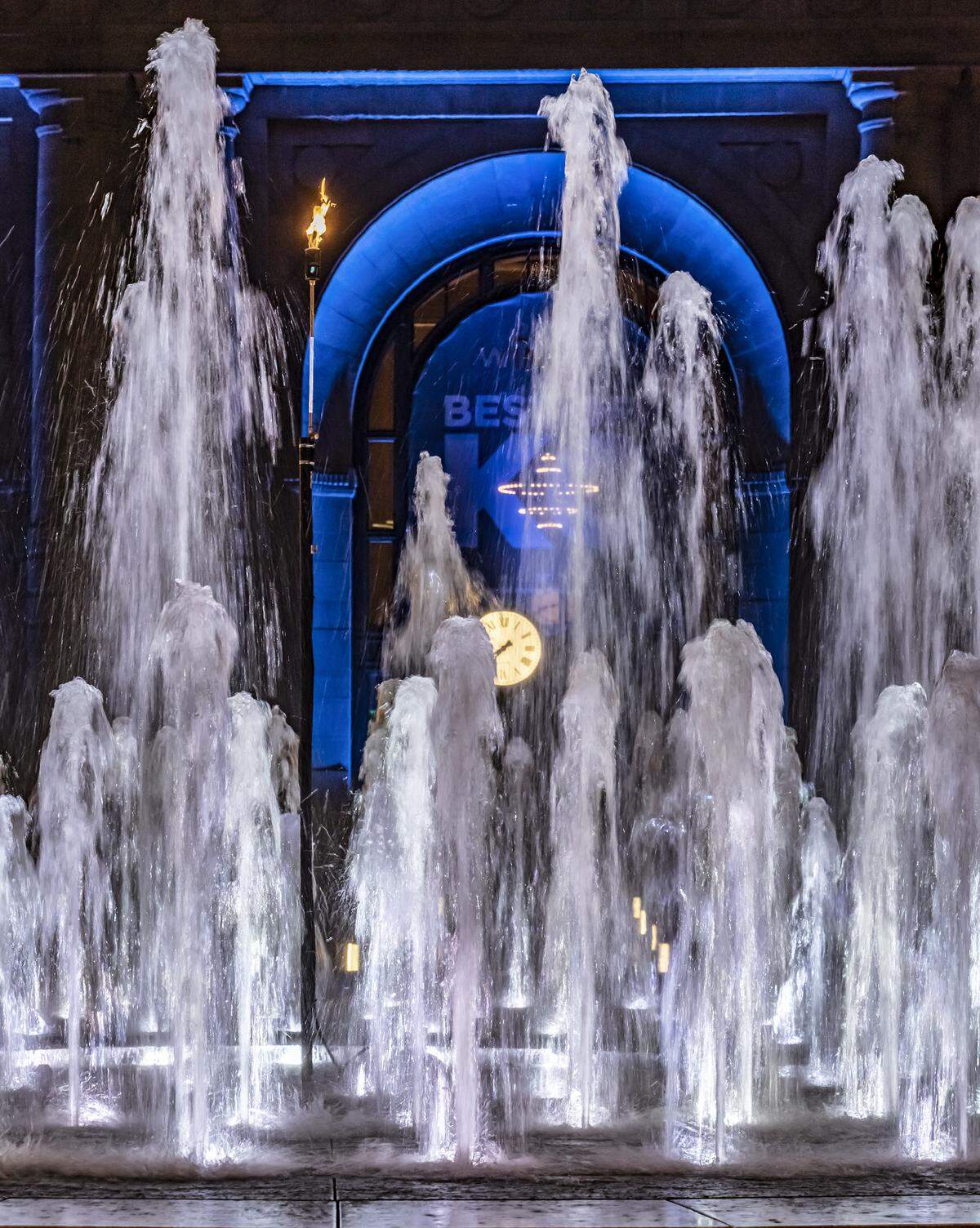
Crown Center Square Fountain: This fountain is equipped with 49 water jets and 48 water shooters that throw water up to 60 feet in the air. The water works are choreographed and set to recordings of the Kansas City Symphony.
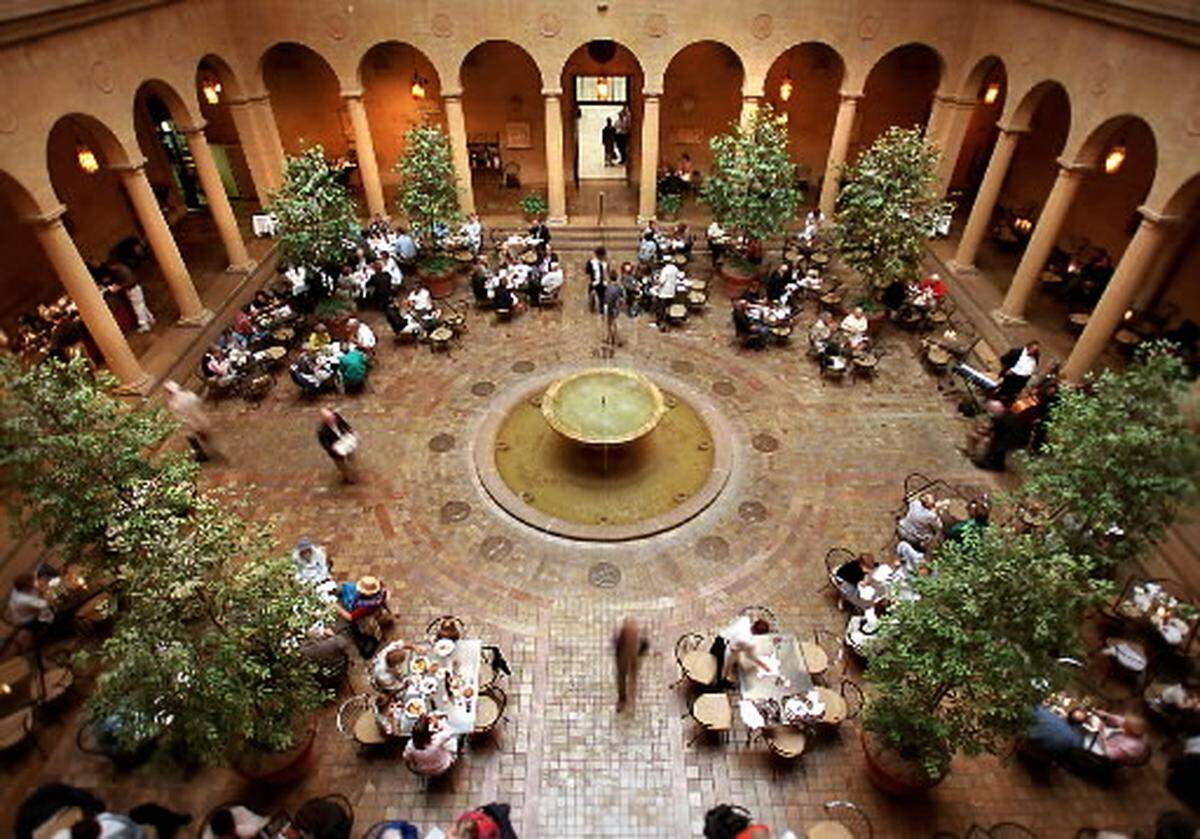
Fountain in Rozzelle Court Restaurant: This fountain is located at The Nelson-Atkins Museum of Art. The marble bowl at the base of the fountain was purchased in Italy in 1931 but dates back as far as 220 A.D. The pedestal of the fountain was installed in Kansas City in 1933, the same year that the Nelson-Atkins opened its doors.
Children’s Fountain: This fountain can be found at Children’s Fountain Park, located at Northeast 32nd and Burlington streets. The dedication plaque reads: ”The bronze figures represent children everywhere to whom this fountain is dedicated and the activities that shape young lives making childhood a joy.”
Barney Allis Plaza Fountain: This fountain is as long as a whole city block and is located near the Bartle Hall convention center downtown. Geyser jets — 112 of them — propel the fountain’s water several feet high.
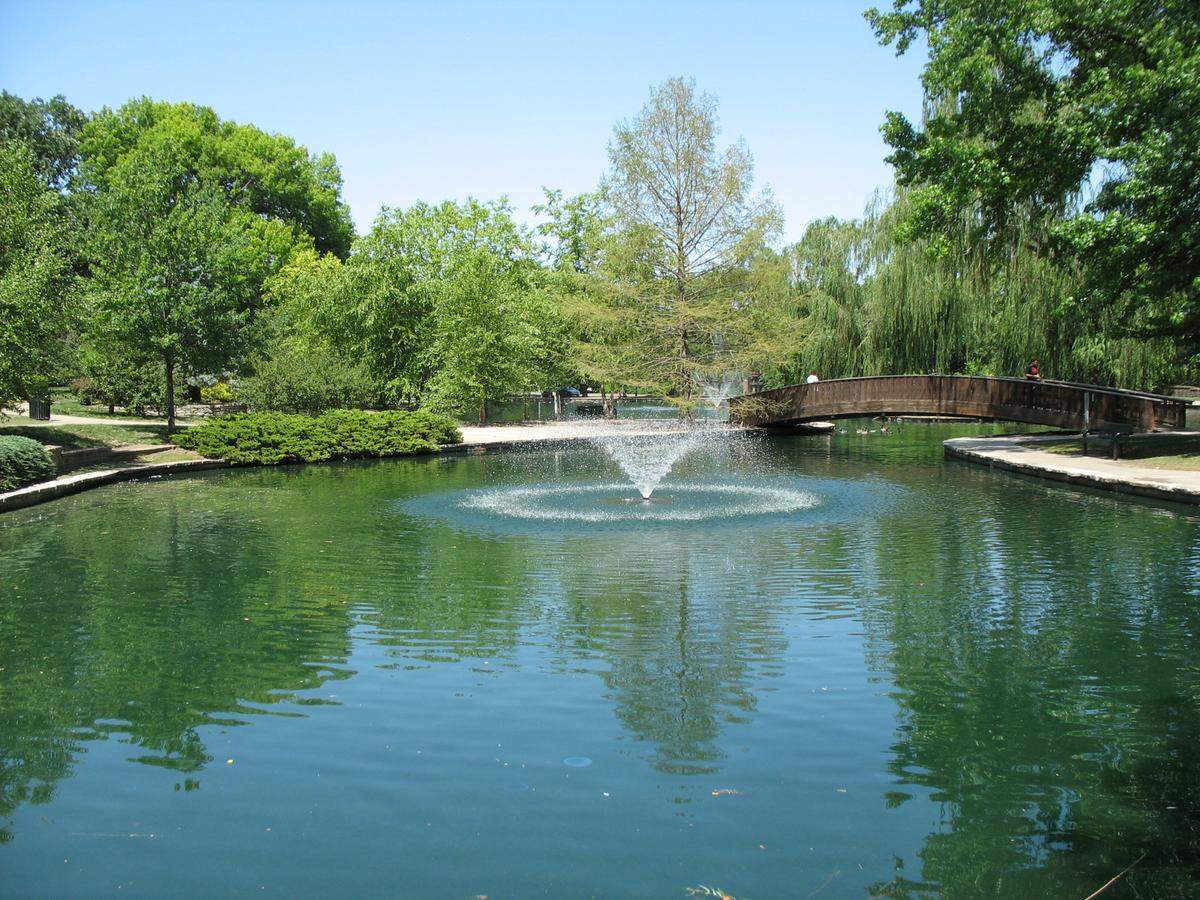
Loose Park Lake Fountain: Land for the park was donated to Kansas City in 1927 by Ella Loose, in honor of her late husband, Jacob Loose. In 1964, the park’s lake was renovated in the style of a Japanese garden and a fountain was installed. In 1993 the fountain was donated to the Kansas City Parks and Recreation Department.
Laura Conyers Smith Fountain at Loose Park Rose Garden: The rose garden is home to one of Kansas City’s most ornate fountains. The fountain was built from stone carved off a bluff in Vincenza, Italy, and it was dedicated in August 2002.
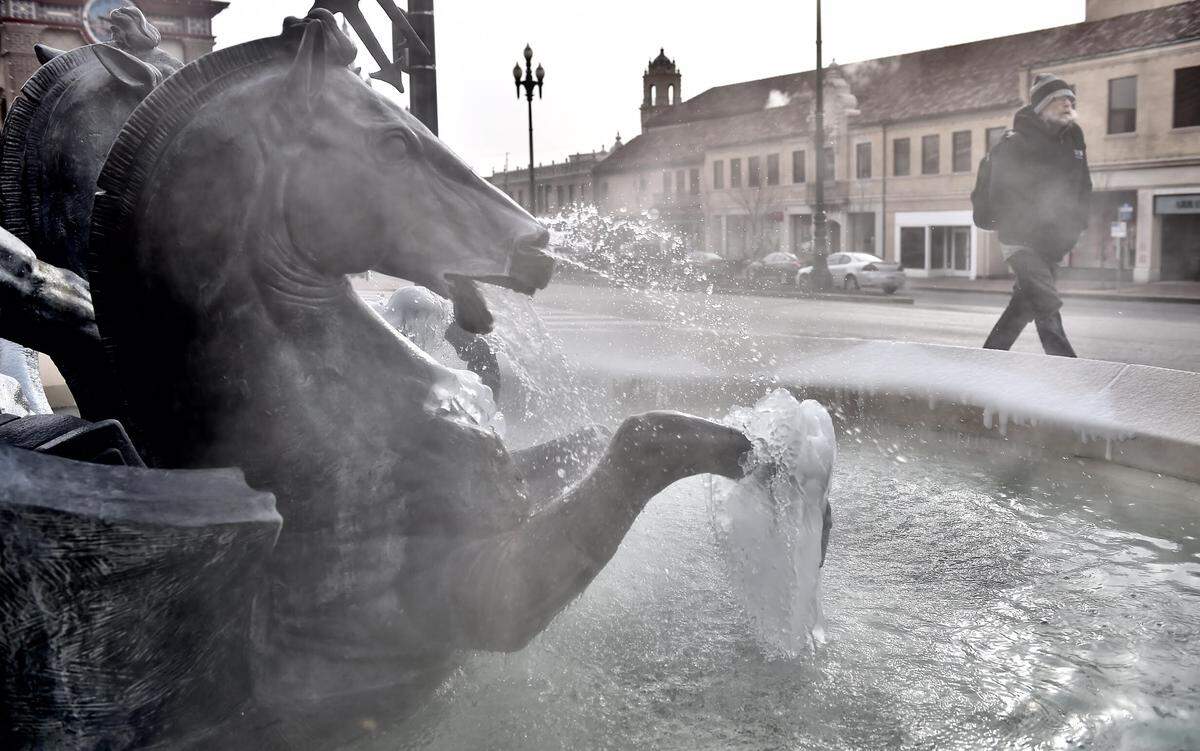
The Neptune Fountain on the Plaza: This fountain was built in 1911 in Worcestershire, England. In 1953, the Neptune fountain became a permanent part of the Country Club Plaza. The design features the Roman god of the sea holding a trident and being pulled in a carriage by three horses.
More information on the fountains can be found on the Kansas City Parks website or The City of Fountains Foundation website.
This story was originally published August 29, 2022 at 12:30 PM.