
After ‘BlacKkKlansman’ Oscar, Willmott turns to another minority cause: Gay Kansans
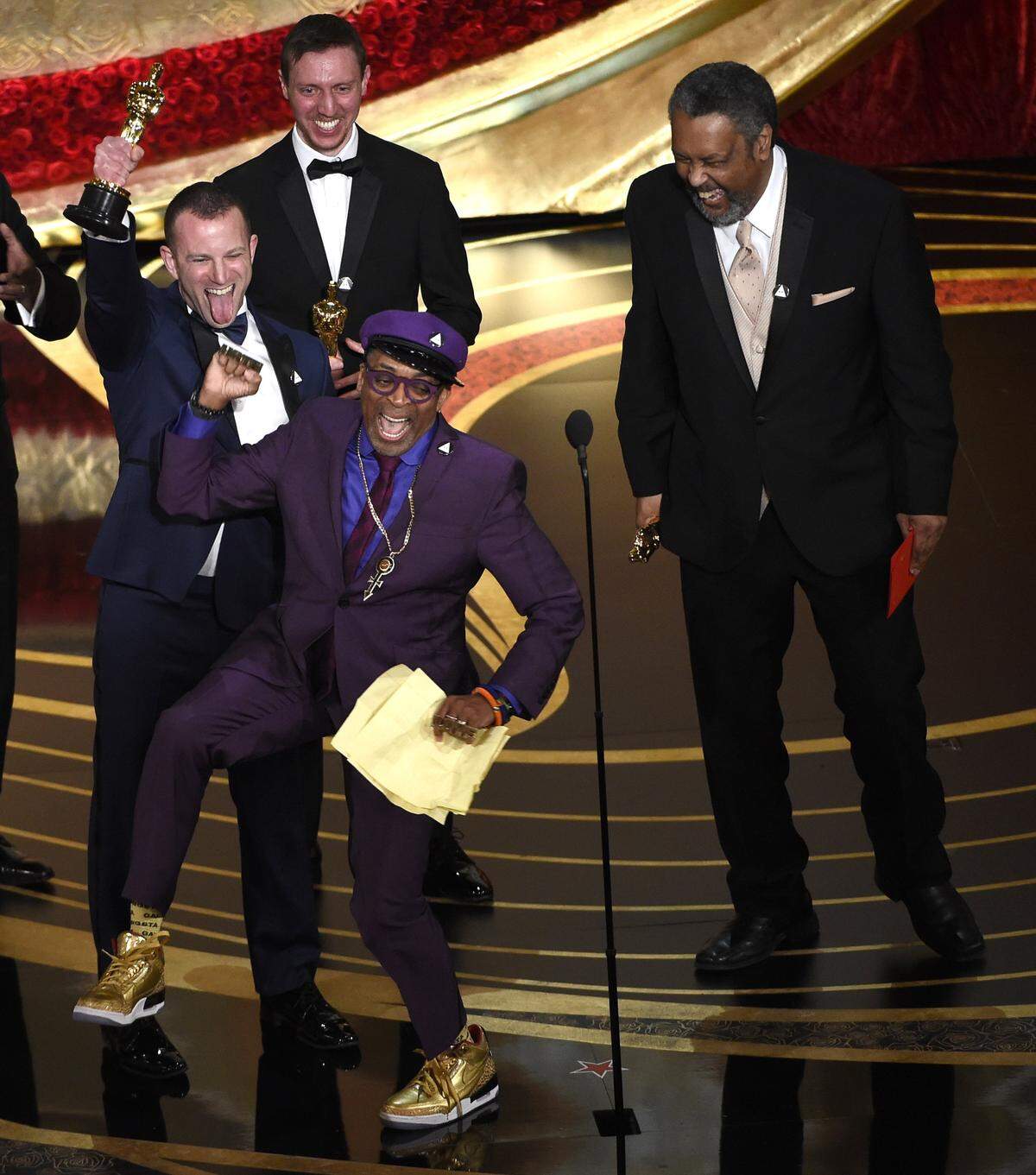
Kevin Willmott has made a career out of making movies that examine race in America: “Ninth Street,” “C.S.A.,” “Jayhawkers,” “Destination: Planet Negro” and, most recently, “BlacKkKlansman,” which won him an Academy Award for screenwriting this year.
So his new project, “No Place Like Home,” a documentary about being gay in Kansas, might seem well out of his comfort zone. It’s based on C.J. Janovy’s 2018 nonfiction book about LGBT activism in the Sunflower State.
But going from African American issues to those of LGBT people actually isn’t that great a leap, Willmott said. They’re another minority.
“What really attracted me was how the book reflected my own life out in western Kansas,” said Willmott, who grew up in Junction City and now lives in Lawrence. “You take for granted these stories about what gay people go through living in small towns — there have been times when I was the only black person in a town — but C.J. put a human face on it.”
Willmott now has his choice of projects since winning the Oscar for the Spike Lee film. “It’s kind of amazing to discover just who knows you now,” he said. “I’ve got more work than I know what to do with.”
This documentary is one of a number of projects Willmott is juggling at once (see below). But still, his choices are dictated by what moves him personally and politically.
.JPG "Kevin Willmott 2016 with lights (002).JPG")
The struggle in Kansas
Willmott was introduced to the book by Sam Zeff, his producer on his earlier documentary about the Gordon Parks Elementary School in Kansas City. Zeff and Janovy share an office at KCUR-FM, where he is the metro reporter and she is the digital managing editor.
According to Zeff, as soon as he read an early vision of the book he recognized its potential for a documentary.
He was particularly drawn to the story of Sandra Stenzel, a lesbian whose job as economic director of Trego County was eliminated after she spoke out against an amendment to the state constitution that banned gay marriage. The 2015 U.S. Supreme Court decision made the ban unconstitutional.)
“As soon as I read her story I got pretty verklempt,” Zeff said, “and after spending a few days on Sandra’s farm in WaKeeney, I came away convinced this had the makings of a great documentary.” Stenzel is featured in the extended trailer for the film.
In the course of chronicling Kansas’ slow political and social acceptance, Janovy’s book celebrates everyday LGBT Kansans like Stenzel, who, rather than leave for a more welcoming existence on one of the coasts, decided to stay put and fight for political change.
This despite the state’s reputation as the reddest of the red and as the home of the late anti-gay activist Fred Phelps and his very much alive Westboro Baptist Church.
“I have known many people,” Willmott said, “who left Kansas for various reasons — often because of conservatism and Republicanism. But the real civil rights struggle has been about the people who stayed. That’s one of the film’s big themes — for things to change locally somebody has to be there to fight the fight.”
Janovy’s book examines the slow organization of gay Kansans over decades, often spurred by struggles in cities like Lawrence and Topeka to pass nondiscrimination ordinances.
While the book records some incidents of outright violence or intimidation, Willmott said that oppression needn’t be overt. Merely the threat of violence leaves many gay people closeted and fearful.
“You end up censoring your life, your friends, your behavior,” he said. “And that’s the thing that C.J. really captured.
Telling their stories
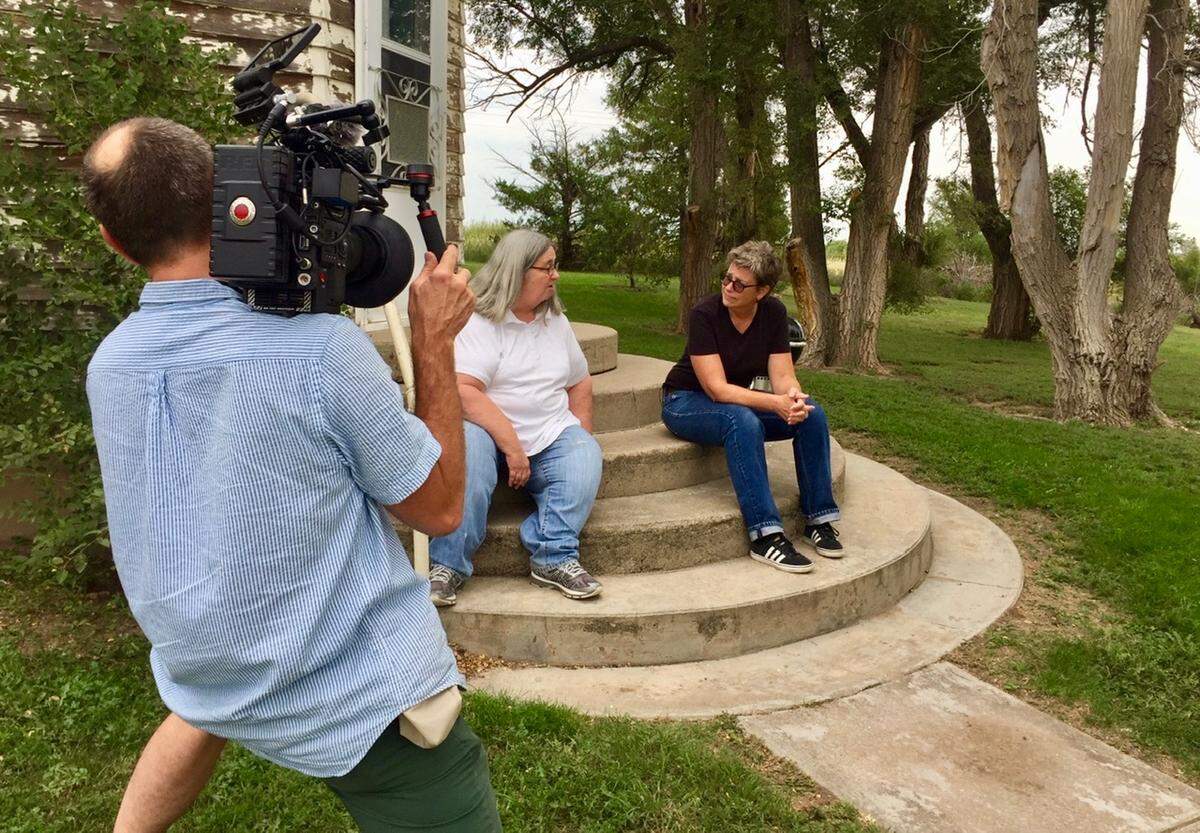
Because of Willmott’s crazily busy schedule, Janovy and Zeff are doing most of the legwork on the film, setting up and filming interviews with individuals featured in the book, as well as with other Kansans whose stories flesh out the film’s primary thesis.
“I’m letting them do the shooting,” Willmott said, “and then I’ll organize and edit the material.”
Willmott envisions the documentary as less politically oriented than the book — at least in the sense that it will not be a history of legislative efforts regarding gay rights in Kansas.
“The political struggle will come out through personal stories people tell,” he said. “We’ll have archival photos and footage. But the main thing is to let these people tell the story of being gay in Kansas. Not that this is just a Kansas thing; these stories are incredibly common.”
Zeff agrees: “The political angle will be maybe 50 percent of the movie. The other half will push the ball forward, especially as regards the trans community and trans rights. The film will be a chance to see where we are now. Things have changed for the better … but there’s been some backsliding.”
Janovy said that in the process of conducting on-camera interviews, she realized the extent of progress.
“A lot of things have happened since the book,” she said, “notably the 2018 elections.”
Last year for the first time Kansans elected openly gay individuals to national and state posts: Sharice Davids to the U.S. House of Representatives and Brandon Woodard and Susan Ruiz to the Kansas House of Representatives. All three are from Johnson County.
Janovy wants to keep the momentum building: “I very much hope our film is ready to be screened before the 2020 election.”
“No Place Like Home” is being produced by Zeff’s nonprofit Do Good Productions and has received grants from the Kansas Humanities Council and other funders. But it remains a hand-to-mouth operation.
“We’re putting a whole documentary together for what Ken Burns spends on lunch,” Zeff joked. “We all have other jobs. We all make a little money, not much. But we get to do important projects.”
Willmott and his associates hope to see “No Place Like Home” air on public television affiliates and, hopefully, nationally on PBS.
A busy Kevin Willmott
“No Place Like Home” is only one of Kevin Willmott’s current projects.
While still handling his teaching load at the University of Kansas (he is professor of film and media studies) Willmott is working on several other projects.
▪ “He’s doing post-production work on “The 24th,” a feature he shot last summer in North Carolina. The cast features Trai Byers of Kansas City, Kansas, a veteran of Willmott films and a star in “Selma” and TV’s “Empire,” and Oscar-nominated Thomas Haden Church. “The 24th” tells the true story of black servicemen — Buffalo Soldiers — who in 1917 marched on the Houston police department to protest their abuse at the hands of the officials and citizens. More than a dozen people died in the ensuing riot.
▪ Willmott is writing a screenplay for Netflix about former slave and abolitionist Frederick Douglass.
▪ And he is developing a documentary about Langston Hughes, the African American poet, novelist, playwright and social activist from Joplin.
Willmott described “No Place Like Home” and the Langston Hughes film as his “slow-moving projects,” work he turns to between more high-paying, high-profile jobs.
This story was originally published November 24, 2019 at 5:00 AM with the headline "After ‘BlacKkKlansman’ Oscar, Willmott turns to another minority cause: Gay Kansans."