
How Kansas City performers are connecting with grateful audiences isolated by COVID-19
As soon as Stan Chappell finished the song, “Just A Closer Walk With Thee,” he quickly packed his trumpet, chair and music to get to his next gig.
The next gig on that October evening was only about 50 yards away, just in a different parking lot facing a different group of residents at The Forum at Overland Park retirement community. But Chappell wasn’t going to miss one of the few opportunities to play live music during a pandemic.
“I love seeing their faces,” Chappell said of the audience that night. “It was great to give them a little joy in these times.”
Chappell is a member of the Village Presbyterian Church’s brass ensemble, one of several groups and individuals that have been providing live performances for seniors in independent and assisted living centers, and memory care facilities across the Kansas City area.
It’s somewhat of a feat for a time when much of Kansas City’s live music scene — professional and amateur alike — has shut down and many senior centers aren’t allowing visitors inside.
The performers deserve nothing less than a standing ovation, said Maurice Goff, a 78-year-old resident who attended The Forum concert.
“It was a very nice experience for me,” Goff said. “I opened my window about six inches and right there they were performing. I sure admire them putting forth the effort that they did.”
The effect of these parking lot shows is not lost on those who work in the communities, nor on those who have performed.
“Art connects us and is vital to the human experience,” said Christina Valdez, owner and artistic director of Crescendo Conservatory, an Olathe dance studio.
Valdez had been wondering how her dancers could perform during the pandemic and shared her concerns with her mother, who lives in an assisted living facility in South Carolina.
“We often talked about how isolated she feels in quarantine,” Valdez said. “I longed to bring my dancers to her facility to perform to bring them a little joy. My mother suggested I could at least have my dancers perform for local nursing homes and facilities. It was a great idea.”
A great idea that greatly contrasts to a year ago, when the Crescendo dancers were on stage at the Kauffman Center for the Performing Arts as part of the Future Stages Festival.
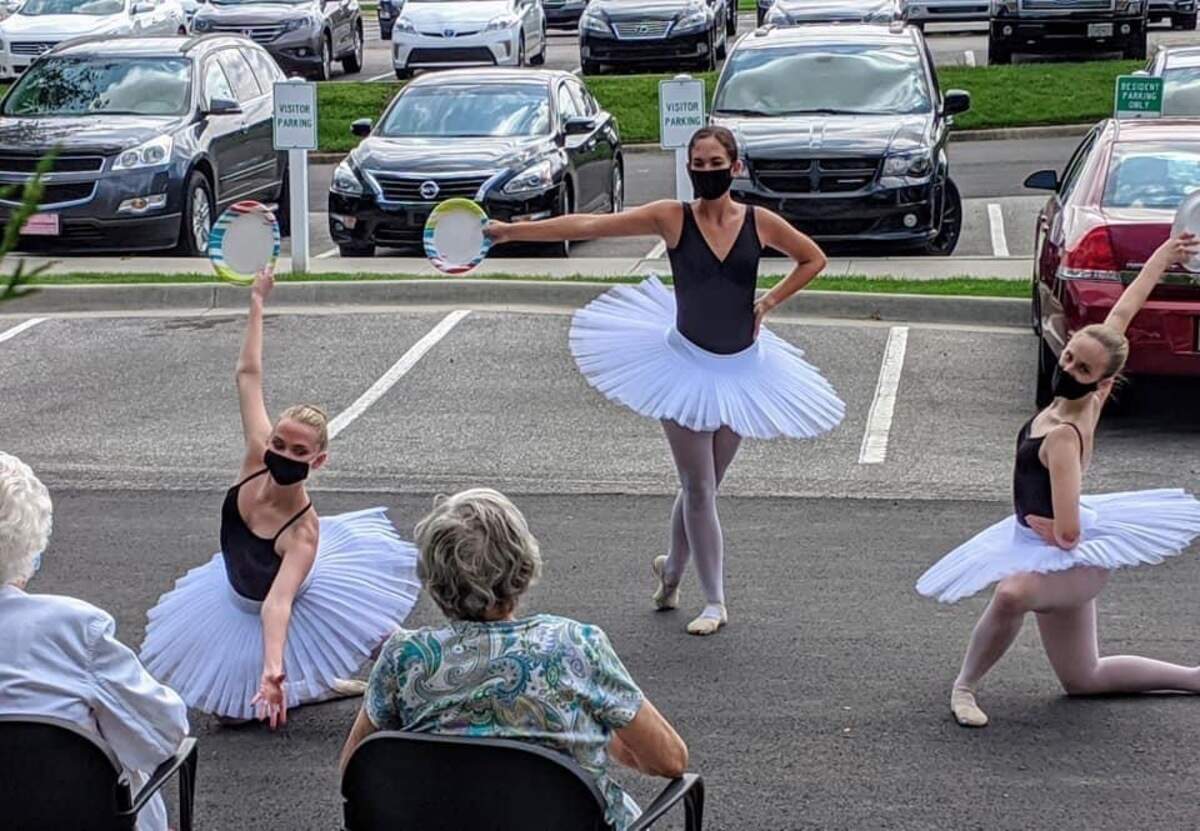
The dancers, ages 10 to 18, learned to rehearse and perform while socially distanced so they could entertain outside senior communities this fall. Since costumes and props could not be shared, paper plates stood in for tambourines.
“They had muddy ballet slippers and were performing on a parking lot, but they still had gratitude,” Valdez said. “We never anticipated we would be performing like this, but there was not a single complaint. They wanted to keep dancing.”
Valdez said many residents dressed up, wore lipstick and held “Thank You For Coming” signs in the windows.
“The kids had smiles on their faces,” Valdez said. “The residents had smiles on their faces.
“They were still waving from their windows when we were leaving.”
Like the dancers, musicians yearn for the pre-coronavirus days of regular rehearsals and a full schedule of performances. Chappell, a member of three musical groups, said the brass ensemble concerts have been important to him.
“It’s been my only opportunity to play outside my basement,” Chappell said.
Before the pandemic, senior communities teemed with live performances from volunteer groups and paid musicians. Some centers even have served as rehearsal spots for musical groups.
There is an immeasurable benefit, said Steve Bauer, an activity director of The Forum.
“Music itself is scientifically proven to be one of the longest-lasting memories that we possess,” Bauer said. “Even residents who are nonverbal will often begin to tap their toes, smile or nod their heads when songs from their past begin playing. The urge to get up and start dancing can be seen on each and every face.“
“It’s truly one of the most joyous things we can offer.”
It used to be that the weekly live entertainment was so popular at Senior Star at Wexford Place in Kansas City, North, that performances had to be held in the largest community room.
“They were arm-to-arm in there,” said Mary Pat Whitley, the center’s program coordinator. “There was excitement, kind of like a party.
“It’s like listening to music on your iPod and then going to their concert. It’s how you feel the music.”
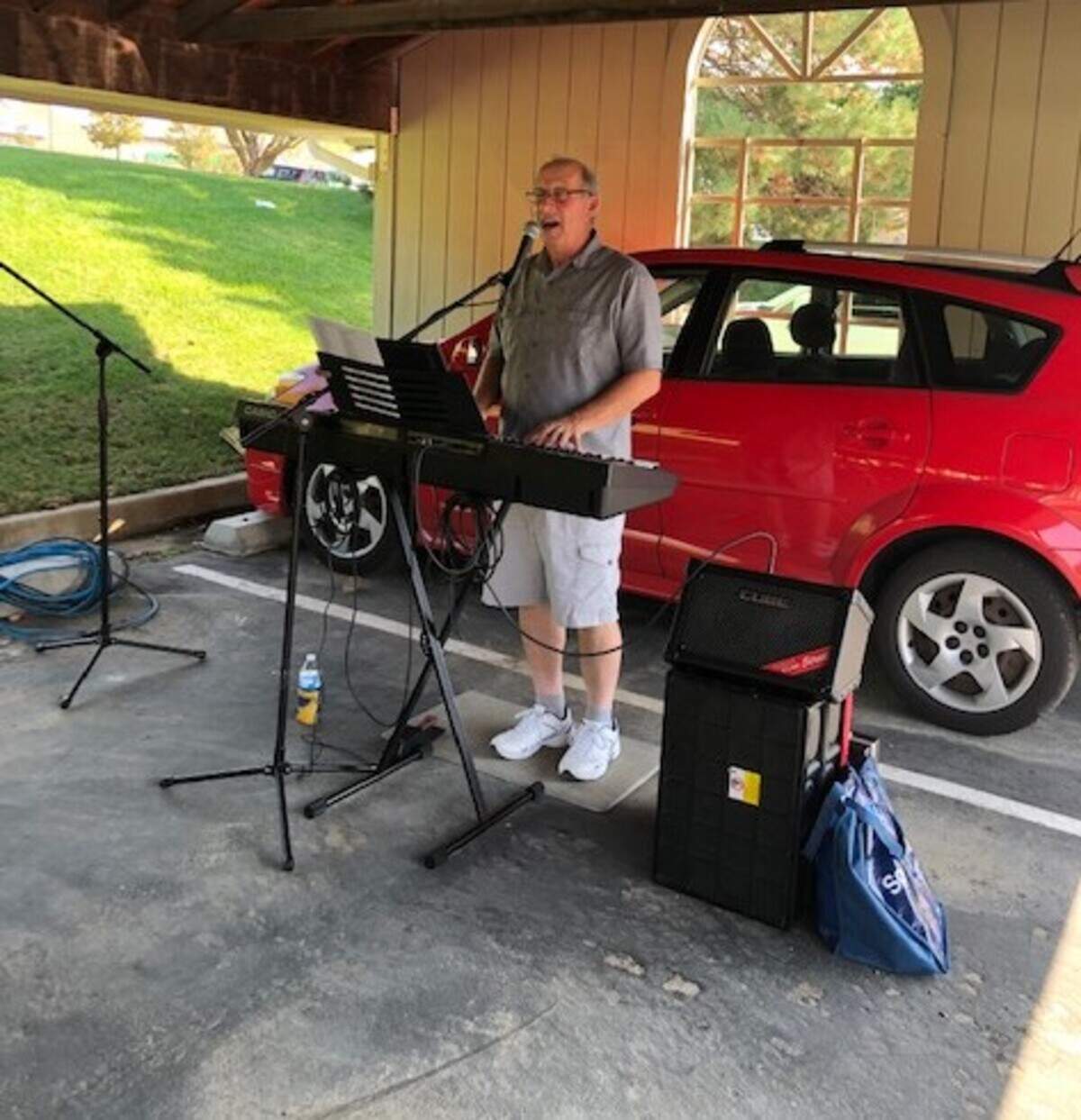
This year, as soon as the weather warmed, Whitley got busy booking musicians to play outside, including Bob Cohen of Smithville, who has a business playing to senior communities.
Cohen had 19 gigs booked all over the Kansas City area in March. He got to play six.
“When you play stuff (from) back when they were young, you can see the wheels turning in their head and the memories are coming back,” he said. “They might not be able to dance, but they are tapping their hands, tapping their feet. That’s cool.
“Just that one hour makes such a big difference.”
Winter weather is expected to bring an end to the outdoor concerts. Cohen hopes to switch to livestream performances then.
But a music therapist can provide live music indoors, even now, at McCrite Plaza at Briarcliff in Kansas City, North, said Nicole Walter, an activity director. The community also has a small choir for residents, and often employees will stop to play a piano in the lobby.
“Music creates good morale for the residents, but also for the employees,” Walter said. “It’s really something when we are all singing the same song.”
It’s quite moving to bring music to these senior communities, said Matthew Christopher Shepard, director of the Village brass ensemble. “It is our hope that our music was a gift for the residents, (one) that stayed with them long after the last note ended,” Shepard said.
The performers need not worry about their impact.
Music, Bauer said, “can easily make six feet apart feel like six inches.”
“Listening from a window isn’t too bad when you can hear your neighbors singing along next door,” he said. “The effects of a patio performance continue past the last song — oftentimes for days.
“It’s not surprising to overhear residents having a conversation over breakfast about how much they liked the music from the day before, and the conversation rolls right along from there. It provides them a great day, two for the price of one, and helps them forget the masks and distance and ‘new normal’ just a while longer.”
This story was originally published October 25, 2020 at 5:00 AM.