
Violent Chris Hemsworth movie ‘Extraction’ has its roots in a quiet Kansas town
The No. 1 movie on Netflix right now stars Chris Hemsworth, aka Thor, as a mercenary who must fight through hordes of assassins and soldiers to return the kidnapped son of a drug lord.
You might not expect that it had its origins in a peaceful Kansas town.
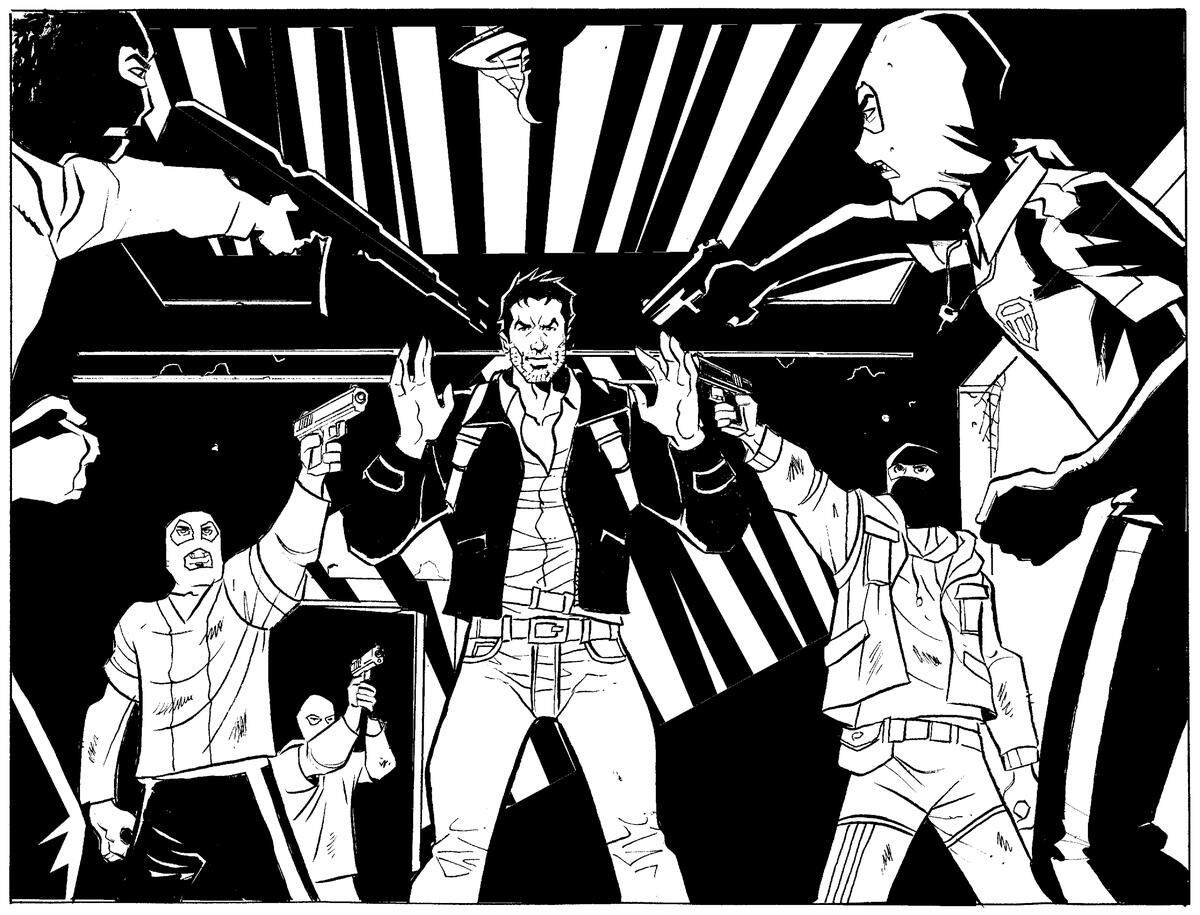
The film, called “Extraction,” is based on “Ciudad,” a 2014 graphic novel written by Ande Parks, an Overland Park native and Shawnee Mission West grad who lives with his family in Baldwin City, south of Lawrence.
Parks wrote it from a story he developed with Joseph and Anthony Russo, brothers who went on to direct “Avengers: Endgame.”
His graphic novel is set in Paraguay. The Hollywood adaptation (scripted by Joe Russo) moves the action to Bangladesh. But the story’s basic plot remains intact, as does the ultra-graphic violence that has generated some controversy for the film.
“You’re making entertainment for a generation that has grown up playing Call of Duty, and to them it’s kind of a language,” Parks says.
Still, he says, Hemsworth’s character, brooding Tyler Rake, has heart.
“Although Tyler is used to not caring about people he rescues, they form a bond when trying to get the hell out of this dangerous place,” says Parks.
The veteran creator spoke to The Star about the inescapable challenges of dealing with Hollywood and the comic industry while based in Kansas.
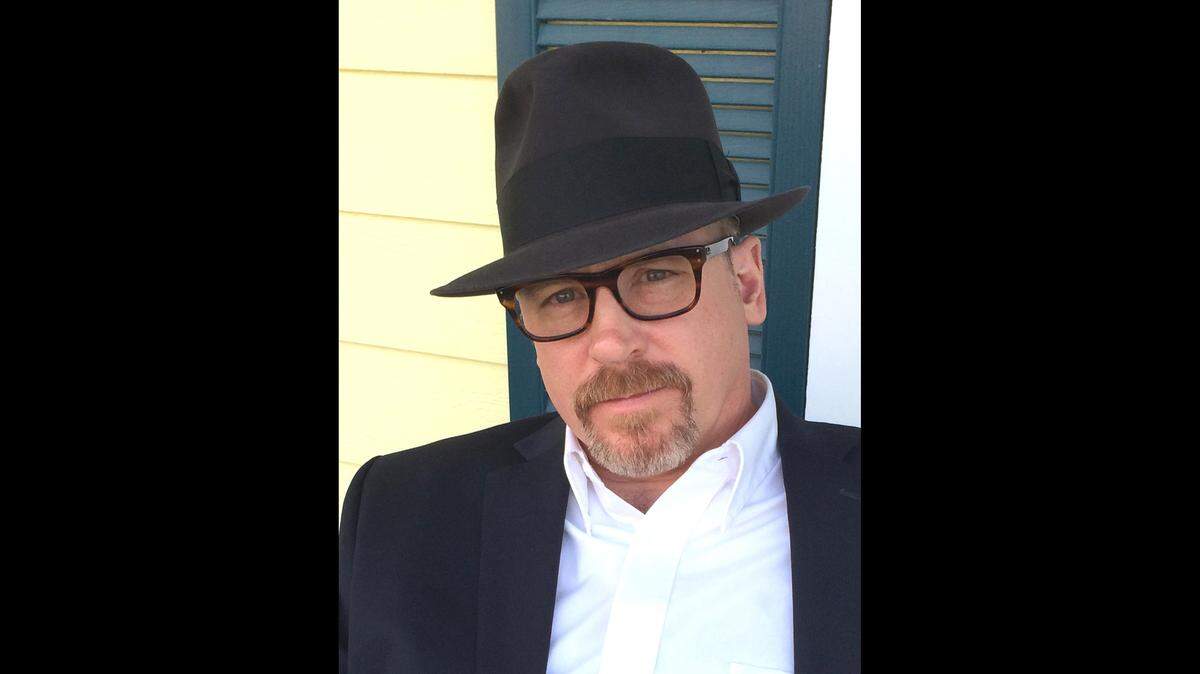
Q: How does a guy living in Baldwin hook up with the directors of the highest-grossing film of all time?
A: When I met them, they were not those guys. Twelve years ago they reached out to Oni Press, my publisher, saying, “Would you like to collaborate with us on a graphic novel/movie? We’ve got a nugget of an idea.” Because I was Oni Press’ “real crime guy,” I hooked up with them and started collaborating.
Q: What was your working relationship like with the Russo brothers?
Pretty collaborative at the beginning — a lot of phone calls talking about what they thought this story looked like. Even then, although they weren’t yet mega-stars in Hollywood, they had connections. So we’d get on the phone with, “Oh, here’s a guy who used to be in the CIA.” I don’t know what you consider the Midwest, but they’re from Cleveland. They’re just nice guys from the same kind of town that I’m from. They were very easy to work with. While we bashed out the outline and story together in L.A., they didn’t write a word of the graphic novel, and I didn’t write a word of the screenplay.
Q: What was the most disappointing “extraction” from your original comic that didn’t make it into the film?
A: There’s a scene where Tyler has to have a “bad moment” with a former friend of his. In the book, the way that goes down is an homage to one of my favorite crime thrillers in the ’70s, an Elliott Gould movie called “The Silent Partner.” If you remember the film, a character gets her head chopped off in an aquarium. Well, it kind of goes like that. It was really brutal, and it said something about Tyler at his low point. After that he’s like, “I’m getting this girl out of here. I don’t care what it takes.” As soon as I came up with that idea, they said, “We love that. And it will probably never make the movie.”
Q: Did the film improve upon your story in any way?
A: Yes. They flipped the relationship with one of Tyler’s enemies — the guy who works for the kidnap victim’s father. I thought that remakes the third act in a more interesting way. I wish I had thought of it.
Q: What did you think of the acclaimed 11-minute, one-shot action sequence?
A: It was really mind-blowing. I knew the background of director Sam Hargrave, who is a stunt guy. I knew he would ramp it up. But to see those behind-the-scenes clips where he is strapped on the hood of a car, wearing a helmet, zipping down the road with the camera in his hands, you feel all that adrenaline on the screen.
Q: Did you get a chance to visit the set?
A: No. Once upon a time, this was going to be a movie set in South America and filmed in Mexico. I probably would have gone then. But they shot in Thailand and Bangladesh, and I didn’t get an offer — and I didn’t ask — because it just seemed like a long way to travel.
Q: The main criticism of the movie is its excessive violence. What’s your opinion?
A: It’s not the kind of movie I would usually call my favorite. I’m not a big “gun guy.” That kind of onslaught usually wears me out. So I get people who feel that way. I was just hoping it would still have the heart, and to me it did. Those moments of heart balance out the wholesale bullet-flying. I watched it the first time and thought, “This is really awesome, but my mom ain’t gonna make it past the first scene.”
Q: Are you still as passionate about creating comics as when you started your career?
A: I’ve been through a little arc there. This may sound bad, but I was burned out on collaboration. I had too many projects fall apart. It’s just the nature of the beast. You’re making independent comics, and there’s not a lot of money involved. It’s hard to find collaborators who can commit. At some point I was like, “I can’t take it anymore. I’m going to go write some prose.” But I took a little break from that world, and now I have some dear friends I’d love to collaborate with. I feel like I’m ready to jump back in. I got my passion back.
Q: Is there a single panel from any comic that you’ve written or drawn that you find emblematic of your whole career?
A: The one page I kept from probably the most important gig of my career is a splash page in Green Arrow No. 2 I did with Kevin Smith and Phil Hester. It shows Green Arrow grabbing a grubby, greedy guy and holding him accountable. It’s a character I love doing a thing that I love.
Q: What’s the most recent thing you’ve drawn?
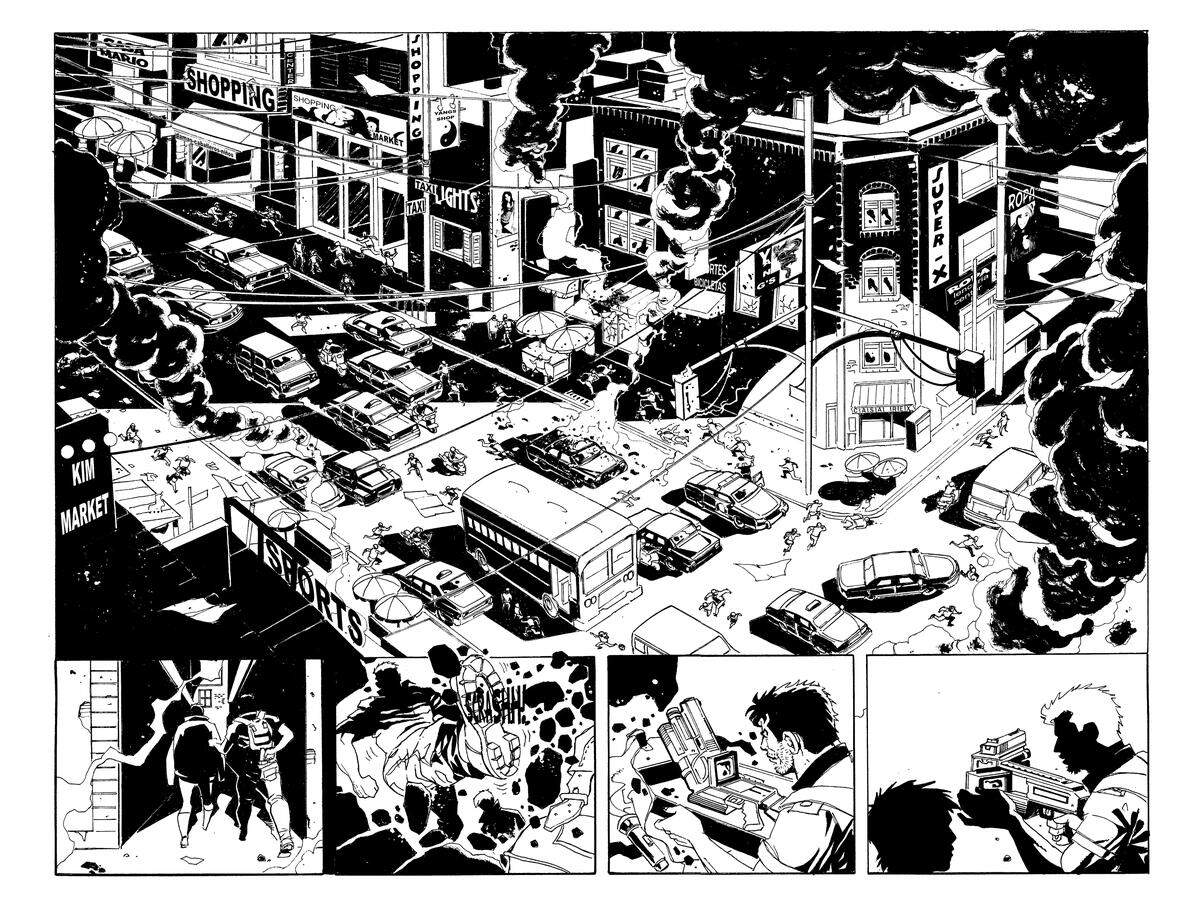
A: I finished an arc on Batman Beyond. And now I’m inking a Black Hammer series for Dark Horse Comics.
Q: Can you explain what an inker does?
A: The American comic book business got built around this serialized form of fiction that came out every month. And they soon realized that was too much work for one person to do — to write and draw — so they started splitting up those jobs assembly-style to make the comic happen on a monthly basis. And at some point they split up the penciling and inking to get it done faster. So the penciler reads the script and lays out the action in pencil form. It’s the inker’s job to take those pencil drawings and convert them into black and white line art. You want to be true to the penciler and tell the story as effectively as possible.
Q: How does living in Baldwin influence your creative process?
A: It’s not hard to look at my writing career and see that Kansas is important to me, and that I like to write about the kinds of people I grew up around. I’m especially interested in clashing those kinds of people with situations they wouldn’t normally encounter. “Capote in Kansas” was about Truman Capote — this odd little man from New York — talking to people like my grandpa. I wrote Lone Ranger, which was about a good man, kind of like the people I grew up with, encountering bad situations and trying to figure a way out. I feel very connected to this part of the world and to the kind of people who call it home.
Q: What was the most revelatory thing you learned about the process of adapting a graphic novel into a film?
A: What I had to learn was that Hollywood is a bizarre maze. And that you never can predict how a certain project is going to play out. I’ve had so many projects that I’ve been told, “They’re close.” “They’re done.” “Well, not done now, but they’re close again.” Years go by. “Extraction” took 12 years from initial contact to hitting the screen. And only when I saw a picture on Twitter of Chris Hemsworth on the set did I go, “Oh, I think it’s actually getting made!”
Jon Niccum is a filmmaker, freelance writer and author of “The Worst Gig: From Psycho Fans to Stage Riots, Famous Musicians Tell All.”
This story was originally published April 30, 2020 at 5:00 AM with the headline "Violent Chris Hemsworth movie ‘Extraction’ has its roots in a quiet Kansas town."