At a time women rarely played basketball, this KC team did — frequently versus men
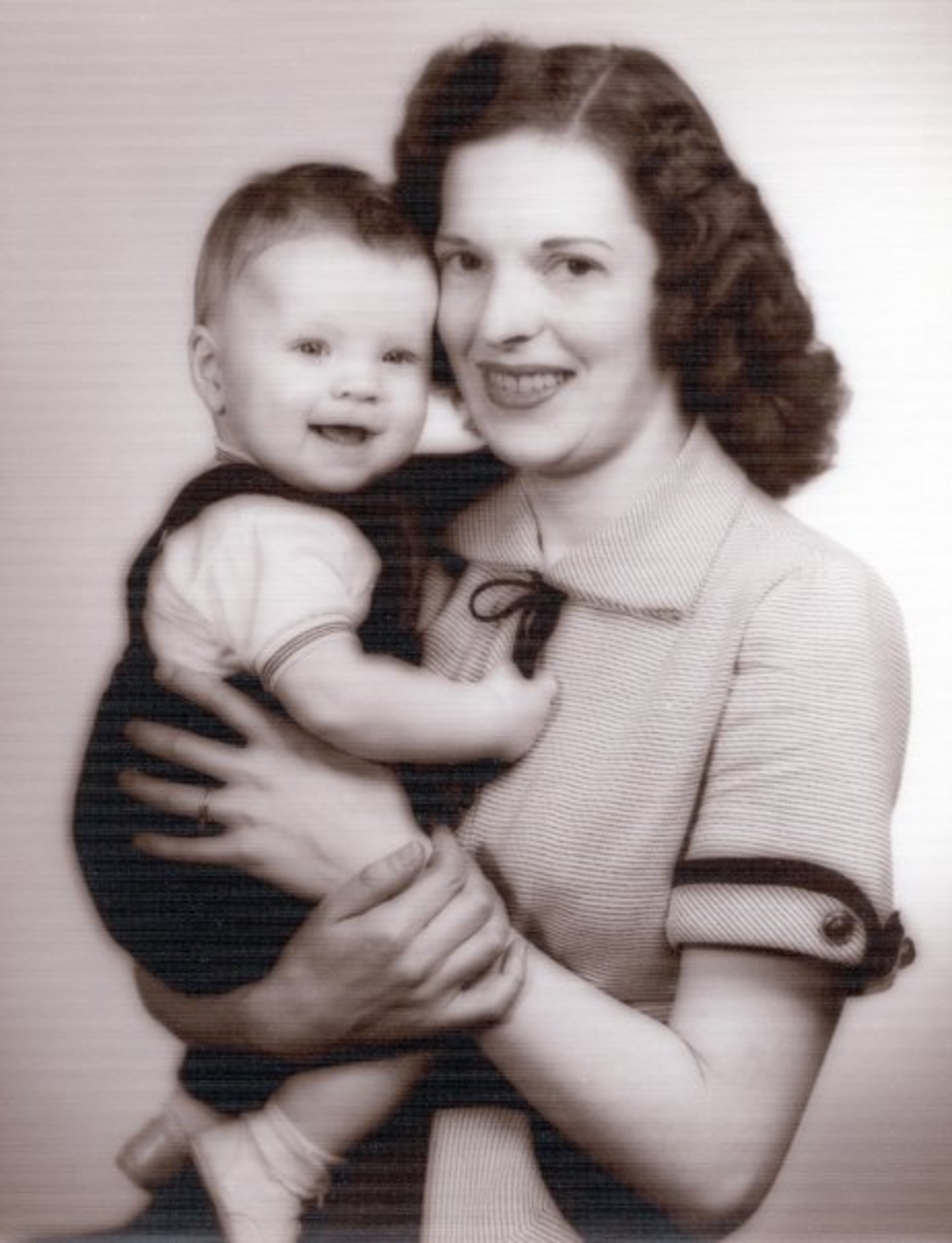
When Larry Bell was a toddler dressed in a tiny purple and gold warmup jacket at his mother’s basketball practices, he didn’t realize he was treading on the ground floor of a women’s athletic breakthrough.
This was the early 1950s, and female athletes didn’t play basketball. Not really.
Oh, there were pockets of the United States where girls played high school basketball and women competed on college club teams. And the Amateur Athletic Union (AAU) — which in 1908 had decided that females should not play basketball in public — had begun holding women’s championships.
In most of the country, however, a girl or woman had no options if she wanted to hoop it up. In Kansas City, on the other hand, she could try out for the Kansas City Hellcats (later known as the North Kansas City Hellcats).
The memory of that team sparked Bell to reach out with a query to What’s Your KCQ?, a partnership between the Kansas City Library and The Star:
What can you find out about the women’s basketball team “The Kansas City Hellcats,” who played from about 1950 to ’55? My mother played on the team, and I barely remember their practices when I was a small child.
Based on archives of The Star and other area newspapers, the Hellcats operated from 1950 to 1957. The stories indicated the team wasn’t very successful, at least not in the win-loss column. But the Hellcats were something of trailblazers, helping to break ground for the future of women’s professional basketball as one of a handful of barnstorming women’s teams of that era. Especially noteworthy is that they frequently played exhibition games against men’s teams in addition to competing against women’s teams in a local league.
Bell remembers them only as his mom’s team and that he was its adopted “Hellkitten.”
“One of my very earliest memories is crawling around on the rolled-up tarps at the side of their practice court,” he said. “Literally crawling. So I’m saying maybe I was 3 at the time.”
Bell was born in 1951, so that would make the year in question 1954. He said he doesn’t remember attending any games.
“I do remember when I was 7 or 8, she still had her warmup jacket, which was purple and gold satin with I think white piping, that was always hanging up in the closet,” he said.
Bell isn’t sure how many seasons his mother, Evelyn Bell, was with the Hellcats or why she ended her basketball career, although her pregnancy with his younger brother might have played role.
He does have a theory about how she became enamored with the sport, however.
“She grew up in western Oklahoma, and I lived there for about six months,” Bell said. “And believe me, there’s nothing out there except wheat, grazing land and playing basketball. … They all played basketball, so that’s probably how she got into it.”
Bell said his mother also was a cocktail waitress and, in fact, met his father on the job. He was a bartender.
Life on the road
The Hellcats took their basketball seriously, but they also had fun with comedic antics and trick plays — much like the Harlem Globetrotters.
That fun style of play was limited to their barnstorming exhibition charity games against men’s teams in small towns such as Maysville, Butler, Brookfield, Lawson and Excelsior Springs. The competition ranged from out-of-shape businessmen to talented younger players, as evidenced by a 133-34 Hellcats loss in Excelsior Springs.
Vic Colby made sure the games were promoted ahead of time with newspaper articles and advertisements. In Lexington, Missouri, an ad billed the Hellcats’ upcoming game as “Boy Meets Girl.” The Bates County Democrat previewed their contest with the Butler Jaycees using this decidedly tongue-in-cheek line: “Basketball fans will have the unusual opportunity to witness the game of the century — more or less.”
Those games featured men’s rules at a time when many girls’ and women’s teams played a six-on-six game with each team using three offensive players and three defensive players on each half of the court. That is, if girls and women played at all.
Many high schools and colleges fielded teams in the early part of the 20th century only to later ban females from competing — typically arguing that athletics are “hazardous to their health,” as one Colorado high school administrator said. By the end of the 1920s, only 12% of colleges sponsored women’s varsity basketball teams.
Only with the advent of Title IX in 1972, which required schools to fund women’s sports equitably, did girls’ and women’s basketball begin to emerge from the shadows. Missouri and Kansas both started holding high school girls’ championships in 1972-73. The University of Missouri didn’t field a women’s team until 1974-75, although the University of Kansas had been doing so since 1968-69.
Basketball tourney included beauty contest
Until then, the closest thing to a women’s national championship was the AAU tournament, which was held frequently in its early years in Wichita (in 1928, a beauty contest was added to the event) and moved to St. Joseph during the 1950s and 1960s.
During those years, the Raytown Piperettes emerged as a national AAU power. They became a pipeline for players to join national teams, including Marian Washington, who went on to coach women’s basketball at the University of Kansas for 31 seasons.
A professional women’s league such as the now-popular WNBA was still a long way off. And in the 1950s, it was not even a pipe dream.
That’s where teams such as the Hellcats filled a void and showed that women’s basketball could be a spectator sport. Some newspaper articles referred to them as “semiprofessional.”
Admission was charged at their barnstorming games, however, and sponsors typically covered many expenses.
Bell said his mother had told him the Hellcats usually were competitive with the men’s teams until halftime “because the men were very hesitant to play an aggressive game against women. But then … they would end up losing almost every time.”
The Hellcats had more success in the Jayhawk Girls Basketball League, which was dominated by the powerhouse Peck’s Good Girls.
The Good Girls formed at about the same time as the Hellcats and also barnstormed, even playing in Mexico and Canada according to a 1985 story in The Star. They were still playing at that time, although newspaper articles suggest their last year of existence was 1990.
Barnstorming All American Red Heads
The Hellcats were long gone by then, of course, but another women’s team that hailed from Missouri predated them and the Good Girls — the All American Red Heads, who formed in Cassville, Missouri, in 1936. They barnstormed the country for nearly six decades, and were the first women’s team enshrined in the Naismith Basketball Hall of Fame in Springfield, Massachusetts, earning that distinction in 2012.
All of the Red Heads had red hair, although most of it was dyed. The gimmick helped attract crowds, but the team was also very good, playing hundreds of games against men’s teams every year and winning the vast majority. According to The New York Times, the Red Heads once won 96 games in 96 days.
Among their many standouts were Missourians Helen Stephens, known as the Fulton Flash because of her gold-medal performances at the 1936 Berlin Olympics, and Ruth Harms, who still holds the girls’ state record with the 85 points she scored in one game for Schell City High School in 1951 .
Also a one-time Red Head was Jackie Wrage, who previously played for the Hellcats.
A Hellcat star
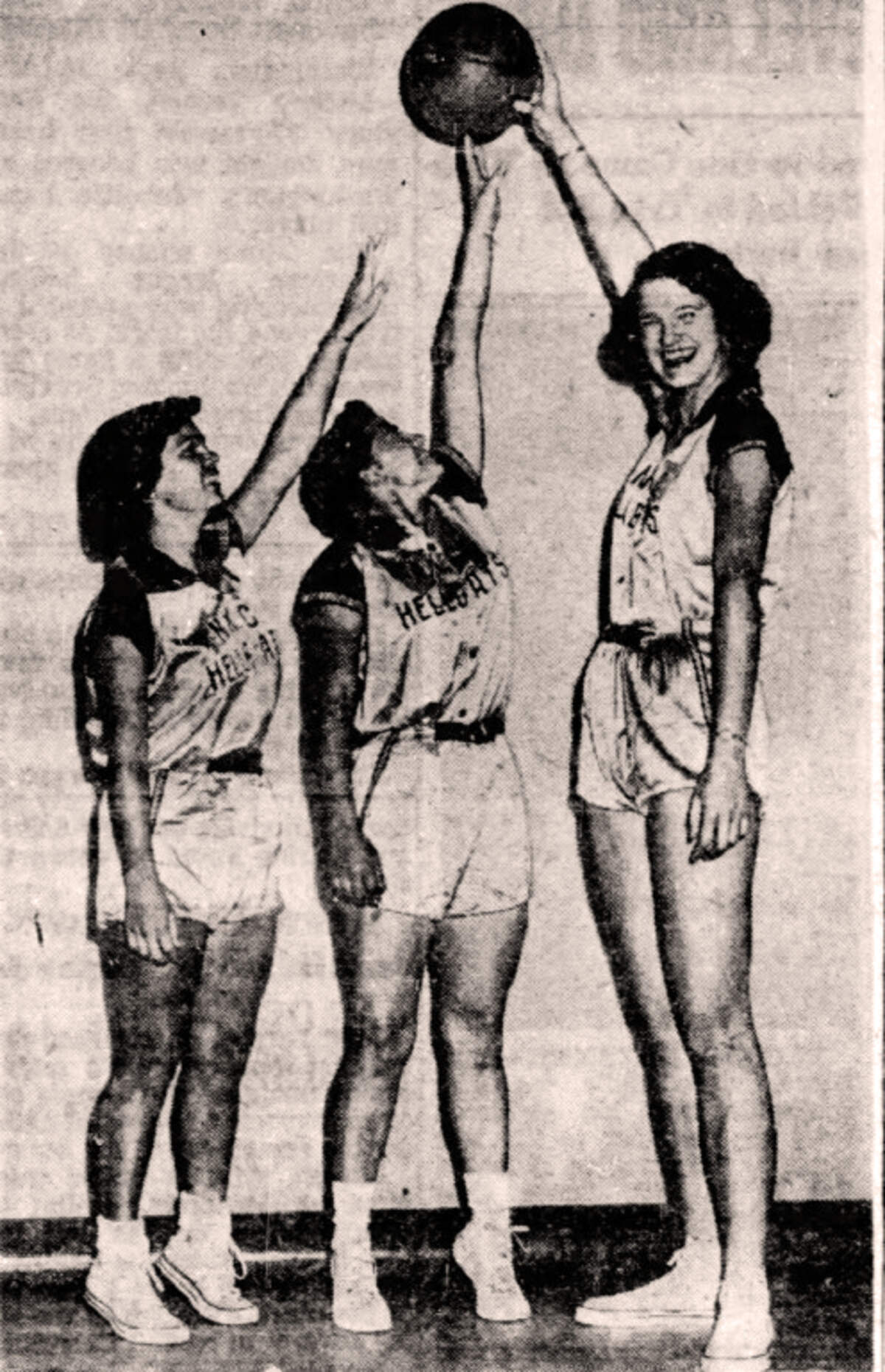
The Hellcats’ roster included (according to newspapers of that time, which weren’t always sticklers for accuracy or spelling) Pat DiiBon, a 15-year-old junior at Lillis High School in 1956; Leeona Evans, an all-state player in Wirthman, Arkansas; Bonnie Kurpjewist, who made second-team all-Jayhawk Girls Basketball League in 1955; and Wrage, a recent high school graduate from Minnesota who at 6-foot-5 (or maybe 6-4) was billed as the tallest player in the Kansas City area (or Missouri, or professional women’s basketball, depending on the source). She left after one season to join the Red Heads.
Online searches for most names associated with the Hellcats came up empty or led to obituaries. There was one exception, however. Virginia Lee Colby, the daughter of Vic Colby, the Hellcats’ organizer, promoter and coach, was the team’s top player for much of its existence.
Now Virginia Russo, 87, she is one of the few surviving members of the Hellcats.
She was understandably taken aback when a stranger reached her by telephone at her home in Camarillo, California, a city of 70,000 about 50 miles northwest of Los Angeles, and asked about an obscure basketball team she played for 70 years ago.
“Well, what you want to know?” she wondered.
For one thing, how would she sum up her experience with the Hellcats?
“I enjoyed it,” she said meekly.
But when given a gentle nudge to expand, she did so. With gusto.
“I enjoyed it, despite the stuff we had to put up with from some of the men we played against,” she said.
And what kind of stuff?
“A lot of it was they’d start getting on us, we should be home, learning how to cook, how to be housewives and all that kind of stuff.”
Were they having fun with you or were they serious?
“Some of the guys were really serious about it. In fact, one woman found a board and was waiting for them to come out (of the locker room), and they saw her and went out the other way. ’Cause she’d had enough.”
Learned to ignore sexist comments
How often did these men make these sexist comments?
“It was a regular thing from the guys. … It was enough that I just learned to ignore it.”
Remember, these were the 1950s, when women were expected to raise children, not their scoring averages.
Russo recalled few details from those days — no big moments, almost no teammates (although she did remember Wrage), not even how many years she played for the Hellcats. She was with them from their origin, however, and left the team because she planned to get married. She also said she was invited to try out for the Red Heads but declined because of her impending marriage.
“One of the things I remember, I started being able to shoot from center court and be able to make the basket,” Russo said. “And the fun would start because the guys would want to one-up me.”
That evidently didn’t happen often
She not only was frequently the Hellcats’ leading scorer, but she also performed gymnastics at halftime as the India Rubber Girl. That nickname was news to her, saying nobody ever told her about it.
In 1960, she moved to California, but there was no women’s basketball in her area. She turned her focus to softball and bowling, becoming a standout in both sports.