
After 90 years, this holiday tradition still ‘keeps the magic alive’ in KC
When the Fairy Princess returns to Kansas City this week 90 years after first appearing here, Olivia Pikul will assume the throne for the fifth consecutive year. That probably is a record for the most years as a princess, but we can’t be sure. Nobody has kept such records.
Which also is why Carol Barta doesn’t know for certain that she and her daughter Becky are the only mother-daughter combo to serve as the Fairy Princess.
“As far as I know, I think that we are the royalty,” Carol Barta said.
Thanks to this Kansas City tradition, instead of jumping on the lap of one of the area’s many would-be Santa Clauses , children sit at the feet of KC’s own Fairy Princess to relay their Christmas wishes.
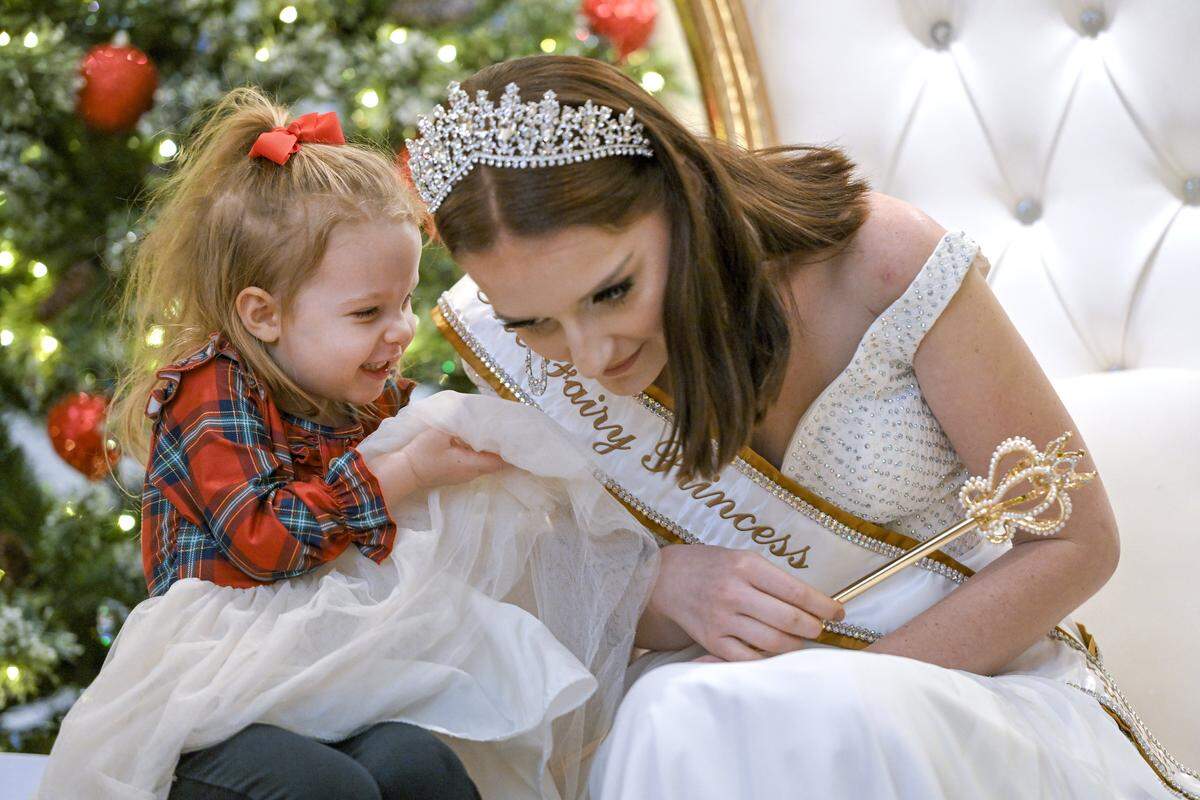
Pikul, a Lee’s Summit resident who works as a project manager at QTS Data Centers in Overland Park, has trained the princesses for the past two years. She said the “vagueness” about specifics of the tradition is more or less by design.
“What’s really fun about it is … as far as everyone knows, we’re just coming down from our castle in the clouds to come meet people in Kansas City,” said Pikul, who will compete in the Miss Missouri pageant in June as Miss Southwest. “So, it kind of keeps the magic alive in the sense that when kids are asking, ‘Oh, are you from Kansas City?’ we say no, and then we describe our castle in the sky.”
What we do know is that Kline’s department store in downtown Kansas City created the Fairy Princess in 1935 and that she went on a 17-year hiatus starting in 1970 when Kline’s closed. The Museum of Kansas City (then the Kansas City Museum) resurrected her in 1987, and she has been a local holiday tradition since.
For some families, the tradition has spanned generations.
“You will get kids who come with their parents and their grandparents and their great-grandparents, and it’s a magical tradition they look forward to each year,” Pikul said.
In the early days, one Fairy Princess reigned for several weeks and families paid 25 cents for a visit. Nowadays, the cost is $15 per child, and this year there will be nine Fairy Princesses — one for each of the seven shifts Dec. 11-14 at the museum, as well as one at Children’s Mercy Hospital on Dec. 9 and one at Union Station on Dec. 22. They all work on a volunteer basis.
Pikul said the most important trait for a princess is “genuine kindness and openness.”
“Making sure to leave all judgment at the door and just meeting every kid where they’re at. Because there are some kids who will be terrified of you because they think you’re a magical princess and other kids who are completely comfortable with you. And when you ask them what they want for the holidays, they say they want a banana.”
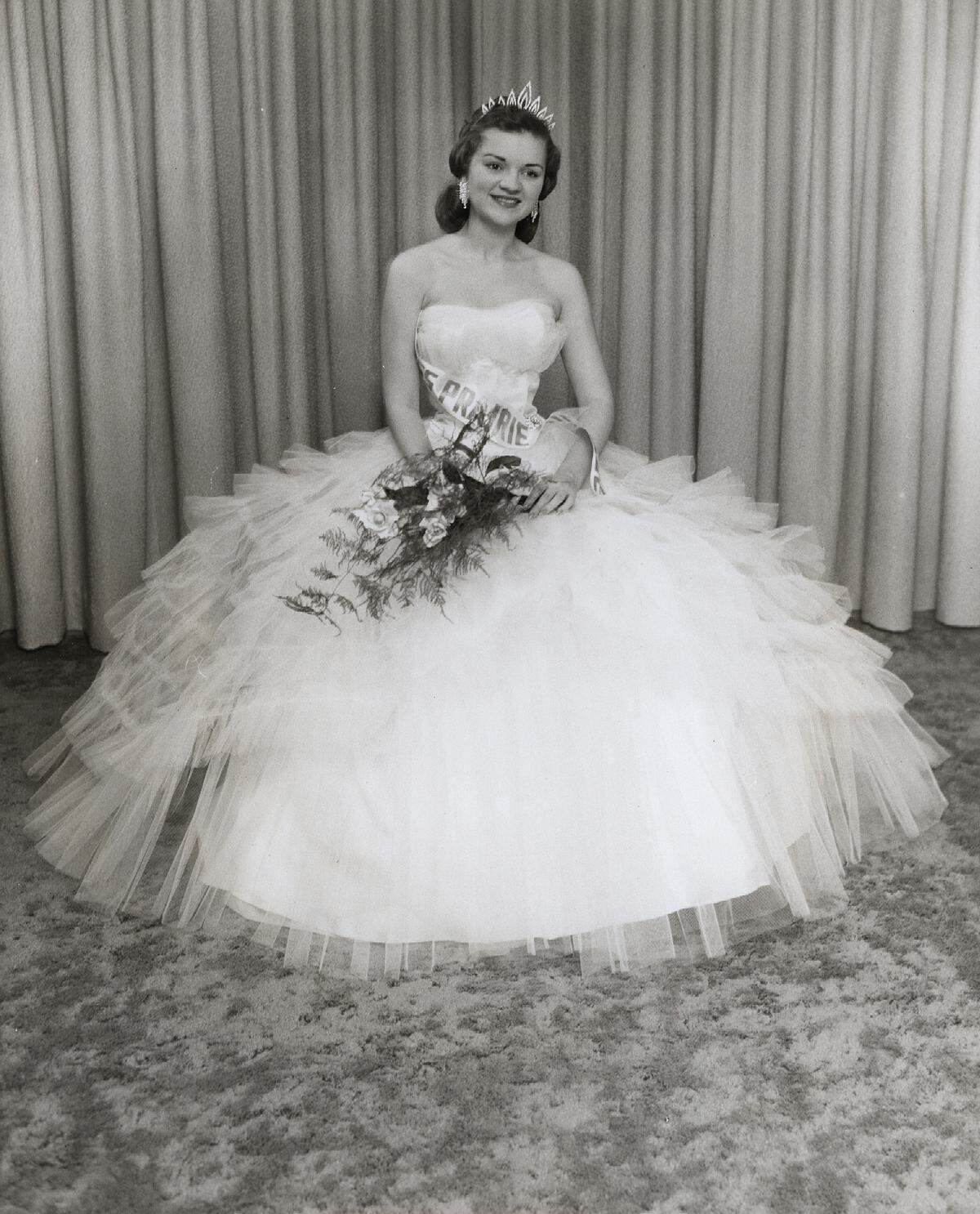
Carol Barta, who served as the Fairy Princess in 1956 and went on to career in radio and acting, is the oldest living former princess. She has remained involved with the program for much of the past 70 years.
“It was a lovely experience,” she said. “I enjoyed every minute of it. I mean, who wouldn’t? I sat there in a gorgeous gown with a tiara, and the children adored me.”
Here’s what you need to know if you plan on visiting the Fairy Princess:
When can we see the Fairy Princess?
Hours will be 4-7 p.m. Thursday-Friday, Dec. 11-12; 10 a.m.-7 p.m. Saturday, Dec. 13; and noon-4 p.m. Sunday, Dec. 14.
Where is it?
The Fairy Princess will appear in the Betty Milbank Waldrop Salon on the first floor of the Museum of Kansas City, 3218 Gladstone Blvd.
How much does it cost?
$15 per child, which includes a visit with the Fairy Princess, a gift, a sweet treat and a framed photo. Advance timed tickets are required.
Other things to know
- Families can purchase additional photo prints and digital downloads online.
- Up to four adults per child are allowed in the gallery.
- Admission to the museum and parking are free.
More information
A brief timeline
1935: Kline’s department store in downtown begins the Fairy Princess tradition as part of its new Toyland. Seeking an alternative to other stores’ Christmas traditions, E.B. Kline, who had founded Kline’s in 1906, reportedly found a fairytale about a snow queen and transformed her into the Fairy Princess.
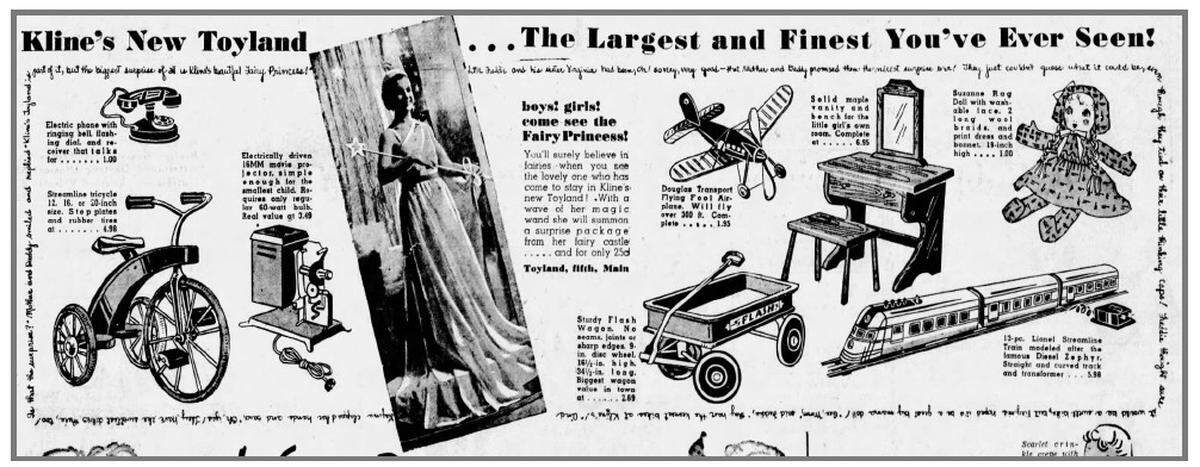
1944: Evelyn Meyers Kays, 17, assumes the role of Fairy Princess just days after marrying Clyde Kays, who happened to work for a Kline’s rival, Montgomery Ward.
1958: City Stores Co. of New York acquires Kline’s.
Early 1960s: Kline’s expands the Fairy Princess tradition to its store in the Ward Parkway shopping center.
1964: Pat E. Gallagher serves as Fairy Princess, then was Miss Boating at the Kansas City Boat, Sports and Travel show at the Municipal Auditorium a few weeks later.
1970: All three Kline’s stores (downtown, Plaza and Ward Parkway) close, and the princess tradition goes with them.
1987: The then-Kansas City Museum resurrects the tradition with the first Fairy Princess since 1969.
2010s: The Fairy Princess makes appearances in the Zona Rosa shopping area in the Northland.
In the words of former Fairy Princesses
Virginia Lunday Hayes, the first Fairy Princess, spoke to The Star in 1987 from her home in Cheyenne, Wyoming, when she was 70. She said she had applied for work at Kline’s in 1935 and was offered a spot on the store’s new throne: “That was the job they gave me. I think I was a pretty young lady and a very nice one. What other qualifications do you need to be a Fairy Princess?”
Sandra Ford, who in 1991 became the first Black princess, said at the time: “Color, I don’t think, is an issue at that age. I don’t know when it becomes an issue, God forbid. They respond to kindness and love, and I have a lot of that to give.”
Carol Barta, a princess in 1956, in 2016: “In this crazy world, it’s so nice to have something so totally human, with a little magic mixed in.”
Bonnie Icenogle, 1960, in 2010: “I like children. It was a very nice experience.”
Renee Rosinski, 2015 and 2016, in 2016: “You have to get on their happy level.”
Barta, in 2010: “I’ve never since then given up the idea that you’re not fully dressed unless you have on your tiara.”