
Two hours east of Kansas City, step inside ‘the best film festival in the world’
On a blustery Saturday afternoon, a Kansas City couple stands determined in an alleyway.
Rohan Pidaparti, 29, and Julianne Delessio, 30, are near the front of a growing line of bundled-up individuals hoping to see the 3 p.m. showing of “Zodiac: Killer Project,” a subversive new documentary that’s as much about our culture’s lust for true crime as it is the notorious serial killer.
At the True/False Film Festival in Columbia, Missouri, when you need last-minute admission to a movie everyone’s been talking about, you find your way to the Q line at least one hour before your screening and await the word of the Queen. You just have to look for her.
In the side alley of this old brick concert venue, The Blue Note, one woman fits the bill: A white beehive wig stands impossibly still atop her head and she flaunts a rainbow crown, glasses, gloves and cape as if she were from Oz. She’s standing underneath a brightly painted “Q” sign that matches her wardrobe.
.JPG "IMG_0369 (1).JPG")
Her majesty, the queen, is here.
“I’ve been a queen for — this is the 10th anniversary,” says Abbie Brown, who normally dresses in all black for her job as a University of Missouri librarian. It took her two and a half hours this morning to get dressed and apply her makeup.
“I don’t do it every day, so it’s a whole process.”
She will soon deliver a spiel she and any other good queen could recite in their sleep. She will tell everyone, in an authoritative tone she describes as “funny scolding,” to hang onto the numbered piece of paper they receive. Fifteen minutes before their showtime, they need to be back here, in the same order. Pass-holders will be able to proceed to the right; those who need to purchase a ticket, left.
As the clock strikes 2, Brown delivers her speech with typical gusto and then offers quieter reminders as she hands out pink Q slips. Pidaparti collects 15, Delessio 16, and there are maybe 100 more behind them.
“How wonderful it is to spread a good-old Midwestern, smiley, cheery attitude,” Brown says. “I want to get them where they need to go and then have a wonderful experience here at our festival.”
True/False, always held from Thursday to Sunday over the first weekend of March, is a singular celebration of nonfiction film set in a charming college town. Part of the fun of attending is watching a place known for its main institution, Mizzou — a place that shuts down every fall for the football-centered homecoming festivities it boasts about originating — transform into a global mecca of art and culture. For a brief moment in time, this community revolves around documentary film.
A section of Ninth Street, the central downtown corridor, is closed-off to make way for quirky and philosophical art installations. Outside of storefronts, foldable chalk boards display warm messages for film fans: “Croissants, Coffee, Action” in front of a bakery; next to a coffee shop, “True or False: You’re not Yourself Without Caffeine.” Black-and-red sponsor stickers mark doors across town like badges of honor.
.JPG "IMG_0386 (1).JPG")
“True/False has this real Missouri spirit I think we’re deeply proud of, and I know I’m proud of,” said Emily Edwards, communications director for the festival. “Our community, not only in Columbia but statewide, has been an incredible support system throughout the 22 editions.”
This year, Edwards said nearly 32,000 people purchased tickets to its 36 programmed features, which — selected from 581 submissions around the world — hailed from more than 25 countries. Attendees encountered stories that may have never reached them.
Two Kenyan women take on the monumental task of decolonizing a formerly whites-only library in Nairobi. An aging Afghan mother prepares to open a textiles shop, as captured by her daughter’s attentive lens, only for the Taliban and its anti-woman agenda to return to power. The widow of Sally Ride, the first American woman in space, details an improbable and inspiring life that was incomplete, the truth of whom she loved kept secret until her death.
Allison Nelson, a 28-year-old filmmaker, has worked at the Sundance Film Festival in Park City, Utah and volunteered here. There’s much that separates the two fests — Sundance is more well-known, for starters — but Nelson highlights True/False’s exclusive embrace of nonfiction and its track record of great lineups. Festival selections that have gone on to win Academy Awards include “American Factory,” “Summer of Soul” and “20 Feet From Stardom.”
“Usually at least two of the films that are here get nominated for Oscars when they come out, right?” said Nelson, who is from New Mexico. “It’s really hard to get a film into this festival and so you know everything that gets into this festival is gonna be really good.”
True/False, compared to most fests including Sundance, is exceedingly walkable — the venues are all within about a half-mile of each other. It also occupies a uniquely accessible location in Columbia, home to a regional airport and smack-dab in the middle of St. Louis and Kansas City.
The drive from the city of fountains is easy enough: Two hours along I-70 East, the passing landscape a blur of fast food, truck stops and combination fast food-truck stops. Though it’s possible to do the fest in one day, squeezing in anywhere from one to four movies between two highly caffeinated drives, most people make accommodations for a full weekend.
Delessio and Pidaparti, who live in midtown Kansas City, stayed with friends at an Airbnb in Columbia. They each took Friday off of work, learning from last year — their first time coming — they would want one extra day.
A couple of hours after seeing “Zodiac: Killer Project” on Saturday, they were on the Mizzou campus in line for a documentary about the scientist John Lilly, famous for his experiments with dolphins and LSD. An interesting double feature, to be sure.
“You think of a film festival as being a kind of sedentary activity,” Pidaparti said, “but you end up walking a lot. You end up going and checking out different places and grabbing drinks from different places. You end up spending six hours a day sitting but you also get in five or six miles too.”
‘The best film festival in the world’
At its inception, True/False was a response to film festivals that are only really available to a privileged few.
Columbia residents David Wilson and Paul Sturtz, who started True/False in 2004, had been to some of these fests. Fests with red carpets, A-list celebrities, prestigious juries that hand out awards. They felt a “need to be something that sat outside that,” according to Edwards. An accessible festival for cinephiles and those who may not yet know they’re cinephiles.
It was an ambitious idea, fraught with thorny questions of logistics and money; but then again, Wilson and Sturtz could handle all that. In 1998, the duo founded Ragtag Cinema, an arthouse movie theater in downtown Columbia whose name represents the volunteers who, with no prior experience, put it together.
The first True/False made a small but strong impact, selling 4,200 tickets to three theaters. It grew incrementally over the next decade thanks to positive word-of-mouth, and reached its height in 2017 when there were nine venues hosting more than 52,000 patrons. COVID-19 brought numbers back to less than 10,000 in 2021.
“The slow throttle of streaming met with the quick acceleration of the pandemic has totally changed cinema-going and movie theaters and, honestly, communal gatherings, especially centered around arts and culture, period,” Edwards said. “Our numbers are not what pre-pandemic they were, and I don’t think any festival is.”
But True/False is bouncing back — they put “butts in seats” in 2025, she said — and it hasn’t lost its original spirit. Still no competitive prizes. Still no red carpet. No celebrities.
Ragtag, which has two screens, a bar and a bakery called Uprise, is the beating heart of it all, a gathering place for fans and filmmakers to converge. Other venues include the Blue Note, the Missouri Theatre, the First Presbyterian Church and the Rhynsburger Theater, Mizzou’s main stage for theatrical productions.
A core belief of the fest is that not everyone has the time or money to see everything. For non-pass-holders, individual tickets are $17, and students or educators with a valid ID get discounted prices of $11.
“People can come, watch a movie and then move on with their daily life,” Edwards said.
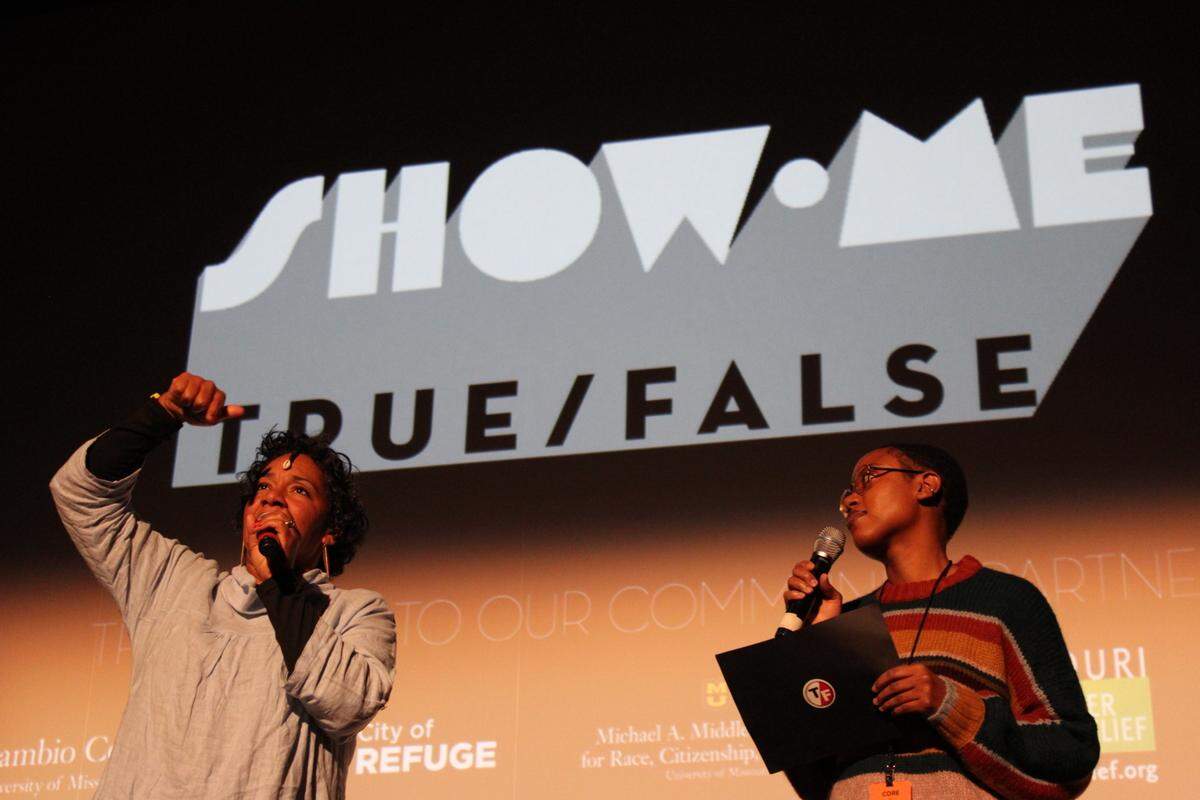
Directors in particular love this festival, she said, because it is well-known in their industry but has the genial feeling of “a community-based thing.” Landing a movie here can be the highlight of someone’s career, and this month six made their world premieres.
One of those was “How Deep is Your Love” from the U.K. Throughout Eleanor Mortimer’s mesmerizing deep-sea doc, sponge-like species — never seen before — casually float across the ocean floor like alien lifeforms. Researchers on the expedition Mortimer is following give the creatures off-the-cuff names based on their attributes: Gummy Squirrel, Barbie Pig, Casper the Ghost Octopus.
Of all the locations in the world to debut this movie, shot in the middle of the Pacific Ocean, Mortimer was thrilled about the middle of Missouri.
“I was always wanting to come to True/False because it has such an amazing reputation for filmmakers,” she said during a post-screening Q&A. “I was just hoping the film got into the festival. And the experience that we’ve had here has just been phenomenal.”
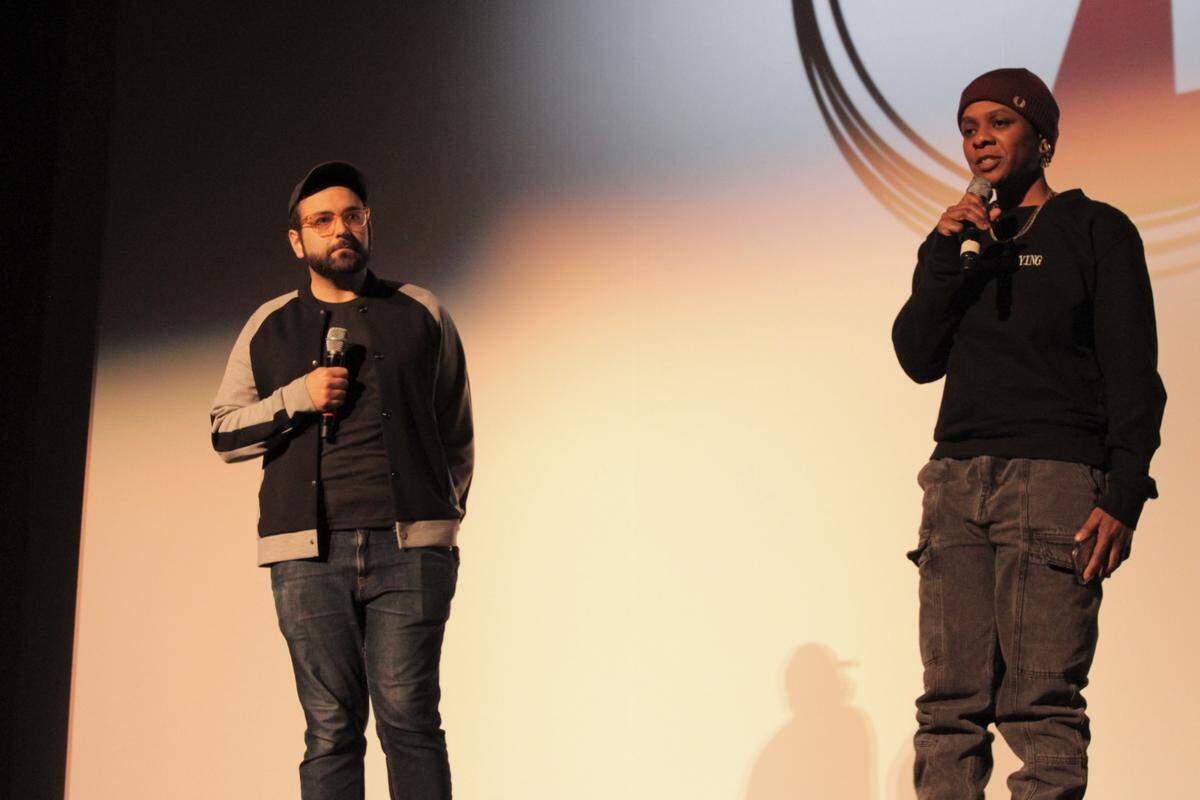
David Osit said before the March 2 showing of his documentary, “Predators,” “This is my favorite film festival in the world.”
His first feature, “Building Babel,” premiered here in 2012. “It’s in many ways like my hometown festival. Even though I’m from New York, I feel like I have a little bit of my heart in Missourah,” Osit said before a packed crowd that extended all the way up the balcony of the historic Missouri Theatre.
His “Predators” was perhaps the most talked-about movie of the weekend, a revisiting of the NBC Dateline program “To Catch a Predator” that interrogates the show’s methods, morality and the society that embraced it. It ends with a pitch-perfect interview with Chris Hansen, the former host, far too good to spoil here.
However, all Osit wanted to discuss, before the lights went dark and the projector began to roll, was this place.
“You’ve probably heard a lot of people say this weekend this is their favorite film festival in the world,” Osit said. “It’s because it is the best film festival in the world.”
‘Tired but invigorated’
On the final morning, Columbia is quiet.
Much of the non-fest-going public is at home, and the streets are populated almost entirely by those with laminated passes dangling from lanyards underneath their coats. They walk with purpose toward theaters, or duck into coffee shops.
It’s normal at this time for an attendee to be feeling the effects of it all. Legs may be sore. Eyes groggy. A building feeling of anticipation for the final films ahead, undercut by the knowledge that another festival is drawing to a close.
Edwards hopes people leave feeling changed, at least in some small way.
“Whether that be from the narrative,” she said, “or whether that be from the experience of watching with other people, or congregating, or hearing something someone said.”
Delessio and Pidaparti started their last day with hand-rolled bagels at Goldie’s followed by two films: “Deaf President Now!” — a retelling of a 1988 student protest at the world’s only deaf university — and “Writing Hawa,” the loving portrait of the Afghan mother. They had to leave by 3 p.m. to drop off a friend at the Columbia Regional Airport.
After they said their farewells and hopped onto I-70, the couple spent much of the two-hour drive home talking about what they had seen. They agreed their favorites were the two from earlier in the day as well as “Zodiac: Killer Project,” which Pidaparti said turns “a critical eye to the true crime genre and the glut of content we have in that space now.”
They watched the Oscars that night, all 3-and-a-half hours of it, and went to bed. The next morning, he would return to his job at CBiz Advisors on the Plaza; she would report to Kiewit Engineering. Back to reality.
The feeling on that Monday was a mixture, Pidaparti said — “tired but invigorated.”
He and Delessio plan to be back next year for the 23rd True/False Film Festival. Though they won’t learn until at least 2026 what the films will be, they have a good feeling, based on experience, there will be something worth seeing.
A friend has already booked the Airbnb.
This story was originally published March 21, 2025 at 10:44 AM.