
After serving time, are prisoners ever free? This book paints their bleak future
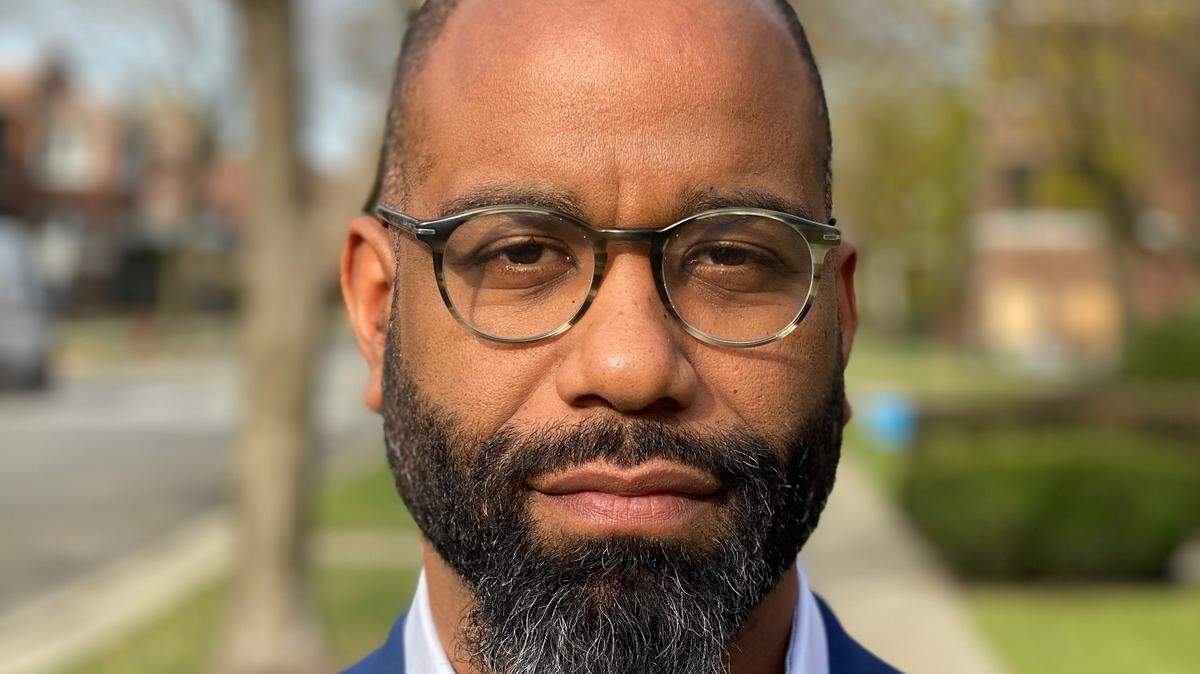
Reuben Jonathan Miller watched prison guards serve men bologna sandwiches and oranges from black garbage bags. In the Michigan prisons he visited, employees referred to the process as “feeding time.”
The University of Chicago professor of criminology and sociology has tracked the causes, effects and aftermath of mass incarceration for decades. He says it’s not that the guards are bad.
“It’s just how we think about and treat this group is jarring, inhumane,” Miller says. “We’re afraid of them, so we keep them at arm’s length, and we treat them in ways that reflect how we feel about them.”
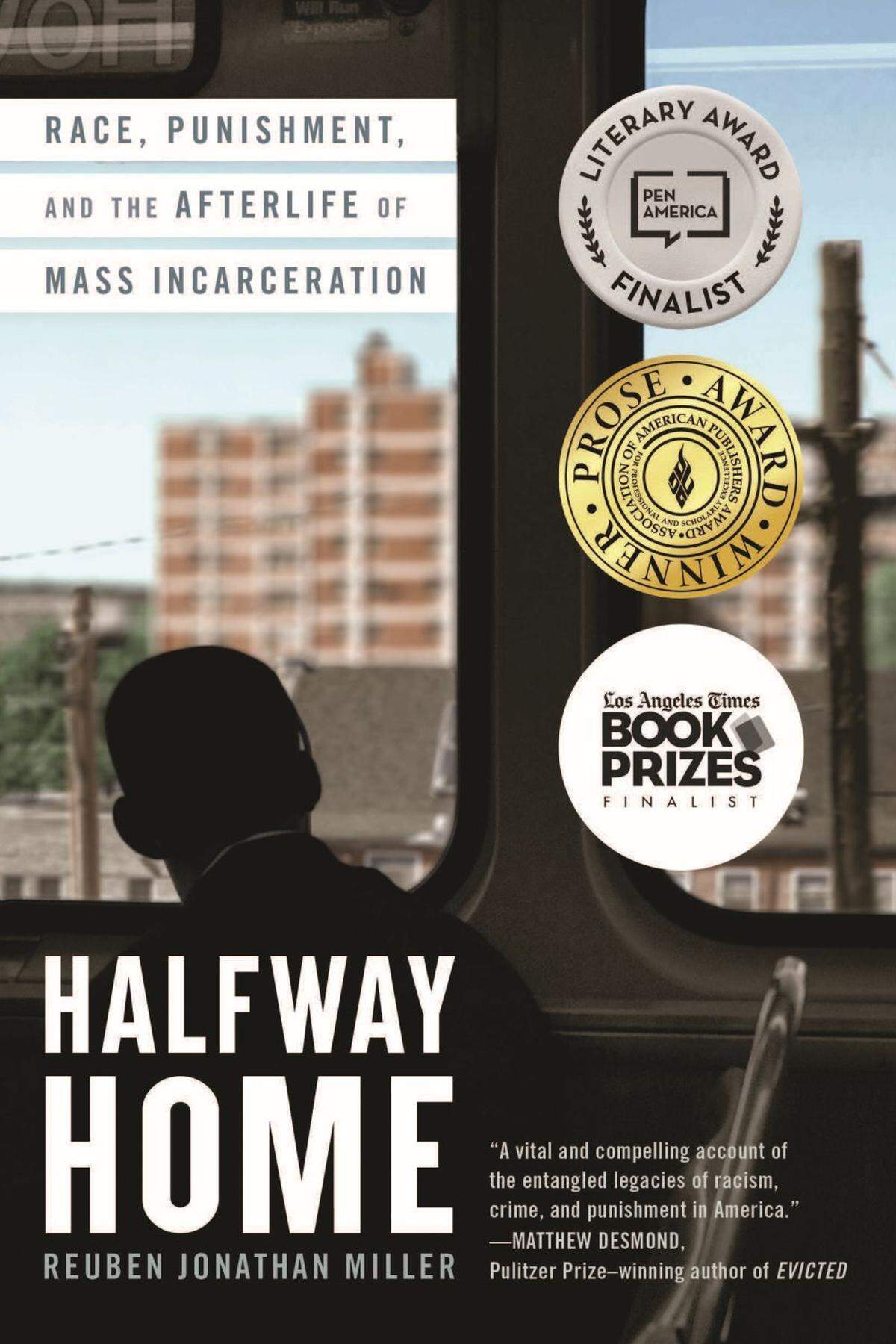
The result of his research is “Halfway Home” (2021, Hachette), a study of race, punishment, and the afterlife of mass incarceration, which he’ll discuss at the Kansas City Public Library in June. The work is the latest selection of the FYI Book Club.
Miller collected data about the lives of 250 people — most of them poor and Black — who had felony convictions and studied their trajectories from marginalized youth through release from imprisonment to, sometimes, reincarceration. The stories he heard were familiar: He, too, grew up poor, and his brother and estranged father were caught in the incarceration system. Miller first interacted with prisoners as a chaplain but later found research better suited his interest.
At the heart of the matter, he found, is systemic racism, a legacy of social hierarchy stretching back centuries, with the placement of slaves from African nations on the bottom rung beginning in the 15th century.
And, of course, no person wants to exist in a state of slavery; resistance and rebellion were the strong, natural human responses, as was joining forces with others at the bottom, regardless of skin color.
The wealthy, dominant class feared the potential strength in numbers and separated the white indentured servants from the Black slaves.
Miller writes: “The separation of black and white people took place across law and in everyday life. The slave codes outlawed the vestiges of black freedom.”
The oppressing class criminalized everything for Black people: interracial relationships, reading, traveling without certain documents, and so on. All to prevent insurrection.
“While the fear of black insurrection was always palpable, and white slave patrols, constables, and, eventually, the police stood at the ready to beat back black rebellion, the way that black people were depicted in popular culture wouldn’t change until emancipation, more than two centuries later,” Miller writes.
But he also notes that the image of Black people, particularly Black men, is still not all that different today. He writes about a study by psychologist Phillip Atiba Goff that showed Black boys are perceived as less innocent than white children of the same age; and Black boys are seen as being about four and a half years older than they are.
Miller says that in his interviews of people with felony records, he asked how old they were the first time they were arrested. He heard about men who’d been arrested at 10 or 11 years old, and women who’d been arrested as young as 12.
“How do you arrest a 12-year-old girl? How do you arrest a 10-year-old boy?” Miller asks by phone from his home in Chicago. “This is what racism does, it doesn’t allow us to see them as children. If I think that that 14-year-old is 18, it makes more sense for me to throw him in handcuffs, slam him on the ground, take him to the court, and lock him up for 35 years.”
So, even as children, for many Black Americans the Fifth Amendment, innocent until proven guilty, offers less protection than it should.
And that’s on the outside, before an arrest has been made.
Inside the system of mass incarceration, Miller writes, it’s nearly impossible to overturn a wrongful conviction. He writes about how prisoners lose their rights of citizenship, like the 13th and 14th amendments — equal protection under the laws and the abolishment of involuntary servitude, respectively.
But even after incarceration, when someone’s debt to society has been repaid, Miller says that people with felonies continue living in an “alternate legal reality.”
Currently in effect are 44,000 laws, policies, and administrative sanctions, Miller says, that regulate the lives of the 19.6 million Americans with criminal records.
He calls living in this alternate legal reality “carceral citizenship.”
“There are different kinds of responsibilities that people with criminal records have that other people just don’t,” Miller explains. “So, for example, people with criminal records can be made to submit themselves to drug tests at the threat of re-arrest. I can’t make anybody else do these kinds of things. They can’t cross state lines, they may not associate with other people with criminal records, all at the threat of re-arrest.”
In this alternate legal reality, 1,000 of the 44,000 laws, policies, and administrative sanctions have to do with housing restrictions and 19,000 govern employment.
The effect is that the formerly incarcerated have a difficult time securing employment that pays a living wage or offers room for advancement. They also are much more likely to experience housing insecurity than the general population; someone who was incarcerated once is seven times more likely to be homeless, and someone incarcerated twice is 13 times more likely to be homeless, Miller says.
The threat of eviction looms large as well, even for family members of the formerly incarcerated. For instance, Miller talks about how in the late 1980s, the Department of Housing and Urban Development issued guidelines that said residents of public housing could not host anyone with a record; a grandmother could be evicted for allowing a grandson to sleep on the couch.
“The effects of mass incarceration affect us all. And this is one of the tricks of American racism,” Miller says. “It hides what we’re doing to all of us. It makes us think that a crime problem is a Black problem.”
Ultimately, Miller says, finding true redemption and true reintegration into society is a question of fully restoring citizenship. Citizenship is about belonging, he says.
“It’s a set of rights, restrictions, responsibilities, but also benefits that are afforded to people because of their political belonging. What the criminal record does, and what the laws and policies that we’ve passed in response to it does, is it makes it so that people with records have nowhere they belong,” Miller says.
He goes on to say that when legislation prevents someone from having a home, from having a job, and from forming healthy social bonds, that leads to instability, which leads to more crime
“Criminological literature has told us for quite literally 100 years that unemployment, poverty, limited access to care, limited access to medical treatment, constraints on one’s time with their family, all leads to more crime, not less,” he says.
“What we’ve done is we’ve legislated a less safe world. So ethically, I think the right move is for us to take the risk and do this important work of restoring people to their rights.”
Anne Kniggendorf is a writer and editor for the Kansas City Public Library and is the author of “Secret Kansas City” and “Kansas City Scavenger.” Follow her @AnneKniggendorf.
Join the club
The Kansas City Star partners with the Kansas City Public Library to present a book-of-the-moment selection every six to eight weeks. We invite the community to read along. Kaite Mediatore Stover, the library’s director of readers’ services, will lead a discussion of Reuben Jonathan Miller’s “Halfway Home” at 6:30 p.m. June 28 at the Central Library, 14 W. 10th St. Email Stover at kaitestover@kclibrary.org for details on joining in.
Library events
▪ “Halfway Home” author Reuben Jonathan Miller is in conversation with Anne Kniggendorf at 6 p.m. June 29 at the Central Library, 14 W. 10th St. RSVP at kclibrary.org.
▪ To learn more about housing instability, visit the ”Evicted” exhibition at the Central Library through July 17. The exhibition, produced by the National Building Museum in Washington, D.C., is inspired by Matthew Desmond’s Pulitzer Prize-winning book “Evicted: Poverty and Profit in the American City.”
An excerpt
From “Halfway Home: Halfway Home: Race, Punishment, and the Afterlife of Mass Incarceration” by Reuben Jonathan Miller:
Criminal justice reform has focused on the near-term goals of building better prisons and providing more services for the people who are eventually released. We’ve failed to see, or perhaps we’ve ignored, how the ways we’ve chosen to punish the poor extend far beyond the prison’s walls and start long before an arrest occurs. This, too, is part of the afterlife of mass incarceration and a condition we have not yet reckoned with. An entire class of people are presumed guilty of some unspecified crime long before they break a law.
Were we to better understand the living conditions of the people we’ve labeled criminals, we might not wonder what they did to deserve poverty, prison, or the police officer’s bullet. Were we to aim our gaze at the everyday routines of arrest, incarceration, and release or at what it takes to piece together a life after being branded ex-convict, ex-offender, or ex-felon, we might be curious about how such practices abide in the land of the free. We might ask what it means to carry the weight of being already accused as we weather life’s predictable tragedies – caring for the sick or burying the dead and dealing with the adversities that come.