
Kansas City’s Big Read: US poet laureate paints ‘American Sunrise’ of past and future
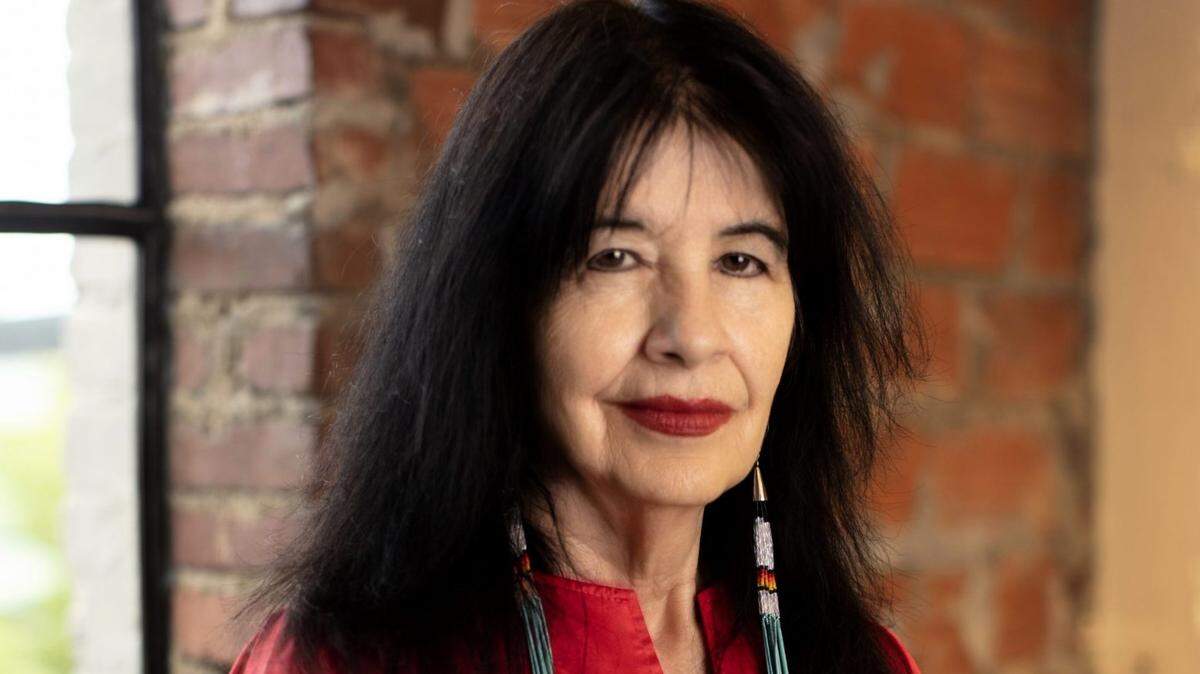
Joy Harjo will miss a Bob Dylan concert in April to be the featured speaker in the Kansas City Public Library’s Big Read celebration.
Harjo is the sitting U.S. poet laureate. And yet she feels small next to someone of Dylan’s stature — even though she is, among many other things, the Bob Dylan Center’s artist-in-residence.
“I’ve been to his concerts through the years, but you know, it’d be nice to meet him,” Harjo says from her home in Tulsa, Oklahoma.
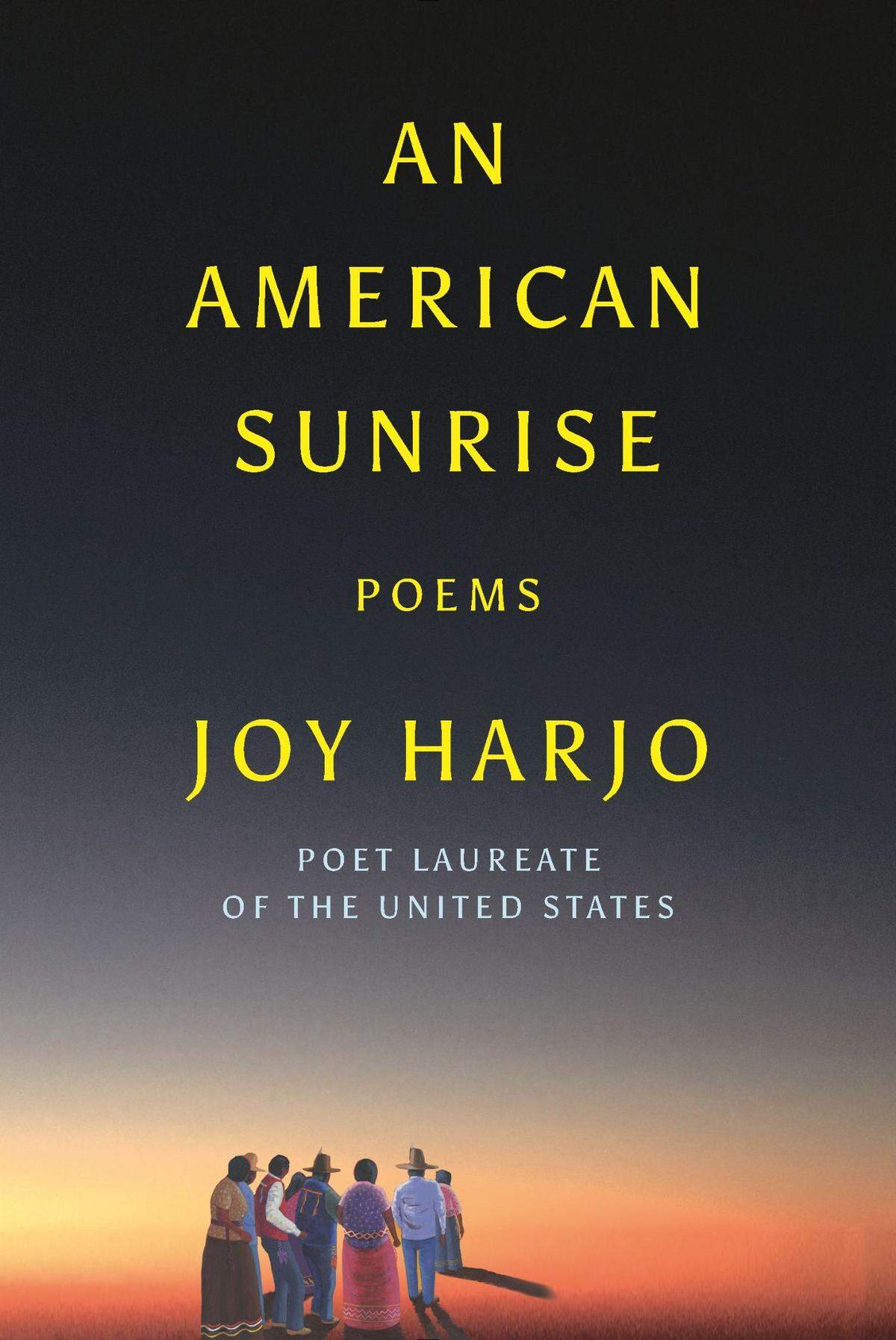
That meeting of the minds will have to wait. Harjo will be at the library on April 14 to read from and discuss “An American Sunrise” (2019, Norton), her most recent collection of poetry. She’s participated in a couple dozen similar events across the nation over the past couple of years. The collection is also the latest selection of the FYI Book Club.
“Often there are people there who wouldn’t normally read poetry, or probably think there’s no such thing as Native writers or Native poets,” says Harjo, a member of the Muscogee Creek Nation.
But she thinks her work is slowly raising awareness and changing the general public’s perception of Indigenous people. She’s in her third term as U.S. poet laureate and is the first Native American to hold the position.
Harjo’s laureate project, “Living Nations, Living Words,” and its accompanying anthology, has introduced the nation to myriad Native poets.
“I wanted people to know I’m not the only Native poet. I’m not the only Native, there are many of us; I may not even be the best representation,” she says.
With her long tenure as laureate, as well as the 2021 appointment of U.S. Secretary of the Interior Deb Haaland, a member of Pueblo of Laguna, Harjo says younger Native people have felt an affirmation.
A similar affirmation of cultural continuity is a major theme in “An American Sunrise.” As those younger generations now look to Harjo and Haaland, Harjo looks to her ancestors for strength, guidance and inspiration.
That type of listening to the past colors Harjo’s perspective on events like Valdmir Putin’s war in Ukraine. She recalls hearing someone say that all water is related and thinks all war may be related as well.
“Especially in this kind of scenario where you have somebody who doesn’t mind destroying the lives and disrupting the lives of many people, because there’s something they want for themselves,” Harjo says. “There’s that similar resonance that happened in the founding of this country.”
In the poem “Weapons, Or What I Have Taken in My Hand to Speak When I Have No Words,” she writes: “Each of us is a wave in the river of humanity. If we break we bleed out. If we move forward together we are bound together by scarlet waters of belief. One side is war. One side feeds the generations. We are bright with the need for life.”
Much of the book reads as politically minded in the sense that it deals with power; who’s over whom, how is that the case, why, and to what end?
Harjo thinks about leadership, who has the power within a family or community, but also over nations. Another poem in “An American Sunrise” called “For Those Who Would Govern” is a list of seven questions to ask before that person assumes power.
They include: What is the state of that person’s own household? Who really owns the person (e.g., a bank, a corporation, a lobbyist)? Will this person serve the land and lift up all living things, including plants and animals?
She says Putin certainly doesn’t qualify to lead by those standards, but she thinks someone like former President Jimmy Carter does. He’s humble, Harjo says, and willing to listen.
“It doesn’t matter if you’re the U.S. poet laureate or the president, or anyone else. We’re all here in service positions,” Harjo says.
She points to Carter’s work for Habitat for Humanity as an indicator of his willingness to be of service and his understanding of how we’re all connected.
The recognition of connectivity, sort of like the continuity of life through ancestors, is a Muscogee tradition.
She says, “In the Muscogee tradition, you bring people into the circle, and you make relatives out of them.”
The culture didn’t have jails, but it did have retribution.
“If somebody is misbehaving so much that they want to take over the world, that’s dangerous. If a Putin were in our traditional society, somebody like him would be banished,” Harjo explains, “for going against human laws of taking care of each other.”
But the animals and plants are relatives, too. In the poem “Tobacco Origin Story” she writes: “We knew our plants like/Relatives. Their stories were our stories…”
The effect of that thinking is powerful, particularly when it comes to leadership.
“If you see that you are part of the earth, which is the reality, and the relationship is much different than if it’s seen as something dead or just a resource,” Harjo says. The same goes for interactions with other people: social media users tend to treat others as a resource rather than as the interconnected living beings they are.
And, she says, that sets the stage for a lot of trouble — like cultural control through book banning, another timely thread running through her collection.
One of her poems mentions the Indian Religious Freedom Act of 1978. Up until that time, most creative Native expression was illegal. Restrictive old laws as well as recent school board attempts in various states to remove particular books from the shelves of school libraries not only harms the marginalized groups the actions are aimed at, but society as a whole.
“I’ve always said that colonization has hurt everyone including the colonizer,” Harjo says. “It’s the banning of truth telling.”
And whether that truth is about something that’s helpful or harmful, no one can make informed decisions — during a vote, for instance — without it.
Harjo returns to Putin’s actions in Ukraine again.
She says she thinks that some Russians are willing to go along with the information their president is feeding them. Maybe some believe when Putin says Ukraine belongs to Russia.
“But,” she says, “the Puritans said this land was given to them by God and used that to attempt to destroy communities and languages and cultures. And it still goes on, that same kind of reasoning.”
Anne Kniggendorf is the author of “Secret Kansas City” and a writer and editor for the Kansas City Public Library.
Join the discussion
The Kansas City Star partners with the Kansas City Public Library to present a book-of-the-moment selection every six to eight weeks. We invite the community to read along. Kaite Mediatore Stover, the library’s director of readers’ services, will lead two in-person discussions of Joy Harjo’s “An American Sunrise”: at 6 p.m. April 12 at the Kansas City Museum, and at 11:30 a.m. April 22 at the National World War I Museum. Email Stover at kaitestover@kclibrary.org for details on joining in.
Big Read events
The Kansas City area’s community-wide Big Read is a six-week initiative revolving around “An American Sunrise,” the acclaimed poetry collection by Joy Harjo, U.S. poet laureate. For more information on events and to RSVP, see kclibrary.org/signature-events. Events include:
▪ Big Read Kickoff: A Community Celebration: 6:30 p.m. April 6, Central Library. In person and online.
▪ An Evening With Joy Harjo: 6:30 p.m. April 14, Plaza Branch. In person and online.
▪ “The Heart Is a Fist,” exhibit of contemporary Indigenous artwork: April 2-May 29, Central Library’s Guldner Gallery.
▪ Indigenous Cinema Now: Native American and First Nations Filmmaking in the 21st Century: 6 p.m. April 28, Central Library. In person and online.
A limited number of complimentary copies of “An American Sunrise” will be available at all library locations.
An excerpt
Once there were songs for everything,
Songs for planting, for growing, for harvesting,
For eating, getting drunk, falling asleep,
For sunrise, birth, mind-break, and war.
For death (those are the heaviest songs and they
Have to be pried from the earth with shovels of grief).
Now all we hear are falling-in-love songs and
Falling apart after falling in love songs.
The earth is leaning sideways
And a song is emerging from the floods
And fires. Urgent tendrils lift toward the sun.
You must be friends with silence to hear.
The songs of the guardians of silence are the most powerful—
They are the most rare.
This story was originally published March 27, 2022 at 5:00 AM.