
‘I read it and reread it’: Kansas City Big Read selection a hit with book club members
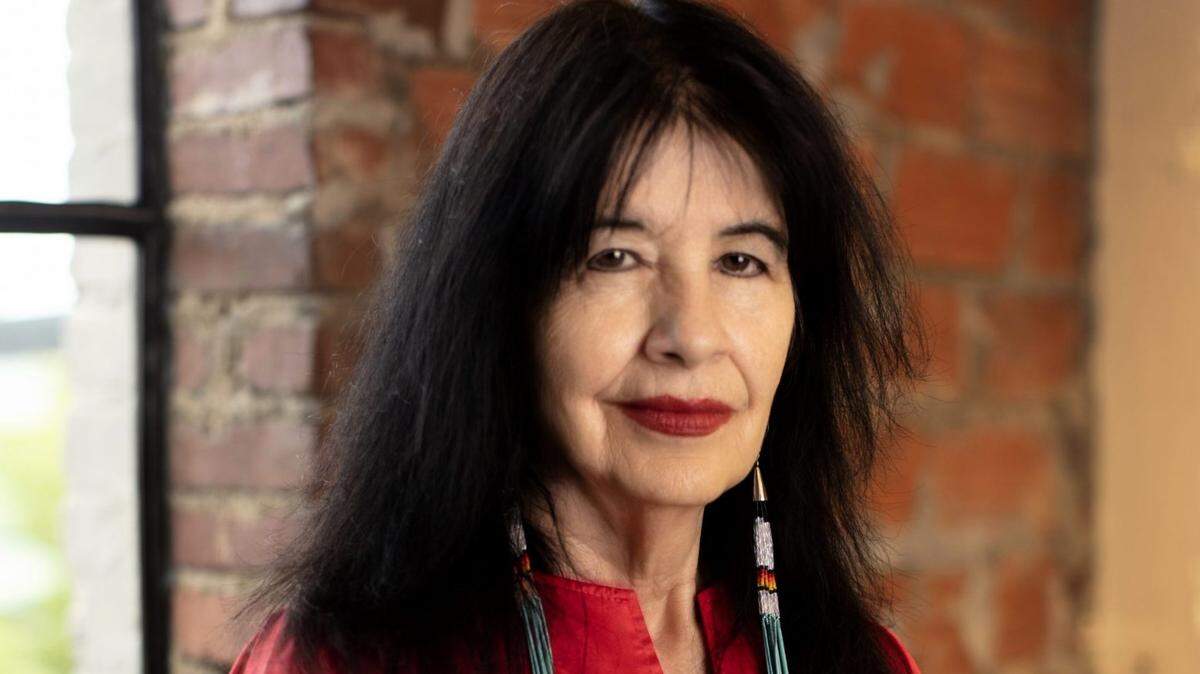
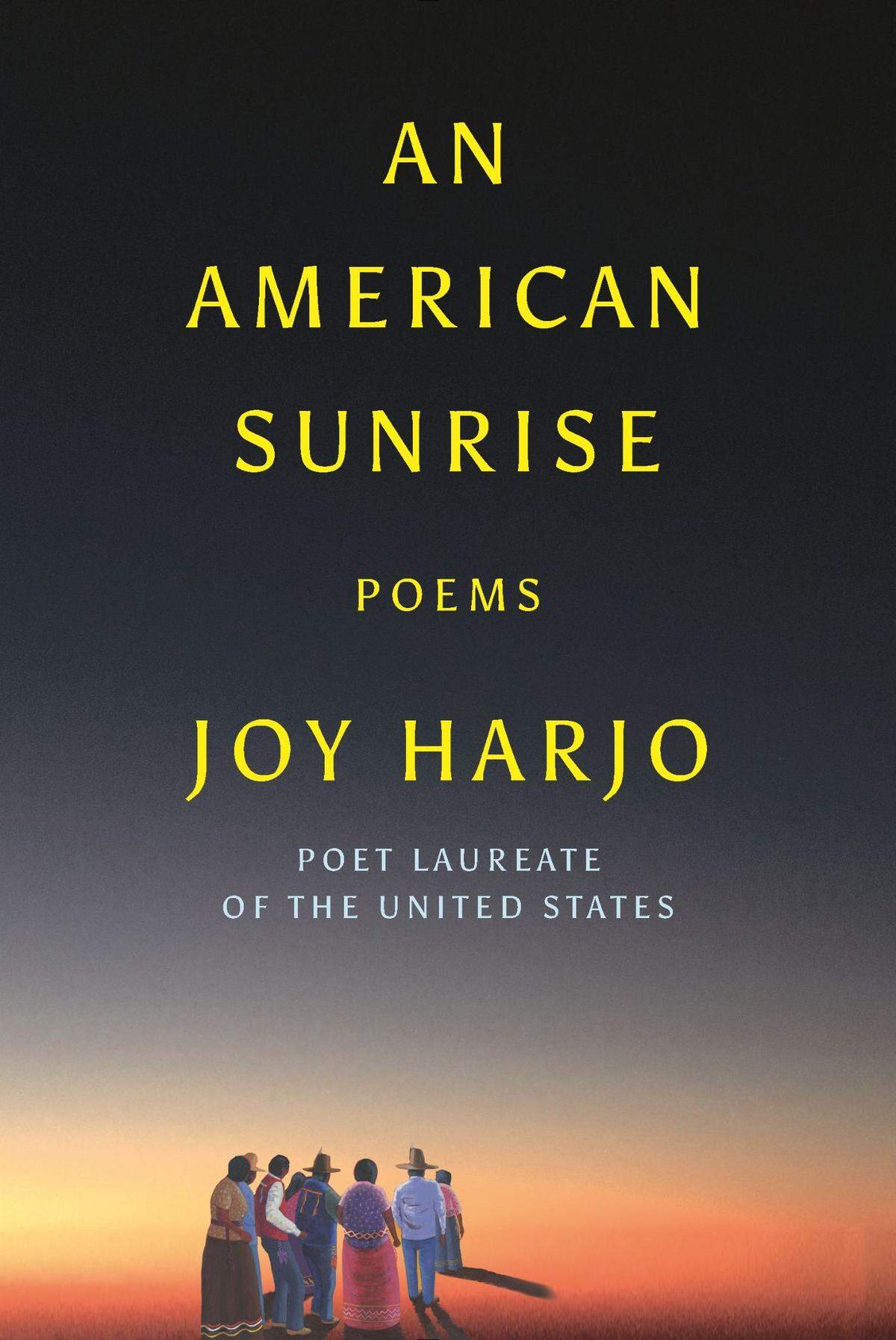
In two discussions of “An American Sunrise” by Joy Harjo, FYI Book Club participants all gained a greater appreciation for poetry and the gentle ferocity of this poet’s voice.
Readers met in two locations — the Kansas City Museum and the National World War I Museum — to talk about the work of Harjo, a three-term U.S. poet laureate. In addition to being the latest book club title, “An American Sunrise” is the current NEA Big Read selection hosted by the Kansas City Public Library.
A number of poems resonated with readers: “Washing My Mother’s Body” was mentioned most frequently. “My Man’s Feet” was a close second. and attendees enjoyed comparing the way Harjo used the physical body to impart feelings of love and ancestral connections.
Diane Lewis, of Kansas City, was familiar with the practice of washing the body of a loved one. “I thought it was powerful that even though Harjo couldn’t do this for her own mother, she did it in her mind and with her heart. She wrote this piece as a way to say goodbye and pass on memories of her mother,” she said.
Glenn North, Kansas City, found this poem inspiring while struggling to write a poem honoring the memory of a lost friend. “It was helpful to read ‘Mother’s Body’ and fix those lost opportunities to connect. Harjo is also playing with time and memory in this poem, and she does it so well,” North said.
History, ritual and passing on cultural traditions are the elements that stayed with Trish Cecil, Lenexa. Cecil connected the very personal actions Harjo recounts to the way Native American World War I veterans were revered by their tribes. “They were considered gatekeepers of death since they had been so close to it,” she said. “The Native American veterans were the ones who helped communities grieve and walk through death.”
Franklin Cline, Kansas City, saw the ancestor connection, too, in ‘My Man’s Feet.’ “I can’t help thinking of my ancestors who walked the trail,” he said. “I can’t think about my feet or my father’s feet without thinking of the feet that got us here. One generation following another.”
Readers found many connections to artists, musicians, other poets and historical figures. They noted the passage of the Indian Religious Freedom Act of 1978 and how before that, America had stifled Native Americans’ right to practice their cultures and engage in artistic expression.
“It blew me away that it was illegal for cultural expression of Native Americans,” Lisa Timmons, Kansas City, said. “To me it explains why painter T.C. Cannon and Harjo are oozing creativity in so many disciplines: opera, visual arts, lyrics.”
Tori Kottwitz referenced one of Harjo’s memoirs: “Even her family told Harjo not to write poetry, but they were more concerned with her ability to make a living. But still, that’s a quiet form of stifling expression.”
Cecil showed examples of Cannon’s paintings and showed how they connect to Harjo’s poetry and Bob Dylan’s music. “This painting, ‘All the Tired Horses in the Sun,’ is inspired by a Bob Dylan song, and the painting inspired one of the songs in a larger poetic cycle Harjo includes in her collection. A song inspires a painting which inspires a poem.”
Cline brought up “The Story Wheel” to point out how Harjo acknowledges other poets, different literary forms, and history to create one piece. “Harjo is using what N. Scott Momaday does here,” he said. “The poem on the left, the prose on the right, the historical fact on the bottom. She’s leaving space for lyricism. The poetry is hopeful and imaginative in combination with the harsh reality of prose and the historical fact.”
Cline continued, “‘The Story Wheel’ is doing so much work in no small part because of the way it ends. The factual trail. To write or create as a native person was illegal. Look at Harjo, she’s writing as the poet laureate almost saying, ‘Look at this’ in defiance and reliance.”
Paul Lewis, Kansas City, was stunned by the collection. “I see Harjo dealing with three levels in these poems — the person, the culture, and the world more broadly,” he said. “And asking how should they intersect? How have they intersected? I’d never read Harjo before. What a delight to start with this collection.”
Kathy Lindsey found connection to recent events in “Honoring.” “I just loved it,” she said. “I read it and reread it, especially since today is Earth Day. Once I understood she was writing about modern times, it reminded me of during the pandemic. We talked about everyday heroes, postal workers, truck drivers, nurses, and that’s who she’s honoring. She’s talking about food and clothing. But it was so wise and kind. Most of her poems are those things.”
Lewis drew attention to “Song 7 Three Ghost Figures,” a smaller poem in a large cycle, “Mama and Papa Have the Going Home Shiprock Blues.”
“If you look at the last three lines of that poem, there’s a sense in which things are negative or strongly evil. But they are a means to an end to something that is good, safety,” Lewis said. “Harjo seems balanced and even-handed. That our lives are composed of things both angelic and satanic.”
Kottwitz urged people to read the poems aloud, “or even better, listen to the author read her own poetry.”
Susan Jackson, Kansas City, said, “Read these poems more than once. This conversation proves that you might miss a lot if you read them only once. And talk about the poems with other readers. This is not a book you give back. You keep it. It stays on your shelf so you can return to it.”
Join the club
The Kansas City Star and the Kansas City Public Library present a book-of-the-moment selection every few weeks and invite the community to read along. To participate in the next discussion led by the library’s Kaite Stover, email kaitestover@kclibrary.org.
You can watch author Joy Harjo’s Kansas City presentation through May 31 at YouTube.com/kclibrary.