
How food is more than a meal: It’s art, power and culture, our book club readers find

The FYI Book Club recently addressed one of the most crucial elements of any book club — food. (Bet you thought we’d say the book.)
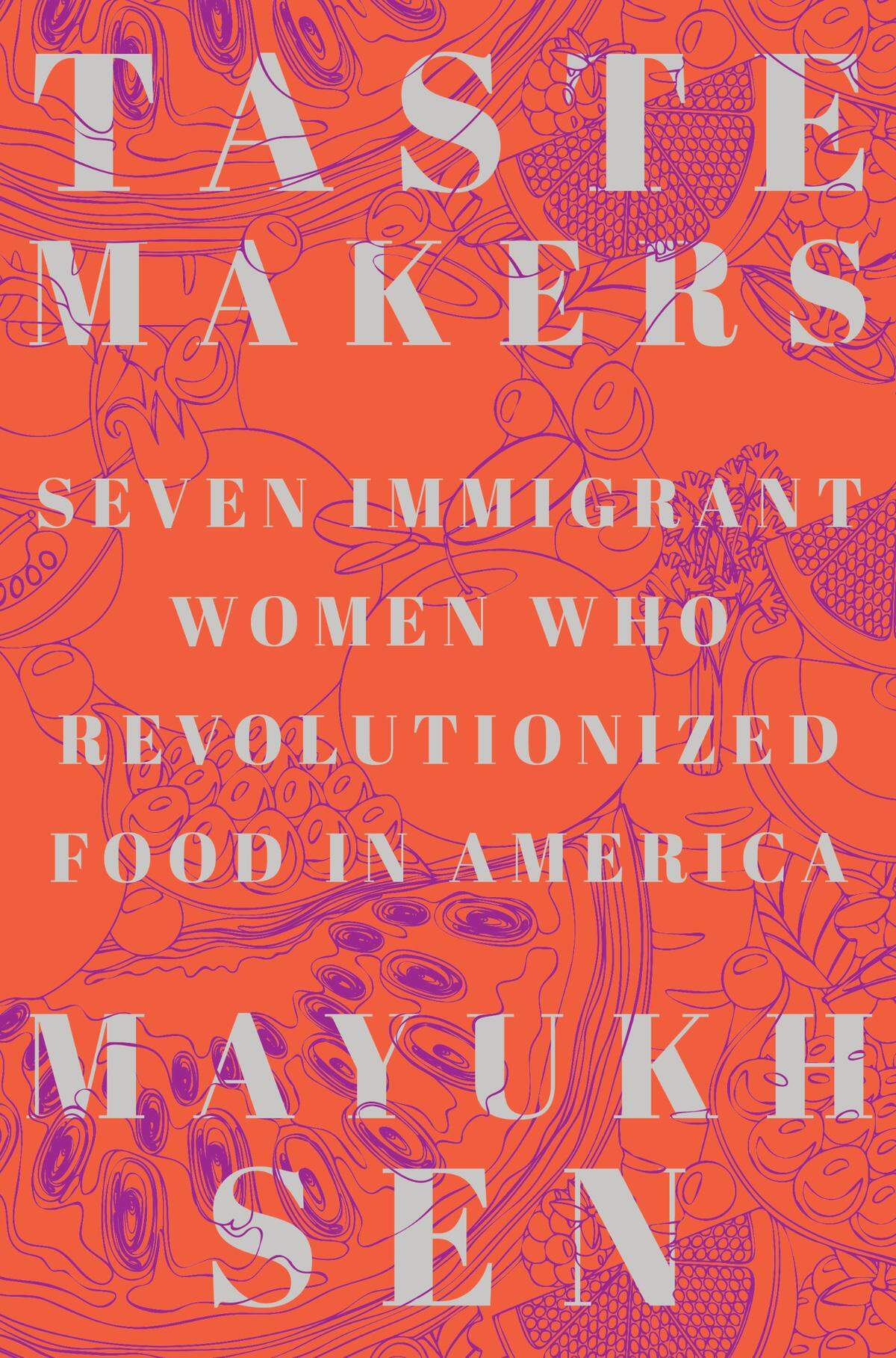
“Taste Makers: Seven Immigrant Women Who Revolutionized Food in America” is a perfect combination of book club elements: complex characters, fascinating stories, a soupcon of tension, and mouthwatering descriptions.
Attendees at the club’s gathering this month delighted in the compelling group portrait of the women who made notable but, in some cases, overlooked advancements in the American food industry. Author Mayukh Sen joined the conversation to take questions from readers. But first they sunk their teeth into the lives of these culinary visionaries.
All the readers praised the book, but Judith Reagan of Kansas City had one minor quibble. She laughed as she said, “My only problem was some of the pages may have my drool on it when I read the delicious items some of these women were cooking.”
George Helmkamp appreciated the way the book was arranged. “I liked how the various chefs were placed in a historical context,” he said. “We read about the life of each particular chef and her challenges in getting ingredients or her family challenges or external challenges. But Sen always provided a grounding as to why this particular chef gravitated toward this particular cuisine.”
Arla Jones, Kansas City, said, “Chao Yang Buwei should be on a postage stamp for bringing stir-fry to America’s attention. Cooking was a way for her to feel less homesick. Some had to cook to make money and support families. But Buwei was feeding a hunger for home.”
A different chapter resonated with Margaret Turner, Kansas City, about a blind chef, Elena Zelayeta. “This chapter stayed with me,” Turner said. “Just the thought of going into my kitchen, closing my eyes, and trying to dice an onion.” Turner closed her eyes and briefly shuddered.
Helmkamp said, “I loved Zelayeta’s story for the same reason. She was inspiring.”
A short discussion about the difference between the terms “cook” and “chef” took an unusual turn. Several of the readers shared their own kitchen stories, which they noted lent even more appreciation for this FYI selection.
Pete Dulin, Kansas City, said, “I have a background as a food writer. ‘Cook’ is a noun and a verb. It’s the who and the act. It’s something both men and women do, but women have traditionally been cast in the role of running the household, cooking the meals. Chef is a profession. It’s the act of cooking that’s been elevated and refined. ‘Chef’ to me communicates a western European orientation. You don’t hear the word chef being bandied about in other cultures.”
Helmkamp agreed. “I volunteer in a kitchen in Kansas City,” he said. “In the hierarchy, chef is at the top. Cook is a couple notches below. I’m a jack-of-all-trades in the kitchen.”
Sara Hartley, Lee’s Summit, chimed in and said, “I consider chef a profession. But for an amateur who is a great cook who specializes in certain dishes, they might call themselves a gourmet cook.”
Readers found the inclusion of a chapter on a beloved American culinary icon, Julia Child, intriguing and looked forward to asking Sen about it.
Ellen Schwartze, Kansas City, said, “The Julia Child section made me pause. Sen gave everyone their time in the sun and then added Child. But he framed it in the context of these other women, especially the woman who was compared so much to Julia, Madeleine Kamman.”
Dulin said, “The Interlude was a palate cleanser, a sorbet between the stories, no pun intended. Julia Child is a notable figure who did change cooking in our country, and it’s relevant that she’s included and would also be relevant if she were not. Not all of the other chefs were directly impacted by what Julia Child accomplished. But there’s this frame of reference we all have in the back of our heads. If none of us had ever heard of Julia Child, we’d have a different prism to view who they were and what they accomplished. I think it was worthwhile to include her, but limit her space as an interlude.”
Author Mayukh Sen, who joined the conversation via video conference call from Brooklyn, New York, said, “Julia was initially not a part of the book. My editor suggested a short essay on Julia Child be included, and she does hover over so many chapters. Especially the later ones. The challenge was to tell Child’s story from a different angle. I have great affection and respect for Julia Child. The last thing I wanted the interlude to read like was a takedown or diatribe. She had massive influence for a reason. She was very transparent about her privilege that allowed her to scale certain heights.”
This topic led to a conversation about the responsibility cooks have to learning a cuisine outside of their own culture.
Dulin said firmly, “Start with the fundamentals. If you’re going to be true to whatever cuisine it is, you pay respect to the ingredients, traditions, recipes before you put your own spin on it.”
Schwartze agreed and said, “There’s so much that goes into the culture. I would want to respect it. Understand why using certain ingredients is important. That was touched on in the chapter on Elena Zelayeta. She would make concessions for American readers but would prefer cooks use the correct ingredients that represent her native Mexico and embody the true taste. Especially for dishes that might be special for a culture or celebrate holidays or high holy days. There’s the story behind the food and the food itself that makes the recipe and preparation special.”
Readers asked Sen about his research, and this led to a discussion of the role food media and industry plays in the careers of celebrity cooks.
“I’m lucky to be working at an academic institution that has access to so many databases,” Sen said. “But I searched the internet with ‘The Julia Child of…’ and ‘Craig Claiborne called her…’ because so many women have been called the Julia Child of their respective countries of origin.”
Sen pointed out that while these odd terms led to discovering some of the women in his book, the women’s significance was tied to these two prominent Americans in the food industry. “Craig Claiborne used his position as food critic at the New York Times to champion immigrant female voices and food. It was crucial for these women to get their names out there.”
“To be written about in this industry is to be written into the history or zeitgeist or trends of the time,” Sen said.
Dulin brought up the subject of power in the food industry. “I was struck by the theme of power in every chapter. Sometimes it was personal, Chao Yang Buwei’s husband exercising power over her writing or political power, Najmieh Batmanglij fleeing a tumultuous country, or even culinary power in the case of Madeleine Kamman. Power exercised by representing their cuisine and putting the weight of a culture’s cuisine on their shoulders.”
Sen agreed and said, “There are so many different definitions of power swimming in this book. Where power was concentrated in food establishment. It’s what binds each of these women’s stories. They faced so many challenges in their personal lives. They saw the kitchen as a place of empowerment, as a form of powerful, creative expression, in a way other aspects of their lives didn’t allow them to explore.”
Turner said, “It’s life giving. Providing food and sustenance. There is power in the kitchen.”
“There is power in knowing how to cook,” Dulin said. “In knowing the ingredients and how to present them. In who retains the recipes and the power to bestow them to the next generation.”
Schwartze closed out the evening’s conversation with this observation: “These women saw cooking as a powerful art. Whether you’re a cook or a chef, there is power in the kitchen.”
Join the club
The Kansas City Star and the Kansas City Public Library present a book-of-the-moment selection every few weeks and invite the community to read along. The next book will be “An American Sunrise” by Joy Harjo. Look for an interview and book introduction March 27. To participate in the discussion led by the library’s Kaite Stover, email kaitestover@kclibrary.org.