
How a Kansas City writer found fame and understanding ‘Sitting Pretty’ in a wheelchair
Rebekah Taussig says she’s the only woman at a party unable to chime in with an anecdote about being catcalled.
Strange men do call to her in public, but what they typically shout is: “Don’t fall!”
However, she knows that if she shared this story, her friends “might go quiet, or ask questions or even try to understand, but the circle of solidarity would disappear,” she writes.
For several years, Taussig has posted “mini memoirs” about her life as seen from a wheelchair for her 40,000-plus Instagram followers — including all the ways strangers call out to her, cringey, cruel and kind.
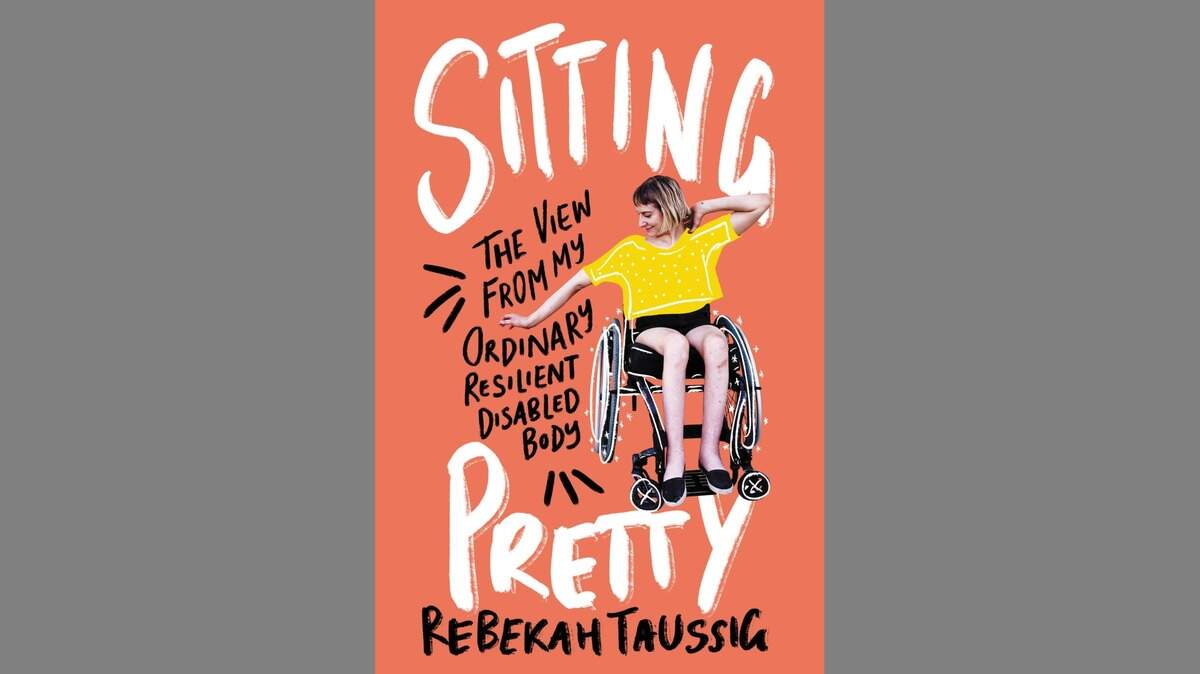
But her acclaimed new book, “Sitting Pretty” (HarperOne, $25.99), has further expanded the Kansas City, Kansas, writer’s platform to discuss what it means to live in a body — any body — and why a hard look at access to buildings, affordable housing, health care and more is crucial to everyone’s well-being, not just those with disabilities.
Since the book came out in August, Taussig has found fame: Time magazine published an excerpt, and she has appeared in Forbes and in London’s The Guardian.
The conversation was one she found the tools to tackle while working on her doctorate at the University of Kansas.
The Shawnee Mission South graduate had earned degrees at the University of Missouri-Kansas City and began doctoral work in 19th century literature at KU when she started thinking that her love of those particular books wasn’t quite worth the time and monetary sacrifice.
“I was working myself to the bone for things that I couldn’t quite attach to the real world,” Taussig tells The Star.
Then someone sent her a chapter from a book about disability studies that changed her outlook and her career.
Taussig says that through that one manuscript she began to see that her “body was a part of something, and the problem was much more complicated than just, ‘Look, this disabled person showed up. I guess we’ve got to figure out how to get her upstairs.’”
A shift in perception
Reading that felt familiar, she says, and allowed her to reflect on the bond she had with her five siblings growing up in Overland Park.
“My siblings are the only people on Earth who grew up right next to me as a paralyzed little girl, so my body was always ordinary and normal to them,” Taussig says.
She lost the use of her legs as a toddler after cancer treatments but writes that she continued sleeping on the top bunk of her shared room; her family carried on as usual and she kept pace.
A professor in her program, novelist Laura Moriarty (“American Heart,” “The Chaperone”), pointed out to Taussig that her eyes lit up when she wrote creatively about her life and disability. She encouraged her to pursue that work.
The eight essays in “Sitting Pretty” detail the shifts in her self-perception and relationship with the world around her.
She writes that as a child, she was aware of stares or sympathetic smiles from strangers. And, Taussig writes, she “wore a clunky mess of plastic, metal, and Velcro braces on my legs, used a battered aluminum walker, and sped around on my hot-pink wheelchair.”
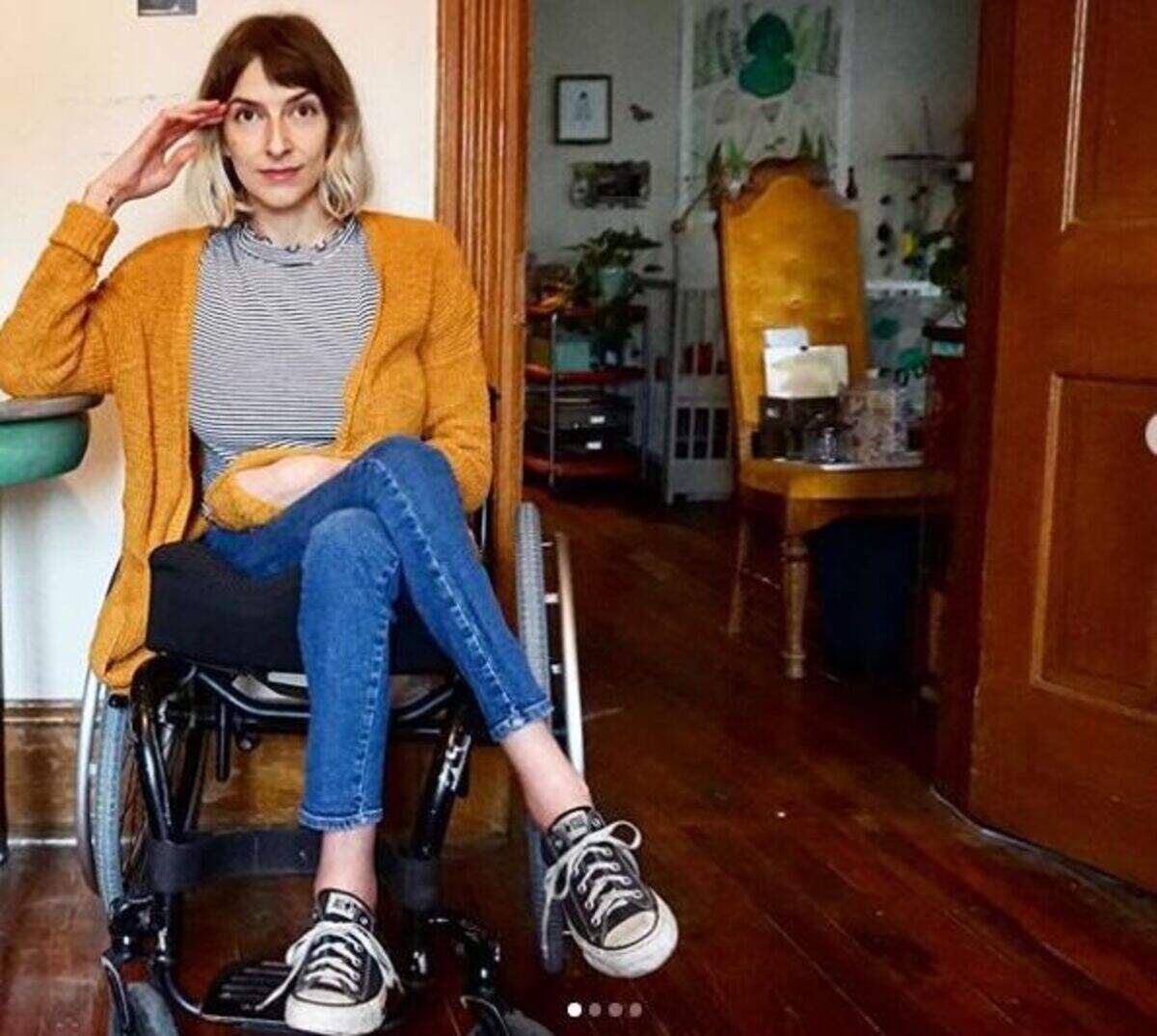
But for a while, none of that seemed worth factoring into her self-perception. As an adult, she’s fashionably dressed and radiates healthy self-esteem.
By the time she was 8, however, she’d begun cutting friends out of her life as soon as she felt that she might be burdensome. Not much later, she started seeing herself as ugly.
A big part of the shift was her growing awareness that “there weren’t any paralyzed girls or women included in stories told on screens, through ads, or in magazine pages,” she writes.
Taussig says, “Identities that have been ‘othered’ historically, one way that those identities become a little bit more normal in mainstream culture is through storytelling and is through things like Netflix shows and books that people are picking up.”
She feels hopeful that a cultural shift is underway to include those many other identities.
She’s a mom now
Since she finished writing the book, Taussig, who now lives in a small house in KCK’s Strawberry Hill neighborhood, has become a mother.
Here again, she says, very few images or stories of mothers with disabilities are available. Her sisters and sisters-in-law are mothers, but she can’t entirely follow their road maps in her own early parenting and must search for help and models online.
For instance, because she can’t stand, she can’t soothe her son by bouncing him while slowly walking around the house. To pick him up, he needs to be at a height she can reach. And as soon as he’s mobile, much of the house she shares with her partner, Micah Jones, will need rearranging and sectioning off — especially when she’s the only parent home.
She writes that she often finds being both a woman and being disabled hard to figure out. In the book, she asks: “Where does my disability fit into this narrative about Women? I wonder, does my disability swallow my womanhood?”
Taussig says that often she reads posts from other new mothers and thinks, “‘Oh, I’m not alone.’ But there’s another part of me that’s like, ‘This is not exactly the same.’”
Unlike the catcalls conversation, the solidarity she and other moms share is real, but “it branches off and is not the same experience,” she says.
Like that disabled women have historically had their children taken away from them simply because they’re disabled or, she says, that it’s legal for fertility clinics not to work with disabled women.
So Taussig feels anxious about going out with her now 6-month-old son, Otto. “A lot of people don’t see me as a mother simply because of being in a wheelchair.”
One of the first times Taussig and Jones were in public with their baby, a woman looked at Otto and said, “Does she ever take you for a ride in that thing?”
Taussig felt “misinterpreted.”
“Obviously he rides around in my chair with me,” Taussig says. “In that moment, I felt like I was being read as either not his mother or as if something as ordinary as carrying my baby from the kitchen to the bedroom was somehow turned into some spectacular carnival ride.”
She wrote about the incident on Instagram — she’s sure the woman at the park was only clumsy, not mean — and received over 400 comments.
Her followers wrote messages of appreciation, shared their own limitations as parents, reported that reading the post helped them feel less alone parenting in atypical bodies, and shared similarly bewildering or hurtful parenting comments from strangers.

‘Many ways to be disabled’
Though Taussig taught disability studies courses at Pembroke Hill School for several years prior to the pandemic, having a child of her own to raise in a culture with very specific reactions to disabled bodies is new.
She says those reactions are learned, so she’s thinking a lot about future conversations with her son.
“It’s not just a matter of training him to look at wheelchairs one way or to look at people who have different skin colors from him and be prepared for that exact moment,” Taussig says.
She hopes her child can be comfortable with any way that a person might be different from him.
“Disability is such a rambling, sprawling identity; there are just so many ways to be disabled,” she says — which is why conversations about living in a body are crucial to the future health and productivity of our society.
As Taussig continues to relate the experiences of her “ordinary, resilient, disabled body” — as her book’s subtitle calls it — to a bigger and bigger audience, she says she really isn’t feeling the fame yet.
Being sequestered for months is partly to blame. She resigned her teaching post in late winter, and rather than traveling to book signings and speaking engagements, all of her interactions with the press and public have taken place via phone or Zoom from her living room. (A Star photographer met her on her back patio.)
But the book keeps the conversation growing all the same.
‘Meet’ the author
The nonprofit Ability KC will host a virtual book release celebration for Rebekah Taussig’s “Sitting Pretty” from 5:30 to 7 p.m. Thursday, Nov. 19. Taussig will read an excerpt and then discuss the book and the issues it raises. Free, but donations are encouraged. Register at abilitykc.org/events/sittingpretty.