In Kansas’ ‘Little Sweden USA,’ the small-town American dream is still alive
READ MORE
Hidden gems of Kansas & Missouri
If you’re thinking about a trip into the Sunflower or Show Me states, consider these unexpected attractions: New businesses putting small towns on the map, hidden gems recommended by locals or entire towns that make for delightful getaways.
Expand All
Its nickname is “Little Sweden USA,” and when you pull into Lindsborg, it’s clear why.
Pole banners and road signs greet visitors with a friendly “Välkommen.” Many businesses display replicas of Swedish dala horses, the town mascot. The word “SWEDES” is painted in yellow on the blue stands of the Bethany College football field. Wine and spirits are obtained at Swedes Liquor. The street benches downtown possess a distinctly Scandinavian design quality. Umlauts abound.
Years ago, on trips from his home in Denver to visit his wife’s relatives in Oklahoma City, Jim Prugh and his family would sometimes stop along the way and spend an hour or two in Lindsborg. It seemed like a curious place.
“I grew up in small towns, so I’m pretty familiar with what life tends to be like there,” said Prugh, who’s now 67 and retired from a career as an engineer for oil and gas companies. “So many small towns are drying up and blowing away; the citizens seem kind of stuck, they’re relying on Dollar General and Walmart, there’s not a lot of amenities. But I would walk around Lindsborg and think, ‘How are there all these art galleries? How is the grocery store still doing well?’ You could feel that the people had a lot of pride in the town. I was like, ‘I think I want to be a part of this.’”
Prugh was interested in historic preservation and redevelopment. But having never done it professionally, he was reluctant to try his hand in a big market like Denver. So, when he heard about a dilapidated building coming up for sale in downtown Lindsborg about 15 years ago, Prugh bought it.
“I figured if it didn’t work out, I’d just sell it or leave,” Prugh said.
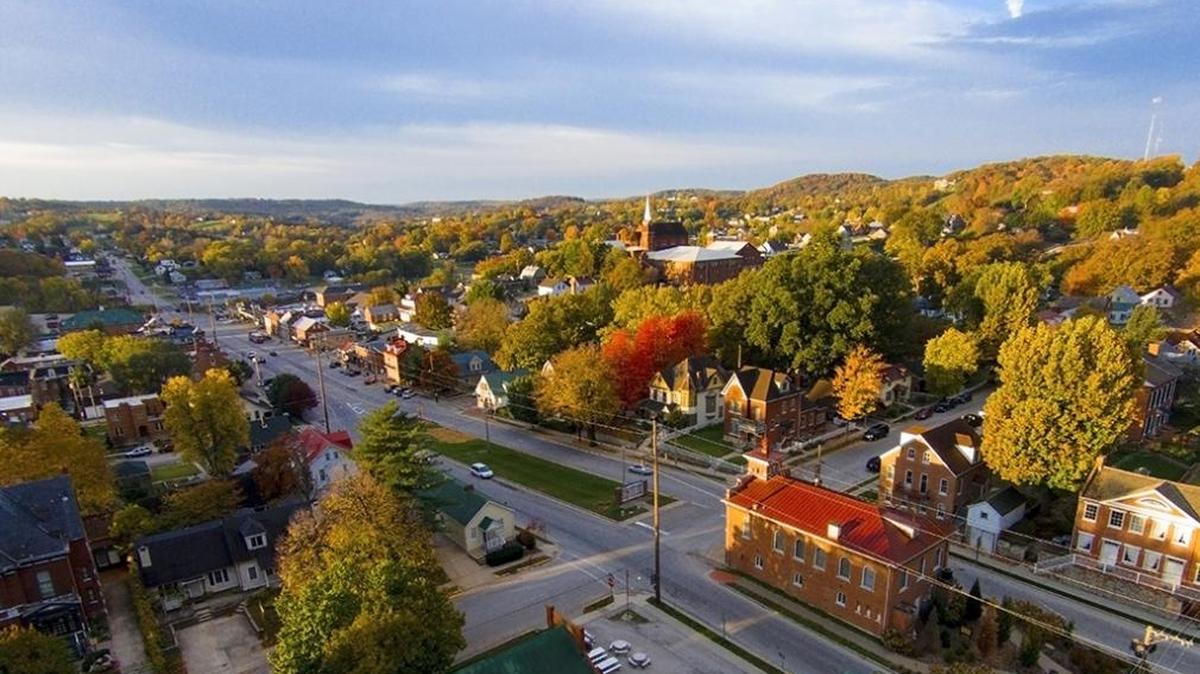
It did work out. Prugh still lives in Denver, but he has now renovated six buildings in downtown Lindsborg, plus four houses that he has converted into vacation rentals. His current tenants in this town of 3,700 include a coffee shop, a western clothing boutique, a bakery, a toy store, a community arts center, and the Clara Hatton Center, a new museum dedicated to a forgotten Kansas artist whose work has recently been rediscovered.
“His investment in Lindsborg over the past several years has been absolutely vital,” Holly Lofton, director of the town’s Convention and Visitors Bureau, said of Prugh. “Renovating those buildings has allowed a lot of people here to start businesses, and the vacation rentals have opened up a lot of room for overnight stays, which we’ve desperately needed.”
“It’s a remarkable mission he’s on,” said Jim Richardson, a photographer and co-owner of Small World Gallery, also in downtown Lindsborg. “A lot of small-town redevelopment aims to spend a few thousands dollars to get the doors open. Jim is spending millions, doing high-quality restoration that is giving these old buildings another 50 or 70 years of life. Not many towns find people like Jim.”
Though Prugh’s approach to redevelopment isn’t as capitalistically cutthroat as a big-city developer — he didn’t charge his tenants rent during the scarier months of the pandemic, and he voluntarily paid the city a tax on his vacation rentals before there was a mechanism to collect one — he also doesn’t view Lindsborg as some kind of charity case. He is bullish on the town’s future, and his reasons are rooted as much in the past as the future he’s helping build.
Lindsborg, located in a central Kansas region called the Smoky Valley, has long punched above its weight. Settled by Swedes in 1869, it is a town that has preserved its heritage to a degree rarely found in the American Midwest. In an era of atomization and polarization, Lindsborg has held tight to its communitarian roots.
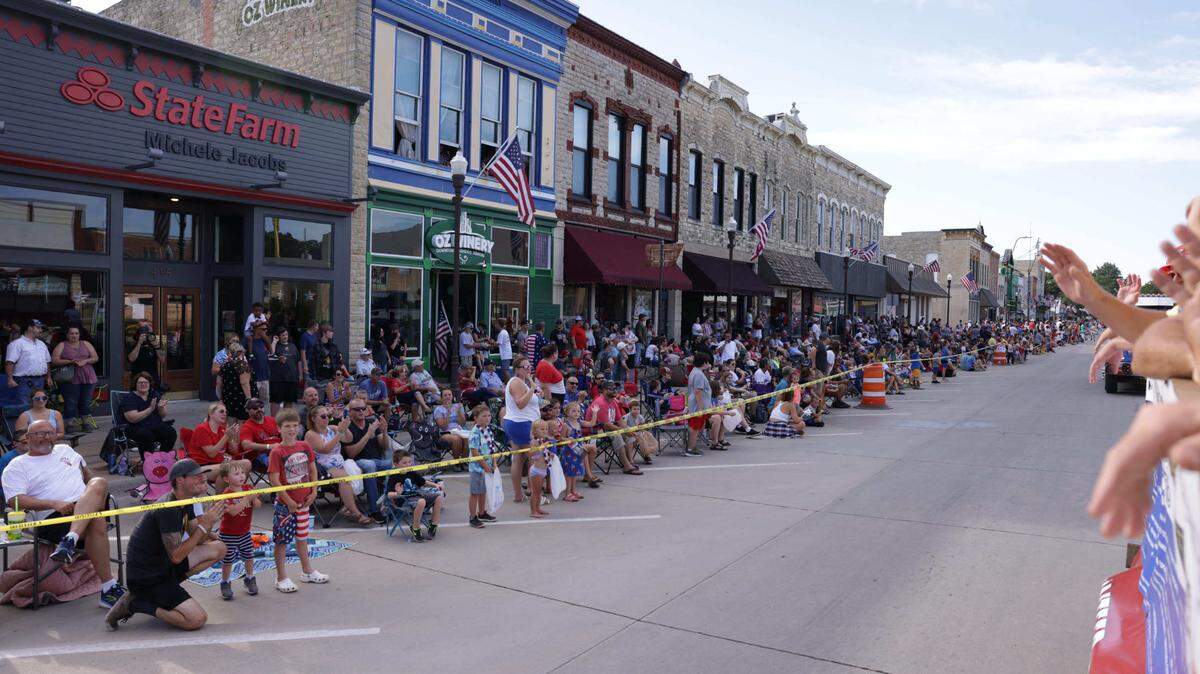
Volunteerism is baked into civic life. Kids are encouraged from a young age to pursue artistic endeavors. Tourists pump money into the local economy on the weekends, drawn in by the Old World charm. Aside from a bank and a couple of insurance chains, all the downtown businesses are local.
Lindsborg remains a place where “the ability to create something beautiful goes hand in hand with daily living,” as a newspaper reporter observed of the town in the 1940s.
It is all paying off. Unlike most small towns in Kansas, Lindsborg is growing. The real estate market is on fire, the schools have a great reputation, downtown is on the upswing, and students from the small liberal arts college continually breathe new life into the town.
“It’s a little like Mayberry,” said Mari Loder, a local Realtor who moved to Lindsborg in 1995.
“You have kids riding their bike to the park, parents grabbing coffee downtown, all these arts festivals. We have our own grocery store, our own pharmacy, a hospital. I used to say we have everything you need here, except you have to leave to go to the eye doctor. Well, now we have an eye doctor.”
Swedes and artists
Lindsborg has seen its share of ups and downs in its 150-year history, and particularly so in the 70-odd years since macroeconomic trends began incentivizing Americans to move away from small towns into cities and suburbs.
Other than the founding of the town, the most pivotal moment in Lindsborg’s history likely occurred in 1894, when a Swedish artist named Birger Sandzén was summoned to America to teach at Bethany College, one of the oldest colleges in the state. Sandzén lived in Lindsborg for the next half-century, during which time he created a body of work that made him one of the most significant visual artists in Kansas history. The Kansas landscapes he depicts in his oil paintings are lush and abstract, full of bold brush strokes and bright colors uncommon to prairie art — pinks and reds and lime greens and purples. His paintings today commonly sell for hundreds of thousands of dollars.
Sandzén also built a culture of artistry at Bethany College and, by extension, Lindsborg. His presence on the faculty was a selling point for the town. In 1925, when the town’s population was roughly 2,000, a survey noted that only a handful of homes in Lindsborg lacked original works of art.
“Bethany College was for many decades one of the top schools for the arts in the Midwest,” Lofton said. “That’s partially because of some of the music faculty on staff. But it was mostly because of Sandzén and those who came behind him.”
Sandzén died in 1954, but artists kept coming to Lindsborg.
The 1970s are remembered fondly as a creatively exciting period — a time when Bethany College boasted more than 100 art majors and several full-time arts faculty members.
“Something special happened in little Lindsborg back in the Seventies and early Eighties,” Ray Troll, an artist who attended Bethany College in the 1970s, recently wrote of the era on his website. “Townies and gownies, all making beautiful things, lost in the countless paint strokes, cranking out prints, throwing pots, making jewelry, the young and the old alike, making music, partying, skinny dipping, making love in dark rooms, smoking pot in the back alleys and drinking Coors nonstop, like it was the water of life. Goddamn it was fun.”
But by the turn of the millennium, Bethany College’s reputation as an arts destination had largely eroded, and NAFTA and other forces of globalization had begun to hammer small towns like Lindsborg. “Those were not great years here,” Lofton said.
Tourism has helped insulate the town against economic downturns. Lindsborg puts on numerous festivals, most of them rooted in its Swedish traditions, throughout the year. The town is particularly busy during the Christmas season — this month alone, the town hosted St. Lucia Day events, a special Christmas artists’ open house, a Snowflake Parade, a holiday homes tour, and several smaller events — and during the summer, when the Midsummer’s Festival and theater productions at Broadway RFD, the longest-running outdoor band shell in Kansas, draw crowds to town.
In 2000, just one year after Chicago’s successful “Cows on Parade” project, Lindsborg was one of just three American cities that followed suit with its own public art exhibit, encouraging artists to create their own Swedish dala horses, which were displayed around town and eventually sold, with proceeds donated to charity. Today, such exhibits are common (see: this year’s “Parade of Hearts” in Kansas City) but at the time, Lindsborg was far ahead of the curve, and the national media took notice of the quiet Kansas town that had assembled an installation on par with that of much larger cities.
“I think one key to Lindsborg’s success is that it accidentally figured out a long time ago that tourism could be a very powerful economic driver for a small town,” Lofton said. “It’s unusual for a town our size to have a full-time CVB director like myself. But there’s an awareness of its importance, and we work hard at it.”
The emphasis on Swedish heritage presents certain business opportunities. After graduating from Kansas State University’s fashion studies program and working in costume design in Los Angeles, Tara Killingsworth moved back to the Smoky Valley six years ago and opened The Ivory Thimble, an apparel design studio and boutique.
“In the fashion industry, in New York or L.A., you’re not really designing — you’re working under someone, or you’re doing marketing or technical design,” Killingsworth, 33, said. “I had a friend working in Lindsborg who was like, ‘What if you opened up your own shop here?’ I was like, ‘I don’t think I can afford that.’ She was like, ‘I think you’d be surprised.’”
Today, a big chunk of Killingsworth’s business is making and tailoring costumes for the Lindsborg Swedish Folk Dancers, a group of high school dancers and musicians dedicated to preserving the traditions of Swedish folk dancing and music. The dancers are one of the town’s great sources of pride, and the community supports a program that sends them to Sweden for two weeks as ambassadors.
“I’ve never not had enough work here,” she said. “We just have so many festivals. Plus, people here will choose to have something done by a local. When I opened, I had people come in with stuff that didn’t really need to be tailored, but they wanted to give me business to make sure my shop made it.”
Jim Richardson, a National Geographic photographer, moved from Denver to Lindsborg with his wife, Kathy, in 1997. They opened Small World Gallery as a way to showcase Jim’s photography work. Twenty-five years later, it is a sprawling operation, with local art and retail up front (jewelry, children’s books, handbags and other ephemera) and production areas in the back for Jim’s photography, Kathy’s beadwork, and their assistant Briana Zimmerling’s jewelry-making.
“Before we decided to make the move, I picked up a little tourism pamphlet in town and there was a middle-school orchestra performance on the calendar,” Jim said. “I thought, ‘That’s rare.’ And you still see it. You see kids packing cellos on their back walking home from school. I don’t think that’s true in a lot of other places.”
“We’re a very creative, well-traveled community, and I attribute that to the philosophy of the Swedish people who settled here,” said Kathy Richardson. “Neither Jim nor I are Swedish, but it’s clear there’s this priority on making things just a little bit better, whether it’s a stone sculpture or a wooden piece of art or the glass in the church.”
Jordan Jerkovich, Lindsborg’s community development director, was raised in Salina, went to the University of Kansas, and then lived abroad for several years, including a few in Sweden. He moved to Lindsborg last year with his wife and child.
“Everybody I met at KU who was from Lindsborg really talked up their hometown, which is not usually the case when you meet people from small towns,” Jerkovich said. “And my theory about this is that, in Scandinavian countries, there is much more of a communitarian, collectivist ethos writ large. And I think those values came over from Sweden to Lindsborg, and even though it’s been 150 years, some of those values are still present in this community.”
Jerkovich added: “People here are stretched pretty thin — volunteering like crazy, sitting on multiple boards and committees, coaching teams, dressing up for festivals. Because we know that otherwise, things really will fall apart. We have to work together out of necessity in a way people in bigger markets don’t. It’s challenging. But the flip side to that is, you make all these connections in the community. You’re busy, but you realize that all those relationships, that collectivist thing that’s happening here — it makes you feel so much more fulfilled.”
Turnover in Lindsborg’s anchor institutions in the last few years has also opened up leadership positions to a younger generation. Jerkovich is 29. Heath Hogan, the new superintendent of the Smoky Valley School District, is in his 40s, as is Kristi Northcutt, a Bethany College graduate who recently moved back to Lindsborg from Phoenix to be the new city administrator.
“A lot of people, when they step into a role like mine in a small town, they have a lot to clean up,” Northcutt said. “I’ve been fortunate because we’re in a relatively strong financial position because of the decisions made and work done by councils and mayors and administrators before me. It allows me to be visionary, to think beyond the present. We have a long-term strategic plan out to 2040. So, it’s a really nice balance, I think, of drawing on our history while also getting to have this forward-thinking mentality.”
Bill North, the former executive director of the Salina Art Center, recently opened the Clara Hatton Center in one of Prugh’s downtown buildings. A printmaker who worked in the British arts and crafts tradition, Hatton was “arguably the most important forgotten Kansas artist of the 20th century,” North said, and his aim is for the space to expand its mission to be a “clearinghouse for information on Kansas women artists.”
A Salina resident, North cited Lindsborg’s artistic infrastructure as his primary reason for wanting to store the Hatton collection there.
“Being in Lindsborg, there’s all these things we can leverage,” North, whose wife, Cori North, is the curator of the Birger Sandzén Memorial Gallery, said. “For example, we’ll want to bring in scholars and artists, and above my space there’s two vacation rentals where we can temporarily house them. And if we need a lecture hall, the Sundstrom Center is right across the street. There’s this incredible esprit de corps there between commerce and the arts.”
Growth mode
Lindsborg’s biggest challenge lately is housing. People want to live in Lindsborg, and there aren’t enough houses to meet demand.
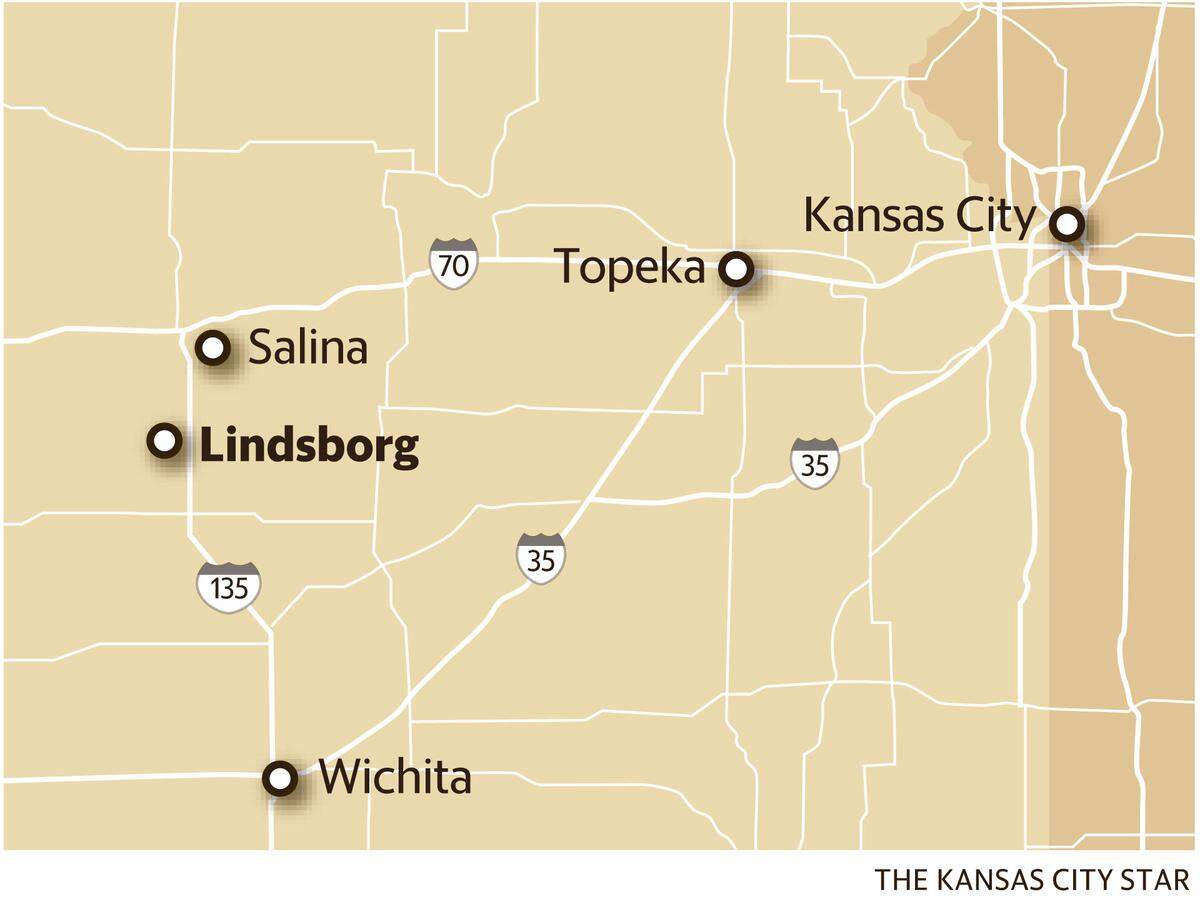
Though it’s a small town in central Kansas, Lindsborg benefits from being just a 20-minute drive to both Salina and McPherson — larger cities with a relatively healthy base of industrial and professional employers. Some of the people who work those jobs are happy to trade a commute for the dreamy small-town lifestyle Lindsborg has on offer.
Since the pandemic, there has also been a steady increase in interest in Lindsborg from other states.
“I used to not answer calls from other states,” said Loder, the realtor. “The last couple years, I answer all of them. They’re people from all over the country who’ve realized they can work anywhere and are looking for an escape from bigger cities. Lindsborg appeals to that kind of buyer. We’ve had several people buy sight unseen.”
That has driven prices up. A three-bedroom, two-bath in reasonably good shape will “easily” sell in the $250,000 range these days, Loder said, while an older two-bedroom, one-bath close to downtown would be closer to $150,000. She’s seen price reductions in Salina and McPherson in recent months, as the market cooled due to rising interest rates. But that’s rarer in Lindsborg, she said.
“If a house in Lindsborg isn’t under contract within seven days, that means it’s either a very unique property or the seller has a pricing problem and needs to make some adjustments,” Loder said. “Homes here just don’t last. If you price it at fair market value, it’s gone. And that’s not true in other surrounding communities.”
Building new homes in rural areas can be a losing proposition for developers, because the homes often cost more to build than they will sell for. But the city has made some headway in adding housing stock. A new development called Stockholm Estates has leveraged two state programs — the Rural Housing Incentive District and a Moderate Income Housing Grant — to open home lots on the east side of town aimed at middle-class buyers such as young families and retirees looking to downsize.
To make the math work, the developers had hoped to sell 10 lots per year for five years. Two years in, all but 11 of the 52 lots planned for the initial building phase have been sold. Subsequent phases of Stockholm Estates will add another 100 lots. All in all, Stockholm Estates is projected to add more than 600 residents to Lindsborg over the next 10-20 years.
“Most Kansas towns talk about having this kind of growth as a long-term plan,” said Derek Lee, one of the developers behind Stockholm Estates. “Very few will achieve it.”
As in many other rural communities, child care in Lindsborg has been an impediment to growth. For years, Lindsborg’s only child care center was small and located in a converted home. It served only a fraction of the need in the community.
As of earlier this year, though, the Lindsborg Child Development Center — a $3 million, 11,000 square-foot facility with immediate capacity for 100 kids and room to expand for 40 more — is up and running on the east side of town, just across the way from Stockholm Estates.
It is a public-private partnership between the city and a nonprofit called Sprout House Learning Center. The city leased Sprout House the land for a dollar and assigned a city staff member to assist Sprout House in getting the operation up and running over the last few years. The lease stipulates that if Sprout House folds, the building must remain a child care facility. Most of the $3 million was fundraised, with some help from Community Service Tax Credits awarded by Gov. Laura Kelly, who came down to Lindsborg for the June opening of the center.
It was an immediate success.
“It’s already full, with a wait list, and will need to expand,” Northcutt said. “It’s been huge not just for Lindsborg but for the region, since a lot of people in Lindsborg travel for work.”
Other problems remain. The modest success of Lindsborg has put it just above the income-per-household levels required to qualify for certain rural poverty grants, putting much-needed federal funds just out of reach. Being four miles from the interstate means Lindsborg is overlooked for certain things: business expansions, K-DOT’s recent electric vehicle infrastructure program. So city officials have been working with the state to try to secure a new interchange. “I would give my right arm to be two miles closer to the interstate,” Lofton said.
The town also recently lost two important downtown businesses: a restaurant called Farley’s and a hardware store that had been around for decades.
“Fortunately for us, because this is a community of artists and people with a lot of energy, when a restaurant or a boutique goes out, we have some degree of confidence that there’s somebody else in the community who’s been waiting for that opportunity,” Jerkovich said. “The challenge is making sure we maintain that culture of energy and entrepreneurship over time. Which is not guaranteed.”
And though a collectivist ethos tends to carry the day in Lindsborg, civic disagreements still spill out into the open, as when the city recently purchased a Tesla for its fleet.
“That was met with a series of cheers and jeers,” Jerkovich said, with a laugh. “But we own our own electric utility here, and the point was to showcase electric cars as a viable option for residents. And we got it for a wholesale deal, and it costs nothing to the city to recharge it, so the finances square out. But the optics — yeah, it caused quite a controversy.”
Corey Peterson, who owns the Scandinavian gift shop and workshop Hemslöjd and also sits on the city council, moved to Lindsborg in 2011. He noted that Lindsborg residents are fairly diverse in their beliefs — the art community and college professors on one side of the political spectrum, farmers and certain business types on the other.
“But we’ve been pretty good at keeping national politics and even a lot of statewide politics out of our local government,” Peterson said.
“Now, the last few years have tested that a bit. I’ve seen some fissures. But I’m confident we’ll keep overcoming that. It would be terrible if we succumbed to that kind of nastiness. For now, though, Lindsborg is a place where people can have different viewpoints and still be friends. And more and more, I marvel at that.”
This story was originally published December 18, 2022 at 5:00 AM with the headline "In Kansas’ ‘Little Sweden USA,’ the small-town American dream is still alive."