
Through turbulent waters, Kendrys Morales has landed safely
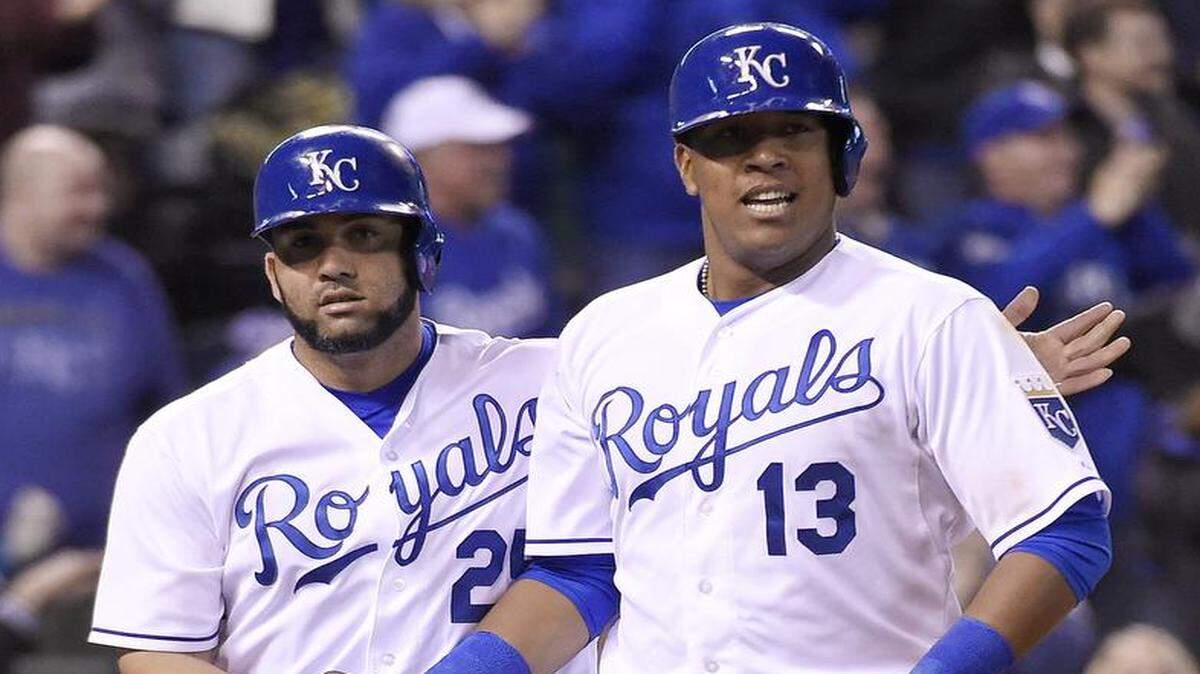
Stranded in free-agent negotiation limbo a year ago, Kendrys Morales was a man without a country.
In a manner of speaking, that is.
Not literally, again, for a man who now technically belongs to three countries as a major-league Baseball player who obtained citizenship in the Dominican Republic to facilitate playing here after escaping Cuba.
On his 13th try.
Twelve times before, Morales had embarked on rafts of various dimensions, crowds and conditions, seeking to negotiate the 90-mile journey to Florida for the chance to make good on the abundant promise that had made him a legendary baseball prospect before he was 20.
“The Best Player You’ll Never See” was The Star’s headline on a story about Morales written from Havana in 2002.
And that would have been a safe concept if not for his furious tenacity in the wake of being suspended by the Cuban national team under suspicion of being in contact with a professional baseball agent.
“They didn’t have any proof that I was meeting with anybody,” he said Monday through the translation of Rene Francisco, a Royals’ assistant general manager. “It (had) never crossed my mind to come to the States, but when I got suspended, then I decided to leave Cuba.
“Because it’s my dream to play baseball, and I couldn’t do it in my country.”
Still, it was an excruciating decision to make: to consciously leave his family and live in exile for nearly a decade before he could return home without reprisal.
But one thing drove it more than anything else.
“I needed,” he said, “to find a place to play.”
So even if it always felt “scary,” he wasn’t dissuaded by his dozen failed attempts, most of which were punctuated by 72 hours of jail.
No sooner would he serve his time than he’d be scheming again.
Until he didn’t have to any more in 2004.
“In the past, the escape was not coordinated correctly,” he said. “So the 13th time, everything worked out perfectly.”
This was about as much detail as Morales was comfortable revealing.
But it’s an ample sample to help understand why the Royals in the offseason saw him as a viable solution for their open designated-hitter slot despite the suspect numbers he put up in 2014.
It wasn’t just that they understood those numbers, .218 with eight home runs and 42 RBIs in 367 at-bats, were less a function of diminishment than the rust accumulated by missing spring training and being out of baseball shape by the time he signed with the Twins on June 8.
It also was that they knew his story and what it says about Morales, 31, a switch hitter who entered Monday’s game hitting .347 with two home runs and seven RBIs — the last two of which were the game-winners on Sunday against Oakland.
The perseverance to keep trying to escape “tells you he’s determined,” general manager Dayton Moore said, adding, “Kendrys Morales is an absolute professional. He’s a very serious baseball person. …
“If you’re going to give anybody the benefit of the doubt, you’re going to give it to players with that type of mindset and makeup.”
So Moore and his scouts essentially threw out Morales’ 2014 stats as they studied him and largely based their evaluations on his last two full seasons, 2012 and 2013, when he averaged 22.5 home runs and 76.5 RBIs.
“His sense of timing wasn’t very good last year, but his bat speed, his strength, his approach was very much similar” to before,” Moore said. “And we felt that if he had a full spring training under his belt he would have success.”
That’s proven true so far, and in a nifty bit of symmetric symbolism never more so than with his last word in Sunday’s game after the man he replaced, Billy Butler, took his curtain call in an A’s uniform.
Out of respect for Butler’s long service with the Royals, Moore and manager Ned Yost were careful to remind that the decision hadn’t been as simple as letting Butler go to bring Morales in.
And it’s pretty clear that’s true.
For one thing, the Royals weren’t going to try to match Oakland’s three-year, $30 million offer to Butler.
“We felt that we needed to spend our money in different ways and to bring in multiple players,” said Moore, referring to what would become Morales, Edinson Volquez and Alex Rios, among others and adding, “So it was a function of economics as much as anything. “
For another …
“Well, the truth of the matter is we tried to sign Torii Hunter,” Moore said. “And if we would have signed Torii Hunter, we probably wouldn’t have done anything with Kendrys, truthfully.
“But we didn’t win in negotiations there; Torii wanted to go home (to Minnesota). So we went after the next-best available bat, and we felt Kendrys was that guy.”
As such, the price for Morales was $6.5 million in 2015 and $9 million in 2016 with a mutual option of $11 million or a $1.5 million buyout in 2017.
Many around baseball thought the Royals had overpaid for what seemed a gamble.
For his part, though, Morales says he wasn’t fretting about his future as he languished, then struggled, last season, when he began to resume his stroke with seven home runs in his last 59 games after being traded to the Mariners.
That was only trifling trouble for Morales, 31, who after finishing fifth in the 2009 American League MVP race missed nearly two full seasons because of a freak ankle injury incurred when he jumped on home plate after a walk-off grand slam for the Angels in 2010.
“No more jumping, no celebrations,” he said, smiling. “It was tough. But I knew I was going to come back and be on top again. I’ve had worse things that have happened in my life than that injury.”
Like really being stuck between countries, if not worlds.
To reach Vahe Gregorian, call 816-234-4868 or send email to vgregorian@kcstar.com. Follow him on Twitter at @vgregorian. For previous columns, go to KansasCity.com
This story was originally published April 20, 2015 at 10:32 PM with the headline "Through turbulent waters, Kendrys Morales has landed safely."